Quick wins for a faster PC:
Fix the driver behind crashes, sound loss and screen glitchesFind Drivers →Clear out junk files and repair common Windows errorsFree Scan →Scan for outdated or missing drivers - takes under a minuteDriver Scan →A Boxer Lab mix combines two athletic, people-oriented breeds: the Boxer and the Labrador Retriever. The result is usually an energetic, affectionate dog with a strong appetite for play, but there is no official breed standard for this cross. Puppies from the same litter can differ in size, muzzle shape, coat, sociability, prey drive, and trainability.
Expect a dog that needs daily activity, early training, careful weight management, and plenty of interaction with its family. This is rarely a good match for a home looking for a low-exercise or independent companion.
As an Amazon Associate I earn from qualifying purchases.
What is a Boxer Lab mix?
A Boxer Lab mix—sometimes called a Boxador—is a cross between a Boxer and a Labrador Retriever. It is not a recognized breed with a fixed appearance, temperament, or health profile. The dog may inherit the Boxer’s square build, expressive face, clownish playfulness, and protective instincts; the Labrador’s retrieving ability, food motivation, swimming interest, and outgoing nature; or a less predictable combination of both.
What’s actually slowing this PC down?
Pick the symptom - the matching free tool is one click away.
Even a dog sold or adopted as a “Boxador” may have additional ancestry, particularly when its background is unknown. A breed label is a useful starting point, not a guarantee of adult behavior.
#1 Best Overall

- Dog Friendly Materials: Not Suitable for Aggressive Chewers. Treat dispensing dog toys are made of ABS and nylon material. It is a sturdy, safe food container that resists pet damage, provides a long-lasting and safe play experience. You can give your dog confidently use interactive dog toys. At the same time, in order to make the dog puzzles for smart dogs quieter when rolling, the material of the dog enrichment toys for large dogs roller is made of rubber, less noise
- Food Adjustment Distribution: Mental enrichment toys for dogs have two adjustable switches, you can control the amount of food by adjusting the size of the dog puzzles for large dogs switch to extend the feeding time. Dog toys to keep them busy are also designed with a special spiral structure to make the dog puzzle feeder more challenging. If you want to give a birthday gift to your furry friend, these large dog puzzle toy are good choice, it will like this dog treat dispenser toy
- Improve Intelligence & IQ Training: Dog treat toy is an interactive chase toy that combines puzzles and treat dispensing, pets learn the process of rolling the dog treat puzzle to make treats fall and get treats, which helps to improve intelligence and stimulate the brain, Mental stimulation for dogs will relieve anxiety and reduce boredom, best dog toys to keep them busy for hours. Our dog food puzzle feeders, like other interactive dog toys for boredom are best played under supervision
- Slower Feeding: BoYoYo dog stimulation toys to keep them busy and food puzzles for dogs that reduces your dog's eating speed, cultivate slow eating habits in dogs to promote digestion, allowing your dog to enjoy a more enjoyable mealtime. It is a great alternative to dog slow feeder toy, lick pad for dog, and snuffle mat for dog. These are multi-functional dog puzzles for large dogs
- Attracting Dog Attention: Put your dog's favorite dog food or snacks inside the dog mental stimulation toys to better attract your dog's attention! Keep your dog engaged and active, puzzle treat toys for dogs can divert attention from destructive behavior to positive play, one of the best interactive dog toys for large dogs to keep your dog busy. This interactive dog toy is suitable for medium and large pet, can also be used as a cat puzzle toy and cat treat puzzle
Size and appearance
Most Boxer Lab mixes are medium-to-large dogs with a muscular, athletic build. Adult size depends on the parents’ size, sex, nutrition, and individual genetics. As a practical planning estimate, many may weigh roughly 50–80 pounds and stand around 21–25 inches at the shoulder, but some will fall outside that range.
Common physical features include:
- A short, dense coat that may be black, brown, fawn, brindle, white-marked, or a combination of these colors
- A broad chest and athletic body
- Drop ears, although ear carriage varies
- A long-to-moderate muzzle; some inherit a noticeably shorter Boxer-like face
- A strong tail and powerful hindquarters
Neither parent breed is reliably low-shedding or hypoallergenic. The coat is easy to maintain compared with a long-haired breed, but hair around the home is still likely. A short coat also does not make the dog suited to living outdoors. Boxer-influenced dogs can be particularly uncomfortable in cold weather, while any dark-coated, heavily exercised dog can overheat in hot conditions.
Temperament
A well-socialized Boxer Lab mix is often friendly, playful, affectionate, and highly attached to its household. Both parent breeds tend to enjoy human company, and many mixes are enthusiastic about games, food, walks, and attention.
That enthusiasm can create difficult behavior if it is not taught an appropriate outlet. A large young dog may jump on visitors, pull hard on the leash, grab clothing, steal food, or knock over children without intending harm. Boxers can remain puppy-like and physically exuberant for several years, while Labradors are also known for intense adolescent energy.
Potential traits include:
- High social drive: Many want to be near their people rather than spending long periods alone.
- Retrieve-and-carry behavior: Toys, balls, and household objects may become especially appealing.
- Food motivation: This can make training easier, but it also increases the risk of counter-surfing and weight gain.
- Watchfulness: Some inherit the Boxer’s alertness around unfamiliar people. Do not assume every mix will be a natural guard dog or that every dog will welcome strangers.
- Dog-to-dog variation: Sociability depends on genetics, early experiences, training, health, and the individual dog. Supervise interactions rather than relying on the breed label.
With cats, small animals, or unfamiliar dogs, assess the individual dog’s behavior. A friendly dog may still chase, body-slam, or play too roughly for a smaller animal.
Rank #2

- [Treat Distribution] Our food dispenser has differently sized spheres at both ends. As dogs push the toy, it moves within a fixed area, allowing dogs to continuously chase and play with it. During movement, food is dispensed from the food holes on both sides of the toy.
- [Adjustable Switch] Each of the two spheres with a food dispensing switch, making it suitable for various sizes and types of pet dry food or snack. The switch can be adjusted according to the different sizes of dog food. It also allows control over the amount of food dispensed, extending or shortening the time it takes for pets to obtain food. It is more conducive to a healthy dog diet.
- [Increase Pet Intelligence] This dog treat puzzle toy combines intellectual training with food rewards. When pets push this toy, it will not only be to get delicious food, but it will also stimulate their intelligence and hunting instinct. This design not only meets the needs of pets but also encourages them to learn and grow in the game.
- [Prolonged Play] The dog enrichment toy is designed to limit the amount of treats your dog gets while encouraging more extended playtime. This is intended for effective playtime for dogs and is NOT a chewed toy. It is also dog boredom buster toys and best dog gift to keep them busy when dogs are left home alone, relief anxiety.
- [Attract Dogs' Attention] With barbell shaped design and bright color, the dog puzzle toy ball can attract your dog's attention, stimulate their curiosity and drive them crazy to roll it. Size: 6.1*3.44*3.44in/15.5*8.7*8.7cm.
Exercise and enrichment
Plan for daily physical activity plus mental work. A healthy adult may need around 60–90 minutes of combined activity on many days, but there is no universal exercise quota for this mix. Age, fitness, body condition, weather, and orthopedic health all matter.
Good outlets include:
- Brisk walks with time for exploration
- Retrieving games with clear start-and-stop rules
- Hiking after gradual conditioning
- Swimming, if the dog is comfortable and supervised
- Obedience, rally, agility foundations, or scent games
- Food puzzles, stuffed toys, and scatter feeding
- Structured play with compatible dogs
A fenced yard helps, but it is not a replacement for walks, training, or interaction. Releasing energy only through repetitive ball throwing can produce an over-aroused dog and may place unnecessary strain on joints. Build endurance gradually, especially in puppies and overweight dogs.
Boxer-like dogs can struggle in heat because of their shorter muzzle and tendency to exercise intensely. Exercise during cooler hours, provide water and shade, and stop at signs such as excessive or unusual panting, weakness, confusion, vomiting, or collapse. Heatstroke is an emergency.
Training
Start reward-based training as soon as the puppy comes home. This cross is often intelligent and eager to participate, but excitement and physical strength can overwhelm an inexperienced owner. Short sessions repeated several times a day work better than long, frustrating drills.
Priorities for the first year
- Name response and attention: Reward the dog for looking toward you before adding distractions.
- Loose-leash walking: Teach this before the dog reaches full size. A large adolescent that has rehearsed pulling is difficult to manage.
- Recall: Practice indoors, then in a fenced area or on a long line. Do not test an unproven recall near roads, wildlife, or open water.
- Drop it and leave it: These cues are important for a dog that likes to carry objects and investigate food.
- Four paws on the floor: Reward calm greetings and ask visitors not to reinforce jumping.
- Settle training: Teach the dog to relax on a mat after exercise rather than demanding constant play.
- Handling: Pair ear checks, nail trims, tooth brushing, harnessing, and veterinary procedures with treats.
- Alone-time practice: Increase separation gradually. Destructive behavior or panic when alone may indicate separation-related distress, not simple disobedience.
Avoid harsh corrections. They can increase fear, conflict, or excitement and do not teach the dog what to do instead. If the dog shows guarding, aggression, severe anxiety, or uncontrollable behavior, involve a qualified reward-based trainer or veterinary behavior professional.
Rank #3
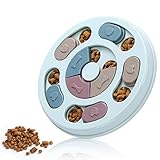
- 【Size】: L9.44" * W9.44"* H1.14" suitable for cats, puppies and small dogs.
- 【Interactive Dog Toys】This is a interactive puppy puzzle , which can easily become the closest companion and toy for your puppies and cats, and will release pressure for dogs. Find food by sliding parts to improve eating pleasure and IQ.
- 【Slow Feed Bowl】This encourages pets to eat at a slower speed, helps to slow down the feeding time to help the dog digest, and can provide your dog with a variety of healthy snacks.
- 【Slow Feede toys】 Use this educational game toy to exercise the dog’s brain, which will help meet the dog’s instinct needs, train the pet’s sense of smell, and let the dog enjoy feeding when using the nose or paw to move the slider, while providing spirit stimulate.
- 【Dog toys】No toy is indestructible. Do not leave toys with unsupervised pets. Remove and replace toy if damaged.
Grooming
Grooming is straightforward but not maintenance-free.
| Task | Practical routine |
|---|---|
| Brushing | About once or twice weekly; brush more often during heavy shedding. |
| Bathing | When dirty or according to veterinary advice for a skin condition. |
| Nails | Check weekly and trim before they click on hard floors or alter the dog’s gait. |
| Teeth | Brush regularly with canine toothpaste; dental chews do not replace veterinary dental care. |
| Ears | Inspect weekly, especially after swimming. Clean only with a product and frequency recommended by a veterinarian. |
| Skin folds | If the dog has Boxer-like facial folds, keep them clean and dry and watch for redness or odor. |
Do not shave the coat to manage shedding or heat. Brushing, environmental cooling, and veterinary care are safer approaches.
Health concerns
There is no comprehensive health profile for Boxer Lab mixes, so risks should be considered from both parent breeds and from the individual dog. A mixed-breed dog is not automatically protected from inherited disease.
Potential concerns include:
- Hip and elbow dysplasia: These orthopedic conditions can cause stiffness, pain, lameness, or reduced willingness to exercise.
- Heart disease: Boxers can be affected by conditions including arrhythmogenic right ventricular cardiomyopathy and aortic or subaortic stenosis. Ask the veterinarian whether a heart evaluation is appropriate.
- Cancer: Boxers have recognized risks for several cancers, including mast cell tumors and lymphoma. Any new lump should be examined rather than watched indefinitely.
- Gastric dilatation-volvulus: A deep-chested, large dog may be at risk of bloat and stomach torsion. A swollen abdomen, repeated unproductive retching, restlessness, pale gums, weakness, or collapse requires immediate emergency care.
- Eye disease: Both parent lines can carry inherited or age-related eye problems.
- Skin and ear disease: Allergies, recurrent ear infections, and irritation may occur.
- Exercise-related problems: Some Labradors carry genetic risks such as exercise-induced collapse, while individual dogs can also suffer injuries from excessive or poorly conditioned activity.
- Obesity: Food drive, neutering, inactivity, and generous treats can quickly add weight.
For a planned litter, ask to see verifiable health records for both parents, including appropriate hip, elbow, eye, and cardiac evaluations and relevant DNA testing recommended for their lines. For an adult rescue, arrange a veterinary examination, establish a weight and fitness plan, and report changes in breathing, stamina, gait, skin, or appetite.
Food and weight control
Feed a complete and balanced diet suitable for the dog’s life stage. Start with the food manufacturer’s guide, then adjust according to body condition, weight trend, activity, and veterinary advice. The dog’s appetite is not a reliable measure of how much it needs.
Recommended Free Tools
Rank #4

- 【PRODUCT SIZE】10 inch*10 inch*1.3 inch.
- 【3 WAYS TO PLAY, UPGRADE SLOW FEEDER】Our dog mental stimulation toys have a unique squeak button in the middle, which make it easier to attract the attention of dogs and cats. Three different difficulty designs and the 16-hole dog treat dispenser design maximize slow feeding time, even beyond 20 minutes.
- 【FUNNY STIMULATING TOYS】All kinds of dogs and cats love the puzzle game of Spin & Slide and the Seek & Hide with their smell sense and paw skills to find food. Combining circular orbit sliding game and linear orbit sliding game, smart dog and cat must move the slider correctly to get the food reward hidden in the maze.
- 【NON-REMOVABLE PARTS DOG PUZZLE】Our dog treat puzzle is made of non-toxic materials, very durable and suitable for pets to play for a long time. This dog toy has no removable parts because the design has built-in play parts that fold tightly and won't fall off easily.
- 【ANTI-SLIP & EASY TO CLEAN】: The four corners of the bottom are equipped with four anti-skid pads, which can be well fixed during the dog's slow food process; It is easy to clean, also dishwasher safe.
Use part of the daily ration for training when possible. Keep treats and extras controlled, and avoid leaving food on counters where a determined dog can reach it. You should be able to feel the ribs under a thin covering of fat and see a waist from above; ask a veterinarian to assess the dog if you are unsure.
Large-breed puppies should grow steadily rather than rapidly. Choose an appropriate puppy diet and discuss portions with a veterinarian. Do not add calcium or joint supplements without professional advice.
Independent reader supportYour contribution helps us test, update, and keep practical guides available for everyone.Living with a Boxer Lab mix
This mix can suit an active household that wants a close, trainable companion and is prepared for a substantial adolescent dog. It may work well for walking, hiking, retrieving, swimming, obedience, and other activities.
It may be a poor fit if:
- The dog will be left alone for most of every day
- No one can provide daily exercise and training
- Jumping, barking, chewing, or muddy paws would be unacceptable during adolescence
- The household cannot safely manage a strong dog on leash
- There are very young children who cannot be supervised around a boisterous dog
- The home cannot provide reliable temperature control in hot or cold weather
Meet the individual dog where possible. For a puppy, observe the parents’ behavior and ask about socialization, health history, return policies, and previous generations. For a rescue, ask specifically about leash pulling, handling, food guarding, separation behavior, dog interactions, escape attempts, and any bite history.
Life expectancy
No dependable lifespan has been established for the Boxer Lab mix. A reasonable planning estimate is often around 10–12 years, but individual dogs may live shorter or longer lives. Genetics, body condition, dental care, preventive medicine, injury prevention, and early treatment of disease all influence longevity.
Best Value

- 【Product Size】10 inch*10 inch*1.2 inch.
- 【Interactive Dog Puzzle Toys 】This is a fun interactive puzzle toy,which can encourage and train your dogs or cats to seek foods by sliding the slider, helping pets to increase IQ by learning sequential steps and the challenging play.
- 【Squeaky Dog Toys】This dog puzzle toys is designed with a sounding device in the middle of the toy,which is to attract the pet's attention.Also,you would enjoy the fun of dog squeak puzzle toy with your pets, greatly improve relations with your pets and get fun during interactive dog games.
- 【Mental Excecise&Boredom Buster】Our memory training puzzle toy can keep smart dogs busy and engaged in more thinking and activities.Therefore,clot stimulation toys are great for reducing dogs’boredom,anxiety and destructive behaviors.
- 【Food-Safe PP Material】This dog treat puzzle is made with toxic-free, food-grade PP material. It is durable for interactive play and mental enrichment but not designed as a chew toy. Always supervise your pet during use.Easily washable with water or in the dishwasher.Note: No toy is indestructible. Remove and replace the toy if damaged.
FAQ
Is a Boxer Lab mix a good family dog?
It can be, especially when raised or assessed carefully and given supervision, exercise, training, and calm-management skills. Its size and exuberant play make supervision essential around young children and smaller pets.
How big will a Boxer Lab mix get?
Many adults are medium-to-large dogs weighing roughly 50–80 pounds and standing about 21–25 inches tall, but there is no official size standard. Parent size and individual genetics can produce dogs outside that estimate.
Are Boxer Lab mixes aggressive?
The cross is not automatically aggressive. Behavior varies with genetics, socialization, training, health, and experience. Some may be protective or wary, so early socialization and responsible management are important.
PC Slower Than It Used to Be?
A free scan shows the junk files, broken settings and background clutter dragging Windows down - then fixes them in one click.Free scan · Windows 10 & 11Outdated Drivers Are Slowing You Down
One free scan finds every outdated or missing driver and matches the right update for your exact hardware.Free scan · exact hardware matchDo Boxer Lab mixes shed?
Yes. Both Boxers and Labradors shed, despite their short coats. Weekly brushing and more frequent brushing during shedding periods can reduce loose hair, but the mix is not hypoallergenic.
Can a Boxer Lab mix live in an apartment?
Possibly, if the dog receives adequate daily exercise, training, enrichment, and opportunities to relax. The apartment itself is less important than the owner’s ability to manage energy, barking, size, and alone time.
Are Boxer Lab mixes easy to train?
Many are responsive to food and play rewards, but adolescent excitement, strength, distractibility, and occasional stubbornness can make training demanding. Consistent, reward-based practice should begin early.
How much exercise does a Boxer Lab mix need?
A healthy adult commonly needs around 60–90 minutes of combined exercise and enrichment on many days, adjusted for age, health, fitness, and weather. Puppies need shorter, lower-impact activities.
Do these 3 things before closing this tab:
1Clear out junk files and repair common Windows errors2Fix the driver behind crashes, sound loss and screen glitches3Repair Windows errors before they cause bigger problemsThe Bottom Line
A Boxer Lab mix is best viewed as an energetic, affectionate mixed-breed dog—not as a predictable standardized breed. Plan for a powerful adolescent, daily physical and mental activity, reward-based training, shedding, careful weight control, and veterinary attention to orthopedic, cardiac, cancer, skin, and bloat risks. The individual dog’s behavior and health history matter more than the “Boxador” label.
Quick Recap
Product prices and availability are accurate as of the date/time indicated and are subject to change. Any price and availability information displayed on Amazon at the time of purchase will apply.




