
What’s actually slowing this PC down?
Pick the symptom - the matching free tool is one click away.
Monarch butterflies provide the clearest answer to the migration question: each autumn, eastern monarchs east of the Rocky Mountains leave Canada and the United States for overwintering forests in central Mexico. Smithsonian conservation biologist Alfonso Alonso reports that the trip takes “two months or more” and covers about 3,000 miles. They cluster in trees from early November through the end of March, then fly north toward the southern United States; their offspring continue the journey into the United States and Canada. Western monarchs follow a different pattern, overwintering at coastal California sites.
That spectacular journey is one species’ strategy, not a template for every butterfly. Butterflies are members of the order Lepidoptera, and their wings are covered with microscopic scales. They include almost 20,000 species worldwide, with strikingly different food plants, life cycles, habitats, and seasonal movements.
As an Amazon Associate I earn from qualifying purchases.
What makes a butterfly a butterfly?
Butterflies and moths belong to Lepidoptera, the insect order whose name refers to scaled wings. The Smithsonian National Museum of Natural History says that the world’s approximately 135,000 moth species and almost 20,000 butterfly species all have tiny scales on their wings. Its Lepidoptera Collection contains more than four million specimens, including butterflies, moths, and skippers.
A butterfly’s wing color can come from pigments, physical or “structural” effects that manipulate light, or a combination of both, according to the Smithsonian’s butterfly reference. Scales can create metallic flashes, ultraviolet patterns visible to other insects, camouflage, or warning colors. Because scales are delicate, touching a wing can remove them; a missing patch does not usually prevent flight, but handling can injure the insect.
#1 Best Overall
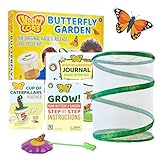
- Explore the Science of Metamorphosis: Bring science to life with a real butterfly metamorphosis experience. Live caterpillars are not included with the kit. Use the included voucher to redeem Painted Lady caterpillars and watch them grow, form chrysalises, and emerge as butterflies. An additional $10.95 redemption fee applies
- Science Kit Kids Can Watch: Give kids a close-up view of one of nature's most fascinating transformations! This hands-on science kit for kids encourages observation, curiosity, and discovery as the butterfly life cycle unfolds
- STEM Learning Through Nature: Explore the butterfly life cycle, growth, development, and metamorphosis through an interactive 3-week project kids can experience at home or in the classroom. A fun way to turn science concepts into hands-on learning kids can see happening in real time
- Raise, Observe, and Release: Includes a reusable butterfly habitat, feeding supplies, instructions, STEM Activity Journal and a voucher for live Painted Lady caterpillars. Additional fee applies for voucher redemption
- Educational Gift for Curious Kids: Make learning an adventure with a memorable science gift for kids who love animals, insects, nature, and discovering how things work. Great for birthdays, holidays, classrooms, homeschooling, or summer learning
Butterflies are generally recognized by their clubbed antennae, slender bodies, and a habit of holding their wings upright when resting, although field identification still depends on species-specific markings and behavior. Many are active in warm daylight, while most moths are nocturnal, but these are useful tendencies rather than absolute rules.
Butterfly food changes with the life stage
Caterpillars specialize in host plants
The caterpillar, or larva, is built primarily for eating and growing. Most caterpillars consume one plant species or several closely related species. A female often selects the plant on which to lay eggs, so the plant choice made before hatching can determine whether her offspring can feed successfully.
This relationship is often highly specific. A plant that attracts adult butterflies may provide nectar but still be useless for their caterpillars if it is not a host plant. Monarchs demonstrate the point: the U.S. Fish & Wildlife Service says healthy, abundant milkweed is needed both for monarch egg-laying and as food for monarch caterpillars.
Adults seek nectar and other foods
After metamorphosis, most adult butterflies use a long, coiled proboscis to drink flower nectar. Nectar supplies carbohydrates for flight, mating, and daily activity. Some adults also feed on rotting fruit, tree sap, or dung, so a garden with only pristine flowers may omit useful food sources.
Rank #2

- Create unforgettable memories and embark on a captivating 3-week project with 10 baby caterpillars, where you'll witness the day-to-day metamorphosis of your very own Painted Lady butterflies!
- Included: 2 cups of caterpillars along with their food, a reusable 12-inch-tall mesh habitat, 2 Chrys-A-Lid holders, a Flower-shaped Feeder, sugar packets for nectar, STEM Activity Journal, Instruction Guide, and dropper.
- Dive into STEM learning with our engaging butterfly journal filled with exciting science, math, and writing activities. Perfect for your budding entomologist to explore the world of butterflies in an interactive way!
- Insect Lore has been trusted by families and educators for over 50 years. Caterpillars are raised on their California farm. Teach an appreciation for nature using live caterpillars from the inventors of the Butterfly Garden!
Adult and larval diets therefore solve different problems. Planting nectar flowers can support flying adults, but a complete habitat also includes the appropriate host plants for eggs and caterpillars. The correct plants depend on the butterfly species and the region.
The four stages of a butterfly’s life
Butterfly development is a complete metamorphosis with four distinct stages. Timing varies by species, temperature, food supply, and season; there is no single schedule that fits all butterflies.
- Egg: The female deposits eggs on or near a suitable host plant. Shape, color, and placement differ among species.
- Caterpillar (larva): The larva eats, grows, and sheds its skin several times. Its job is to acquire the energy needed for transformation and adulthood.
- Pupa: Inside the pupa, the insect’s tissues are reorganized into the adult form. A butterfly pupa is usually called a chrysalis.
- Adult: The winged butterfly emerges, expands and dries its wings, feeds, mates, and—if female—lays the next generation of eggs.
A chrysalis is not a resting shell with a miniature adult waiting unchanged inside. It is an active transformation stage. Likewise, a caterpillar is not a “baby butterfly” in appearance or diet: it has a different body plan and usually eats different foods.
Why butterflies matter in ecosystems
They can move pollen between flowers
When a butterfly visits flowers for nectar, pollen can stick to its body and be carried to another flower. The Smithsonian describes butterflies as important to plants that depend on visiting insects for cross-pollination. This is a qualified ecological contribution: butterflies pollinate some plants, but they are not the main pollinators everywhere, and they do not pollinate every crop.
Rank #3

- CREATE A REAL BUTTERFLY HABITAT - Build the perfect butterfly habitat in the included mesh enclosure with see-through lid! Kids can decorate the feeder with the included stickers, and get ready to watch one of nature's most exciting metamorphoses!
- INCLUDES VOUCHER FOR 5 CATERPILLARS – With this kit you’ll receive a voucher for 5 baby caterpillars (S&H applies, caterpillars can be sent to mainland USA ONLY).
- WATCH CATERPILLARS GROW INTO BEAUTIFUL BUTTERFLIES - See nature in action as the caterpillars grow and eventually encase themselves into their chrysalises. They’ll develop inside until finally emerging as beautiful Painted Lady butterflies!
- LEARN ABOUT BUTTERFLIES - With National Geographic, learning is always part of the fun! The full-color Learning Guide in this kit teaches kids all about the butterfly life cycle, with a poster for documenting their own caterpillars' progress!
- HIGH-QUALITY EDUCATIONAL TOYS - We're proud to make the highest quality hands-on science toys, and all our products are backed by exceptional service. If your experience is less than stellar, let us know and we'll make things right!
They connect plants and animals in the food web
Caterpillars convert plant matter into prey for birds, insects, spiders, and other animals. Adults are also eaten by predators. Because butterflies respond to temperature, rainfall, plant availability, and habitat structure, their presence can reflect local environmental conditions, although a single sighting is not a complete measure of ecosystem health.
They reveal the importance of plant diversity
A landscape can have many flowers yet support few caterpillars if it lacks the host plants that females need. Maintaining native plant diversity helps provide both larval food and adult nectar, while leaving some less-tidy vegetation can preserve eggs, chrysalises, and overwintering shelter.
Monarch migration: the documented route and seasons
Eastern monarchs travel to central Mexico
According to Alfonso Alonso in a Smithsonian interview, “Each fall, monarch butterflies east of the Rocky Mountains migrate from Canada and the United States to Mexico. They take two months or more to travel 3,000 miles and reach their overwintering location in central Mexico.” These butterflies spend most of their stay clustered in mountain forests from early November to the end of March.
Recommended Free Tools
The northward return is not a single round trip completed by one butterfly. The overwintering adults begin moving toward the southern United States in spring, and their offspring continue reproducing and flying north. Several generations can therefore be involved in reaching the northern part of the breeding range.
Rank #4

- GROW BUTTERFLIES & LEARN WITH HANDS-ON ACTIVITIES - Build the perfect butterfly habitat in the included mesh enclosure with see-through lid! Kids also get 3 glow-in-the-dark butterfly figures, a butterfly molding activity and more!
- AWARD-WINNING PRODUCTS - Blue Marble, winner of the Toy Association's prestigious Toy of the Year Award, proudly develops products that foster education, imagination, and creativity, with a U.S. support team to ensure a stellar experience!
Western monarchs use coastal California sites
Western monarchs have a different overwintering destination: coastal California. The U.S. Fish & Wildlife Service distinguishes this population from the eastern population that reaches central Mexico. Its species page, updated September 21, 2026, describes thousands of monarchs clustering at California sites and millions in Mexico. Those descriptions convey the broad scale of the gatherings, not a new standardized population count.
| Population | Migration or overwintering destination | Overwintering setting | 2015 assessment category |
|---|---|---|---|
| Eastern North American monarch | Central Mexico after traveling from Canada and the United States east of the Rocky Mountains | Mountain forests, where adults cluster mainly from early November through the end of March | Critically imperiled in the 2015 NatureServe assessment summarized by the Xerces Society |
| Western North American monarch | Coastal California sites | Coastal overwintering sites | Vulnerable to imperiled in the 2015 NatureServe assessment summarized by the Xerces Society |
Migration is not a universal butterfly behavior. Some species remain in one locality when conditions allow; others shift seasonally over shorter distances. Monarchs are a well-documented example of long-distance movement, not a model for every species.
Independent reader supportYour contribution helps us test, update, and keep practical guides available for everyone.What conservation evidence says—and what it does not
The Xerces Society’s summary of a NatureServe assessment prepared for the U.S. Forest Service reported in 2015 that the North American monarch subspecies was vulnerable to extinction overall. In that assessment, the eastern population was classified as critically imperiled, while the western population ranged from vulnerable to imperiled. These are findings from that dated report, not a substitute for a current legal or scientific status determination.
Do these 3 things before closing this tab:
1Clear out junk files and repair common Windows errors2Scan for outdated or missing drivers - takes under a minute3Repair Windows errors before they cause bigger problemsThe U.S. Fish & Wildlife Service reports that monarch numbers in North America have declined over the past two decades and describes cooperative conservation efforts. Eastern and western populations should not be collapsed into one trend: they use different overwintering regions and face different local conditions. Current regulations, listings, and population estimates can change, so consult the agency’s Save the Monarch page and its Monarch species page for the latest federal information.
Best Value

- Create unforgettable memories with this Insect Lore Butterfly Garden Kit with Live Caterpillars. Embark on a captivating 3-week project where you'll witness the day-to-day metamorphosis of your very own Painted Lady butterflies!
- Included: 5 baby caterpillars along with their food, a reusable 12-inch-tall mesh habitat, Chrys-a-lid Holding Log, Activity Journal, Flower-shaped Butterfly Feeder, sugar packets for butterfly nectar, Caterpillar Care Guide, and a feeding dropper.
- Insect Lore has been trusted by families and educators for over 50 years. Their caterpillars are proudly raised in the USA on their California farm. Teach an appreciation for nature using live caterpillars from the original source.
- The durable mesh habitat is reusable, and designed for effortless use, collapsing flat for convenient storage and reassembly. This live caterpillar kit provides a fun and engaging way to teach your little ones about nature using high quality materials and clear instructions!
- Live insect shipping notice - Please delay ordering if temperatures in your area are below 50°F or above 90°F. Live caterpillars can only be shipped to the continental U.S
How to make a useful butterfly habitat
Habitat work is most effective when it supports the species that actually occur in your area. A generic “butterfly mix” is not automatically suitable nationwide, and a plant labeled as attractive to adults may not feed local caterpillars.
- Identify local species and conditions. Check regional natural-history groups, extension services, or native-plant references for species found in your area, soil, moisture, and light requirements.
- Add locally appropriate host plants. For monarchs, that means native milkweed suited to the region. Other butterflies may require entirely different plant genera.
- Provide a sequence of nectar flowers. Choose native plants that bloom at different times so adults can find food throughout the season. Smithsonian Gardens specifically highlights native plants flowering in September and October for migrating monarchs.
- Avoid unnecessary herbicides. Herbicide use can remove host plants and flowering resources. Smithsonian Gardens recommends avoiding herbicides when cultivating butterfly habitat.
- Leave some shelter undisturbed. Eggs, pupae, and adults may use leaf litter, stems, bark, or dense vegetation. Over-cleaning can remove these microhabitats.
- Manage expectations. Habitat may support butterflies without producing an immediate swarm. Weather, predators, disease, and regional population changes all affect sightings.
“Native” is a regional term, not a universal label. A milkweed native to one state can be inappropriate or invasive elsewhere, so match seed and plant choices to local guidance. If you buy native milkweed seeds, verify the species’ native range, provenance, and growing requirements before planting.
Butterfly watching without harming the insects
Observe from a short distance and use binoculars or a camera rather than catching adults. Photographing the underside of a wing, the host plant, and the surrounding habitat can make identification easier. Record the date, location, weather, and plant visited; these details are more useful than a name alone when reporting a sighting.
Outdated Drivers Are Slowing You Down
One free scan finds every outdated or missing driver and matches the right update for your exact hardware.Free scan · exact hardware matchPC Slower Than It Used to Be?
A free scan shows the junk files, broken settings and background clutter dragging Windows down - then fixes them in one click.Free scan · Windows 10 & 11Do not collect eggs, caterpillars, chrysalises, or adults from the wild unless you have the permits and expertise required in your jurisdiction. Avoid disturbing monarch clusters and other overwintering gatherings, where repeated handling or trampling can impose stress on concentrated insects.
Common misconceptions to avoid
- “All butterflies migrate like monarchs.” Migration patterns vary widely, and many species do not make a 3,000-mile seasonal journey.
- “Any flowering garden feeds the whole life cycle.” Nectar helps adults, but caterpillars need their specific host plants.
- “Butterflies are the main pollinators of all food plants.” They contribute to cross-pollination for some plants; pollination roles differ by plant and ecosystem.
- “A conservation category from 2015 is today’s definitive status.” Historical assessments need their date and source, while current agency decisions may change.
- “Touching a wing is harmless.” Wing scales are fragile, and handling can damage the insect.
Where to learn more
The Smithsonian’s overviews of butterfly biology and butterflies and beyond explain scales, coloration, feeding, and collections. Its account of monarchs in Smithsonian gardens provides practical habitat context. For gardening details, see Smithsonian Gardens’ butterfly guidance. The Xerces Society’s 2015 conservation-status summary gives the dated NatureServe assessment and its separate eastern and western categories.
Quick Recap
Product prices and availability are accurate as of the date/time indicated and are subject to change. Any price and availability information displayed on Amazon at the time of purchase will apply.





Leave a Reply