
Free tools Windows power users keep installed
One-click scans. No signup required.
Some links on this page are affiliate links: if you buy through them we may earn a commission, at no extra cost to you.
Sometimes—but not automatically. In the United States, an ordinary pet may be subject to a condominium’s declaration, bylaws, house rules and applicable state or local law. A dog that qualifies as a service animal under the Americans with Disabilities Act (ADA), or as an assistance animal under the Fair Housing Act (FHA), is treated differently. A condo generally must consider a disability-related reasonable-accommodation request instead of applying an ordinary-pet or carrier rule without analysis.
The key questions are what the governing documents say, what type of animal is involved, what concrete safety or sanitation problem the rule addresses, and whether a less restrictive accommodation would solve that problem.
As an Amazon Associate I earn from qualifying purchases.
Start with the animal’s legal category
“Service dog,” “assistance animal,” “emotional-support animal” and “pet” are not interchangeable legal terms. The classification determines which protections may apply, although state and local laws can add protections beyond federal law.
| Animal or situation | Federal definition or treatment | Likely condo-rule consequence |
|---|---|---|
| Ordinary pet | No federal housing rule creates a universal right to use a condo elevator with a pet. | The association may regulate or prohibit the animal if its governing documents and applicable law authorize the rule. |
| ADA service dog | The Department of Justice defines a service animal as a dog individually trained to do work or perform tasks directly related to a person’s disability. Comfort alone does not qualify under the ADA. | A no-pets rule cannot simply be applied to a qualifying service dog without considering the laws that protect the resident and the setting. |
| FHA assistance animal | HUD defines an assistance animal as an animal that works, provides assistance, performs disability-related tasks, or provides emotional support that alleviates one or more identified effects of a disability. HUD says an assistance animal is not a pet. | A resident may request a reasonable accommodation to use common areas, including an elevator, when the animal is needed because of a disability. |
An animal can therefore be protected under the FHA even when it does not meet the narrower ADA service-animal definition. A dog that provides disability-related emotional support may fall in that broader housing category, while a dog whose only role is companionship generally remains an ordinary pet.
Popular on Amazon

- AIRLINE APPROVED CARRIER - With airline-approved design, you can take your pet to go to everywhere. This pet carrier provides two connecting loop handles for balanced carrying as a dual seat belt or luggage strap to secure transport
- SAFETY DESIGN - The adjustable shoulder strap help you hands-free carrying and makes it more safe and convenient pet carrier bag for your travel
- DURABLE - This cat carrier is made of durable and lightweight polyester fabric. The four-side mesh will not only give a safe and comfortable travel for your pet, but also easy for you to check on your pet
- PORTABLE & FOLDABLE - This dog carrier is easy to carry and store, which has a padded shoulder strap and handles
- BOTH SIZES AND WEIGHTS - The mediun cat carrier is designed for small and medium pets within 15" x 9" x 9"(smaller than product) and 15 lbs. Please do not choose your carrier only based on weight. Reference your pets' length and height in selecting a carrier size.If carried on board, the maximum dimensions should not exceed 18IN*11IN*11IN.
What documents give a condo authority to restrict dogs?
Declaration and bylaws
The declaration and bylaws are the condominium’s foundational documents. They may define “pet,” limit the number or size of animals, prohibit animals entirely, require leashes, or authorize the board to adopt operational rules. Read the exact language, including definitions, enforcement powers and amendment procedures. A rule adopted by a board cannot exceed authority granted by the declaration, bylaws or applicable statute.
House rules and posted elevator policies
House rules often address conduct in shared spaces: leash control, waste cleanup, noise, aggressive behavior, elevator etiquette or use of carriers. Obtain the current written rule rather than relying on a notice posted temporarily in a lobby. Check whether the rule applies to all common areas, only certain elevators, or only animals that are not assistance animals.
State and local law
Condominium statutes, municipal health codes and state disability or fair-housing laws may affect the association’s authority. They can impose procedural requirements, define assistance animals differently, or provide remedies and filing deadlines. A rule that appears valid under the documents still must comply with controlling law.
Does a no-pets rule apply to a service dog?
Not automatically. Under the ADA, a service animal is a dog individually trained to perform work or tasks directly related to a person’s disability. Examples include guiding a person who is blind, alerting a person to certain medical events, retrieving items or interrupting a disability-related behavior. A dog’s calming presence, without a disability-related task, does not satisfy the ADA definition by itself.
Housing rights are broader under the FHA. HUD’s definition of an assistance animal includes disability-related emotional support, not just trained tasks. When a resident asks to keep or use an assistance animal in a condominium, the association must evaluate a reasonable-accommodation request. It should not treat the request as an ordinary pet application merely because the animal is not an ADA service dog.
Also popular on Amazon

- High Quality Design:Sturdy steel cage structure and wooden support board maintain good spatial stability and shape. Breathable mesh windows on four sides,which can ensure good air circulation and views,make pets have a comfortable and safe travel.It can also be easy for you to check on your pets.There is a front pocket to store pet toys,treats,etc.
- Dimension and Weight:Made of durable tear-resistant fabric.Four easy entrances for pets. Dimensions: 17 inch x 11 inch x 11 inch (L*W*H), suitable for pets up to 16 lbs.Please don't choose your carrier based on weight only,consider your pet's length and height when choosing a carrier.
- Airline Approved & Safty:Can be placed under the seats of most airplanes(Four non-slip feet on the bottom to prevent movement), and comfortably on the seat next to you in a car or bus.It has a adjustable shoulder strap.Can also be fastened to the car seat with a safety belt or shoulder strap to keep your pet safe.
- Easy to Clean :You can clean the stains and dirt on the surface with a soft cloth.Soft mat inside the pet carrier is removable and washable.You can take it out and wash it easily to solve all stains.
- Easy to Collapsible & Lightweight:When not in use,fold it into a flat,space saving and easy to store.Only 2.2lbs,it's easier to carry around.It can also used as a toy of pet house,allowing pets to play in a safe space to relax and rest.
The resident may still have to show that the animal is needed because of a disability when that need is not obvious. HUD allows housing providers to request reliable disability-related information in that circumstance, but the request should be limited to information needed to establish the disability-related need. It is not a license to demand a resident’s complete medical file or a particular certification document when the law does not require one.
Can an elevator rule violate fair-housing rights?
The FHA’s reasonable-accommodation protections concern equal use and enjoyment of a dwelling, including common-use spaces. An elevator is ordinarily a shared route to a resident’s home, so a rule that blocks an assistance animal from the elevator can interfere with that equal access. The association must consider whether an accommodation is necessary and reasonable rather than applying a pet restriction mechanically.
That does not make every elevator rule unlawful. A neutral rule requiring an animal to be under control, preventing contact with other residents, or requiring prompt cleanup can address genuine safety or sanitation concerns. The legal question is whether the specific restriction, as applied to the individual and animal, is necessary and supported by evidence, and whether a less restrictive alternative would address the concern.
HUD’s New Jersey enforcement example
In a 2018 New Jersey condominium matter, HUD reported that an association allegedly refused to waive a requirement that residents transport pets in carriers in common areas and imposed a $100 fine when a resident walked the animal through the development’s common areas. HUD Assistant Secretary for Fair Housing and Equal Opportunity Anna María Farías said: “Subjecting someone to different residency requirements because they use an assistance animal prevents that person from fully enjoying their home and is against the law.”
The matter does not establish that every carrier rule is illegal. It illustrates why a board must analyze an assistance-animal request and the resident’s actual need instead of automatically applying an ordinary-pet rule.
Quick wins for a faster PC:
Scan for outdated or missing drivers - takes under a minuteDriver Scan →Clear out junk files and repair common Windows errorsFree Scan →Also popular on Amazon

- Premium Materials And Design: Experience ultimate comfort and durability with the TOMKAS puppy carrier. Our high-quality selected fabric is thick, soft, and ensures safety for your furry friend. The bag's large opening and adjustable safety belt makes it easy to use, and tough sutures prevent cracks. It's perfect for chihuahua and Yorkshire accessories.
- Sufficient Safety: Your pet's safety is our top priority. The TOMKAS small dog carrier sling has a secure safety buckle that keeps your dog safe and in place. Our carrier provides reliable safety and comfort that you and your pet will love. Remember to never tie the safety buckle to the collar, as it could hurt your dog's neck if it attempts to jump out.
- Large-Capacity Zippered Pockets: Stay organized with TOMKAS's front zippered pocket that can store all of your essentials, such as your phone, keys, cards, wallet, and dog leash. Our reliable carrier is designed with your convenience in mind. Unlike other dog slings without zippered pockets, our pocket keeps your belongings secure throughout use.
- Convenient Enough: Take your furry friend anywhere you go with the TOMKAS dog purse carrier. It's comfortable and convenient for walking, outings, and traveling. Our carrier is especially useful for dogs that are old, blind, injured, or have undergone surgery. You can keep them close and comfortable in our carrier, providing the care they need to get through any difficulty.
- Size: The TOMKAS dog carry bag is best suited for pets weighing between 3-10 lbs, with a high capacity of 10 lbs. Our adjustable shoulder strap includes a sturdy plastic buckle for easy length adjustments. The TOMKAS dog sling's shoulder strap adjustment buckle is larger and stronger than other similar products, making it easy to use for both adults and children.
Can a condo require you to carry your dog?
For an ordinary pet, a carrier requirement may be enforceable when it is authorized by the governing documents or a valid house rule and is consistent with state and local law. The rule may be inconvenient, but inconvenience alone does not create a federal exception for an ordinary pet.
For an assistance animal, the analysis changes. Ask the board to explain the specific safety, sanitation or property concern and why a carrier is necessary. If carrying the dog is not feasible because of the resident’s disability, propose alternatives such as a short leash, a secure harness, riding at less busy times, using a designated elevator, maintaining distance from other occupants, or cleaning any accident immediately. The board should assess whether one of those measures provides equal access without imposing the carrier requirement.
An animal that is out of control or not housebroken can be removed from a particular setting under ADA regulations. The FHA also recognizes limits where an accommodation would create an undue financial or administrative burden, fundamentally alter the housing provider’s operations, create a direct threat that cannot be reduced by another accommodation, or cause significant physical damage. Those limits require an individualized, evidence-based assessment; fear, stereotypes or generalized dislike of dogs are not substitutes for evidence.
How to request an elevator accommodation
- Collect the governing documents. Obtain the declaration, bylaws, current house rules, elevator notices and any enforcement policy. Save the version in effect when the dispute occurred.
- Identify the animal’s role. State whether the dog is an ordinary pet, an ADA service dog trained for disability-related tasks, or an FHA assistance animal. Do not describe a pet as a service animal merely to avoid a rule.
- Submit the request in writing. Address the board or managing agent and ask for a reasonable accommodation to use the elevator with the animal. Explain the disability-related need when it is not apparent, while disclosing only reliable information relevant to that need.
- Describe workable safeguards. Offer concrete measures: leash or harness control, distance from other residents, immediate cleanup, a specific elevator, or scheduling at quieter times. Explain why a carrier is impossible or unnecessary if that is the issue.
- Ask for a written response. Request the board’s decision, the rule it relies on, the evidence supporting any safety claim, and the reasons proposed alternatives would not work.
- Preserve the record. Keep the request, supporting information, notices, fines, photographs, incident reports, emails and meeting minutes. Record dates and names of decision-makers.
Use a neutral, factual tone. The request is about equal access and a workable rule, not about winning an argument over labels.
What’s actually slowing this PC down?
Pick the symptom - the matching free tool is one click away.
How a board should evaluate the request
1. Confirm authority
The board should identify the declaration, bylaw, house rule or statute that authorizes the restriction. It should verify that the rule is applied consistently and that the board followed required notice and hearing procedures.
Also popular on Amazon

- High Quality Design:Sturdy steel cage structure and wooden support board maintain good spatial stability and shape. Breathable mesh windows on four sides,which can ensure good air circulation and views,make pets have a comfortable and safe travel.It can also be easy for you to check on your pets.There is a front pocket to store pet toys,treats,etc.
- Dimension and Weight:Made of durable tear-resistant fabric.Four easy entrances for pets. Dimensions: 17 inch x 11 inch x 11 inch (L*W*H), suitable for pets up to 16 lbs.Please don't choose your carrier based on weight only,consider your pet's length and height when choosing a carrier.
- Airline Approved & Safty:Can be placed under the seats of most airplanes(Four non-slip feet on the bottom to prevent movement), and comfortably on the seat next to you in a car or bus.It has a adjustable shoulder strap.Can also be fastened to the car seat with a safety belt or shoulder strap to keep your pet safe.
- Easy to Clean :You can clean the stains and dirt on the surface with a soft cloth.Soft mat inside the pet carrier is removable and washable.You can take it out and wash it easily to solve all stains.
- Easy to Collapsible & Lightweight:When not in use,fold it into a flat,space saving and easy to store.Only 2.2lbs,it's easier to carry around.It can also used as a toy of pet house,allowing pets to play in a safe space to relax and rest.
2. Separate pet rules from accommodation analysis
A board may enforce ordinary-pet restrictions, but it must separately analyze a disability-related request. Calling an assistance animal a “pet” does not end the inquiry, and waiving a rule for one resident does not necessarily require waiving every unrelated rule.
3. Identify the actual problem
Ask whether the concern is an identifiable incident—such as lunging, biting, repeated soiling, uncontrolled barking or property damage—or a generalized concern. Evidence can include dated incident reports, photographs, repair invoices or credible witness accounts. A board should not rely solely on speculation.
4. Test less restrictive options
Consider whether supervision, a leash, a harness, distance, a different elevator, cleaning obligations or another condition would reduce the risk. A complete ban is harder to justify when a practical alternative provides equal access.
Recommended Free Tools
5. Apply limits carefully
HUD identifies undue financial or administrative burden, fundamental alteration, an unmitigated direct threat and significant physical damage as potential limits on an accommodation. The analysis must be individualized and based on current facts. An association cannot reject a request simply because accommodating it is less convenient than enforcing the ordinary rule.
Independent reader supportYour contribution helps us test, update, and keep practical guides available for everyone.Policy choices compared
| Policy approach | Ordinary pet | Assistance animal | Questions the board should ask |
|---|---|---|---|
| Complete elevator ban | May be permitted if authorized by governing documents and law. | Requires individualized reasonable-accommodation analysis; automatic application is risky. | How will the resident reach the home equally, and is a less restrictive route available? |
| Carrier required for every dog | May be enforceable under a valid rule. | May need to be waived or modified when carrying is not feasible and another safeguard works. | What documented risk requires a carrier rather than control by leash or harness? |
| Leash, control and cleanup requirements | Generally compatible with ordinary pet regulation. | Often a less restrictive condition if applied reasonably and without unequal treatment. | Are the requirements clear, practical and tied to actual conduct? |
| Removal after dangerous conduct | May be authorized by documents or law. | May be justified for an animal that is out of control, not housebroken, presents an unmitigated direct threat or causes significant damage, subject to applicable law. | What evidence shows the problem, and can another accommodation reduce it? |
What to do if the board issues a fine or denial
Read the notice for the stated rule, amount, deadline and appeal procedure. Ask for the hearing or reconsideration process in the bylaws and for the board’s written accommodation decision. Continue following reasonable safety and cleanup requirements while the issue is reviewed, but do not sign a statement that inaccurately characterizes an assistance animal as an ordinary pet.
Also popular on Amazon
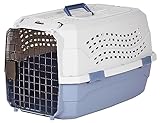
- Hard sided pet carrier with 2 doors for front and top entry; suitable for cat or medium size dog weighing 12 - 20 pounds
- Durable plastic construction with steel wire doors; screws keep the top and bottom sections securely connected
- Spring load latches ensure easy one-handed door opening and closing; top door swings open to the left or right and includes a top carry handle
- Plenty of air ventilation on the sides, top, and back of the carrier
- Note: Be sure to measure the size of the pet when choosing carrier size
If internal review fails, contact a fair-housing agency, a state or local civil-rights office, or a lawyer who handles condominium and disability-housing matters in the relevant state. Agencies and courts may have filing deadlines, so preserve the complete chronology. A $100 fine, a threatened lien or a denial of elevator access can have different legal consequences depending on the documents and jurisdiction.
Questions owners commonly ask
Can my condo ban my dog from the elevator?
It may restrict an ordinary pet if its governing documents and applicable law authorize the rule. If the dog is an assistance animal needed because of a disability, the association must consider a reasonable accommodation instead of applying the ban automatically.
Does a no-pets rule apply to an emotional-support dog?
A disability-related emotional-support animal can qualify as an FHA assistance animal even though comfort alone does not meet the ADA service-animal definition. Submit a written accommodation request and provide reliable disability-related information when the need is not apparent.
Do I have to use a carrier?
That depends on the valid rule and the animal’s legal status. A carrier requirement may apply to an ordinary pet. For an assistance animal, ask whether leash control, a harness, distance or another measure would address the documented concern without preventing equal elevator access.
Can the board demand a service-dog certificate?
Federal law does not make a particular certificate the test for every housing request. The board may seek reliable information when the disability-related need is not obvious, but it should request only information relevant to that need and apply the correct ADA or FHA standard.
What if another resident says they are afraid of dogs?
A generalized fear does not by itself establish a direct threat. The board should evaluate the individual animal’s conduct and whether practical controls can protect other residents.





Leave a Reply