
Short answer: Tumors near or encasing microchips have been reported in a very small number of dogs and cats, but the reports are extremely rare and a cause-and-effect relationship has not been established. The American Veterinary Medical Association (AVMA) describes microchips as having an excellent safety record.
If your pet develops swelling, drainage, or a lump near an implantation site, have a veterinarian examine it promptly. Location alone cannot tell you whether a lump is cancer, a minor reaction, an infection, or something unrelated to the chip.
As an Amazon Associate I earn from qualifying purchases.
What the evidence actually shows
The AVMA’s pet-owner information is careful rather than categorical. It acknowledges reports of tumors close to, or surrounding, implanted microchips in a very small number of dogs and cats. It also states that a cause-and-effect relationship has not been established in dogs and cats.
That means the reports are signals that deserve attention, not proof that the devices caused the tumors.
The wording matters because the available material does not provide a numerical incidence rate. “Very small number” and “extremely rare” are qualitative descriptions, not a percentage that can be applied to every implanted pet. It would be inaccurate to convert them into a risk figure or to promise that a chip can never be associated with a tumor.
#1 Best Overall

- 【Support Multipe Microchip Formats】Universal microchip scanner supports EMID / ISO11784 / ISO11785 / FDX-B(15 digit microchips). Please note, the microchip reader CAN NOT read Avid chips, and the 9-digit ID can not be recognized. Only the 15-digit international standard protocol can be recognized. Please check the format of the microchip before purchasing.
- 【Easy To Operate & Fast Scan】Our pet microchip scanner is easy to operate, one button to read. Our microchip scanner adopt advanced RFID technology, responsive and fast scanning, it can better improve the efficiency of work. Please note, if no label is scanned, the device will automatically turn off after 180 seconds, or you can press and hold the button for 3 seconds to turn off the device.
- 【 Large Data Storage】Our pet microchip scanner can save 128 animal chips. It can be transferred to a computer or mobile phone via a USB cable connection. Our pet chip scanner also features a data-erase function, refer to the user manual for instructions.
- 【Rechargeable Battery】Our pet chip scanner supports USB charging, eliminating the need for frequent battery replacements, it can last for more than one year after being fully charged.
- 【Easy To Carry】Our scanners are lightweight and compact, making them easy to carry and ideal for both indoor and outdoor use. The package includes one scanner, a USB cable, and a user manual.
The evidence summarized here concerns dogs and cats. It does not establish a cancer rate for every species in which identification chips might be used. For an individual animal, the relevant question is not whether a chip is generally safe, but what a veterinarian finds when examining that animal’s particular lump or skin change.
Why laboratory-rodent reports do not prove a risk in pets
Studies in laboratory mice and rats have reported tumors near implanted microchips. Those findings are part of the reason owners ask about cancer, but they cannot be transferred directly to household dogs and cats.
The AVMA notes two important limitations. Many of the rodents in those reports were already being used in cancer research, and some belonged to strains known to be predisposed to tumors. In such populations, an underlying tendency to develop cancer can make a tumor near an implant more likely to be observed, without demonstrating that the implant initiated it.
Quick wins for a faster PC:
Repair Windows errors before they cause bigger problemsFix Now →Scan for outdated or missing drivers - takes under a minuteDriver Scan →Species, genetics, age, immune function, study design, and the reason an animal was housed in a laboratory all affect how a finding should be interpreted. Rodent observations therefore warrant continued scientific attention, but they do not establish that routine microchipping causes cancer in dogs or cats.
Rank #2

- [Support Multiple Protocols] - Support ISO11784(85)/FDX-B/EMID 10/15 digit microchips.Microchips in other formats cannot be read. Please confirm whether your microchip is compatible before purchasing.(Does not read AVID microchip).
- [Improved Recognition Performance] - Faster recognition speed and larger recognition range than older scanners. Upgraded the sensitivity of the scanner. It can better improve the efficiency of work.
- [Battery Performance Improvement] - Use high-capacity built-in lithium battery. With more battery capacity and faster charging speed. Greatly improved recognition range and sensitivity. Improved work efficiency.
- [Built-in Hardware Has Veen Fully Upgraded] - It uses the latest technology scanning chip compared to older scanners. Now the energy consumption is greatly reduced and the performance is greatly improved.
- [Data storage] - Storage capacity is equal to 128 sets of data.USB upload to computer.
What a microchip is—and what it cannot do
A pet microchip is an identification device, not a monitoring or medical implant. A compatible scanner sends a radio signal that activates the chip and reads its unique identification number. The chip has no internal power source.
- It is not GPS: the chip cannot show a pet’s live location or provide a map of where the animal has traveled.
- It is not a cancer screen: scanning returns an identification number, not information about tumors or other diseases.
- It is not a diagnostic tool: a scanner cannot determine why a lump formed or whether tissue is malignant.
- It is intended for identification: the number is useful only when it is linked to accurate owner contact details in a registry.
Because the device is designed for identification, a scan that successfully reads the number says nothing about the health of the surrounding tissue. Conversely, a lump at the site does not prove that the chip caused it.
Reported complications besides tumors
The AVMA characterizes the overall safety record as excellent and complications as uncommon. Migration is the most frequently reported problem. A chip can move from its original implantation position, usually without affecting the pet’s health, but migration can make the device harder to find if someone scans only one small area instead of performing a complete scan.
Do these 3 things before closing this tab:
1Fix the driver behind crashes, sound loss and screen glitches2Repair Windows errors before they cause bigger problems3Scan for outdated or missing drivers - takes under a minuteOther uncommon reports include chip failure, hair loss, infection, and swelling. These problems have different causes and implications, so they cannot be treated as interchangeable with a tumor report.
Rank #3

- ❤ Supports Multiple Protocols – Compatible with ISO 11784/11785, FDX-B microchips for seamless reading with one-button operation. Does NOT support FDX-A or AVID chips. The 9-digit ID CANNOT be recognized. Only the 15-digit international standard protocol can be recognized.
- ❤ Efficient Data Management – Built-in storage holds up to 128 tags, eliminating redundant scanning and improving efficiency. The USB transfer feature allows seamless data upload to computers or mobile devices for backup, analysis, and sharing, making it ideal for pet owners, farms, and research institutions.
- ❤ Portable & Durable Design – Lightweight and easy to carry, suitable for both indoor and outdoor use. The robust casing provides strong impact resistance, ensuring stable performance in farms, field research, and rescue operations, even in harsh conditions.
- ❤ Built-in Rechargeable Battery – Eliminates the need for frequent battery replacements, with USB charging for convenience. Includes an auto-shutdown function after 180 seconds of inactivity or manual shutdown with a 3-second press.
- ❤ Support turn on/off the pet reader prompt sound. The pet reader is equipped with a speaker, when you scan successfully, the pet reader will "di" to indicate that the scan is successful. If your pet is afraid of the sound of the card reader, please check the instructions in the package and follow the instructions to turn off the sound.
| Finding or issue | What the AVMA information indicates | What an owner should do |
|---|---|---|
| Migration | Most frequently reported complication; usually does not affect health, but can make the chip harder to locate. | Tell the scanner operator that the chip may have migrated and request a complete scan. |
| Chip failure | Uncommon report; a scanner may not read the identification number. | Ask a veterinary clinic or shelter to confirm the result with a compatible scanner and discuss identification alternatives if needed. |
| Hair loss | Uncommon local problem reported near an implantation site. | Arrange veterinary assessment if it persists, spreads, or is accompanied by skin irritation. |
| Swelling or drainage | Uncommon reports; drainage or swelling can indicate a local problem that needs assessment. | Contact a veterinarian promptly rather than waiting for the lump to resolve on its own. |
| Lump near the chip | A tumor has been reported in an extremely small number of pets, but location does not establish the cause. | Have the veterinarian examine the individual pet and decide whether any further evaluation is appropriate. |
Your action plan if you find a lump
Do not try to diagnose a mass by feeling it or by assuming that its position proves a connection to the chip. Use the following sequence to get a useful answer without delaying care.
- Look at the site once and note changes. Record when you first noticed the lump, whether it is growing, and whether the skin is red, open, painful, or producing fluid. Avoid repeatedly squeezing or manipulating it.
- Contact your veterinary practice promptly. The AVMA specifically advises contacting a veterinarian when an owner notices an implantation-site abnormality such as swelling or drainage. Tell the clinic that the pet has a microchip and where the change is located.
- Bring identification and medical information. Provide the chip number if you have it, the implantation date if known, and any recent vaccination or procedure records. This helps the veterinarian distinguish a chip site from other injection or injury sites.
- Let the veterinarian assess the tissue. A professional can examine the skin and underlying area, check the chip’s position and function, and determine whether observation or additional evaluation is warranted. The AVMA does not prescribe a single diagnostic protocol for every lump.
- Follow the recommended recheck. If the veterinarian advises monitoring, ask what change should trigger an earlier appointment and how the site should be protected while it heals.
A pet can have a benign swelling, an infection, scar tissue, a reaction unrelated to the chip, or a tumor. Only an individual veterinary assessment can sort among those possibilities.
How implantation and scanning affect safety
The AVMA advises that implantation be performed by, or under the supervision of, a veterinarian. Correct placement and depth matter for reliable identification and for recognizing complications. Veterinary supervision also gives the professional an opportunity to select an appropriate site, use proper technique, and respond if the area heals abnormally.
Recommended Free Tools
At routine visits, owners can ask the clinic to scan the chip and confirm that the number matches their registry record. A complete scan is particularly useful when a pet has a history of migration or when a shelter, clinic, or animal-control worker cannot find the device at the expected location.
Rank #4

- Stores lost pets chip numbers
- Alerts the user that a pet is missing
- Rechargeable by plugging into a pc
- Reads most microchips in pets, dogs, cats
Microchips, collars, and tags: identification choices
A chip and an external tag serve the same broad purpose—helping identify a lost pet—but they work differently. The AVMA notes that a chip provides permanent identification that cannot be lost or removed in the way a collar or tag can. That permanence does not make a chip a medical treatment, and neither a collar nor a chip changes cancer risk.
| Identification method | Main strength | Main limitation |
|---|---|---|
| Microchip | Permanent identification under the skin; readable with a compatible scanner. | Requires a scanner and a registry record; it is not visible to a finder and is not GPS. |
| Collar and tag | Visible immediately to anyone who finds the pet; no scanner required. | Can be lost, removed, or become unreadable. |
Using both forms of identification can make reunification easier, but owners should not choose between them based on an assumption that one prevents cancer. The health issue is whether an abnormality needs veterinary attention.
Independent reader supportYour contribution helps us test, update, and keep practical guides available for everyone.Common misconceptions that lead to bad decisions
“A lump over the chip means the chip caused cancer.”
It does not. The AVMA reports extremely rare tumors near or encasing chips, while also stating that causation has not been established. A mass can arise for many other reasons, so the correct response is examination rather than a conclusion based on geography.
The Tool Desk
Outbyte PC Repair FREERepair Windows errors before they cause bigger problemsFix Now →Outbyte Driver Updater FREEScan for outdated or missing drivers - takes under a minuteDriver Scan →“A normal scan proves the area is healthy.”
It does not. Scanning confirms that an identification number can be read. It cannot evaluate skin, muscle, or other tissue around the device.
Best Value
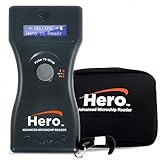
- UNIVERSAL MICROCHIP COMPATIBILITY: Reads all ISO microchips plus 9-, 10-, and 15-digit chips from any brand. Ideal for scanning horses, livestock, pets, and other animals in clinics, shelters, barns, or field settings.
- BLUETOOTH CONNECTIVITY FOR FAST, ACCURATE DATA TRANSFER: Easily sends scanned chip numbers to Bluetooth-enabled devices within a 25-foot range for quick syncing to computers, tablets, or shelter management software. Reduces manual data entry errors and speeds up check-in and intake processes—perfect for busy clinics or multi-pet facilities.
- BACKLIT LCD SCREEN WITH 15-MINUTE DISPLAY HOLD: Features a bright blue backlit LCD screen with bold white text displaying the full chip number on one line for easy reading—day or night. The 15-minute display hold gives ample time to record the scan without rushing, ideal for high-volume or field settings.
- RECHARGEABLE BATTERY WITH AUTO POWER-SAVE MODE: Includes a rechargeable 9V battery and charging unit for long-lasting performance. The auto shut-off function conserves power between uses—great for mobile vets, rescue teams, or animal control officers who need dependable scanning during long sessions.
- LIGHTWEIGHT, DURABLE DESIGN WITH PROTECTIVE CASE: This 7-inch handheld microchip scanner is compact, ergonomic, and easy to carry. Includes a protective carrying case to guard the reader during storage and transport. Built for dependable use in clinics, shelters, barns, or field settings.
“No chip scan means the pet has no chip.”
Migration or equipment problems can make a chip difficult to locate. A complete scan with compatible equipment is more informative than checking only the usual implantation point.
“Because rodent studies found tumors, every pet is at high risk.”
The laboratory animals’ cancer-research backgrounds and tumor-prone strains are significant limitations. Those reports do not establish the same risk in dogs and cats.
Questions to discuss with your veterinarian
- Is the swelling located at the chip site, or could it be associated with another injection, injury, or skin condition?
- Does the chip scan correctly, and has it moved from its original position?
- What changes in size, color, discharge, or pain should prompt an earlier recheck?
- Does the appearance warrant additional evaluation, or is monitoring reasonable?
- Are the chip number and your contact details correctly recorded in the registry?
These questions keep the discussion focused on the individual pet rather than on an unsupported yes-or-no assumption about all microchips.
Bottom line for pet owners
Microchip-associated tumors have been reported in an extremely small number of dogs and cats, but current AVMA information does not establish that microchips cause cancer. The device’s established role is permanent identification, not tracking or diagnosis. If you notice a lump, swelling, or drainage near the implantation site, arrange prompt veterinary assessment and let that examination—not the location alone—determine what happens next.
Quick Recap
Product prices and availability are accurate as of the date/time indicated and are subject to change. Any price and availability information displayed on Amazon at the time of purchase will apply.





Leave a Reply