
No. Ordinary human baby powder is not a proven or recommended flea treatment for cats. A veterinarian-reviewed Catster article found no scientific evidence that baby powder kills fleas and warns that loose powder can be inhaled or licked from the coat during grooming. The safest response is to avoid dusting your cat with it, use a flea comb when appropriate, and ask a veterinarian about a product specifically labeled for cats.
Why baby powder is not the same as cat flea powder
The word “powder” describes a physical form, not a treatment category. Human baby powder is made for people and may contain talc, cornstarch, fragrance or other ingredients, depending on the product. A veterinary flea powder is an animal pesticide formulated and labeled for a particular species. Its active ingredient, concentration, age restrictions and application directions are established on the label.
As an Amazon Associate I earn from qualifying purchases.
Using a human product because it looks similar to a veterinary flea powder is unsafe reasoning. A cat’s grooming behavior creates a direct route from its coat to its mouth and lungs, and cats process some chemicals differently from dogs and people. Never assume that a product labeled for dogs, horses or household surfaces is suitable for a cat. Some dog flea products can poison cats.
What’s actually slowing this PC down?
Pick the symptom - the matching free tool is one click away.
Talc-based and cornstarch-based formulas
The veterinarian-reviewed discussion distinguishes talc-based from cornstarch-based baby powders, but neither type should be presented as a flea remedy. Formulas differ, so the precise hazard depends on the ingredients, the amount involved and whether the powder was inhaled, swallowed or merely contacted the skin. There is no established feline dose threshold that lets an owner safely calculate how much is harmless.
#1 Best Overall

- High-Quality Flea Comb: Higher grade metal for the teeth, making them stronger than the previous version. Rubber-sheathed handle, increases the comfortableness of holding the comb/dog comb when combing your pet
- Health Profits: Use this dense fine tooth lice comb and brush your pet regularly can effectively remove small objects and dandruff flakes to keep your pet healthy and well groomed. It also helps monitor the condition of your pet’s skin and coat
- Anti-slip handle grip: You don't have to worry about being too cautious when using our pet hair combs for cats, dogs & other small animals. It has been enhanced with a non-slip handle to help avoid accidents
- Widely use: Use for Bunnies, Horses, Puppies, Kitties, Specially designed to work for cats and dogs with all coat type
- Recommendation: Please clear all matted fur before using this lice comb. This flea comb for dogs might get damaged if used in heavily matted fur. We recommend this comb to be used on cats, dogs, and any other equivalent size animals
What the evidence actually shows
Catster’s veterinarian-reviewed article says there is no scientific evidence supporting the claim that baby powder kills fleas. That is a statement about the lack of supporting evidence, not proof from a controlled feline trial that every baby powder formula has zero insecticidal effect. No primary feline study directly testing baby powder against fleas, and no dose-response safety study for cats, was identified.
That distinction matters. The responsible conclusion is that baby powder is unproven and not recommended, not that a particular brand or ingredient has been clinically demonstrated to be lethal to fleas or harmless to cats. A product can fail to control an infestation while still exposing a cat to respiratory or ingestion risks.
How a cat can be exposed
Inhalation
Fine particles become airborne while powder is poured, brushed through fur or shaken from bedding. A cat can breathe those particles during application or while grooming. The risk is influenced by the product’s ingredients, particle size, ventilation and quantity; the available sources do not establish a safe amount for cats.
Ingestion during grooming
Cats may lick powder from their coat later, even if they did not swallow any during application. Ingestion risk therefore continues after the visible dust has settled. Fragrance and other additives also vary by product, so keep the container or a clear photograph of the ingredient list if you need veterinary advice.
Rank #2

- Packing list:Long handle comb x1, Double sided flea comb x1, long needle comb x1, short needle comb x1,Double-sided tear stain removal combx1,Multifunctional to meet your different needs.
- Material: Each comb adopts round teeth and made of high quality stainless steels and durable anti-slip plastic handle,which are rustproof,sturdy and durabl.
- Versatile Applications: Easily removes fleas, flea eggs, lice, scabs, mucus, floating hair, tangles, hair stains, hair removal,Dematting Tool for Small, Medium & Large Pets.
- humanized design: Every comb tooth is finely polished, won’t scratch your pets’ skin while.
- Suitable for most Pets: comb are suitable for most pets such as dogs, cats, chihuahuas and so on and other furry pets.
Skin and eye contact
Contact with the skin or eyes can cause local irritation, but the seriousness cannot be predicted from the product name alone. Ingredient lists and the route of exposure are more useful to a veterinarian than the label “baby powder.”
What to do if powder was applied or swallowed
- Stop further exposure. Put the powder out of reach and do not apply more while deciding what to do.
- Read the ingredient panel. Note whether the product is talc-based, cornstarch-based, fragranced or contains other additives. Record the approximate amount and when exposure occurred.
- Call your veterinarian for case-specific advice. Cornell University College of Veterinary Medicine recommends prompt consultation for possible poisoning. A veterinarian can judge the product, route, amount, cat’s age and health history together.
- Seek urgent care for breathing problems or other concerning signs. Difficulty breathing is a possible poisoning sign that warrants prompt contact with a veterinarian or emergency veterinary clinic.
- Do not induce vomiting unless a veterinarian or poison-control professional specifically directs you to. Inducing vomiting can create additional risks, particularly after an inhalation exposure or when the product is not known.
Do not wait for severe symptoms before asking for advice. A cat that seems normal may still have powder on its coat and may continue ingesting it while grooming. Your veterinarian can tell you whether a decontamination step is appropriate for that specific product; do not improvise with household solvents or another pesticide.
Cat-safe ways to remove and control fleas
Use a flea comb for immediate physical removal
A fine-tooth flea comb is a practical, nonchemical option for removing adult fleas and flea eggs from a cat’s coat. The U.S. Food and Drug Administration specifically advises: “Use flea combs to remove fleas and flea eggs, and a tick remover to take off ticks from puppies and kittens that are too young for flea and tick products.”
Free tools Windows power users keep installed
One-click scans. No signup required.
Combing is especially useful when a kitten is below the minimum age or weight on a flea-product label. It can also help you confirm that fleas are present and reduce the number on the animal while you arrange a complete control plan. Combing alone does not address fleas developing in the home or exposure from another infested animal, so treat it as one part of control rather than a guaranteed cure.
Rank #3

- 1. Get rid of fleas and lice easily: Our high-quality flea comb is specially designed to effectively remove fleas, lice eggs, and ticks from your pets, promoting a healthy and parasite-free coat. No more annoying itching and scratching!
- 2. Gentle and safe for your pets: Made from premium plastic material, our comb features balanced teeth and rounded tips to protect your pet's scalp and hair from discomfort or pulling. It also stimulates blood circulation and keeps their hair healthy and shiny.
- 3. Versatile grooming tool: Not only does our pet brush eliminate loose fur, tangles, knots, and dandruff, but it also helps prevent fleas, flakiness, and spots. Suitable for all types of pets with different fur textures, keeping them looking their best.
- 4. Convenient on-the-go grooming: Whether you're on a short or long trip, our compact and portable flea comb is the travel companion. Its ultra-fine teeth and lightweight design easily fit into backpacks, carry-on luggage, gym bags, or purses to keep your pet clean and groomed on the go.
- 5. Long-lasting durability: Crafted from high-quality plastic, our combs are built to withstand regular use without scratching your pet's skin. Its sturdy construction ensures years of reliable and effective grooming for your furry friends.
Consider a cat-labeled shampoo or flea powder only with guidance
Veterinary flea shampoos and powders may kill fleas present on the cat at the time of application. VCA Animal Hospitals cautions that these products generally have little lasting effect. They can therefore remove some adult fleas without preventing the next wave from emerging.
If your veterinarian recommends one, verify that the package explicitly says it is for cats and that your cat meets the stated age and weight requirements. Follow every application, dilution, ventilation and re-treatment instruction on the label. Never substitute a dog product, agricultural pesticide or household insecticide.
Ask about a longer-term preventive
A veterinarian can select a cat-labeled preventive based on age, weight, health status, pregnancy or nursing, existing medicines and the local flea risk. The correct product and schedule depend on those details, so a generic recommendation is not appropriate for every cat. Use the product exactly as labeled and monitor for adverse effects.
Recommended Free Tools
FDA guidance says to contact a veterinarian if a pet becomes ill after a flea or tick product is used. Keep the package so the active ingredient and lot information are available if a reaction occurs.
Rank #4
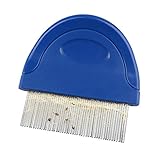
- FINE-TOOTH STAINLESS STEEL: Closely spaced stainless steel teeth, this dog and cat flea comb helps remove dirt, dander, and loose debris during regular grooming checks
- ROUNDED TEETH TIPS: Rounded-tip teeth comfortably glide through your pet’s coat with less pulling and scratching; helps keep cats and dogs more comfortable during face, body, and coat checks
- MULTI-USE PET GROOMING COMB: This dog flea comb can also be used carefully around the face to remove flea, dried tear debris, loose hair, and help loosen minor tangles on cats and for small & large short-haired dog breeds (including Beagles, Boston Terriers, German Shepherds, Retrievers and Rottweilers) and long-haired breeds
- SINGLE-ROW DETAIL FLEA COMB: The fine single-row design makes it easier to see what you are combing out; suitable for detailed grooming around eyes, ears, paws, eyebrows, and small tangled areas
- COMFORTABLE ERGONOMIC HANDLE: The slightly curved handle fits naturally in your palm during grooming; compact, lightweight design is easy to use at home, during travel, or for quick pet care checks
Why treating only the cat often fails
Fleas do not remain exclusively on the animal. VCA reports that persistent infestations commonly result from incorrect application, inadequate treatment of the home, or continued exposure to infested animals or environments. Cornell likewise emphasizes that effective flea control must address both the cat and its environment.
This explains why a cat may appear clear after a bath or combing and then have fleas again. Adult fleas on the cat are only one part of the problem; other life stages can remain in the surrounding environment, and an untreated dog, cat or wildlife exposure can reintroduce them.
A complete plan has three questions
- Was the cat treated correctly? Check the species label, age and weight limits, dose, application site and timing.
- Was the home addressed? Ask your veterinarian what environmental treatment is appropriate for your household and follow the directions for any product used indoors.
- Could another source be re-exposing the cat? Consider other pets, shared spaces and known contact with infested environments.
If fleas continue, do not respond by applying baby powder more often or layering products. Recheck the application instructions and speak with the veterinarian who can identify the likely failure point.
How the main options compare
| Approach | Evidence or expected effect | Cat-label and age considerations | What it does not solve |
|---|---|---|---|
| Human baby powder | No scientific evidence supports it as a flea killer; not a recommended treatment. | Not formulated or labeled for feline flea control; ingredients vary. | Does not provide an established flea-control duration and may be inhaled or licked. |
| Flea comb | Physically removes fleas and eggs from the coat. | FDA identifies combing as an option for kittens too young for flea and tick products. | Does not treat the home or prevent re-exposure by itself. |
| Cat-labeled flea shampoo or powder | May kill fleas present during application, but VCA says lasting effect is limited. | Use only a product labeled for cats and only within its age and weight directions. | Usually does not provide durable protection or address environmental stages alone. |
| Veterinarian-selected cat preventive | Choice depends on the product and the cat’s circumstances; follow the label and veterinary advice. | Species, age, weight, health and other medicines determine suitability. | Still requires correct application and attention to the home and other exposure sources. |
| Environmental control | Necessary when the home or another animal is maintaining the infestation. | Use only methods and pesticides appropriate for the setting and occupants. | Cannot replace treating the infested cat and other affected animals. |
Choosing an approach for kittens, older cats and medically fragile cats
Kittens below product minimums
Do not guess at a kitten’s eligibility by age alone. Read the specific product label and ask a veterinarian. FDA’s flea-comb guidance is particularly relevant for kittens too young for flea and tick products.
Best Value

- THOUGHTFUL SET: Our pet grooming comb set includes 4 combs, 1 tooth comb, 1 double sides lice comb, 1 long-needle & 1 short-needle comb to meet different needs. Perfect for straightening out the knotted tangles hair, as well as finishing and fluffing
- PREMIUM MATERIAL: The combs have high-quality stainless steel teeth tightly embedded in the ergonomic ABS grip. The double-sided comb is made of high-impact ABS, durable & corrosion-resistant, won’t rust or fade, withstands wear & tear in long term use
- ROUNDED EDGES: Every comb tooth is finely polished, won’t scratch pets’ skin, easily removing lice, flea, mess, mucus, stain etc. Ideal for combing soft fur nearby eyes, ears and fine hair of the legs. Let you and your pet enjoy this fun time together
- MULTIFUNCTIONAL & SAFE: Our rounded teeth would also support the pet health by boosting blood circulation, massaging skins, removing loose fur, undercoat, dander, knots, no matter long & short haired dogs, cats with thin & thick coats or sensitive skin
- SUITABLE FOR ALL COAT TYPES: One set of our combs is enough for EASY & EFFECTIVE grooming for rabbits, guinea pigs, ferrets. Regular use of this ergonomic dog comb can help reduce shedding, promote healthy skin & coat, easy to clean by just rinsing
Pregnant, nursing or ill cats
Health status can change which ingredients and application methods are suitable. Provide the veterinarian with the cat’s age, weight, diagnoses, current medicines and reproductive status before using a flea product.
Cats that have reacted to a product before
Keep records of the product name, active ingredient, dose, timing and symptoms. Do not retry or combine products without veterinary direction. If illness follows a flea or tick treatment, FDA advises contacting a veterinarian.
Common mistakes to avoid
- Confusing appearance with formulation: A household powder is not equivalent to a veterinary flea powder.
- Using a dog product on a cat: Some dog flea products are poisonous to cats.
- Applying more because fleas remain: Persistent fleas may reflect environmental stages or re-exposure, not an insufficient amount on the cat.
- Ignoring the ingredient list: Talc, cornstarch, fragrance and other additives create different exposure questions.
- Inducing vomiting without instructions: Cornell advises against this unless a veterinarian or poison-control professional directs it.
- Stopping after one visible improvement: A comb, shampoo or powder may affect fleas on the coat without solving the household infestation.
Questions to take to your veterinarian
Before selecting a treatment, have the cat’s age, weight, medical history and current medicines ready. Ask:
- Is this product labeled for cats, and is my cat within its age and weight range?
- Is a flea comb appropriate while we decide on a preventive?
- Could the cat’s symptoms be related to powder or another pesticide exposure?
- What environmental steps are needed in our home?
- What should I do if fleas remain after the first application?
- Which signs require an emergency visit?
These questions help separate an immediate removal method from a complete flea-control program and reduce the temptation to improvise with household products.
The practical answer
Do not dust a cat with human baby powder to kill fleas. The claim lacks supporting scientific evidence, and powder can be inhaled or swallowed during grooming. Use a flea comb for physical removal when appropriate, choose only cat-labeled products with veterinary guidance, monitor for adverse effects, and address the home and any other exposure sources when fleas persist.
Quick Recap
Product prices and availability are accurate as of the date/time indicated and are subject to change. Any price and availability information displayed on Amazon at the time of purchase will apply.





Leave a Reply