
Black pepper may make some cats avoid a spot, but it has not been shown to keep cats away reliably. The same dust and pungent compounds that could discourage a cat can irritate the eyes, nose, throat and airways. If a cat licks or swallows pepper, drooling or vomiting may occur.
For gardens and other outdoor areas, skip pepper. A physical barrier such as fencing or chicken wire is a more controllable choice, and a motion-sensor sprinkler may help in some settings. No method is guaranteed to exclude every cat, so choose the least irritating option that fits your space.
As an Amazon Associate I earn from qualifying purchases.
What black pepper can—and cannot—do
Why a cat might avoid pepper
Black pepper has a strong odor and contains pungent compounds that can feel unpleasant to a cat’s sensitive nose and upper airways. Catster’s veterinarian-reviewed guidance says that this unpleasant exposure may repel some cats. That is an observation about a possible reaction, not proof of a dependable deterrent.
Quick wins for a faster PC:
Clear out junk files and repair common Windows errorsFree Scan →Fix the driver behind crashes, sound loss and screen glitchesFind Drivers →Repair Windows errors before they cause bigger problemsFix Now →A cat that walks away from a pepper-scented area once may still return later, particularly after the smell fades, the pepper is dispersed by wind or rain, or the animal is strongly motivated by food, shelter or a familiar route. Individual cats also respond differently to smells.
#1 Best Overall

- HELPS DISCOURAGE REPETITIVE SPRAYING: Formulated to deter cats from revisiting and spraying the same spot twice
- FOR INDOOR TRAINING: Ideal solution when trying to break cats’ spraying behaviors
- REPELLENT SCENT FORMULATED WITH ESSENTIAL OILS: Repellent scent deters cats from returning to the treated area
- SAFE FOR PETS AND HOME: Safe for pets and home when used as directed
- TRUSTED BRAND: From the maker of Nature’s Miracle products, the pet stain and odor removing brand you trust…because it works!
What has not been established
No controlled household or field trial has established a success rate for scattering culinary black pepper around a yard, flower bed or porch. The available guidance does not provide a reliable dose, coverage amount, duration of effect or comparison with barriers and other deterrents. It is therefore accurate to say that black pepper may deter some cats, not that it keeps cats away.
Do not interpret an anecdotal result as a humane, consistent system. A cat that avoids one patch may simply choose another route, while another cat may ignore the smell entirely.
Is black pepper safe to use around cats?
How exposure can happen
Ground pepper can become airborne during application or when disturbed by paws, wind or gardening. A cat may inhale the dust, get residue on its face or paws, or lick particles while grooming. Pepper placed on a surface can also be tracked indoors or contacted by children and other animals.
What’s actually slowing this PC down?
Pick the symptom - the matching free tool is one click away.
Catster’s veterinarian-reviewed article warns that pepper exposure can irritate the eyes and upper airways. Possible signs include sneezing and discomfort around the nose or eyes. If pepper is swallowed, the source describes drooling or vomiting. The article does not establish a safe outdoor quantity or a threshold below which irritation cannot occur.
“Natural” does not mean harmless
A kitchen spice is still a biologically active irritant when it is concentrated as dust. Calling a product natural says nothing about how it affects a cat’s eyes, respiratory tract or digestive system. Avoid blowing pepper toward a cat, sprinkling it where an animal may lick or groom it, or rubbing it onto fur, paws or feeding areas.
What the European feed-additive opinion actually covers
The European Food Safety Authority’s FEEDAP Panel adopted a scientific opinion on September 27, 2022, covering defined black-pepper-derived preparations—black pepper oil, oleoresin and a supercritical extract—used as feed additives at specified concentrations in complete feed. That is a controlled feed-use assessment, not an endorsement of culinary pepper as a yard repellent.
The opinion states: “The additives are irritant to skin and eyes, and act as dermal and respiratory sensitisers.” Those findings reinforce why scattering pepper dust around an outdoor area should not be presented as risk-free. Feed-additive conclusions cannot be converted into a household application rate or a claim that pepper on soil, paving or plants is safe.
Free tools Windows power users keep installed
One-click scans. No signup required.
Do not substitute essential oils
Strong-smelling essential oils are not a safer version of this idea. Pet Poison Helpline explains that essential oils can pose risks to cats, including respiratory irritation from strong odors, with more serious effects possible depending on the oil and the amount and route of exposure. Concentrated oils can also contaminate fur and be swallowed during grooming. A scent being unpleasant does not make it cat-safe.
Rank #2
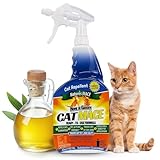
- 40 OZ READY-TO-USE FORMULA: This 40-oz ready-to-use cat spray deterrent requires no mixing or measuring. Apply directly from the bottle for coverage of targeted areas such as beds, furniture, trash bags, decks, or walkways. Great for home or garden use, it helps keep your space cat-free while reducing the effort needed for daily upkeep.
- TARGETED AREA APPLICATION: Shake thoroughly and apply our cat pee stopper to areas where cats are unwanted, covering up to 1,000 sq ft. Apply daily for the first 7-10 days, as these are the primary training days. Afterward, apply twice during the following week, and then once per week to maintain protection. Consistency is crucial in training cats to stay away from the treated areas.
- UTILIZES SCENT AVERSION: Formulated with essential oils that cats strongly dislike to keep them away from certain areas. It contains oils like peppermint and castor oil, which cats find unpleasant. Whether you need a cat spray deterrent for scratching, cat deterrent spray for unwanted behavior, or a cat spray repellent for targeted areas, it helps for all your cat training needs.
- INDOOR DETERRENT FOR HOME SURFACES: It can also be used indoors to keep away cats from scratching or clawing furniture and walls. Apply to common target areas such as sofa arms, chair legs, and door frames, creating a boundary that discourages repeat behavior. Our cat spray training formula is generally fabric-safe, but it is recommended to apply it to a hidden area first to see if it will stain the fabric. Helps protect furniture and maintain a scratch-free home.
- GENTLE CAT SPRAY TRAINING: Our cat scratch deterrent is a powerful training tool. Cats respond through repetition and consistency, so regular use helps reinforce learned behavior. This product gradually corrects habits by deterring unwanted scratching and marking actions, helping establish respectful boundaries within indoor and outdoor spaces.
What to do if a cat is exposed
If a cat has walked through pepper, inhaled a visible cloud or eaten it, remove the source and prevent further contact. Watch for persistent sneezing, eye irritation, breathing changes, drooling, vomiting or unusual behavior.
- Stop the exposure. Move the pepper and keep the cat away from the treated area. Do not add more substances to the fur, eyes or mouth.
- Do not improvise a home treatment. Do not deliberately induce vomiting or use household chemicals to “neutralize” pepper.
- Call for professional advice. Contact a veterinarian or an animal poison-control service, especially if symptoms are present, exposure was substantial, or the cat has asthma or another respiratory condition.
- Describe the product and timing. Tell the professional that culinary black pepper was involved, how the cat encountered it, and which signs appeared.
Breathing difficulty, collapse, severe weakness or rapidly worsening symptoms require urgent veterinary care rather than observation at home.
Humane alternatives that give you more control
Catster identifies fencing, chicken wire and motion-sensor sprinklers as practical alternatives. These options work in different ways: a barrier physically limits access, while a sprinkler creates a startle or inconvenience without leaving an irritant on the ground.
Recommended Free Tools
| Approach | How it works | Advantages | Limitations and precautions |
|---|---|---|---|
| Fencing or panels | Creates a physical boundary around a bed or other protected area. | Does not depend on a smell; can remain effective in rain and wind; useful for defining a small zone. | Requires installation and periodic inspection. Gaps, climbable surfaces and loose edges can defeat it. |
| Chicken wire | Covers or surrounds soil so digging and entry are more difficult. | Often adaptable to irregular beds and newly planted areas; no airborne scent. | Secure every edge and avoid sharp exposed ends that could injure paws. Check it after gardening or weather. |
| Motion-sensor sprinkler | Releases water when movement is detected. | Can discourage visits without applying a chemical or powder to the area. | Performance depends on sensor placement, water supply, temperature and the individual cat. It may also trigger on people or wildlife. |
| Commercial repellent | Uses ingredients intended to make an area less attractive. | May be convenient for locations where a barrier is impractical. | “Repellent” is a broad category, not a safety guarantee. Read the ingredient list, follow the label and avoid pepper-containing or potentially harmful formulations. |
No head-to-head controlled comparison or quantified ranking of these methods has been established in the cited guidance. Judge an option by four questions: how well it fits your particular setting, whether it can irritate or expose cats, how much installation and upkeep it needs, and whether it creates a dependable boundary rather than relying on an aversive smell.
How to protect a garden bed without pepper
For a small bed or seedling area
- Map the access points. Look for gaps under edging, open corners and nearby objects a cat could use as a step.
- Choose a physical layout. Use low fencing or panels around the perimeter, or place chicken wire over the soil with openings for established plants.
- Secure every edge. Anchor wire and panels so they do not lift, curl or expose sharp ends. Leave enough room for plants to grow without pushing the material into a hazard.
- Inspect after weather and maintenance. Recheck the barrier after rain, strong wind, mowing or digging. A single new gap can restore access.
For a larger yard or repeated visits
A motion-sensor sprinkler can supplement, rather than replace, a barrier. Aim the detection zone at the route cats use and adjust it so it does not repeatedly activate for household members, delivery workers or desirable wildlife. Test it at different times of day and keep the device maintained. The cited source does not provide a guaranteed range or success rate, so treat it as a setting-dependent measure.
Common mistakes to avoid
- Sprinkling more pepper when the first application fails. Lack of a visible reaction does not mean a higher amount will work; it increases the opportunity for inhalation, eye contact and ingestion.
- Blowing pepper toward a cat. Deliberately creating an airborne cloud can intensify respiratory and eye exposure.
- Applying pepper to fur, paws or feeding spots. Grooming can transfer residue to the mouth, and food areas should not be contaminated with an irritant.
- Assuming every cat reacts the same way. A neighbor’s anecdote is not a measured prediction for your garden.
- Confusing feed additives with yard use. EFSA’s opinion concerns specified preparations and concentrations in complete feed, not loose kitchen pepper outdoors.
- Replacing pepper with concentrated oils. Essential oils can irritate cats and may cause more serious effects depending on the oil and exposure.
- Leaving a “repellent” product unchecked. Read ingredients and directions; a commercial label does not remove the need to consider cats, children, wildlife and other pets.
What other guidance does—and does not—show
Cornell’s feline-behavior guidance discusses commercial pet repellents for specific indoor chewing problems and ways to make houseplants less attractive. That advice is context-specific. It does not demonstrate that black pepper is effective or appropriate for excluding cats outdoors, and it should not be used to infer an outdoor pepper recipe.
Likewise, the absence of a reported controlled trial is important: there is no named statistic for household black pepper deterrence, no validated exposure threshold for yard application and no evidence-based claim that pepper is reliably humane. A responsible recommendation must acknowledge those limits instead of filling them with a percentage or a made-up schedule.
Do these 3 things before closing this tab:
1Repair Windows errors before they cause bigger problems2Scan for outdated or missing drivers - takes under a minute3Clear out junk files and repair common Windows errorsFrequently asked questions
Will adding pepper to soil stop a cat from digging?
There is no established amount that reliably stops digging. If a cat encounters pepper, irritation is possible, so increasing the amount is not an appropriate escalation. Covering the soil with securely installed chicken wire or another safe physical design addresses the digging behavior without distributing an airborne irritant.
Rank #3

- LAB PROVEN TO KILL & REPEL BUGS. Plant powered pest protection with natural essential oils that works. This pest repellent spray is proven to protect your pets and family from mosquitoes, ants, ticks, fleas, and other common yard bugs. Meets the same effectiveness standards required for conventional flea and tick yard treatment and preventatives. An alternative to conventional pesticide sprays, baits, ant granules, zappers or foggers.
- SPRAY & PLAY CONVENIENCE! NO DRY TIME NEEDED. Safe around pets and the whole family when used as directed with no wait time for drying or reentry into sprayed yard areas. Pre mixed and ready to use. Just attach directly to a garden hose, spray your backyard, and enjoy. Keep the bottle & refill the sprayer with Wondercide Outdoor Pest Control concentrate.
- TREATS UP TO 5,000 SQUARE FEET. Treats up to 5,000 square feet to kill mosquitoes, ants, gnats, fleas, Japanese beetles, no-see-ums, and crickets. Treats up to 2,500 square feet to kill and repel ticks and repel mosquitoes. When used as directed, this bug control spray can be safely used on lawns, gardens, grass, patios, dog kennels, vegetables, flowers, siding, brick, paint, and more. Treat an existing pest infestation or use for prevention.
- PLANT POWERED INGREDIENTS YOU CAN FEEL GOOD ABOUT. No artificial colors, dyes, or fragrances. Made with plant based active ingredients like steam-distilled cedarwood essential oil. The residue is safe beneficial insects and pollinators like bees and butterflies when used as directed. Cruelty free.
- POWERFULLY EFFECTIVE. We know you will love our Outdoor Pest Control Spray, especially for flea, tick, and mosquito removal. Woman founded. Mom approved. USA Made with US and global components. Application coverage depends on water pressure and walking speed.
Can I use whole peppercorns instead of ground pepper?
Whole peppercorns are less likely to form a dust cloud, but their safety and deterrent performance for outdoor cat exclusion have not been established. A cat could still mouth or swallow them, and they do not create a dependable boundary. Use a barrier rather than changing the form of pepper.
Will pepper keep a cat away permanently?
No lasting effect has been demonstrated. Odor can fade or wash away, and a cat may choose a different route or return when the incentive to visit is strong. Any deterrent should be monitored and combined with practical access control.
Is a pepper-based commercial product automatically acceptable?
No. “Commercial” describes how a product is sold, not whether its ingredients are suitable for cats. Check the full label, avoid products that create harmful exposure, and follow directions for the intended location. When in doubt, choose a physical barrier and ask a veterinarian about a cat that has already been exposed.
Frequently Asked Questions
Will adding pepper to soil stop a cat from digging?
No reliable amount has been established, and increasing pepper raises the chance of inhalation, eye contact or ingestion. A securely installed physical cover is safer and more controllable.
Can I use whole peppercorns instead of ground pepper?
Whole peppercorns have not been shown to work for outdoor cat exclusion and could still be mouthed or swallowed. Changing the form does not create a dependable or proven deterrent.
Will pepper keep a cat away permanently?
No lasting effect has been demonstrated. Odor can fade or wash away, and a cat may return or use another route.
Is a pepper-based commercial product automatically safe?
No. Review the ingredients and label directions; commercial packaging is not a safety guarantee. A physical barrier avoids distributing an irritant.
Quick Recap
Product prices and availability are accurate as of the date/time indicated and are subject to change. Any price and availability information displayed on Amazon at the time of purchase will apply.





Leave a Reply