
Yes. Cats can pass intestinal gas. An isolated, quiet fart in a cat that is eating, behaving normally, and producing normal stools is not enough to identify a disease. However, there is no established “normal” number of feline farts per day in the veterinary sources reviewed. Gas that keeps returning, becomes more noticeable, or occurs with vomiting, diarrhea, appetite loss, lethargy, weight loss, abdominal pain, or marked bloating warrants veterinary advice.
The useful question is therefore not simply whether cats fart, but whether the gas is a one-off sign or part of a gastrointestinal problem. Food history, an examination, and—when indicated—diagnostic tests help separate a dietary reaction from other illness.
As an Amazon Associate I earn from qualifying purchases.
What cat farting means
Flatulence is gas passing through the intestinal tract. Veterinary references list it among possible gastrointestinal signs, but they do not provide a population study or a daily frequency that can be called normal for healthy cats. Occasional gas by itself is nonspecific: it does not prove that a cat has a food allergy, inflammatory bowel disease (IBD), parasites, or any other particular condition.
A single episode after an unusual treat may resolve without treatment. Recurrent gas is different. Its importance depends on the pattern, what the cat has eaten, stool quality, appetite, energy, weight, and whether the abdomen appears painful or unusually distended.
#1 Best Overall
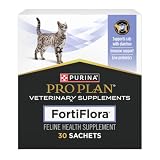
- Number 1 vet-recommended cat probiotic brand to support digestive health (online survey among all US vets who indicated brand as one of 1-3 brands recommended Q4 2025).
- For Cats of All Ages: Purina Pro Plan Sensitive stomach cat food supplement for the dietary management of kittens and adult cats with cat diarrhea.
- Proven Probiotics: Digestive Care Cat Food supplement containing probiotics proven to promote intestinal health and balance.
- Easy-to-Feed: Easy-to-Feed powder supplement includes cat immune system supporting antioxidants.
- Trusted Brand: FortiFlora digestive probiotics for cats are developed in collaboration with Purina nutritionists, researchers and veterinarians.
Occasional gas versus a pattern that needs attention
| Pattern | What it suggests | What to do |
|---|---|---|
| One or rare episodes; normal appetite, behavior, stools, and weight | May be transient digestive gas; gas alone does not identify a cause | Review recent foods and treats, avoid dairy, and monitor closely |
| Gas that recurs or is increasing | Could reflect a food reaction or another gastrointestinal disorder | Arrange a veterinary consultation and bring a diet-and-symptom record |
| Gas with vomiting, diarrhea, poor appetite, lethargy, weight loss, pain, or marked bloating | Possible broader gastrointestinal illness requiring assessment | Contact a veterinarian promptly; seek urgent advice if the cat appears severely ill |
Do not use the presence or smell of gas as a home diagnosis. A cat can have gastrointestinal disease without obvious flatulence, and a healthy cat can occasionally pass gas.
Why might a cat fart?
Dairy and lactose intolerance
Many cats are lactose-intolerant. Milk and other dairy products can cause gastrointestinal upset, including bloating, vomiting, diarrhea, and abdominal discomfort, according to VCA’s guidance on food intolerance (VCA Animal Hospitals). Cornell’s feline nutrition guidance also says milk is not generally recommended as a treat because many cats cannot digest lactose well (Cornell Feline Health Center).
Dairy is one possible trigger, not an explanation for every case of gas. If symptoms began after cream, milk, cheese, or a dairy-containing treat, stop offering that item and record what happens. Do not deliberately give more dairy to “test” the theory, particularly if the cat is already vomiting or has diarrhea.
Food reaction or intolerance
Adverse reactions to food can produce digestive signs, and VCA includes excess gas among the possible signs of suspected food allergy. The same guidance emphasizes that many different conditions can look alike, so a physical examination and detailed diet history are important (VCA’s elimination-challenge diet guidance).
Rank #2

- Cat and Dog Probiotics for Digestive Health: Proviable capsules contain multiple strains of beneficial bacteria, providing 5 billion colony-forming units (CFUs) to support your pet's gut health. They also include prebiotics to encourage the growth of probiotics
- A Healthy Gut Supports Overall Health: Probiotics help support intestinal health after imbalances, such as diet changes, food sensitivities, dietary indiscretions, or stress from travel or kenneling
- Clinically Researched: Backed by multiple published studies, Proviable multi-strain probiotic for dogs and cats contains beneficial bacteria to help support gut health
- Easy Administration: Incorporating Proviable probiotics into your pet's daily routine is simple - just open the capsule and sprinkle the powder onto your pet's food at mealtime
- Vet Recommended Probiotic: Proviable comes from Nutramax Laboratories Veterinary Sciences Inc., the #1 Veterinarian Recommended Supplement Company
Record every food source: the main diet, flavor changes, treats, table scraps, supplements, flavored medications, and anything another household member feeds. Note when gas occurs, stool consistency, vomiting, appetite, and any skin signs such as itching. This timeline can reveal a recent change without assuming that the newest ingredient is automatically responsible.
Other gastrointestinal disease
Flatulence can accompany gastrointestinal illness. Inflammatory bowel disease, for example, may involve vomiting, diarrhea, weight loss, lethargy, and reduced appetite; gas alone is not an IBD diagnosis. Cornell’s overview describes those broader signs and the need for veterinary evaluation (Cornell on feline IBD).
Gastroenteritis and other intestinal disorders can also cause combinations of vomiting, diarrhea, abdominal discomfort, appetite change, and dehydration. VCA explains that veterinarians use the history, examination, and appropriate diagnostic testing to investigate these illnesses (VCA on gastroenteritis in cats). Because these signs overlap, a fart cannot distinguish one disease from another.
Free tools Windows power users keep installed
One-click scans. No signup required.
What to do if your cat farts but otherwise seems well
- Review the previous 24–48 hours. Write down all meals, treats, dairy, supplements, scavenged food, and medication products. Include changes in brand, flavor, batch, or feeding schedule.
- Remove dairy and extras. Feed the cat’s usual complete, balanced food and stop milk, cheese, cream, table scraps, and rich treats. Cornell describes commercial cat foods as formulated to meet feline nutritional needs (Cornell’s feeding guidance).
- Monitor the whole cat, not just the gas. Check appetite, water intake, energy, stools, vomiting, body weight, and whether the abdomen looks swollen or seems painful. A short written log is more useful than relying on memory.
- Do not give human medication. Over-the-counter products are not a default treatment for feline gas. Cornell cautions that some nonprescription medications can harm cats (Cornell’s diarrhea guidance). Ask a veterinarian before giving any drug or supplement.
If the gas stops and no other sign appears, continue the normal balanced diet and avoid the suspected extra. If it returns, becomes frequent, or is accompanied by digestive or systemic signs, arrange an examination rather than repeatedly changing foods at home.
Rank #3

- BENEFITS BEYOND DIGESTION: Stop struggling with messy litter box cleanup issues and sensitive stomach distress. Our advanced cat probiotics dual texture chews provide cat constipation relief and occasional diarrhea support by stabilizing delicate gut flora. These functional treats safely soothe occasional vomiting, minimize foul gas, and naturally strengthen your feline's immune system defense networks to ensure happy, active, and perfectly balanced days.
- THE INSIDE STORY: Our premium digestive health recipe is loaded with live beneficial microorganisms and nourishing plant based fibers. It combines active multi strain probiotics for cats with natural prebiotics from chicory root to soothe a hyper sensitive digestive tract. Fortified with clinically studied postbiotics and omega rich fish oil, it accelerates natural nutrient absorption after intensive antibiotic cycles or high stress events.
- THE BEST FOR THE BEST: Give your exceptional feline companion an elite standard of everyday preventative care. Specially designed to stand out from generic healthy cat treats, these advanced multi system vitamins optimize stool quality, ease constipation, and reduce hairball formatting issues. Perfect for multi cat households, indoor cats, and growing felines, this award winning formula guarantees full physiological protection.
- DROOL-WORTHY TASTE + EASY USE: Eliminate the stressful battle of forcing bitter diarrhea medicine or chalky powders into your pet's mouth. Our unique cat probiotic treats feature an irresistible chicken flavor with a distinct crunchy outer shell and a smooth creamy core. Simply feed as a daily reward or crumble over wet cat food to seamlessly balance your companion's intestinal tract without any pills, greasy gels, or messy liquids.
- THE HONEST DIFFERENCE: Give your faithful companion the elite, uncompromised standard of premium clinical care. This Vet-Recommended cat probiotic supplement is proudly manufactured in the USA using elite, globally sourced ingredients. Because we are proudly NASC certified, we adhere to the most rigorous quality and compliance benchmarks in the pet supplement industry, delivering real digestive results you can completely trust.
When a veterinarian should examine your cat
Contact a veterinarian for persistent or recurrent flatulence, especially when it is accompanied by:
- vomiting or repeated retching;
- diarrhea, blood or mucus in stool, or a sudden change in stool consistency;
- poor appetite or refusal to eat;
- lethargy, weakness, or unusual hiding;
- weight loss or failure to maintain weight;
- obvious abdominal pain, a tense abdomen, or marked bloating.
Cornell advises prompt veterinary care when diarrhea lasts more than a day or two and occurs with systemic signs such as poor appetite, lethargy, or vomiting (Cornell Feline Health Center). Do not wait for a “normal” fart count if your cat appears acutely unwell, is repeatedly vomiting, cannot keep water down, or has pronounced abdominal distension; call a veterinary service for triage.
What to bring to the appointment
- A dated list or photographs of every food, treat, supplement, and medication.
- When the gas started, how often it occurs, and whether it follows a particular meal.
- Videos or photographs of vomiting, unusual stool, or abdominal swelling when safe to obtain.
- Recent weight information and notes on appetite, drinking, urination, and activity.
The veterinarian may perform an abdominal examination and recommend fecal, blood, imaging, or other tests based on the history and physical findings. Testing is selected to investigate the cat’s complete symptom pattern, not simply to label a fart.
What’s actually slowing this PC down?
Pick the symptom - the matching free tool is one click away.
Diet trials: when they help and when they do not
A therapeutic diet is not a blanket cure for ordinary gas. If a food reaction is suspected, a veterinarian may prescribe a structured elimination-and-challenge trial. VCA describes using a diet with a novel protein or a hydrolyzed protein and then assessing the response under controlled conditions (VCA’s elimination-challenge protocol).
Rank #4

- Cat and Dog Probiotics for Digestive Health: Proviable capsules contain multiple strains of beneficial bacteria, providing 5 billion colony-forming units (CFUs) to support your pet's gut health. They also include prebiotics to encourage the growth of probiotics
- A Healthy Gut Supports Overall Health: Probiotics help support intestinal health after imbalances, such as diet changes, food sensitivities, dietary indiscretions, or stress from travel or kenneling
- Clinically Researched: Backed by multiple published studies, Proviable multi-strain probiotic for dogs and cats contains beneficial bacteria to help support gut health
- Easy Administration: Incorporating Proviable probiotics into your pet's daily routine is simple - just open the capsule and sprinkle the powder onto your pet's food at mealtime
- Vet Recommended Probiotic: Proviable comes from Nutramax Laboratories Veterinary Sciences Inc., the #1 Veterinarian Recommended Supplement Company
A valid trial is exclusive: the cat receives the prescribed food and nothing else that could contain the suspected trigger. Treats, flavored medications, supplements, and shared food can invalidate the result. The length and follow-up plan should come from the veterinarian; changing foods repeatedly or adding several new ingredients makes the outcome impossible to interpret.
| Diet approach | Clinical reason | Key requirement |
|---|---|---|
| Novel-protein diet | Used in some supervised trials when the cat has not previously eaten the selected protein | Feed only the prescribed diet for the period set by the veterinarian |
| Hydrolyzed-protein diet | Protein is broken into smaller components for selected food-reaction investigations or disease management | Use veterinary direction; it is not established as a general treatment for isolated gas |
| Regular complete, balanced food | Appropriate for a well cat with occasional gas and no other concerning signs | Avoid unplanned extras and maintain nutritional completeness |
For some cats with IBD, VCA describes novel-protein or hydrolyzed-protein diets as part of disease management and notes that a true diet trial is fed exclusively for 8 to 12 weeks (VCA on IBD in cats). That timeframe applies to a veterinarian-directed clinical trial; it does not prove that hydrolyzed food treats uncomplicated flatulence.
Independent reader supportYour contribution helps us test, update, and keep practical guides available for everyone.Preventing avoidable digestive upset
- Keep the main diet complete and balanced for cats, and make changes only with a plan.
- Do not offer milk or dairy simply because a cat likes the taste.
- Limit table scraps and treats, particularly rich or unfamiliar foods.
- Keep a consistent record when introducing a new food, so a reaction can be recognized.
- Store food securely and prevent access to rubbish, spoiled food, and other pets’ meals.
- For a cat with recurring signs, follow the veterinarian’s feeding instructions exactly rather than combining several home remedies.
These steps reduce avoidable dietary triggers, but they cannot prevent every gastrointestinal illness. A balanced diet and careful observation are supportive measures, not substitutes for diagnosis when symptoms persist.
Common mistakes to avoid
Assuming gas proves a food allergy
Food allergy is only one possibility. Gas without itching, vomiting, diarrhea, weight change, or other findings cannot establish an allergy, and a self-selected diet switch is not a reliable diagnostic test.
Best Value

- Gut & Digestive Health Support: Our pet probiotic prebiotic blend supports healthy digestion, skin health, gut balance and nutrient absorption, helping to reduce sensitive stomachs, irregular stools, low energy and allergy-related discomfort.
- 12 Probiotic Strains, Plus Prebiotics: With powerful probiotics for gut health, this USDA-certified organic probiotic for cats and dogs includes 5 billion CFUs per scoop plus acacia, agave inulin and FOS prebiotics for a balanced microbiome.
- Picky Eater Friendly: Our flavorless cat and dog food topper with prebiotics and probiotics works seamlessly with any diet and is perfect for pet parents looking for a stress-free alternative to probiotic chews, pills or flavored supplements.
- Easy-to-Give Everyday Food Topper: During allergy season and beyond, add to your pet’s food at home or on-the-go, using provided scoop (½ scoop under 15 lbs, 1 scoop 16–60 lbs, 2 scoops 60+ lbs); made in the USA, NASC Certified and GMP-Compliant.
- Vet-Founded & Formulated: Co-founder and veterinarian Dr. Dulake creates formulas for pet parents focused on treating the root cause, not just the symptom; at Fera Pets, we combine Eastern and Western philosophies to deliver long-term wellness for your pets.
Changing foods repeatedly
Frequent unsupervised changes can add new ingredients, upset digestion, and obscure the timeline. If a dietary trial is needed, use one veterinarian-designed protocol and keep it exclusive.
Using human gas remedies
Human products may contain ingredients or doses that are unsafe for cats. Obtain veterinary advice before administering medication, even if the product is sold without a prescription.
Waiting because the cat still eats
Some cats continue eating despite an evolving intestinal problem. Recurrent gas plus weight loss, vomiting, diarrhea, lethargy, pain, or bloating should be discussed with a veterinarian regardless of whether appetite is completely absent.
The Tool Desk
Outbyte Driver Updater FREEFix the driver behind crashes, sound loss and screen glitchesFind Drivers →Outbyte PC Repair FREEClear out junk files and repair common Windows errorsFree Scan →Bottom line for cat owners
Cats can fart, and an occasional episode in an otherwise normal cat is not automatically an emergency. No reliable veterinary source establishes a normal daily frequency, so persistence and accompanying signs matter more than counting episodes. Remove dairy and unplanned treats, keep the regular complete diet, and record what happens. Recurrent gas or gas with vomiting, diarrhea, appetite change, lethargy, weight loss, pain, or marked bloating needs veterinary assessment. A supervised elimination diet or therapeutic food may be appropriate for a diagnosed food reaction or chronic gastrointestinal disease, but it should not be used as a do-it-yourself cure for ordinary flatulence.
Quick Recap
Product prices and availability are accurate as of the date/time indicated and are subject to change. Any price and availability information displayed on Amazon at the time of purchase will apply.





Leave a Reply