
Do these 3 things before closing this tab:
1Repair Windows errors before they cause bigger problems2Scan for outdated or missing drivers - takes under a minute3Clear out junk files and repair common Windows errorsYes. Cats can get seasick. Seasickness is motion sickness that happens on a boat, and it is the same basic problem cats may experience in a car or aircraft. Nausea can cause lip licking, drooling, restlessness, vocalizing, lethargy, vomiting or, in severe cases, diarrhea. Signs often improve after the movement stops, but fear can produce similar signs even when a vehicle is stationary.
There is no reliable cat-specific percentage for how often seasickness occurs, and current veterinary references do not establish that boats cause a separate feline disease. The practical approach is to prepare the cat gradually, secure and ventilate the carrier, follow veterinarian-directed feeding and medication advice, and monitor for symptoms that could have another cause.
As an Amazon Associate I earn from qualifying purchases.
What “seasick” means for a cat
A cat is seasick when boat movement triggers motion sickness. The inner ear detects acceleration and changes in balance, while the eyes and other senses may send conflicting information to the brain. That mismatch activates pathways involving the vestibular system and brainstem, producing nausea and related signs.
The same mechanism can operate during land or air travel. Merck Veterinary Manual’s cat-owner reference explains that signs generally disappear when vehicle motion ceases. The July 2026 Merck reference on motion sickness in animals also notes that a learned fear of travel can contribute. A cat may therefore appear sick in a stationary carrier after associating it with an unpleasant journey.
#1 Best Overall
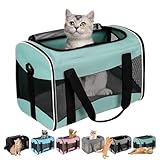
- [PRODUCT DIMENSIONS] Pet travel carrier size : 17x11x11 inches, recommended up to 15 lb pets, it is suitable for large, medium cats and small dogs. Please don't choose your airline cat carrying case based on weight, please refer to your pet's length and height when choosing a pet carrier size.
- [AIRLINE APPROVED] This cat carrier is designed with airline approved, it can fit comfortably under most flight seats, we can take our pets wherever we want. Dog travel carrier offers two attachment loop handles that can be used as a dual harness or as a luggage strap for balanced carry and secure transport.
- [EXCELLENT MATERIAL] Collapsible cat carrier is made of polyester fabric, supported by a steel ring, washable, wear-resistant and durable. The three sides and the top of this pet carrier are nylon mesh, scratch-resistant and not easy to damage, it can not only check your pet in real time, but also ensure enough air circulation.
- [SAFE AND COMFORTABLE] Dog travel bag has metal zippers on the top and side entrances, durable and not easy to deform, it allows your pets to enter and exit easily. The cat carrying case is equipped with an anti-escape safety buckle, which can effectively prevent pets from accidentally falling. It is suitable for car rides and vet rides.
- [PORTABLE AND FOLDABLE] Pet travel carrier comes with a detachable and hand washable wool pet bed, it can provide a comfortable sleeping space for your traveling pet. The cat travel case comes with an adjustable shoulder strap and handle for easy portability. When not in use, you can fold it up for storage.
Current veterinary references do not provide a prevalence estimate for feline seasickness. Do not interpret an individual episode as proof that every boat trip will cause illness, or assume that a calm first trip rules out problems later.
Signs to watch for on a boat
Nausea may begin subtly. Watch the cat continuously rather than waiting for vomiting.
- Lip licking or repeated swallowing
- Excessive drooling or salivation
- Yawning, whining or other unusual vocalizing
- Restlessness, uneasiness or repeated repositioning
- Apprehension, hiding or attempting to escape the carrier
- Lethargy or an unusually quiet response
- Vomiting
- Diarrhea in more severely affected animals
These signs are clues, not a diagnosis. Fear, overheating, pain, toxin exposure, gastrointestinal disease and vestibular or neurologic problems can also cause distress, drooling, vomiting or diarrhea. A cat that remains ill after the motion stops, becomes weak, has trouble breathing, collapses or vomits repeatedly needs prompt veterinary advice.
Motion sickness versus travel anxiety
Motion and fear often overlap. A cat may drool or vocalize because the boat is moving, because the carrier and travel setting trigger anxiety, or because both are happening. Fear-related signs can occur before departure or while the boat is tied up. Motion sickness is more strongly suggested when nausea signs begin or worsen with movement and settle once the motion ends.
Rank #2

- High Quality Design:Sturdy steel cage structure and wooden support board maintain good spatial stability and shape. Breathable mesh windows on four sides,which can ensure good air circulation and views,make pets have a comfortable and safe travel.It can also be easy for you to check on your pets.There is a front pocket to store pet toys,treats,etc.
- Dimension and Weight:Made of durable tear-resistant fabric.Four easy entrances for pets. Dimensions: 17 inch x 11 inch x 11 inch (L*W*H), suitable for pets up to 16 lbs.Please don't choose your carrier based on weight only,consider your pet's length and height when choosing a carrier.
- Airline Approved & Safty:Can be placed under the seats of most airplanes(Four non-slip feet on the bottom to prevent movement), and comfortably on the seat next to you in a car or bus.It has a adjustable shoulder strap.Can also be fastened to the car seat with a safety belt or shoulder strap to keep your pet safe.
- Easy to Clean :You can clean the stains and dirt on the surface with a soft cloth.Soft mat inside the pet carrier is removable and washable.You can take it out and wash it easily to solve all stains.
- Easy to Collapsible & Lightweight:When not in use,fold it into a flat,space saving and easy to store.Only 2.2lbs,it's easier to carry around.It can also used as a toy of pet house,allowing pets to play in a safe space to relax and rest.
Keep a simple log during practice and the actual trip: when the cat was placed in the carrier, when the boat left the dock, when signs began, what the sea conditions were like, whether food had been offered, and when the signs stopped. This information helps a veterinarian distinguish a motion response from anxiety or another illness and decide whether treatment is appropriate.
Prepare the cat before the voyage
Preparation should start well before departure. UC Davis School of Veterinary Medicine recommends making the carrier part of normal home life instead of presenting it only on travel day.
- Leave the carrier accessible. Keep it open in a familiar room with a soft, washable blanket and safe toys or treats.
- Build a positive association. Feed some meals in the carrier, allowing the cat to enter and leave voluntarily at first. Never force a frightened cat inside for training sessions.
- Practice closing the door. Begin with a few seconds, then extend the time while the cat remains calm. Reward relaxed behavior.
- Introduce movement gradually. Carry the closed carrier around the home, then try brief trips. Increase duration only when the cat is coping comfortably.
- Rehearse the full routine. Include loading, transport to the dock, waiting and unloading. If the cat develops severe signs, stop the session and ask the veterinarian how to modify the plan.
- Test prescribed medication at home. UC Davis advises observing the cat’s response before travel rather than giving a new medicine for the first time on the boat.
Gradual exposure cannot guarantee a symptom-free voyage, but it can reduce the surprise and fear associated with the carrier and travel sequence.
The Tool Desk
Outbyte PC Repair FREERepair Windows errors before they cause bigger problemsFix Now →Outbyte Driver Updater FREEScan for outdated or missing drivers - takes under a minuteDriver Scan →Feeding and water: two published timing recommendations
Feeding advice is not identical across authoritative sources, so there is no single interval that suits every cat and journey. The Centers for Disease Control and Prevention (CDC) says to feed pets three to four hours before travel to help reduce car sickness or vomiting. The 2022 AAFP/ISFM Cat Friendly Veterinary Interaction Guidelines advise fasting cats for two to three hours before travel.
Rank #3
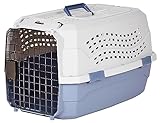
- Hard sided pet carrier with 2 doors for front and top entry; suitable for cat or medium size dog weighing 12 - 20 pounds
- Durable plastic construction with steel wire doors; screws keep the top and bottom sections securely connected
- Spring load latches ensure easy one-handed door opening and closing; top door swings open to the left or right and includes a top carry handle
- Plenty of air ventilation on the sides, top, and back of the carrier
- Note: Be sure to measure the size of the pet when choosing carrier size
| Source | Guidance | Qualification |
|---|---|---|
| CDC, “Pet Travel Safety,” page updated April 15, 2026 | Feed pets 3–4 hours before departure | General pet-travel guidance intended to help prevent car sickness or vomiting |
| AAFP/ISFM, 2022 Cat Friendly Veterinary Interaction Guidelines | Fast a cat for 2–3 hours before travel | Guideline advice for cats; it is not a universal rule for every medical condition or voyage |
Ask the cat’s veterinarian which timing fits your cat’s age, health, medications and trip length. Do not impose a long fast on a cat with a condition for which missed meals are risky. Follow the veterinarian’s instructions for water; bring water and a suitable bowl so hydration can be offered safely when appropriate.
Choose and set up a secure carrier
The carrier is a safety device, not a treatment for nausea. Use one that is large enough for the cat to stand, turn around and lie down, while remaining manageable to secure. It should have adequate ventilation and a stable base. A washable liner or absorbent bedding helps contain accidents; pack a spare liner and cleanup supplies.
- Fasten the carrier so it cannot slide, tip or fall when the boat accelerates, turns or rocks.
- Keep ventilation openings clear and do not drape fabric over them.
- Protect the carrier from direct sun, engine heat and cold drafts.
- Maintain a comfortable temperature; never leave the cat in a hot, enclosed area.
- Use familiar bedding, but avoid loose items that could obstruct the cat’s airway or ventilation.
- Keep the cat inside the carrier whenever an open deck, dock or cabin door could allow escape.
For a boat specifically, the reviewed veterinary sources confirm that sea travel can trigger motion sickness but do not establish which hull designs, wave heights, cabin locations or sailing conditions are best for cats. Do not present a particular part of a boat as proven to prevent seasickness. Ask the vessel operator about pet rules, secure locations and temperature control, and have a plan to return to shore or obtain veterinary help if the cat becomes severely ill.
PC Slower Than It Used to Be?
A free scan shows the junk files, broken settings and background clutter dragging Windows down - then fixes them in one click.Free scan · Windows 10 & 11Crashes, No Sound, or Screen Glitches?
Random freezes, missing sound and display glitches usually trace back to one bad driver. Find and replace yours safely.Free scan · under a minuteMedication: what a veterinarian may consider
Medication decisions belong to the cat’s veterinarian. The 2022 AAFP/ISFM guidelines state that maropitant may be prescribed four hours before travel for cats showing motion-sickness signs such as lip licking, drooling or vomiting. The July 2026 Merck Veterinary Manual reference describes maropitant for cats and says common antihistamines including meclizine and diphenhydramine are ineffective for feline motion sickness.
Rank #4

- Pet Carrier: 17.5” L x 11” W x 11” H, Recommended max load of 16 lbs cats small dogs. Please do not choose your carrier based on weight--please reference your pet's length and height in selecting a pet carrier size.
- Fits for under-seat dimensions of most airlines. Every airline has a specific set of rules and regulations, please contact with airline before flying with your cats small dogs.
- Mesh windows for ventilation, top and side entry with locking zippers for safety. Carrying handles, adjustable shoulder strap which can also be used as seatbelt, and back strap can fasten the pet carrier to your luggage.
- Pet carrier comes with a removable base insert, which creates a solid surface for your pet to stand on, along with a removable & hand washable cozy fleece pet bed, which offers a cozy sleeping space for your traveling cats small dogs.
- "Toys for pets, of textile materials". Mostly used as a Toy of Fabric Pet Home for pets playing and relaxing.
Those statements are clinical guidance, not an owner dosing schedule. A veterinarian must determine whether maropitant or another approach is suitable, taking account of the cat’s diagnosis, other medicines, age and the planned trip. Never select a human motion-sickness product, change a prescribed dose or give a supplement without veterinary direction.
UC Davis cautions that sedatives can affect temperature regulation and may wear off before the journey ends. A sedated cat can also be harder to assess in a moving environment. If a veterinarian prescribes a sedating medicine for a specific reason, ask how and when to use it, what level of drowsiness is expected, and what signs require help. Test the prescribed plan at home first, as advised by UC Davis, so unexpected effects are identified before departure.
A practical departure checklist
Use this checklist on the day of travel:
- Confirm the veterinarian’s feeding, water and medication instructions.
- Place the familiar liner or blanket in the carrier and pack replacements.
- Pack water, a bowl, food for after the advised fasting period, waste bags, paper towels and cleaning supplies.
- Carry the cat’s medical information and the veterinarian’s contact details.
- Inspect latches, straps and tie-down points before loading.
- Load the cat calmly, close the carrier securely and verify ventilation.
- Position the carrier away from direct sun, exhaust, engine heat and heavy foot traffic.
- Check the cat at regular intervals without repeatedly opening the carrier in an unsafe location.
Do not open the carrier on a dock or deck merely to comfort a frightened cat. An escape at that point can be more dangerous than temporary vocalizing.
What to do if signs start during the trip
Mild signs without vomiting
If the cat is lip licking, drooling or restless but breathing normally, reduce additional stress. Keep the carrier level and secure, improve ventilation without exposing the cat to cold or heat, and avoid offering food outside the veterinarian’s plan. Note the time and watch whether signs ease as motion settles.
Best Value

- Multiple Cats: Two large cat carriers that connect in a snap—plus, the side windows can be rolled up or down whenever you need! Ideal for traveling with multiple fur babies.
- Spacious 2-in-1 Design: The carrier transforms into a secure playpen or travel crate, suitable for pets up to 35 lbs. Ideal for cats, dogs, and other small to medium pets, it offers comfort and flexibility.
- Enhanced Travel Convenience: Comes with a collapsible travel bowl and a litter box. Perfect for car rides, vacations, or camping trips, ensuring your pet's basic needs are met.
- Secure and Safe: Features locking zippers to prevent escapes, reinforced stitching, and a stable base to keep your pet secure during travel.
- Easy Setup and Storage: Simple assembly with pipe connectors, designed to be safe and user-friendly. The foldable design allows for convenient storage when not in use, saving space.
Vomiting or diarrhea
Keep the cat contained and protect the airway by maintaining a normal, upright resting position. Do not force food, water or medication while the cat is actively vomiting. Clean the carrier when it is safe to do so and contact the veterinarian for advice, especially if vomiting repeats, diarrhea is profuse, blood is present or the cat becomes weak.
Severe distress or collapse
Breathing difficulty, collapse, inability to remain alert, repeated unproductive retching, marked weakness or signs that continue after motion stops require urgent veterinary assistance. Arrange the safest route to professional care rather than assuming the episode is ordinary seasickness.
When a veterinary check is important before sailing
Arrange a pre-trip consultation if the cat has previously vomited or developed diarrhea during travel, shows severe fear of the carrier, has a chronic illness, takes regular medication, or has unexplained nausea at home. Bring the travel log and describe the boat, expected duration, access to temperature-controlled areas and any previous medicines. The veterinarian can determine whether the signs fit motion sickness, anxiety or another problem and can provide an individualized plan.
Quick wins for a faster PC:
Fix the driver behind crashes, sound loss and screen glitchesFind Drivers →Clear out junk files and repair common Windows errorsFree Scan →Scan for outdated or missing drivers - takes under a minuteDriver Scan →A first episode that is mild and resolves promptly may not indicate a serious disease, but it should still be recorded. Repeated episodes, worsening severity or signs unrelated to movement deserve evaluation rather than repeated self-treatment.
Key limits of what is known
Veterinary references support the conclusion that cats can experience motion sickness on boats. They do not provide a cat-specific seasickness rate, prove that one type of boat is safer than another, or establish a universal feeding interval. They also do not support treating every vomiting episode as motion sickness. Applying the general principles—gradual acclimation, a secure and ventilated carrier, veterinarian-directed feeding and medication, and careful monitoring—keeps the advice within what is established.
Quick Recap
Product prices and availability are accurate as of the date/time indicated and are subject to change. Any price and availability information displayed on Amazon at the time of purchase will apply.





Leave a Reply