
Some links on this page are affiliate links: if you buy through them we may earn a commission, at no extra cost to you.
Not reliably. Research has found cuticular-hydrocarbon differences associated with queens, reproductive workers and ovarian activation in several Vespula studies, but those studies used solvent extraction followed by gas chromatography–mass spectrometry (GC-MS). No cited study validates paper chromatography or thin-layer chromatography (TLC) as an individual fertility test.
A hobby chromatogram can therefore be an exploratory chemical observation, not a diagnosis. Establishing reproductive condition requires species- and caste-matched reference samples, appropriate chemical identification and a separate biological check such as ovarian examination. Even then, the evidence concerns the measured state of that specimen—not a guaranteed prediction that a gyne will found a colony or that a worker will produce viable offspring.
As an Amazon Associate I earn from qualifying purchases.
Do these 3 things before closing this tab:
1Fix the driver behind crashes, sound loss and screen glitches2Repair Windows errors before they cause bigger problems3Scan for outdated or missing drivers - takes under a minuteWhat “fertility” means in a Vespula sample
The word fertility hides several different biological questions. A gyne (the future queen form) may have reproductive potential, but potential is not the same as being mated, having mature ovaries, successfully founding a nest or producing viable offspring. In a worker, “fertile” may mean ovarian activation, egg laying or successful reproduction; these are not interchangeable outcomes.
The published experiments measured narrower endpoints. Some measured the chemical composition of the insect cuticle or egg surface. Others dissected females and counted ovarian oocytes. A chemical profile can be associated with reproductive condition at a group level, while an oocyte count describes anatomical development at the time of dissection. Neither measurement alone proves mating success, future colony performance or viable descendants.
Popular on Amazon

- EXPLORE CHROMATOGRAPHY || Introduces learners to the system of chromatography - the oldest documented technique to separate chemical substances
- ENGAGING DEMONSTRATION || The activity allows learners to perform paper chromatography on three individual dyes, along with a mixture of dyes to determine the composition of the mixture
- CORE CONCEPTS || Students will develop an understanding of the components of a chromatography system as well as why different substances separate and move at different rates within the system
- EXCELLENT FOR REMOTE LEARNING || Includes an instruction manual with worksheets and enough materials for two students or two groups
- INCLUDES ALL REQUIRED MATERIALS || Includes 0.5ml bottles of crystal violet, safranin O, toluidine blue and chromatography mixture, 30ml bottle of ethanol, 2 chromatography sheets, 4 capillary tubes and 2 plastic cups
What the Vespula studies actually found
Vespula vulgaris: juvenile hormone, workers and chemical profiles
A 2021 study on V. vulgaris investigated juvenile hormone, worker ovary activation and chemical profiles. Its results indicate that juvenile hormone influenced the abundance of compounds associated with fertility and increased worker oocyte size. The study reported 68 hydrocarbons in the cuticular chemical analysis.
This was an experiment on hormone treatment and worker biology, not a validation study for a consumer test. The finding supports a biological connection between endocrine state, ovarian development and cuticular chemistry. It does not establish a concentration threshold that identifies a fertile individual in an unknown nest.
V. vulgaris: queen- and worker-laid eggs
In a 2012 egg-maternity study, researchers reported 51 hydrocarbon compounds on newly laid V. vulgaris eggs. Queen-laid and worker-laid eggs differed quantitatively. Longer-chain alkenes and methylated alkanes in approximately the C28–C31 range were especially more abundant on queen-laid eggs. Longer-chain methylated alkanes were also reported as more abundant on queens and reproductive workers.
These results show that egg-surface chemistry can carry information about maternity and that adult reproductive status may correlate with cuticular hydrocarbons. They do not show that a visible spot on a TLC plate identifies one of those compounds, nor that the same pattern applies to every Vespula species, nest or season.
Also popular on Amazon

- Laboratory grade chromatography test paper for separating mixtures into their components
- Produces a crisp separation of pigments for easy to interpret readings
- Pack of 50 strips enable many tests to be conducted
- This paper has a medium / fast filtration and is intended for general laboratory use
Vespula germanica: experimental worker activation
A 2022 study collected nests near Leuven, Belgium, in August and September 2019. Newly emerged workers received topical methoprene, precocene or an acetone control. Researchers extracted cuticular hydrocarbons with pentane and analyzed the extracts by GC-MS. They also dissected females under a stereomicroscope, sampled the Dufour’s gland and assessed ovarian oocytes.
In the oocyte comparison, 66 workers were dissected: 23 acetone controls, 18 methoprene-treated workers and 25 precocene-treated workers. Methoprene-treated workers had more oocytes than workers in the acetone and precocene groups. Their cuticular chemical profile fell between queens and the other treated-worker groups. The authors described chemical changes in eggs and the Dufour’s gland as subtler than changes in the cuticle.
Free tools Windows power users keep installed
One-click scans. No signup required.
Methoprene is an experimental manipulation. The result demonstrates that changing juvenile-hormone activity can alter worker ovarian development and chemistry under the study conditions; it is not evidence that a naturally collected worker can be classified with a home chromatogram.
Comparisons across Vespine species
A 2023 comparative study examined queens, virgin queens, reproductive workers and workers from four Vespine species. It reported caste-specific compounds in cuticle, egg-surface and Dufour’s-gland samples. The cross-species result is a warning against treating one “fertility signature” as universal. A compound, ratio or pattern associated with a reproductive worker in one species may be absent, shifted or unrelated to the same state in another.
Also popular on Amazon
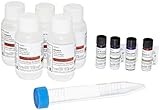
- Develops understanding of chromatography system components and how different substances move at different rates within the system
Why DIY paper or TLC chromatography is not equivalent to GC-MS
Chromatography separates components of a mixture. Paper chromatography and TLC can produce bands or spots, but a spot’s position depends on the stationary phase, solvent system, temperature, humidity, sample loading and many other conditions. A visual spot does not, by itself, identify a hydrocarbon or establish its amount.
The cited chemical studies used solvent extraction and then GC-MS. In the V. germanica paper, the methods state: “All the samples were analyzed in a system of Gas Chromatography coupled with Mass Spectrometry (GC-MS).” Gas chromatography separates volatile compounds under controlled conditions; the mass spectrometer supplies a molecular fragmentation pattern that helps identify them. The researchers then compared profiles among known queens, workers and treatment groups.
Recommended Free Tools
A home TLC plate generally lacks both the resolving power and the molecular identification provided by GC-MS. Two unrelated compounds can travel together, while one compound can produce a broad or faint mark. Even a repeatable pattern could reflect nest odor, contamination, age, diet, handling or solvent differences rather than reproductive condition. The reviewed studies provide no consumer-readable reference chromatograms, validated hobby protocol or diagnostic cutoff for a gyne or worker.
Two different ways to investigate reproductive condition
| Approach | What it measures | What the cited evidence supports | Main limitation |
|---|---|---|---|
| Anatomical examination | Ovarian development, such as oocyte number or size | An observed ovarian state in the dissected specimen | Requires dissection and taxon-, age- and season-appropriate interpretation; it does not identify hydrocarbons or prove mating or future reproductive success |
| Solvent extraction plus GC-MS | Relative chemical composition of cuticle, eggs or glands | Group-level associations between profiles, caste and reproductive or hormonal state in the studied species | Requires analytical instrumentation, compound identification and matched reference samples; no general individual fertility cutoff is established |
| DIY paper or TLC chromatography | Visual separation of an extract into spots or bands | At most, an exploratory pattern that might motivate further study | Not validated as an individual diagnostic and not interchangeable with GC-MS |
A stereomicroscope is useful for viewing structures during a dissection, as in the V. germanica work. It cannot detect a cuticular hydrocarbon signature and cannot establish fertility on its own.
Also popular on Amazon

- High Quality Chromatography: 100 Grade-1 chromatography paper strips ideal for a variety of indoor experiments
- Perfect Size For Use: 6 x 0.75 inches rectangular blotting paper provides easy handling and effective separation for ink or pigment analysis
- Reliable Performance: Medium/fast filtration speed with .172 mm thickness and 11 um particle retention for clear results every time
- Versatile Applications: Suitable for crafts, scrapbook projects, and educational purposes in labs or at home
- Trusted And Valuable: Perfect for students, adults, and anyone interested in science, offer great value and quality
If you still want to run a hobby investigation
Treat the project as comparative natural-history work rather than a test with a yes/no result. The following workflow reduces avoidable interpretation errors, but it does not turn TLC or paper chromatography into a validated diagnostic.
- Define the endpoint. Decide whether you are asking about ovarian development, caste-associated chemistry, egg maternity or a possible difference between known groups. Do not use “fertility” as a single undifferentiated label.
- Confirm the species and caste. Record how the insect was identified, whether it is a gyne, queen, virgin queen or worker, and its life stage. A pattern from V. vulgaris should not be used as a rule for V. germanica or another species.
- Control the sampling context. Record nest, collection date, location, season, age or emergence status, treatment history and whether the sample came from a cuticle, egg or gland. Nest-specific odors and environmental contaminants can overwhelm subtle biological differences.
- Use non-destructive observation first. Photograph and document external features and behavior before considering any chemical or anatomical procedure. If the insect is part of an active nest, follow local wildlife and safety rules and avoid unnecessary disturbance.
- Do not improvise hazardous extraction chemistry. The published V. germanica method used pentane, a flammable laboratory solvent. A household setup is not an adequate substitute for a fume hood, solvent-rated containers, waste handling and trained supervision. A university, museum or accredited analytical laboratory is the appropriate setting for solvent work.
- Build a reference set. A single unknown sample cannot define a signature. Meaningful comparisons require multiple known queens, virgin queens, reproductive workers and ordinary workers from the same species and comparable life stages. Include procedural blanks to reveal contamination.
- Keep the separation method constant. If an exploratory plate is used, keep the stationary phase, solvent composition, development distance, loading amount, drying time and imaging conditions identical across all samples. A changed procedure can create a changed pattern even when the biology is identical.
- Record results as observations, not diagnoses. Describe spot positions, intensity and repeatability. Do not label a spot as a named hydrocarbon without instrumental identification. Do not convert a visual pattern into “fertile” or “infertile.”
- Seek independent confirmation. Send appropriately prepared samples to a laboratory that can perform GC-MS or another validated chemical analysis, and compare the result with direct reproductive observations where ethically and legally possible. Confirmation must use reference specimens from the relevant species and caste.
How to interpret a chemical difference
Association is not an individual test
If reproductive workers have higher relative amounts of a hydrocarbon class in a study, that is a population-level association under defined conditions. It does not mean every worker with that chemical pattern has active ovaries, nor that every fertile worker will show the same abundance. Biological variation, age, nest membership and season all matter.
Relative abundance is not a simple presence-or-absence marker
The V. vulgaris findings emphasize quantitative differences, including compounds in the C28–C31 range. “More abundant” is a comparative statement that depends on how the sample was extracted, normalized and analyzed. A faint or strong TLC spot cannot reproduce that quantitative comparison reliably without validated calibration.
Different tissues answer different questions
Cuticle, egg surface and Dufour’s gland are chemically distinct sample types. A profile from an egg should not be interpreted as an adult cuticular profile. The comparative Vespine work found caste-specific compounds across these materials, reinforcing the need to match the sample type to the biological question.
Also popular on Amazon

- Laboratory grade chromatography test paper for separating mixtures into their components
- Produces a crisp separation of pigments for easy to interpret readings
- Pack of 50 strips enable many tests to be conducted
- This paper has a medium / fast filtration and is intended for general laboratory use
- Made in an ISO compliant facility and backed by the Bartovation Satisfaction Guarantee
What an ovarian observation can and cannot establish
Dissection can reveal ovarian development and allow oocytes to be counted or measured, as in the V. germanica experiment. That is direct evidence about the anatomy of the individual at the moment it was preserved and examined.
It does not establish whether a gyne has mated, whether sperm is viable, whether eggs will develop normally, or whether a colony will be founded successfully. In workers, developed ovaries indicate physiological activation, not necessarily successful egg laying or viable progeny. The cited studies also do not provide a general home scoring system that accounts for every species, age, caste and seasonal state.
Quick wins for a faster PC:
Clear out junk files and repair common Windows errorsFree Scan →Fix the driver behind crashes, sound loss and screen glitchesFind Drivers →Repair Windows errors before they cause bigger problemsFix Now →Common mistakes and better alternatives
- Mistake: treating one visible band as a fertility marker. Better: regard it as an unidentified separation feature until GC-MS or another validated method identifies the compound.
- Mistake: pooling all Vespula species. Better: use species-specific reference groups and report the exact taxon.
- Mistake: calling a gyne “fertile” from appearance alone. Better: distinguish reproductive potential, ovarian state, mating status and successful founding.
- Mistake: using the methoprene result as a natural diagnostic rule. Better: describe it as evidence from experimentally treated V. germanica workers.
- Mistake: assuming a microscope replaces chemical analysis. Better: use microscopy for anatomy and GC-MS for chemical profiling; they answer different questions.
- Mistake: ignoring safety. Better: avoid flammable solvent extraction outside a properly equipped laboratory and follow local rules for collecting stinging insects.
A practical decision guide
| Your question | Most defensible method | What you can report |
|---|---|---|
| Does this dissected female show ovarian development? | Dissection with appropriate microscopy and taxonomic expertise | Observed oocyte number, size or developmental state, with species and life-stage qualifications |
| Do known groups differ chemically? | Controlled extraction and GC-MS using matched reference samples | Group-level differences in identified compounds or relative abundances |
| Can I screen an unknown individual at home? | No validated DIY method is established by the cited studies | Only an exploratory chromatographic pattern, not a fertility classification |
| Will this gyne found a colony? | Neither the cited chemical nor anatomical method provides that prediction | A qualified statement about measured chemistry or anatomy, not future colony success |
Bottom line
Vespula reproductive condition can be associated with chemical profiles, especially cuticular hydrocarbons, and ovarian development can be observed anatomically. The evidence comes from species-specific studies using GC-MS, dissection and controlled comparisons. DIY paper or TLC chromatography has not been validated as a reliable way to classify a gyne or worker as fertile. Use it, if at all, as a carefully documented exploratory observation, and reserve fertility claims for results supported by appropriate reference samples, validated chemical identification and direct biological assessment.





Leave a Reply