
Windows Errors? Fix Them Before They Spread
Repair common Windows errors and clear accumulated junk for a smoother, more stable PC - no reinstall needed.Free scan · no reinstallCrashes, No Sound, or Screen Glitches?
Random freezes, missing sound and display glitches usually trace back to one bad driver. Find and replace yours safely.Free scan · under a minuteYes, dogs can remember things about toys, including a toy’s learned name, identity and sometimes where to search for it. But that is different from understanding the toy’s mechanical operation. The clearest evidence comes from a small, unusually capable group called Gifted Word Learner dogs. Studies have not established how many ordinary pet dogs learn toy names, and they have not directly shown that dogs understand why a squeaker squeaks, how a puzzle releases food or how a ball launcher works.
“Remembering a toy” can mean several different things
When people ask whether a dog remembers a toy, they may mean that the dog recognizes its appearance, knows a spoken label, remembers where it was left, tracks it after it disappears or understands how to operate it. Those are separate abilities. Success in one does not prove success in the others.
As an Amazon Associate I earn from qualifying purchases.
| What may be remembered | What a successful test shows | What it does not establish |
|---|---|---|
| A spoken label such as a toy’s name | The dog learned an association between a word and a particular object. | Human-like language or an understanding of the toy’s purpose. |
| Object identity | The dog can select the requested item from familiar objects. | That the dog can explain how the item works. |
| Location | The dog has information about where an object was seen or placed and may use it in a search. | That the dog remembers the object’s name or mechanism. |
| Existence while hidden | The dog tracks an object after it passes out of sight, using object-permanence or working-memory processes. | Knowledge of the object’s function or internal parts. |
| Mechanical operation | Only a test of cause and effect—such as operating a latch or activating a squeaker—could directly address this. | The cited toy-memory studies did not provide that test. |
Some dogs learn toy names and retain them for months or years
Six or twelve names learned through play
Dror and colleagues studied Gifted Word Learner dogs in 2021. Owners taught either six or twelve new toy names over one week through social interaction and play, including requests to fetch a named toy. Most dogs in the small, selected sample learned the labels. Follow-up tests found that most retained those associations for at least two months.
Recommended Free Tools
This is evidence that a dog can connect a spoken word with a particular object and retrieve that object on request. It is not a normal learning-rate estimate for dogs in general. The participants were chosen because they already showed exceptional skill with object labels, so an average family dog may learn more slowly, learn fewer names or rely more heavily on visual and contextual cues.
#1 Best Overall

- 【PRODUCT SIZE】10 inch*10 inch*1.3 inch.
- 【3 WAYS TO PLAY, UPGRADE SLOW FEEDER】Our dog mental stimulation toys have a unique squeak button in the middle, which make it easier to attract the attention of dogs and cats. Three different difficulty designs and the 16-hole dog treat dispenser design maximize slow feeding time, even beyond 20 minutes.
- 【FUNNY STIMULATING TOYS】All kinds of dogs and cats love the puzzle game of Spin & Slide and the Seek & Hide with their smell sense and paw skills to find food. Combining circular orbit sliding game and linear orbit sliding game, smart dog and cat must move the slider correctly to get the food reward hidden in the maze.
- 【NON-REMOVABLE PARTS DOG PUZZLE】Our dog treat puzzle is made of non-toxic materials, very durable and suitable for pets to play for a long time. This dog toy has no removable parts because the design has built-in play parts that fold tightly and won't fall off easily.
- 【ANTI-SLIP & EASY TO CLEAN】: The four corners of the bottom are equipped with four anti-skid pads, which can be well fixed during the dog's slow food process; It is easy to clean, also dishwasher safe.
At least two years without post-learning practice
A 2024 study tested five Gifted Word Learner dogs that had learned object labels previously. The dogs retained those labels for at least two years without post-acquisition exposure. That result demonstrates unusually durable long-term memory for object names in that group.
The study’s authors specifically cautioned that the finding cannot be generalized to most family dogs or to other kinds of memory. A dog remembering a word-object association for two years does not mean it will remember where every toy was put, recall a multi-step game or understand a toy’s internal mechanism for the same period.
Can an ordinary dog learn the names of toys?
There is no population-wide statistic showing what proportion of household dogs can learn toy names. You can nevertheless test the skill carefully at home without assuming that a failure means your dog has poor memory.
Free tools Windows power users keep installed
One-click scans. No signup required.
- Choose clearly different objects. Start with two familiar toys that differ in shape, texture or size. Avoid introducing several nearly identical balls at once, because the dog may be responding to appearance or smell rather than the label.
- Pair one word with one object. During relaxed play, say the same short name immediately before presenting or tossing that toy. Keep the word consistent; changing between “blue ball,” “ball” and “fetch” makes the association ambiguous.
- Use brief retrieval games. Ask for the named toy, reward a correct choice with play and stop while the dog is still interested. The 2021 experiments used social interaction and retrieval, not passive exposure alone.
- Test against a distractor. Put the named toy beside another familiar object and ask for it without pointing. Several correct choices on different occasions are more informative than one lucky selection.
- Check whether the word transfers. Move the toy to a new room or change its orientation. Consistent selection suggests an association with the object rather than memorization of one location or visual arrangement.
- Allow for individual differences. If the dog loses interest, confuses the toys or prefers to play without retrieving, that does not show that dogs as a species cannot learn labels. It shows only that this training setup did not produce a reliable response for this dog.
Learning by overhearing is possible in a selected group
An Associated Press report in 2026 described a Science study in which seven out of ten Gifted Word Learner dogs learned new toy labels by overhearing their owners speak to another person. The dogs were not being directly instructed during those conversations. The result is notable because it suggests that this particular group can extract a word-object association from overheard interaction.
Rank #2

- INTERACTIVE DOG TOYS FOR BOREDOM WITH DURABLE ROPE:Unleash instincts with this smart automatic dog toy featuring 2 operational modes (Fast/Slow) and two durable heavy-duty tugging ropes. Beyond regular turns, its wide, unpredictable rolling motions mimic real prey. Upgraded with analog barking and bird sounds, it sparks curiosity to keep high-energy dogs engaged in chasing and pouncing. Perfect for small medium dogs, this motion-activated smart toy effectively reduces separation anxiety. 2
- DURABLE E-TPU DOG BALL FOR AGGRESSIVE CHEWERS: Lighter, quieter, and safer for enthusiastic players! Engineered with a revolutionary new composite structure of eco-friendly E-TPU+ABS inner core, this 80mm large-sized dog ball is extraordinarily chew-resistant and flexible. It perfectly protects your dog’s teeth and gums during intense biting while preventing accidental damage. Designed with a 35db low-noise structure, it prevents loud clattering, making it the perfect motion-activated dog toy for peaceful play on tile floors, carpets, and wood floors. 2
- RGB LIGHT SHOW FOR ALL-TERRAIN & NIGHTTIME PLAY: No more losing toys in dark corners or outdoor lawns! Featuring a vibrant built-in RGB light show and automatic spin technology, this glowing dog ball instantly captivates your pet's attention in low-light environments. Driven by a premium Motor, it boasts powerful multi-surface adaptability, rolling and bouncing effortlessly from indoor hardwood to outdoor grass, ensuring your puppy enjoys professional-grade canine enrichment and active fitness anywhere, anytime. 2
- SMART MOTION ACTIVATED & 2 SPEED AUTO ROLLING:Keep your high-energy pet stimulated all day! This motion-activated dog toy utilizes an advanced internal motion sensor to drive dual automated running modes. Whether set to Fast or Slow speed, the self-moving dog ball rolls and turns unpredictably across tile, wood floors, and carpets to mimic natural prey. It provides excellent canine enrichment, mental stimulation, and effective boredom relief, capturing your pup's attention instantly. 2
- IP54 DUSTPROOF WATERPROOF & UPGRADED BIG BATTERY LIFE: Ultimate durability meets tech-forward convenience! Boasting an IP54 dustproof and waterproof rating, the resilient outer E-TPU shell and cord can be easily wiped or rinsed for clean, slobber-free maintenance. Powered by an upgraded 500mAh big battery with Type-C 5V fast charging, this eco-friendly smart pet toy features an energy-saving standby mechanism to deliver long-lasting, reliable runtime for daily training.2
It is not evidence that seven in ten dogs generally learn this way. The figure applies to ten selected Gifted Word Learner dogs, and the original Science paper was not independently assessed in the report used here. The AP quoted study author Shany Dror, affiliated with Eötvös Loránd University and the University of Veterinary Medicine in Austria: “This is the first time that we see a specific group of dogs that are able to learn labels from overhearing interactions.” Animal-cognition expert Heidi Lyn, who was not involved, said, “animals have a lot more going on cognitively than maybe you think they do.”
Remembering what a toy is differs from remembering where it is
A dog may identify a toy correctly yet search inefficiently for it. Kaminski, Fischer and Call’s 2008 study examined this distinction with two highly trained dogs, Rico and Betsy, using familiar objects that were mainly children’s toys and balls.
Both dogs retrieved requested object identities reliably: Rico made 46 correct retrievals out of 48, and Betsy made 38 out of 40 in the reported test. The more difficult question was whether each dog combined what the object was with where it had been seen.
Rico directed his first search to the correct room more often than chance would predict, indicating that he could use object identity and location together when planning where to look. Betsy showed a patterned search preference rather than clearly integrating the object and location information. The authors concluded that this capacity lies within the species’ range but is not necessarily present in every dog.
Rank #3
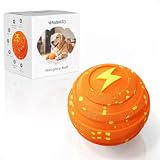
- 【Interactive Dog Ball】: This smart interactive dog toys runs in a 2-minute active cycle followed by a 20-second pause, then enters standby mode. When rolled, shaken, or touched, it reactivates—keeping dogs engaged, active, and chasing for hours.
- 【Premium E-TPU Material】: Made from 100% pet-safe E-TPU, this interactive dog toys is ultra-light, shock-absorbing, and highly bite-resistant while remaining gentle on teeth. The replaceable shell keeps the dog ball fresh, extends its lifespan, and is eco-friendly for safer, longer play.
- 【Waterproof & All-Weather】: Rated IPX7 waterproof, this dog interactive toys works indoors, outdoors, and even in shallow water. Whether for fetch, chase, or use as a Moving Dog Toy, it’s built to handle splashes, drool, and dirt—just tighten the shell before use.
- 【Long Playtime & Fast Charge】: Enjoy up to 4 hours of fun on a single charge. The Type-C port fully recharges in under 1 hour, so your dog toys interactive are always ready for the next play session without long waits.
- 【For Large & Small Dogs】: At 3.15 inches, this dog toys balls is ideal for dogs 35 lbs and up. Supervise play to encourage chasing and interaction, making it a great choice for interactive dog toys for large dogs with both durability and excitement.
Therefore, a dog that races to the right room for a named ball is showing a combination of learned identity and location memory. A dog that eventually finds the ball after searching every room may know the object perfectly well while using a less efficient search strategy.
What hidden-object tests actually measure
Object-permanence and working-memory experiments ask whether a dog continues to represent an object after it disappears from view. In a 2003 study of dogs’ working-memory duration, researchers used an object-permanence task in which an object moved behind a box, followed by a delay before the dog could search.
Performance in such a task can show that the dog tracks the object’s continued existence across a short interruption. It does not show that the dog knows what the object is for or how it operates. A dog can remember that a ball went behind a barrier without understanding the physics of bouncing, and it can lose track of a hidden toy without forgetting the toy’s identity.
The Tool Desk
Outbyte PC Repair FREEClear out junk files and repair common Windows errorsFree Scan →Outbyte Driver Updater FREEScan for outdated or missing drivers - takes under a minuteDriver Scan →There is no direct evidence here that dogs understand toy mechanisms
The label and search studies test associations, recognition and memory. They do not test whether a dog has a mechanical model of a toy. To establish that, an experiment would need to present a mechanism and measure whether the dog generalizes the cause-and-effect relationship to new situations—for example, opening a novel latch after seeing how a similar latch works, or selecting the part of a toy that activates a hidden squeaker.
Rank #4
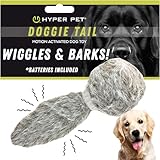
- PLUSH SQUEAKY DOG TOY THAT WIGGLES, VIBRATES, & BARKS – Entice your dog to run, chase, play, and exercise. This interactive dog toy encourages fun stimulation for dogs of all ages. Fun dog toys for small dogs, dog toys for medium dogs, and large dog toys.
- REDUCE ANXIETY AND BOREDOM – With funny sounds and erratic movements, these funny dog toys & plush dog toy will capture your puppy or adult dog’s interest and keep them engaged with its interactive dog toy movements. The wobble and wiggle will keep them busy and is a great alternative to dog puzzle toys and classic dog enrichment toys.
- TIPS TO ACTIVATE: Pull out tab and give hard shake. If toy does not turn on, feel around for ON/OFF switch located underneath cover, hold button for 2 seconds, and give hard shake. The ball will activate, vibrating and making noise for approximately 10 seconds. Once this stops, the ball will reactive when rolled, thown, or played with. When playtime is over, simply press button down to turn dog ball off and preserve battery life. PLEASE SEE VIDEOS FOR HELP.
- BATTERY OPERATED PROLONGED PLAY – To change batteries, remove the plastic ball from plush toy cover. Use tab to open the giggle dog toy ball. Remove the battery compartment and insert 3 AAA batteries. This interactive dog toy has an automatic stop feature after a period without use to extend battery life. (Batteries are included with the Hyper Pet Doggie Tail)
- NEW COVERS AVAILABLE – Additional Hyper Doggie Tail covers are available for your pet. Hyper Pet is a Cosmic Pet Brand. Color of Doggie Tail Plush May Vary. Please always supervise your pet while in use.
Everyday behavior can look mechanical without proving mechanical understanding. A dog may repeatedly press a button because that action has been reinforced with food, or bite a squeaker because the sound is stimulating. Those actions demonstrate a learned relationship between behavior and outcome. They do not by themselves show that the dog understands internal parts, design or purpose in the human sense.
Toy interest changes through habituation
A 2012 study of kennel-housed dogs examined what happened after the animals became habituated to toys and were then shown changed objects. Reduced interest in object-oriented play reflected habituation to the toy’s overall set of stimulus properties rather than to one sensory modality alone.
That finding helps explain why a dog may ignore a toy for a while and then investigate it again after its appearance, smell, movement or context changes. The study did not identify a particular toy type, material, squeaker or puzzle design as superior for maintaining interest. It therefore cannot support a claim that one commercial design improves memory or keeps every dog engaged longer.
Quick wins for a faster PC:
Scan for outdated or missing drivers - takes under a minuteDriver Scan →Clear out junk files and repair common Windows errorsFree Scan →Fix the driver behind crashes, sound loss and screen glitchesFind Drivers →How long might a dog remember a toy?
The answer depends on what is being remembered and which dogs are tested.
| Memory target | Evidence and interval | Population and qualification |
|---|---|---|
| New spoken names | Most tested dogs retained labels for at least two months after learning six or twelve names over one week. | Small sample of selected Gifted Word Learner dogs; 2021 study. |
| Previously learned object labels | Labels were retained for at least two years without post-acquisition exposure. | Five Gifted Word Learner dogs; 2024 study; not generalizable to most family dogs or other memory domains. |
| Object identity during retrieval | Rico and Betsy made 46/48 and 38/40 correct object retrievals, respectively. | Two highly trained dogs; 2008 study. |
| Hidden-object representation | A delay was inserted between disappearance and the search response. | Working-memory and object-permanence task; 2003 study; no mechanical-understanding conclusion. |
These intervals should not be combined into a single claim such as “dogs remember toys for two years.” The two-year figure concerns labels in five exceptional dogs, while the hidden-object work concerns temporary tracking and the retrieval study concerns trained performance with familiar objects.
What the evidence means for daily play
- Use a small set of distinctive toys if you want to teach names, and keep each label stable.
- Practice retrieval in more than one room so a correct response is not tied only to one location.
- Judge learning by repeated, unprompted choices rather than by a single excited fetch.
- Separate memory from motivation: refusing a toy may reflect fatigue, habituation, competing smells or low interest rather than forgetting.
- Do not treat a dog’s ability to find, fetch or manipulate a toy as proof that it understands the toy’s engineering.
- Be cautious when extrapolating from Gifted Word Learner dogs. Their abilities show what dogs can do under some conditions, not what every family dog will do.
The strongest conclusion is precise: dogs can learn and remember associations involving toys, and a few unusually skilled dogs can retain many object labels for years. Evidence for remembering a toy’s location or tracking it while hidden addresses different memory systems. The cited work does not directly demonstrate that dogs understand how toys work mechanically.
Quick Recap
Product prices and availability are accurate as of the date/time indicated and are subject to change. Any price and availability information displayed on Amazon at the time of purchase will apply.





Leave a Reply