No—don’t feed ice cream to fish. It is a human dessert, not a food formulated to meet a fish’s nutritional needs. If a fish accidentally samples some, remove any visible leftovers and watch for changes; the available evidence does not establish a safe dose or show that every accidental bite is acutely poisonous.
Why ice cream isn’t a suitable fish food
Fish foods are designed around the species’ nutritional needs, feeding habits, and the size and texture of food they can eat. Ordinary ice cream is not a balanced fish diet or a suitable substitute for formulated aquarium food. University of Florida IFAS Extension explains the considerations involved in preparing fish feeds, including balance, palatability, water stability, and appropriate size and texture (Preparing Your Own Fish Feeds).
As an Amazon Associate I earn from qualifying purchases.
There is an important distinction between an ingredient used in a formulated feed and a dessert offered on its own. IFAS lists skim milk powder among possible protein ingredients for fish feeds, but a formulated feed combines ingredients to make a diet; that does not make ice cream an appropriate snack.
Fish diets vary by species and life stage
There is no single diet that suits every fish. Species, age, mouth size, and feeding behavior all matter, and some aquarium fish need specialized foods. IFAS notes that flakes, pellets, and granules are common prepared feeds, while some fish cannot take typical commercial food. Seahorses and seadragons, for example, have long, tubular mouthparts that limit what they can eat (Fish Nutrition).
#1 Best Overall

- TROPICAL FORMULATION: Highly digestible ingredients for use as staple food for your top- and mid-feeding tropical fish.
- COMPLETE DIET: Nutritionally balanced for optimal health.
- ACTIVE LIFE FORMULA: With added antioxidants for healthy cells, select proteins for growth and prebiotics for digestion.
- CLEAR-WATER FORMULA: Won’t cloud water when used as directed.
- LESS WASTE: Feed two to three times daily, only as much as your fish can consume within three minutes.
Choose food intended for your fish’s species and life stage. Check the label for whether it is a staple diet or a supplement, and match its form and particle size to how your fish feeds. Food may float or sink depending on the fish’s needs; flakes soften and sink slowly. These practical details are better guides than whether a food seems like a small or harmless human treat.
What about dairy or lactose?
It would be too broad to say that all fish are lactose intolerant. A 1995 study tested juvenile tilapia on diets containing different carbohydrates; in those study diets, tilapia used lactose less well than maltose or sucrose. The experiment was about juvenile tilapia and carbohydrate utilization—not ice cream, other fish species, or accidental exposure (Aquaculture study on disaccharide use by juvenile tilapia).
Rank #2

- TROPICAL FORMULATION: Highly digestible ingredients for use as staple food for your top- and mid-feeding tropical fish.
- COMPLETE DIET: Nutritionally balanced for optimal health.
- ACTIVE LIFE FORMULA: With added antioxidants for healthy cells, select proteins for growth and prebiotics for digestion.
- CLEAR-WATER FORMULA: Won’t cloud water when used as directed.
- LESS WASTE: Feed two to three times daily, only as much as your fish can consume within three minutes.
The practical reason to avoid ice cream is simpler: it is not a balanced, species-appropriate fish food. The presence of a dairy-derived ingredient in some formulated feed does not change that.
What to do if your fish ate some
The available sources do not establish a safe amount of ice cream for fish or a predictable outcome after accidental ingestion. If your fish got a small amount:
Rank #3

- Contains one (1) API TROPICAL FLAKES Fish Food 1.1-Ounce Container
- Contains key nutrients for a complete and balance diet for all tropical community fish
- Includes menhaden and squid for ideal amounts of amino acids and optimal growth
- Formulated to help fish more readily use nutrients which means less waste and clean, clear water
- Feed twice a day the amount of food your fish will consume in three minutes
- Remove visible leftovers without unnecessarily disturbing the fish.
- Check the aquarium’s usual water parameters.
- Observe for abnormal breathing, gulping at the surface, hiding, unusual coloration, or loss of appetite.
Uneaten food can add organic waste to the aquarium, and overfeeding is a common cause of declining water quality. If symptoms appear or the fish consumed a substantial amount, contact a veterinarian familiar with fish or an aquatic-animal professional. Avoid adding salt, medication, or large amounts of water treatment products without species-specific advice; online treatment suggestions can make fish worse. The University of Illinois College of Veterinary Medicine discusses warning signs and fish-veterinary care in its care and feeding guidance.
How much and how often should you feed?
Overfeeding is a more useful risk to focus on than finding an unusual treat. IFAS gives 0.5–1.0% of body weight per day as a general maintenance feeding amount, not a universal prescription for every species, age, or aquarium. It also says one feeding per day is plenty for most pet fish, with younger stock needing more frequent small meals, and that fish should probably be fed at least five days per week. Follow species-specific guidance rather than treating those general figures as a fixed rule.
Rank #4

- TROPICAL FORMULATION: Tetra Tropical Color Flakes were created with the fishkeeper’s success in mind to provide all the nutrition your fish needs.
- COLOR ENHANCING: Formulated to boost your fish’s naturally brilliant colors.
- DESIGNED FOR: Perfect for top- and mid-feeding fish.
- ACTIVE LIFE FORMULA: With added antioxidants for healthy cells, select proteins for growth and prebiotics for digestion.
- CLEAR-WATER FORMULA: Won’t cloud water when used as directed.
Veterinarian Judilee Marrow of the University of Illinois Veterinary Teaching Hospital notes that obesity can result from overfeeding, an unsuitable diet, or a diet that is less diverse than the fish would naturally eat. Her point reinforces why a species-appropriate diet and measured portions matter more than offering human foods.
Free tools Windows power users keep installed
One-click scans. No signup required.
A fish-food fun fact
Fish food can be made to float or sink to suit different feeding behaviors, and flakes sink slowly as they soften. A University of Florida classroom activity also demonstrates a goldfish/carnivore diet recipe with ingredients such as tuna or sardines, flour, cornmeal, soybean meal, egg powder, spirulina, wheat germ, gelatin, and cod-liver oil (Aquatic Animal Nutrition: Make a Fish Food). That is an educational activity, not a universal recipe for home aquariums; making an individual fish’s food requires understanding its nutritional needs.
Quick Recap
Best Value
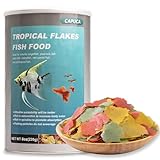
- High Quality Ingredients : Our Tropical fish food Tropical Fish is made from carefully selected natural ingredients, which are derived from fresh meat, vegetables and seaweed. No additives, artificial flavors, colors and other harmful ingredients. The main ingredients are Fish meat, Antarctic krill, Soy, Wheat,Corn, Spirulina, Astaxanthin, Carotene, Natural minerals, Vitamins(A, D3, C, E,B1, B2, B6 &B12)
- Enhanced Color Promote Growth : Tropical flakes fish food rich in astaxanthin and spirulina to promote the formation of rich, beautiful color tropical fish. A quality diet rich in high-quality protein, calcium and natural vitamins is ideal for the growth of tropical fish and enhances their immunity
- Keep Water Clean : Tropical flakes ultra fresh fish food contain probiotics that help dissolve the fish's excrement and residue, keeping the water clean
- Easy Ingestion and Digestion : The Ultrathin flakes are very suitable for All kinds of tropical fish to eat, and the Ultra-thin design allows Tropica fish to better digest and absorb
- Suitable Species : For all tropical fish such as - koi, colorful angelfish, peacock fish, betta fish, zebrafish, red parrot fish and so on
Product prices and availability are accurate as of the date/time indicated and are subject to change. Any price and availability information displayed on Amazon at the time of purchase will apply.




