Recommended Free Tools
Yes—many fish can regrow a damaged or partially lost fin, especially after a clean tear or limited injury. Regrowth is less certain when damage reaches the fin base or supporting structures, infection is advancing, or the cause of the injury remains. The first priority is to work out whether the fin was torn once or is continuing to erode, then address water quality, tank conditions, and any signs of illness.
How fish fin regeneration works
Fin regrowth is a biological repair process, not an instant return to the original shape. In a zebrafish study, the wound surface was covered by epidermis at about 24 hours; an apical epidermal cap formed by day two, a blastema by about day three, and a collagenous matrix for the fin rays began developing by day four. These are early stages in a laboratory model, not a timetable that applies to every aquarium fish.
Regeneration has been documented in several teleosts, including grass carp, common carp, koi carp, and zebrafish. The result depends on species, age, fin type, injury depth, and how much of the fin’s supporting tissue remains. Damage at or near the fin base generally raises more concern than a small loss at the edge.
How long does a fish fin take to grow back?
There is no single reliable timeline for every fish. In a 2009 study by Peking Union Medical College researchers, some caudal fins showed visible regeneration after two weeks. In a 2006 study of four freshwater species after partial fin clipping, fins almost reached their original length after 84 days. Those findings came from specific study conditions and species; they are not a promise that a pet fish’s fin will recover on the same schedule.
Quick wins for a faster PC:
Fix the driver behind crashes, sound loss and screen glitchesFind Drivers →Repair Windows errors before they cause bigger problemsFix Now →#1 Best Overall
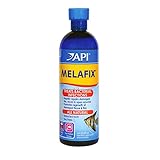
- Contains one (1) API MELAFIX Freshwater Fish Bacterial Infection Remedy 16-Ounce Bottle
- Heals bacterial infections and repairs damaged fins, ulcers and open wounds
- Contains natural, botanical tea tree extract to quickly and rapidly help fish
- Helps treat newly-introduced fish to reduce risk of disease outbreak in freshwater aquariums
- Use daily for a week when treating infections and for 3 days as a preventive when adding new fish
Age can also matter: research on zebrafish and turquoise killifish found significantly reduced caudal-fin regeneration in older individuals, associated with changes in angiogenesis. General health, nutrition, stress, and the extent of injury can further affect recovery, so judge progress by whether the damage stops advancing and new tissue gradually appears rather than by a fixed deadline.
Is it a torn fin or fin rot?
A one-time tear often has an identifiable cause, such as a sharp decoration, rough handling, or a tank mate’s bite. If the fish is otherwise well and the damaged edge stops receding, careful observation and correcting the cause may be reasonable. An edge that keeps fraying or disappearing suggests an ongoing problem, which can include infection rather than a single mechanical injury. Veterinarian Massimo Orioles notes that a presentation “could be compatible with fin rot, which is a bacterial or fungal infection.” Appearance alone cannot confirm the cause.
Rank #2
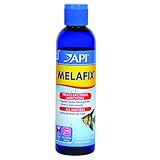
- Contains one (1) API MELAFIX Freshwater Fish Bacterial Infection Remedy 4-Ounce Bottle
- Heals bacterial infections and repairs damaged fins, ulcers and open wounds
- Contains natural, botanical tea tree extract to quickly and rapidly help fish
- Helps treat newly-introduced fish to reduce risk of disease outbreak in freshwater aquariums
- Use daily for a week when treating infections and for 3 days as a preventive when adding new fish
| What you observe | What it may suggest | What to do |
|---|---|---|
| A tear or notch that remains stable | A one-time injury is possible, particularly if there is a plausible source of trauma. | Remove the hazard, check water conditions, and follow the edge with dated photographs. |
| Fraying or erosion that continues to advance | Progressive fin damage, including possible infection, needs investigation. | Check water and husbandry, consider quarantine when practical, and seek veterinary guidance if it worsens. |
| Damage reaching the fin base, body, or accompanied by ulcers or behavior changes | More extensive injury or disease is possible. | Contact an aquatic veterinarian promptly rather than relying on observation alone. |
What to do if your fish’s fin is damaged
- Test the water first. Correct any measured problem before adding medication. Orioles recommends beginning with a water sample; appropriate parameters depend on the species and aquarium, so there is no universal set of target values for all fish.
- Stop repeated injury. Inspect decorations and equipment for sharp edges, avoid rough nets or handling, and assess crowding and fin-nipping tank mates. Review recent additions and changes to the system as well as the fish’s stocking and housing history.
- Consider separation if infection is suspected. Quarantine can reduce exposure to other fish and may make observation or treatment easier when a suitable separate system is available. Merck’s aquarium-fish guidance emphasizes quarantine and biosecurity; avoid moving a fish into an unprepared or unstable setup.
- Keep conditions stable and species-appropriate. Maintain suitable temperature, filtration, oxygenation, and nutrition. Wound management calls for supportive care and correction of both infectious and noninfectious causes, not just treatment of the visible fin.
- Document the margin. Take clear, dated photographs from a consistent angle. A stable wound followed by gradual growth of translucent or pigmented tissue is more encouraging than an edge that continues to recede.
- Escalate if the fish deteriorates. Worsening erosion, redness, ulcers, lethargy, loss of appetite, breathing changes, or damage reaching the body are reasons to contact an aquatic veterinarian.
When recovery is less likely
- Deep or extensive injury: Regrowth depends partly on remaining musculature and supporting structures. Destruction of the fin base or substantial tissue loss can limit the outcome.
- Continuing infection or trauma: A fin cannot recover normally while disease or repeated damage is still removing tissue.
- Age or poor general condition: Older fish regenerated caudal fins more slowly in laboratory studies. Chronic stress, poor nutrition, or systemic disease may also impair recovery, though no universal rate can be assigned.
In a controlled sturgeon-healing study, mineralization took longer when more tissue was removed and when injuries were near the fin’s point of articulation. Survival was near 100% in that study, but that figure should not be applied to home aquariums or treated as a prognosis for an injured pet.
Independent reader supportYour contribution helps us test, update, and keep practical guides available for everyone.Why medication is not a universal fix
Fin damage can result from infection, physical injury, or husbandry problems, and treatment depends on the cause. Antibiotics, salt, and other medications are not interchangeable cures: species tolerance, plants and invertebrates in the aquarium, diagnosis, and local regulations all matter. A manufacturer’s aquarium-salt chart notes that tissue regrowth may not be immediately apparent after treatment, but that guidance does not establish salt as effective or suitable for every fish. Get veterinary advice when the cause is unclear, the fin is worsening, or the fish shows other symptoms.
Quick Recap
Best Value
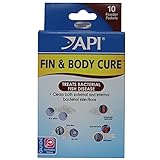
- Contains one (1) API FIN and BODY CURE Freshwater Fish Powder Medication 10-Count Box
- Treats body slime, eye cloud, fin and tail rot, open red sores, gill disease, and hemorrhagic septicemia
- Causes slight discoloration of water that can be fixed by adding activated charcoal
- Use only in freshwater aquariums
- Use daily for four days when symptoms of bacterial diseases appear
Rank #4

- BOOST FISH HEALTH: Artemiss is an expellant; it provides a beneficial treatment against ailments including: dropsy, fungus, milky skin, mouth rot, fin/tail rot
- HOW IT WORKS: supports the immune system and stimulates and accelerates regeneration of damaged tissue until no trace of the wound remains; will not cause buildup of future resistance
- ACCEPTABLE TO USE: acceptable to care for all aquatic life; It is a great aid to use as a stress reducer when acclimating fish to a new environment
- HOW TO USE: Shake thoroughly prior to use and switch off UV sterilizer, protein skimmer or ozone generators; Keep filters operational; Add dosage to water; Best results will be achieved if product is used soon after problem is detected
- NOTE: This product is intended for use with all ornamental and aquarium fish only, and may not be used for fish intended for human consumption
Rank #3

- For use in freshwater or marine aquaria.
- Easily absorbed through both skin and gills; ingestion not required.
- Does not adversely affect the filter bed and is easily removed with carbon.
- Safely and effectively treats several fungal, and bacterial fish diseases (dropsy, popeye, fin/tail rot, septicemia).
- When used in a medicated food mix, it is excellent for treating bacterial infections in tanks that contain invertebrates.
Product prices and availability are accurate as of the date/time indicated and are subject to change. Any price and availability information displayed on Amazon at the time of purchase will apply.




