
Stress may coincide with a seizure or affect seizure management in an individual cat, but veterinary sources do not establish ordinary stress as a stand-alone cause of feline seizures. A seizure can signal toxin exposure, metabolic disease, brain disease, injury, infection, or another medical problem. Treat a first seizure as a reason to contact a veterinarian, and seek emergency care for a seizure lasting more than five minutes or repeated episodes without normal recovery.
What the evidence says about stress and feline seizures
Owners often notice a seizure after a frightening event, a household change, travel, restraint, conflict with another animal, or another stressful episode. That timing is worth recording, but it does not prove that stress caused the seizure. A 2026 clinical review in Today’s Veterinary Practice advises veterinarians to ask about events immediately before an episode, including stressful events. VCA Animal Hospitals’ feline seizure guidance also notes that medication timing or dosage may need veterinary adjustment during a period of stress. Those recommendations support treating stress as relevant context for an individual cat’s history or management—not as a diagnosis.
As an Amazon Associate I earn from qualifying purchases.
No population statistic establishes how often stress triggers seizures in cats, and the available guidance does not show that stress alone produces a seizure in an otherwise healthy cat. Stress reduction can make a cat’s environment easier to manage, but it must not replace an examination for medical causes. Do not blame yourself or assume that an upsetting incident explains what happened.
Why a seizure needs medical assessment
A seizure is a temporary disturbance of brain function. The visible event can stop while the underlying problem remains. Cats may have a normal-looking interval between episodes, especially early in a disease, so an apparently recovered cat still needs appropriate veterinary advice. The 2026 review reports that structural or metabolic seizures are more common in cats than idiopathic epilepsy. A single event is not enough to diagnose epilepsy or a “stress seizure.”
#1 Best Overall
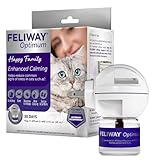
- HELPS REDUCE SIGNS OF STRESS USING A PATENTED PHEROMONE: FELIWAY Optimum is an advanced cat pheromone diffuser that helps reduce signs of stress in cats and helps ease tension between cats.*
- HELPS CATS FEEL CALM IN EVERYDAY SITUATIONS: FELIWAY Optimum is a cat calming diffuser that helps reduce stress‑related behaviors like urine spraying, scratching, hiding, and fearful reactions to change. Cat parents reported noticeable reductions in these behaviors, including a 77% reduction in urine spraying.
- SUPPORTS HARMONY IN MULTI‑CAT HOMES: Helps promote calmer interactions between cats. 72% of cat parents noticed reduced tension between their cats
- SAFE** AND NON-SEDATING: FELIWAY Optimum is not a sedative. It’s safe for use around cats, kittens, people and other pets.
- CONTINUOUS CALMING SUPPORT: This plug‑in cat pheromone diffuser provides 24/7 support when used as directed. To get started, plug into an open outlet with the vents pointed upward, allow at least 4 feet of clearance, and follow the label instructions.
What a seizure can look like in a cat
Signs vary with the part of the brain involved and whether the episode is generalized or focal. A generalized seizure may include sudden collapse, loss of consciousness, rigid muscles, rhythmic jerking or paddling of the limbs, and loss of bladder or bowel control. A focal seizure can be much less dramatic: facial twitching, repeated drooling or swallowing, a sudden change in awareness, unusual vocalization, or running-like movements may be the main clues.
Afterward, many cats enter a post-seizure period. They may be disoriented, sleepy, restless, pace, vocalize, seem temporarily blind, or behave unlike themselves. The duration and intensity of this recovery phase differ between cats. A cat that appears normal between episodes can still have a condition requiring investigation.
Clues that help distinguish an episode
- Before: record sleep, exercise, eating, medication, possible toxin access, injury, illness signs, and any stressful event.
- During: note whether consciousness was lost, which limbs or facial muscles moved, whether there was drooling or paddling, and whether urination or defecation occurred.
- After: record how long confusion, sleepiness, pacing, weakness, or other behavior changes lasted and whether the cat returned fully to normal.
These observations help a veterinarian decide whether the event was likely a seizure or another problem, such as fainting, a movement disorder, or an acute behavioral episode.
What’s actually slowing this PC down?
Pick the symptom - the matching free tool is one click away.
Medical causes that can look like a “stress seizure”
Veterinary sources identify many possible causes. Toxins, head trauma, infection, abnormal brain development, cancer, liver-related disease, blood-glucose or other metabolic disturbances, and structural brain disease can all produce seizures. Some causes begin outside the brain and affect brain function secondarily; others involve a lesion within the brain itself.
Because the causes and treatments differ, removing a suspected stressor cannot confirm or cure the condition. Bring details about household products, human medicines, plants, flea products, accidental ingestion, recent falls or blows, and changes in prescribed medication. If another animal or person may have exposed the cat to a substance, tell the veterinarian even when the cat currently seems well.
When a cat seizure is an emergency
Call an emergency veterinary hospital immediately if an episode lasts more than five minutes. VCA’s feline seizure and emergency guidance uses this duration as an emergency threshold because prolonged seizure activity can cause severe complications. Do not wait for the cat to stop on its own or for a routine appointment.
Repeated episodes also require urgent attention. The University of Illinois College of Veterinary Medicine advises immediate care when an animal has more than two episodes within 24 hours. A 2026 clinical article uses “cluster seizures” for more than one seizure in a 24-hour period. These definitions are not identical, but both support prompt veterinary contact for recurring episodes, particularly when the cat does not fully recover between them.
The Tool Desk
Outbyte PC Repair FREEClear out junk files and repair common Windows errorsFree Scan →Outbyte Driver Updater FREEFix the driver behind crashes, sound loss and screen glitchesFind Drivers →- Seek emergency care for a seizure exceeding five minutes.
- Seek immediate care for more than two episodes in 24 hours, following the University of Illinois guidance.
- Call urgently for repeated seizures close together, incomplete recovery, breathing difficulty, serious injury, suspected poisoning, pregnancy, or other severe illness signs.
If you are unsure whether the episode met an emergency threshold, call an emergency hospital while monitoring the cat. A veterinary professional can advise whether to travel immediately.
What to do while the seizure is happening
Your priorities are preventing injury, timing the event, and keeping yourself safe. Cats do not swallow their tongues. Never put fingers, a spoon, medicine, or another object in the mouth; a frightened or involuntarily jerking cat can bite, and an object can injure the mouth or airway.
Rank #2

- Help Your Cat Feel Safe Again: Create a calmer, more comfortable home with advanced calming pheromone technology that helps reduce common signs of stress including hiding, scratching, urine spraying, conflicts between cats, and nervous behavior. Ideal for everyday emotional support
- Continuous 120-Days Comfort: Each refill delivers calming support for up to 30 days when used continuously, package include: 2 diffusers, 4 refills. Designed to cover rooms up to approximately 750 sq ft, making it perfect for bedrooms, living rooms, and multi-cat households
- Supports Positive Everyday Behavior: Whether introducing a new pet, moving into a new home, welcoming visitors, or dealing with loud noises such as fireworks or thunderstorms, the diffuser helps cats feel more secure and adapt to changes more comfortably
- Easy Plug-In, No Daily Effort: Simply plug the diffuser into an open wall outlet and let it work around the clock. No sprays, no pills, no complicated routines—continuous calming support with minimal maintenance
- Trusted Care for Cats of Every Age: Suitable for kittens, adult cats, senior cats, and multi-cat families. Designed to support a peaceful home environment while helping strengthen the bond between cats and their owners
- Start a timer. Note the exact start time if possible. A seizure that feels long can be difficult to estimate accurately.
- Clear hazards. Move hard or sharp objects away. Block access to stairs, ledges, fireplaces, water, and other fall or drowning risks. If the cat is on a high surface and can be moved without putting your hands near the mouth, lower the surrounding hazard; do not wrestle with the cat.
- Keep the environment calm. Reduce noise and bright light. Keep other pets and children back.
- Do not restrain or transport during active convulsions unless an emergency professional specifically directs you. Restraint can cause injury.
- Observe breathing and color. If the cat is not breathing after the episode, follow emergency veterinary instructions while arranging immediate transport.
- Record safely. A video can help a veterinarian identify the event, but only if filming does not delay hazard removal, timing, or emergency care.
When the movements stop, keep the cat in a quiet, secure area. A disoriented cat may stumble, strike objects, or react defensively. Do not offer food, water, or medication until the cat is alert enough to swallow normally and a veterinarian has advised you, especially after a prolonged or repeated seizure.
What information to give the veterinarian
Write down the date, time, duration, and number of episodes. Describe whether the cat was awake or asleep beforehand, what it was doing, and any possible stressor. Include the cat’s age, medical history, current medicines and supplements, recent dose changes or missed doses, appetite, vomiting or diarrhea, weight change, drinking and urination, and exposure to toxins or trauma.
Explain whether the cat fully recovered between episodes and how long post-seizure behavior lasted. A video recorded from a safe distance is often useful. If you cannot obtain one, a detailed written description is still valuable. Do not delay a trip to obtain a recording.
How veterinarians investigate a first seizure
The veterinarian generally starts with a detailed history, physical examination, and neurologic examination. Blood and urine testing can identify metabolic or organ-related problems and help assess toxin or systemic disease possibilities. The exact tests depend on the cat’s age, examination findings, episode pattern, and other symptoms.
When initial findings warrant it, evaluation may progress to advanced intracranial testing such as magnetic resonance imaging (MRI) and cerebrospinal-fluid analysis. Clinicians typically investigate causes outside the brain before moving to these tests. This staged approach avoids assuming a brain disorder when a treatable systemic problem may be responsible.
Why stress history still matters
Tell the veterinarian about changes in routine, visitors, travel, confinement, inter-cat conflict, construction noise, grooming, or other events before the episode. This information may reveal a pattern, identify a management challenge, or explain why medication timing became difficult. It does not replace testing for toxins, metabolic disease, injury, infection, cancer, or structural disease.
Do these 3 things before closing this tab:
1Fix the driver behind crashes, sound loss and screen glitches2Clear out junk files and repair common Windows errors3Scan for outdated or missing drivers - takes under a minuteMedication and long-term management
Treatment is selected according to the cause, seizure pattern, and the individual cat’s risks. A veterinarian may prescribe an antiseizure medicine and monitor seizure control, adverse effects, and laboratory results. Some cats need treatment after repeated or severe episodes; others require treatment directed at an underlying disease instead.
Never start, stop, split, add, or change an antiseizure medicine without the treating veterinarian’s instructions. Abrupt changes can increase seizure risk. If a dose is vomited, missed, or difficult to give, call the veterinary practice for specific advice rather than improvising. VCA notes that a veterinarian may need to adjust medication timing or dosage during stressful periods; the owner should not make that adjustment independently.
Independent reader supportYour contribution helps us test, update, and keep practical guides available for everyone.Reducing stress without mistaking it for treatment
A predictable, low-conflict routine may help a cat cope with veterinary visits and other challenges. Provide a quiet retreat, separate food, water, litter, and resting areas from household traffic, and avoid forcing contact when the cat is frightened. Introduce changes gradually and ask the veterinarian about safe transport and handling techniques.
Rank #3

- HELPS REDUCE COMMON SIGNS OF TENSION BETWEEN CATS: FELIWAY MultiCat, developed by the #1 vet recommended brand, helps reduce common signs of tension between cats such as: conflict, fighting, chasing, and blocking
- ENHANCED CALM AT HOME FOR MULTICAT HOUSEHOLDS: FELIWAY MultiCat plug-in diffuser uses the science of pheromones to send calming messages that mimic a mother cat’s natural pheromones to help reduce tensions & conflicts. 84% of cat owners saw significant improvement in conflict between cats when using FELIWAY MultiCat
- DRUG FREE & SAFE TO USE: FELIWAY diffusers are drug-free, non-sedating, and while cat pheromone analogs may help your cat, they won't affect humans or other pets
- PROVIDES 4 WEEKS OF CALMING SUPPORT: With just one refill, the diffuser offers up to 30 days of continuous calming benefits, helping your cat feel calmer
- COVERS LARGE LIVING SPACES: Each diffuser covers an area up to 700sqft, ensuring widespread calming support throughout your home for cats of all ages. To get started, simply plug your diffuser into an open outlet with 4+ feet of space to diffuse, with the vents pointed upward
These steps support welfare and may make observation and medication administration easier. They do not prove that stress caused a seizure, prevent seizures from medical disease, or substitute for prescribed treatment. Do not give calming supplements, human medicines, or non-prescribed sedatives after a seizure unless a veterinarian specifically recommends them.
Windows Errors? Fix Them Before They Spread
Repair common Windows errors and clear accumulated junk for a smoother, more stable PC - no reinstall needed.Free scan · no reinstallCrashes, No Sound, or Screen Glitches?
Random freezes, missing sound and display glitches usually trace back to one bad driver. Find and replace yours safely.Free scan · under a minuteA practical decision framework after an episode
| What to assess | What to record | Why it matters |
|---|---|---|
| Duration | Exact start and stop time | More than five minutes is an emergency threshold. |
| Number and spacing | Every episode in 24 hours; whether the cat returned to normal between them | Multiple episodes can require immediate treatment and influence diagnostic urgency. |
| Type of signs | Collapse, stiffening, paddling, facial twitching, drooling, altered awareness, or running movements | Generalized and focal patterns provide different neurologic clues. |
| Before and after | Behavior, sleep, food, illness signs, and length of confusion or sleepiness | Helps distinguish seizure patterns and identify associated disease. |
| Possible precipitating events | Stress, toxin access, injury, medication changes, missed doses, or new products | Guides risk assessment without assuming a single cause. |
Transporting a cat for urgent care
Call the hospital before leaving when possible so staff can prepare. Use a sturdy cat carrier or another secure, ventilated container that allows the cat to lie safely. Line it with a towel, keep it level, and avoid placing your hands near the mouth during or immediately after an episode. If the cat is still seizing, ask the emergency team for transport instructions rather than attempting a risky transfer.
Bring medication containers, a written episode timeline, and any safely obtained video. If poisoning is possible, bring the product packaging without exposing yourself or the cat to the substance.
Common mistakes to avoid
- Calling the event a “stress seizure” before a veterinarian evaluates it.
- Putting fingers or objects in the mouth because of the myth that cats swallow their tongues.
- Holding the cat down, shaking it, or trying to force it awake.
- Waiting for a routine appointment when a seizure exceeds five minutes or episodes recur rapidly.
- Stopping or changing prescribed medication after one seizure or during a stressful event without veterinary direction.
- Giving human drugs, essential oils, supplements, or leftover pet medication.
- Focusing on filming while the cat is near stairs, water, traffic, or other hazards.
The safest interpretation is straightforward: stress can be relevant context, but it is not a sufficient explanation. A first seizure, any recurrence, or any additional illness sign deserves veterinary discussion, while prolonged or closely repeated seizures warrant emergency care.
Frequently Asked Questions
Can a cat have a seizure while asleep?
Yes. A seizure may begin during sleep, so note the cat’s position and behavior immediately before the movements and contact a veterinarian for guidance. Do not wake or restrain the cat during the episode.
Quick wins for a faster PC:
Clear out junk files and repair common Windows errorsFree Scan →Fix the driver behind crashes, sound loss and screen glitchesFind Drivers →Repair Windows errors before they cause bigger problemsFix Now →Should I wake my cat after a seizure?
No. Keep the cat in a quiet, hazard-free area and allow recovery. Prevent falls and keep other pets and children away; seek advice if awareness, breathing, or coordination does not return normally.
Can a stressful vet visit trigger another seizure?
A stressful period may be relevant to an individual cat’s seizure management, and a veterinarian may adjust medication timing or dosage when appropriate. Tell the clinic about stress-related patterns, but do not change medication yourself.
Is one seizure enough to diagnose epilepsy?
No. Epilepsy is not established by a single event. Veterinarians evaluate the history, examination, laboratory results, and—when indicated—advanced tests while looking for structural, metabolic, toxic, infectious, or other causes.
Quick Recap
Product prices and availability are accurate as of the date/time indicated and are subject to change. Any price and availability information displayed on Amazon at the time of purchase will apply.





Leave a Reply