Yes—but usually only in the limited sense that you can reduce the behavior or stop a horse reaching a cribbing surface. An established cribbing habit may persist even after its original trigger is removed, and a collar or muzzle can hide the behavior without solving its cause.
The best approach is to investigate new or intense cribbing with an equine veterinarian, then improve forage access, turnout, social contact, and feeding management. Use physical prevention only when it is properly fitted, closely monitored, and more beneficial to the horse than the stress it creates. Do not use oral hog rings.
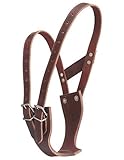
As an Amazon Associate I earn from qualifying purchases.
What it means to stop cribbing
Cribbing is an abnormal repetitive behavior in which a horse grips a fixed object with its incisors, arches its neck, pulls backward, and often makes a characteristic grunt. It is also called crib-biting; some people use windsucking interchangeably, although the terms are not always used identically.
Crashes, No Sound, or Screen Glitches?
Random freezes, missing sound and display glitches usually trace back to one bad driver. Find and replace yours safely.Free scan · under a minutePC Slower Than It Used to Be?
A free scan shows the junk files, broken settings and background clutter dragging Windows down - then fixes them in one click.Free scan · Windows 10 & 11There are three different meanings of “stop”:
- Reduce the trigger: improve forage access, turnout, social contact, diet, or treatment of genuine pain.
- Block access: use a collar, strap, muzzle, or environmental changes to prevent the horse reaching a rail or other object.
- Eliminate the behavior permanently: sometimes possible, but not a realistic promise for an established stereotypy.
A horse may crib less when its management improves, but a long-standing behavior can continue after the original stressor has gone. A device can make the behavior invisible while leaving the horse’s motivation and welfare unchanged. The humane objective is therefore not simply zero visible cribbing; it is a healthier, less-stressed horse, with reasonable protection for the horse and the facilities.
#1 Best Overall
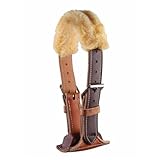
- PATENTED DESIGN FOR EFFECTIVE CRIBBING CONTROL - The Dare Cribbing Control Collar features a unique 3D patented throat piece that helps stop cribbing even in severe cases; This innovative horse cribbing collar offers reliable behavior correction without excessive pressure on your horse's neck or throat
- STAYS SECURE & COMFORTABLE ON YOUR HORSE - Designed with a single 13/4" wide strap, this anti-cribbing collar stays securely in place and provides superior comfort; Unlike traditional cribbing collars, it doesn't need to be overtightened, reducing stress while effectively discouraging unwanted cribbing behavior
- FULLY REVERSIBLE & EASY TO ADJUST - With stainless steel roller buckles on both sides, this leather cribbing collar can be positioned from either side of the horse; Fully reversible with no designated front or back, it offers hassle-free fitting and daily use - perfect for horse owners and trainers alike
- DURABLE LEATHER BUILD FOR LONG-LASTING USE - Crafted from high-quality leather, this professional-grade horse cribbing strap is built to withstand daily barn life and years of use; It's a dependable choice for horse trainers, stables, or owners dealing with chronic cribbing behavior in horses
- ADJUSTABLE FIT FOR ALL-DAY COMFORT - The Dare Collar fits most horses and allows for personalized adjustments - additional holes and half holes can be punched for a better fit; It also includes a removable fleece cover for added comfort, making it ideal for all-day wear and sensitive horses
Should you try to stop a horse from cribbing?
Yes, investigate it and try to reduce preventable causes. No, do not treat the behavior as a nuisance to suppress at any cost. Cribbing is associated with management stressors and, in some horses, medical problems. Blocking it without improving the underlying situation can increase frustration or lead to another repetitive behavior.
Stopping access can be justified when the horse is damaging fences or stall fixtures, losing condition, injuring its mouth or skin, or creating a safety risk. It is less convincing as a purely cosmetic intervention intended to make the horse appear normal. A collar that stops a horse reaching a rail does not, by itself, show that the horse is healthier or happier.
Why horses crib
No single cause has been established. Veterinary reviews describe cribbing as multifactorial. Contributing factors can include:
- long periods of confinement or excessive time indoors;
- limited turnout, movement, or environmental variety;
- insufficient long-stem forage or long periods without anything to eat;
- large amounts of grain, concentrate, or highly palatable feed;
- limited social contact or an unnatural social environment;
- weaning and other stressful changes; and
- individual susceptibility, with possible genetic influences that have not been established.
Horses evolved to spend much of the day moving and foraging. The Merck Veterinary Manual’s review of equine behavior problems describes confinement and grain-based feeding as factors that can promote stereotypies, while roughage and social contact can reduce their likelihood. The UC Davis Center for Equine Health overview of cribbing likewise describes the behavior as multifactorial.
Horses generally do not begin cribbing simply because they watched another horse do it. Current evidence does not support isolating a cribber from stablemates as a treatment. Isolation may remove a useful source of social contact and make the original problem worse.
Does cribbing cause ulcers, or do ulcers cause cribbing?
The relationship is unresolved. It is not accurate to say that every cribber has gastric ulcers, or that treating ulcers will automatically end the behavior.
A 2002 study of young horses that had recently begun crib-biting found more gastric inflammation and ulceration in cribbers than in control horses. An antacid diet improved stomach condition, and cribbing tended to decline. That finding makes gastrointestinal investigation reasonable in a newly affected or symptomatic horse, but it does not establish a universal cause-and-effect rule. The study is available through PubMed.
Quick wins for a faster PC:
Fix the driver behind crashes, sound loss and screen glitchesFind Drivers →Clear out junk files and repair common Windows errorsFree Scan →Other findings are less supportive of a simple explanation. A later study of mature horses managed on pasture found no association between crib-biting and gastric mucosal damage, although cribbers had a greater serum gastrin response after eating concentrate. A 2024 randomized crossover study involving only eight mature horses found no significant difference in crib-bite counts between supplement and placebo periods. The small sample and differing horse populations matter: these results do not prove that gastrointestinal disease is irrelevant, but they do make a guaranteed supplement-based cure implausible.
Rank #2

- PATENTED DESIGN FOR EFFECTIVE CRIBBING CONTROL - The Dare Cribbing Control Collar features a unique 3D patented throat piece that helps stop cribbing even in severe cases; This innovative horse cribbing collar offers reliable behavior correction without excessive pressure on your horse's neck or throat
- STAYS SECURE & COMFORTABLE ON YOUR HORSE - Designed with a single 13/4" wide strap, this anti-cribbing collar stays securely in place and provides superior comfort; Unlike traditional cribbing collars, it doesn't need to be overtightened, reducing stress while effectively discouraging unwanted cribbing behavior
- FULLY REVERSIBLE & EASY TO ADJUST - With stainless steel roller buckles on both sides, this leather cribbing collar can be positioned from either side of the horse; Fully reversible with no designated front or back, it offers hassle-free fitting and daily use - perfect for horse owners and trainers alike
- DURABLE LEATHER BUILD FOR LONG-LASTING USE - Crafted from high-quality leather, this professional-grade horse cribbing strap is built to withstand daily barn life and years of use; It's a dependable choice for horse trainers, stables, or owners dealing with chronic cribbing behavior in horses
- ADJUSTABLE FIT FOR ALL-DAY COMFORT - The Dare Collar fits most horses and allows for personalized adjustments - additional holes and half holes can be punched for a better fit; It also includes a removable fleece cover for added comfort, making it ideal for all-day wear and sensitive horses
A UC Davis gastric-ulcer review updated in December 2025 states that current research has not shown a different ulcer prevalence in cribbing and non-cribbing horses. It also notes that cribbing does not appear to stimulate saliva production enough to establish that the behavior reliably relieves stomach pain.
Ask an equine veterinarian about gastrointestinal disease when cribbing is accompanied by weight loss, poor condition, appetite changes, performance changes, signs of pain, recurrent or unexplained colic, or another reason to suspect ulcers. Behavior alone cannot diagnose ulcers. Direct visualization with gastroscopy is a more accurate way to assess the stomach than assuming an ulcer from cribbing or from a horse’s general behavior.
When a veterinarian should examine the horse
Arrange a veterinary examination rather than trying a collar first if the behavior is new, escalating, or accompanied by other changes. A particularly important combination is newly developed cribbing plus weight loss, reduced appetite, poor condition, recurrent colic, altered performance, or obvious discomfort.
A workup may include:
- a physical examination and review of body condition;
- a dental examination, because dental discomfort can affect eating and oral behavior;
- a detailed review of forage, concentrate, supplements, feeding intervals, water access, turnout, exercise, housing, and social contact;
- discussion of recent changes such as weaning, relocation, altered training, illness, or a new feeding routine; and
- targeted investigation of gastrointestinal or other medical problems, including gastroscopy when the veterinarian considers it appropriate.
Cribbing has been associated with tooth wear, changes in neck musculature, poor condition, and some forms of colic risk. These are associations, not proof that cribbing directly causes every problem in an individual horse. The Merck Veterinary Manual specifically identifies epiploic foramen entrapment as a possible concern; that information should prompt sensible veterinary attention, not panic or an assumption that surgery is required.
First-line treatment: change the environment before blocking the behavior
Management changes are the most reasonable starting point because they can improve welfare whether or not they completely eliminate cribbing.
1. Increase access to long-stem forage
Provide more hay or safe pasture when appropriate for the horse’s health, workload, body condition, and nutritional requirements. Avoid unnecessarily long periods with no forage. The goal is not to feed unlimited calories to an overweight or metabolically compromised horse; it is to design a forage-based ration that meets nutritional needs while reducing empty time.
If the horse eats hay too quickly, a slow-feed hay net for horses may extend feeding time. University of Minnesota research found that smaller-opening hay nets substantially lengthened the time horses spent consuming hay compared with loose-hay feeding. This is a way to increase foraging time, not a proven standalone cure for cribbing. Choose an appropriately sized, durable net, introduce it carefully, and check that the horse can eat and drink normally and cannot become caught in it.
2. Reconsider concentrate and sweet feed
Large meals of grain, concentrate, or highly palatable feed may contribute to stereotypic behavior and gastrointestinal stress in some horses. Ask your veterinarian or an equine nutrition professional whether the ration can be reduced or reorganized while still meeting the horse’s energy, protein, mineral, and body-condition needs.
Rank #3
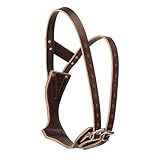
- Horse Miracle Collar: Break the destructive cycle of cribbing in your horses with our leather horse gear; this miracle collar comes with an anatomically precise fit that ensures your horse can eat, drink, graze with ease
- Snug Design: This horse cribbing gear comes with a unique shape that ensures a comfortable, non-slip fit; our horse equipment features a brownband strap that applies pressure while cribbing only and a shorter neck strap that holds the collar in place
- Robust Construction: Handcrafted from premium quality harness leather, this equestrian equipment withstands harsh weather and is extremely gentle on the hair coat; the non-rust stainless steel hardware offers durable performance season after season
- Versatile for All Riding Forms: These horse accessories are suitable for a variety of riding disciplines, from trail riding to performance events, meeting the needs of casual riders and professionals alike
- Ideal Equine Accessory: These equestrian supplies come in small, medium, and large sizes, making them suitable to use for horses of all ages and breeds; this horse collar is an essential addition to your horse care kit
Make feed changes gradually. Abruptly removing concentrate or making a large change to hay can create a different health problem. A horse in hard work, a growing horse, a lactating mare, and an easy-keeping adult have different nutritional requirements.
3. Increase turnout and appropriate exercise
More time outside can provide movement, grazing or foraging opportunities, and environmental variety. Exercise is not a substitute for forage or treatment of pain, but a horse that spends less time confined may have fewer opportunities or reasons to rehearse the behavior.
4. Improve safe social contact
Where compatible and safe, provide visual, tactile, or carefully managed companionship. Horses are social animals, and isolation can be an important stressor. Do not remove a cribber from other horses on the assumption that cribbing is contagious; current evidence does not support that as a treatment.
Free tools Windows power users keep installed
One-click scans. No signup required.
5. Add variety, but do not expect toys to cure cribbing
Environmental enrichment may be worthwhile, particularly when it encourages movement, exploration, or appropriate foraging. However, the Merck Veterinary Manual reports that stimulation often has little direct effect on cribbing. A toy is an addition to good management, not a replacement for forage, turnout, social contact, or veterinary assessment.
Protecting stalls and fences
Cribbing can wear or damage stall doors, fence rails, buckets, and other horizontal surfaces. Removing access to a particularly dangerous surface or modifying the environment can protect the horse and property without pretending to treat the motivation.
For a horse that repeatedly damages a stall edge or rail, a horse stall and fence edge protector can be considered as a facility-protection measure. It should be securely installed, free of sharp edges or loose parts, and inspected regularly. Protecting a rail does not make it safe to ignore the horse’s diet, turnout, social needs, or health.
Cribbing collars, straps, and muzzles
A properly fitted collar, strap, or muzzle can mechanically reduce access to a suitable cribbing surface. Some horses tolerate a strap better than a muzzle, while others may find either device stressful. Devices can rub, interfere with eating or drinking, fail when the horse finds another object, or cause the horse to redirect its behavior.
Recommended Free Tools
If you use a device, the practical safeguards are more important than the label on the product:
- Have the fit assessed by someone experienced with horses and follow the manufacturer’s instructions.
- Check frequently for rubbing, swelling, hair loss, sores, pressure points, or oral injury.
- Confirm that the horse can eat and drink normally and is not losing weight because of the device.
- Watch for distress, agitation, unusual withdrawal, or a new repetitive behavior.
- Inspect the device for wear and make sure it cannot catch on fixtures or create a separate entanglement hazard.
- Do not use it to postpone a veterinary examination when the behavior is new or accompanied by illness.
The welfare concern is rebound and frustration. When access is restricted, some horses crib more frequently when the restriction is removed. The UC Davis guidance and the American Association of Equine Practitioners’ position on oral cribbing devices both emphasize that preventing a stereotypy without addressing its cause can create additional stress or another stereotypic behavior.
If a collar reduces damage but the horse becomes distressed, eats poorly, rubs, or develops another problem, the device is not producing an acceptable welfare trade-off. Discuss alternatives with an equine veterinarian or veterinary behavior specialist rather than simply tightening or replacing it.
What’s actually slowing this PC down?
Pick the symptom - the matching free tool is one click away.
Do not use hog rings
Oral hog rings should be avoided. In a position statement revised by its board in 2025, the AAEP opposes hog rings and other devices placed in the oral cavity to prevent cribbing. Its stated concerns include persistent pain, gingival injury, periodontal disease, and abrasive wear to adjacent teeth. This is the clearest current professional-welfare recommendation in the available research.
An oral device is not equivalent to a carefully monitored external strap. Because it can injure the mouth while preventing a coping behavior, it should not be used as a do-it-yourself solution or as a cheaper alternative to correcting management.
What about surgery?
Operations such as modified Forssell-type procedures and implanted crib rings have been developed, but reported success is inconsistent and welfare concerns remain. Surgery should not be described as a routine, guaranteed, or universally permanent cure.
Merck also notes that neck surgery can cause scarring around the esophagus. That scarring may complicate passage of a stomach tube if the horse later develops gas colic. Any discussion of surgery therefore needs to include the possibility of recurrence, complications, pain, aftercare, and the fact that the original stressor may remain.
For a severe, persistent case in which ordinary management has not protected the horse or people, seek an individualized opinion from an equine veterinarian and, where available, a veterinary behavior specialist. The question should be whether the expected welfare benefit outweighs the risks—not whether an operation can make the behavior disappear on paper.
Best Value

- Made in India
- Package dimension :13.208 cm x 43.18 cm x 3.81 cm
- Product type : ANIMAL COLLAR
- Package weight : 0.75 lbs
A practical decision plan
| Situation | Best next step | What to avoid |
|---|---|---|
| Cribbing has just appeared | Arrange a veterinary examination and review recent changes in feed, housing, turnout, social grouping, training, and stress. | Assuming the horse copied another horse or immediately fitting a restrictive device. |
| The behavior is established but the horse is otherwise healthy | Prioritize forage access, gradual ration review, turnout, exercise, and safe social contact. Track frequency and intensity as management changes. | Expecting a toy, supplement, or collar to provide a guaranteed cure. |
| There are ulcer or pain signs | Ask an equine veterinarian for cribbing evaluation and discuss whether gastroscopy or another targeted investigation is appropriate. | Using cribbing as the diagnosis or relying on an over-the-counter supplement without veterinary guidance. |
| The horse is damaging property or creating a safety issue | Remove or modify hazardous surfaces, use appropriate facility protection, and consider a professionally fitted external device only if the horse tolerates it. | Oral hog rings, sharp or improvised barriers, or ignoring skin, mouth, eating, drinking, and stress checks. |
| Cribbing remains severe despite changes | Seek an individualized plan from an equine veterinarian or veterinary behavior specialist. Reassess whether the device or intervention is actually improving welfare. | Escalating punishment or treating visible suppression as proof of recovery. |
How to judge whether the plan is working
Count more than cribbing episodes. Useful measures include:
- body condition and weight stability;
- normal appetite, drinking, and manure production;
- absence of new pain, colic, dental, skin, or mouth problems;
- less time spent confined and more appropriate foraging and social contact;
- less property damage or risk around fixtures;
- lower cribbing frequency or intensity, if that occurs; and
- no increase in distress or replacement stereotypies.
A horse that still cribs occasionally but is eating well, maintaining condition, has safe management, and shows no sign of device-related distress may be in a better welfare position than a horse that never reaches a rail because it is constantly frustrated by an uncomfortable restraint.
Bottom line
Many horses can reduce cribbing when forage, turnout, social contact, diet, and medical problems are addressed. An established cribber may continue, and no responsible treatment should promise that every horse will stop permanently. Start with veterinary assessment for new or symptomatic cases and with forage-based, less-confining management for all horses. Use an external collar, strap, muzzle, or facility protection only when its practical benefit outweighs its welfare costs and when the horse is closely monitored. Do not use oral hog rings.
Do these 3 things before closing this tab:
1Fix the driver behind crashes, sound loss and screen glitches2Repair Windows errors before they cause bigger problems3Scan for outdated or missing drivers - takes under a minuteFrequently Asked Questions
Can a horse learn cribbing from another horse?
Cribbing is not generally considered contagious, and horses do not usually acquire it simply by copying another horse. Current evidence does not support isolating a cribber as a treatment; isolation can remove valuable social contact and increase stress.
Will treating ulcers stop a horse from cribbing?
Not necessarily. Research on the relationship is mixed. Ulcers or other gastrointestinal disease should be investigated when the horse has compatible signs, but cribbing alone does not diagnose ulcers, and ulcer treatment does not reliably stop established cribbing.
Is it humane to keep a horse in a cribbing collar?
A collar or strap may reduce access to a rail, but it can rub, interfere with eating or drinking, or increase frustration. Use only a properly fitted device, check it frequently, and treat it as a management aid rather than a cure.
Are hog rings safe for cribbing?
No. The AAEP’s position statement revised in 2025 opposes hog rings and other oral-cavity devices used to prevent cribbing because of risks including persistent pain, gum and periodontal injury, and abrasive tooth wear.
The Tool Desk
Outbyte PC Repair FREERepair Windows errors before they cause bigger problemsFix Now →Outbyte Driver Updater FREEScan for outdated or missing drivers - takes under a minuteDriver Scan →The Bottom Line
The humane goal is not to make cribbing invisible at any cost. Identify and treat genuine disease, reduce preventable stressors, protect the horse and facilities, and use physical prevention only when it is safe, tolerated, and genuinely improves the overall situation.
Quick Recap
Product prices and availability are accurate as of the date/time indicated and are subject to change. Any price and availability information displayed on Amazon at the time of purchase will apply.




