PC Slower Than It Used to Be?
A free scan shows the junk files, broken settings and background clutter dragging Windows down - then fixes them in one click.Free scan · Windows 10 & 11Outdated Drivers Are Slowing You Down
One free scan finds every outdated or missing driver and matches the right update for your exact hardware.Free scan · exact hardware matchA normal kitten has 26 baby teeth, and a normal adult cat has 30 permanent teeth. The adult set usually replaces the baby teeth between about 4 and 7 months of age, with most cats reaching the full 30-tooth count by roughly 6 to 7 months.
A normal kitten has 26 deciduous (baby) teeth, while a normal adult cat has 30 permanent teeth. Kittens are born without visible teeth. Their baby teeth usually appear during the first several weeks of life, then begin to loosen and fall out as the adult set eruates at roughly 4 to 7 months of age. Most cats have their complete permanent dentition by about 6 to 7 months, although individual timing varies.
As an Amazon Associate I earn from qualifying purchases.
How many teeth does an adult cat have?
An adult cat normally has 30 permanent teeth:
| Tooth type | Upper jaw | Lower jaw | Total | Main function |
|---|---|---|---|---|
| Incisors | 6 | 6 | 12 | Grasping, grooming, and snipping |
| Canines | 2 | 2 | 4 | Grasping and piercing |
| Premolars | 6 | 4 | 10 | Holding, cutting, and shearing |
| Molars | 2 | 2 | 4 | Crushing and shearing |
| Total | 16 | 14 | 30 |
The upper jaw therefore contains 16 teeth and the lower jaw contains 14. On each side of the upper jaw, a cat has three incisors, one canine, three premolars, and one molar. On each side of the lower jaw, it has three incisors, one canine, two premolars, and one molar.
Do these 3 things before closing this tab:
1Clear out junk files and repair common Windows errors2Fix the driver behind crashes, sound loss and screen glitches3Repair Windows errors before they cause bigger problemsCats do not have the same number or arrangement of premolars as people or dogs. Some teeth that might be expected from another species are simply absent as part of normal feline anatomy.
#1 Best Overall
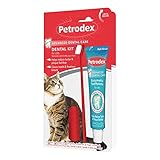
- Complete oral care system: enzymatic toothpaste plus toothbrush cleans teeth and fights bad breath in one kit
- Reduces plaque & tartar buildup: patented enzyme formula works without rinsing required
- Malt-flavored formula cats tolerate well: makes at-home brushing easier to stick with
- Everything needed to start a dental routine: ideal for new puppies, kittens, or first-time brushers
- Formulated specifically for pets: non-foaming, no-rinse enzymatic formula that's safe if swallowed
How many teeth does a kitten have?
A kitten normally has 26 deciduous teeth, also called baby, primary, or milk teeth. The baby set contains:
- 12 incisors
- 4 canines
- 10 premolars
- No deciduous molars
Baby teeth are smaller and usually sharper than the adult teeth that replace them. They help a growing kitten grasp food, but they are temporary and are not counted as part of the adult total.
When do kittens get their teeth?
Kittens are born without visible teeth. The usual eruption pattern is approximate:
The Tool Desk
Outbyte Driver Updater FREEFix the driver behind crashes, sound loss and screen glitchesFind Drivers →Outbyte PC Repair FREEClear out junk files and repair common Windows errorsFree Scan →| Stage | Typical timing |
|---|---|
| Baby incisors begin appearing | About 2 to 4 weeks |
| Baby premolars begin appearing | About 5 to 6 weeks |
| Most or all baby teeth present | About 6 to 8 weeks |
| Adult-tooth transition begins | About 3 to 4 months |
| Permanent teeth appear | Approximately 4 to 7 months |
| Most cats have all 30 permanent teeth | About 6 to 7 months |
These ranges are not a precise schedule. A kitten may erupt a particular tooth somewhat earlier or later than another kitten. During teething, the developing permanent tooth pushes against the baby tooth above it. The baby tooth should loosen and fall out, allowing the adult tooth to occupy its proper position.
You may find a fallen tooth, but it is also common never to see one. Kittens can swallow shed baby teeth while eating, or the teeth may be too small to notice.
Rank #2

- Delious Chicken flavored Cat Toothpaste: Formulated specifically with your cat's preferences in mind
What are the different types of feline teeth used for?
Incisors
Incisors are the small teeth at the front of the mouth. Cats use them to grasp small pieces of food, nibble, and groom their fur. There are six permanent incisors in the upper jaw and six in the lower jaw.
Canines
Canines are the long, pointed teeth commonly called a cat’s fangs. They help a cat grasp and pierce food. They can also be involved in defensive behavior and play. Their shape reflects a carnivorous feeding pattern: cats are built to hold and tear food rather than grind it extensively.
Quick wins for a faster PC:
Fix the driver behind crashes, sound loss and screen glitchesFind Drivers →Clear out junk files and repair common Windows errorsFree Scan →Premolars
Premolars sit behind the canines. They help hold and shear food. Adult cats have three premolars on each side of the upper jaw and two on each side of the lower jaw.
Molars
Adult cats have four permanent molars—one in each quadrant, or section, of the mouth. These contribute to crushing and shearing, but cats do not have the broad, flat grinding teeth characteristic of herbivores.
The feline dental formula
Veterinary references commonly write the adult cat’s permanent dental formula as I 3/3, C 1/1, P 3/2, M 1/1. The number before the slash describes one side of the upper jaw; the number after it describes one side of the lower jaw:
Rank #3

- Ultra-Mini Brush Head for Precision Cleaning: The 0.31-inch soft bristle head targets tiny teeth and hard-to-reach areas, making it perfect for kittens and small-mouthed cats, ensuring gentle yet thorough cleaning
- Finger-Fit Ergonomic Design: This finger toothbrush for cats fits securely on your finger, giving pet parents full control for accurate brushing—ideal for skittish pets or new users starting a cat tooth brushing routine
- Coconut Oil Enzymatic Toothpaste Formula: Powered by coconut oil and natural enzymes, the cat toothpaste helps fight plaque and tartar buildup, while supporting cat tooth care and freshening breath safely
- Irresistible Coconut Chicken Flavor: A delicious enzymatic cat toothpaste flavor cats crave—finger brush for cats becomes a bonding activity, making dental care part of your daily pet routine
- Complete Cat Dental Kit for Daily Hygiene: Includes a soft toothbrush, a finger toothbrush, and a 2.5 oz tube of enzyme toothpaste for cats, giving your feline a full dental care kit in one simple package
- I 3/3: three incisors above and three below on each side
- C 1/1: one canine above and one below on each side
- P 3/2: three upper premolars and two lower premolars on each side
- M 1/1: one molar above and one below on each side
Because the formula describes one side, it is multiplied by two to produce the total of 30 teeth. For comparison, the deciduous formula is I 3/3, C 1/1, P 3/2, producing 26 baby teeth and no molars. The Merck Veterinary Manual’s dental-formula table provides the standard species comparison.
Why might a cat appear to have more than 30 teeth?
The most common explanation is a retained deciduous tooth: a baby tooth has not fallen out even though the corresponding permanent tooth has erupted. The two teeth may then occupy the same area, making the mouth look as if it contains an extra tooth.
Retained baby teeth can crowd the permanent teeth and create narrow spaces where plaque and tartar collect. They are particularly important in kittens during the transition to adult teeth. A veterinarian should examine the mouth and decide whether the baby tooth needs extraction, often while the cat is already anesthetized for another procedure.
Do not try to pull a retained tooth at home. The tooth may be firmly attached, and attempting extraction can fracture it or injure the gum and developing permanent tooth. A veterinarian can also distinguish a retained baby tooth from an unusual extra tooth or a counting mistake caused by the mouth’s small, crowded spaces.
Why might a cat be missing a tooth?
A cat can have fewer than 30 visible teeth because of an earlier extraction, trauma, dental disease, or tooth resorption. Tooth loss is not considered automatically normal just because cats can often eat with fewer teeth.
Rank #4

- FIGHTS DENTAL DISEASE IN CATS: Around 40% of cats develop dental disease, causing daily pain they often hide; this complete dental kit reduces plaque and tartar that cause gum disease and bad cat breath when used regularly.
- COMPLETE CAT DENTAL KIT CONTENTS: Kit includes one 2.5 oz tuna flavor enzymatic cat toothpaste, one dual-headed toothbrush with two different brush head sizes for cats of all sizes, and one finger brush for added brushing flexibility.
- BAKING SODA FORMULA DEODORIZES BREATH: This enzymatic cat toothpaste is formulated with Arm & Hammer baking soda, which dissolves into hard-to-reach areas to deodorize cat breath and clean gently without harsh abrasives.
- TARTAR CONTROL ENZYMATIC TOOTHPASTE: The enzymatic formula actively helps control tartar buildup and freshens breath; fluoride-free and non-toxic, this toothpaste is safe for cats and formulated without dyes or harsh additives.
- TWO TOOTHBRUSH STYLES FOR CATS: The dual-headed cat toothbrush fits different mouth sizes, while the included finger brush slips over your fingertip for closer gum contact, making it easier to reach all areas of your cat's mouth.
Tooth resorption is an especially important cause. In this painful destructive process, a tooth’s structure is gradually damaged and may eventually be lost or require extraction. Cornell describes tooth resorption as the most common cause of tooth loss in cats and reports that approximately 30% to 70% of cats show evidence of it, depending on the population studied and the examination method. See Cornell’s overview of feline dental disease and tooth resorption for more detail.
A missing tooth can look harmless, but the visible gap does not show what is happening below the gumline. Dental radiographs may be needed to identify a remaining root, resorbing tooth structure, or other disease.
Signs that a cat needs a dental examination
Arrange a veterinary appointment if you notice:
- A baby tooth still present beside an adult tooth
- A missing, broken, loose, or visibly damaged tooth
- Bad breath that persists
- Red, swollen, or bleeding gums
- Drooling, pawing at the mouth, or dropping food
- Difficulty chewing or a preference for softer food
- Facial swelling
- A change in appetite, grooming, or behavior
A cat may continue eating despite significant oral pain, so eating normally does not prove that the mouth is healthy. Cats are also good at concealing discomfort. A complete veterinary dental procedure generally involves anesthesia, an examination and probing of the entire mouth, cleaning above and below the gumline, and dental radiographs. The AAHA and AAFP feline dental-care guidance explains why anesthesia-free scaling cannot provide the same access, diagnostic information, or treatment.
Independent reader supportYour contribution helps us test, update, and keep practical guides available for everyone.How to care for a cat’s teeth at home
Counting teeth is useful, but preventing and identifying oral disease matters more than the exact number visible on a given day. Plaque can accumulate soon after eating, and regular brushing is the most effective routine home-care measure for reducing it.
Recommended Free Tools
- Start gradually. Let the cat lick a small amount of cat toothpaste from your finger, then progress to touching the outside of the teeth and gums.
- Use a soft, pet-specific brush. A small brush or a cat toothbrush and toothpaste kit can help establish a practical routine. Some cats tolerate a finger brush better, although it still needs to be used gently.
- Use toothpaste made for pets. Never use human toothpaste unless a veterinarian specifically directs otherwise. Some human formulations contain ingredients that are unsafe for animals.
- Brush the outer surfaces. Focus on the cheek-facing surfaces, where plaque commonly collects. Short, calm sessions are better than wrestling with a cat.
- Stop if the gums are painful or inflamed. Aggressive brushing over diseased gums can hurt and may make the cat resist future care. Have the mouth examined instead.
For a cat that will not tolerate brushing, a veterinarian may suggest alternatives such as a dental diet, water additive, oral gel, spray, powder, or dental treat. The Veterinary Oral Health Council’s accepted-products list includes selected feline products with plaque- or tartar-control claims. “Accepted” means the submitted efficacy data met the VOHC’s standards; it does not mean every product suits every cat, and these products cannot diagnose or treat tooth resorption, periodontal disease, infection, or a retained tooth.
Best Value
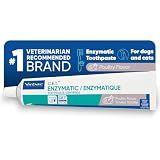
- FOR DOGS AND CATS: Enzymatic toothpaste specifically formulated using an enzyme system for dogs and cats to reduce plaque, freshen breath, and ensure a clean mouth. Poultry flavor pets love
- 100% SAFE: Includes no foaming agents, so this toothpaste is safe for pets to swallow
- VET RECOMMENDED: Virbac is the #1 Recommended dental brand by Veterinary professionals; Made in the USA
- USE WITH A TOOTHBRUSH: Use a soft-bristled toothbrush such as the C.E.T. Dual-Ended Toothbrush. Apply daily or as directed by your veterinarian. Your veterinarian may give you specific directions; follow this professional advice closely
- SATISFACTION GUARANTEED: Virbac is committed to your experience of great satisfaction with our products. Let us help with your questions and we would love to hear your comments at 1-844-484-7222
Do not give cats hard bones, antlers, or other extremely rigid chew objects, which can fracture teeth. Home care also cannot remove established calculus or replace professional examination and dental radiographs when disease is suspected. The AAHA dental-care guidance recommends daily brushing with a soft pet toothbrush and pet toothpaste while emphasizing the limits of home care.
At a glance
- Kitten: 26 deciduous teeth
- Adult cat: 30 permanent teeth
- Adult upper jaw: 16 teeth
- Adult lower jaw: 14 teeth
- Adult molars: 4 total, with one in each quadrant
- Typical adult eruption: approximately 4 to 7 months, usually complete by about 6 to 7 months
A cat with a different visible count may simply have lost a tooth or be in the normal teething stage, but retained baby teeth and tooth loss can also signal a problem. If the count is unexpected—especially alongside bad breath, red gums, drooling, difficulty eating, swelling, or behavior changes—have a veterinarian inspect the mouth rather than trying to diagnose or extract the tooth yourself.
Frequently Asked Questions
How many teeth do kittens have?
A normal kitten has 26 deciduous, or baby, teeth. They usually begin appearing at 2 to 4 weeks of age and are generally complete by about 6 to 8 weeks.
At what age do cats get their adult teeth?
Most cats have all 30 permanent teeth by about 6 to 7 months, although adult teeth commonly begin appearing between approximately 4 and 7 months.
Why does my cat seem to have more than 30 teeth?
A baby tooth may have been retained after the permanent tooth erupted. This can cause crowding and plaque buildup, so a veterinarian should examine it. Never pull it out at home.
Why is my cat missing a tooth?
Possible causes include an extraction, trauma, dental disease, or tooth resorption. A veterinarian may need dental radiographs to determine what remains below the gumline.
How should I brush my cat’s teeth?
Use a soft, pet-specific toothbrush and cat toothpaste. Do not use human toothpaste, and do not brush aggressively over painful or inflamed gums. Brushing does not replace professional dental care.
Free tools Windows power users keep installed
One-click scans. No signup required.
The Bottom Line
Healthy kittens normally transition from 26 baby teeth to 30 permanent teeth. A tooth count that is higher or lower than expected, or any sign of oral discomfort, warrants a veterinary dental examination.
Quick Recap
Product prices and availability are accurate as of the date/time indicated and are subject to change. Any price and availability information displayed on Amazon at the time of purchase will apply.




