The Tool Desk
Outbyte Driver Updater FREEFix the driver behind crashes, sound loss and screen glitchesFind Drivers →Outbyte PC Repair FREERepair Windows errors before they cause bigger problemsFix Now →A cat’s digestive system is the tract from mouth to anus plus the organs that feed into it. It digests food, absorbs nutrients, moves contents along the gut, and eliminates feces. The main disorders covered here are intestinal parasites, constipation and megacolon, foreign-body obstruction, inflammatory bowel disease (IBD), and pancreatitis. Their signs overlap heavily, so vomiting or diarrhea tells a veterinarian where to look but rarely identifies the cause on its own. Treatment depends on the diagnosis and ranges from fluids and diet changes to deworming, endoscopic removal, or surgery.
How the digestive system is organized
The Merck Veterinary Manual groups digestive function into four categories. Each one points to a different place a problem can occur:
- Digestion breaks food into usable pieces. Enzymes from the pancreas reach the small intestine to carry out part of this work.
- Absorption moves nutrients from the intestine into the body.
- Motility is the movement of contents through the tract. Problems here show up as constipation or obstruction.
- Elimination forms and passes feces through the colon and rectum.
The main organs in this pathway are the stomach, small intestine, and colon. The pancreas, liver, and gallbladder feed digestive secretions into it. The Merck overview includes a diagram of the major digestive organs. This article stays at the functional level and does not describe each organ’s structure in detail.
Signs that point to the gut, and signs that do not
Possible signs of digestive disease include:
- excessive drooling
- diarrhea or constipation
- straining to defecate
- vomiting or regurgitation
- loss of appetite
- bleeding
- abdominal pain or bloating
- dehydration or shock
Black, tarry stool suggests bleeding in the stomach or small intestine. Vomiting and diarrhea can also come from illness outside the gut, including kidney, liver, endocrine, and infectious disease. A veterinarian who sees repeated or systemic signs will usually look beyond the intestines.
#1 Best Overall

- 28 piece calico cat anatomy model. Finished model measures 11.57" long.
- Transparent case to show interior anatomical organs. Highly accurate skeletal, muscular, and digestive organs.
- Fine detailed sculpture with hand-painted pieces. Includes assembly instructions.
- Great gift or desk accessory for any biology or animal fan.
- Since founded in 1997, Fame Master has been specializing in designing, manufacturing and exporting plastic educational toys, puzzle educational toys and figurine toys of high quality and innovation on a worldwide basis.
When to call a veterinarian
Cornell Feline Health Center advises prompt evaluation in these situations:
- The cat vomits more than once per week.
- Vomiting is accompanied by lethargy, weakness, decreased appetite, blood in the vomit, or changes in thirst or urination.
- Diarrhea lasts longer than a day or two, especially with poor appetite, lethargy, or vomiting. Cornell advises veterinary care as soon as possible in that case.
Vomiting can have many causes, including foreign objects, parasites, gastrointestinal disease, toxins, and metabolic disease, so the pattern and accompanying signs matter as much as the vomiting itself. Abdominal pain or swelling, dehydration, shock, or retained feces that do not pass are reasons for urgent care.
Rank #2
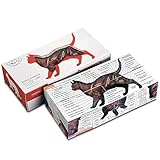
- Innovative 3D Learning Tool – Explore feline anatomy in a whole new way with a foldable cube featuring 10 detailed cat systems, including muscles, skeleton, organs, and more!
- Compact & Portable Design (8 x 8 x 8 cm) – Fits perfectly in your hand or on a desk; ideal for studying on the go or displaying as a unique educational model.
- Hands-On Discovery that Boosts Memory – The tactile folding design encourages hands-on interaction, helping learners absorb complex anatomical structures through movement, touch, and repeated physical exploration.
- High-Quality Print – Crafted from sturdy materials with crisp illustrations that hold up to repeated folding and handling.
- Perfect for Students, Teachers & Animal Enthusiasts – A fascinating gift for vet students, biology teachers, or cat lovers who appreciate learning through hands-on discovery.
The main digestive disorders in cats
Inflammatory bowel disease (IBD)
Feline IBD is chronic inflammation of the gastrointestinal tract that disrupts digestion and absorption. Vomiting, weight loss, diarrhea, bloody stool, lethargy, and reduced appetite are all reported. Which signs dominate depends partly on which part of the tract is affected. Intestinal lymphoma can look very similar, so other causes must be ruled out. Cornell states that definitive diagnosis requires a biopsy of the stomach or intestine examined under a microscope. Blood work, fecal tests, X-rays or ultrasound, vitamin B12 and folate levels, and a food trial usually come first.
Pancreatitis
The pancreas has two roles. Its endocrine function includes producing insulin and glucagon, and its exocrine function delivers digestive enzymes to the intestine. Feline pancreatitis can be serious and often has no identifiable underlying cause. It can occur alongside chronic intestinal, liver or gallbladder, or diabetic disease.
Rank #3

- ❤Enhance Learning: The interactive nature of this model allows for a deeper understanding of feline anatomy, enabling students to retain information more effectively.
- ❤Practical Training: Veterinary professionals can use this model to practice surgical procedures and demonstrate anatomical concepts to clients.
- ❤Engaging Teaching Tool: Educators can make anatomy lessons more engaging and interactive by using this model to visually demonstrate the cat's internal structure.
- ❤Accurate Representation: The detailed design of each organ and body part ensures an accurate representation of feline anatomy, providing a reliable resource for studying and teaching.
- ❤Durable and Long-lasting: Made from high-quality materials, this model is built to withstand frequent use and handling, ensuring its longevity in educational settings.
Signs are often vague, such as lethargy and reduced appetite, although vomiting and weight loss can also occur. No single test is definitive. Diagnosis combines clinical signs, several blood tests, and imaging. The feline pancreatic lipase immunoreactivity test (fPLI) can miss mild or chronic cases, so a normal result does not fully exclude the disease. Cornell’s feline pancreatitis guidance was last updated in 2021.
Constipation and megacolon
Constipation means infrequent or difficult passage of dry, hard feces. Obstipation is severe constipation in which retained feces do not pass at all. Causes include obstruction, poor water intake, reluctance to defecate, and problems with the nerves or muscles of the colon. Chronic cases can progress to megacolon, a enlarged colon that no longer empties normally.
Rank #4

- ✔ With 28 detachable parts, this model allows for a hands-on learning experience. Each organ and body part is intricately designed to accurately represent the cat's anatomy. The transparent body provides a clear view of the organs, enabling easy identification and examination.
- ✔ Accurate Representation- The detailed design of each organ and body part ensures an accurate representation of feline anatomy, providing a reliable resource for studying and teaching.
- ✔ Durable and Long-lasting- Made from high-quality materials, this model is built to withstand frequent use and handling, ensuring its longevity in educational settings.
- ✔ Practical Training- Veterinary professionals can use this model to practice surgical procedures and demonstrate anatomical concepts to clients.
- ✔ Standard Model- It is a rare teaching aid for animal husbandry teaching demonstration, and it is also a recommended display model for pet clinic values and it is a rare tool for students to carry out relevant practical training.
Diarrhea
Diarrhea can follow an abrupt diet change or stress. When it is extended or recurrent, the list of causes widens to inflammatory, infectious, and neoplastic disease. Cornell lists systemic disorders such as hyperthyroidism, kidney or liver disease, infection, and lymphoma among the possibilities. Persistent diarrhea needs a veterinary workup to tell these apart.
Intestinal parasites
Gastrointestinal parasites can cause vomiting, diarrhea, anemia, and dehydration. Some can also infect people. Diagnosis and deworming should be directed by a veterinarian rather than chosen from a shelf product.
Quick wins for a faster PC:
Repair Windows errors before they cause bigger problemsFix Now →Fix the driver behind crashes, sound loss and screen glitchesFind Drivers →Clear out junk files and repair common Windows errorsFree Scan →Best Value

- Jaw on spring
- Mounted on base
Foreign-body obstruction
Obstruction can be caused by foreign material, intussusception (one segment of intestine sliding into another), hernia, or tumors. Long, linear objects such as string are especially risky because they can injure or perforate the intestine. Signs may include vomiting, loss of appetite, lethargy, diarrhea, abdominal pain or swelling, dehydration, and shock.
Independent reader supportYour contribution helps us test, update, and keep practical guides available for everyone.How a veterinarian works up a digestive problem
- History. The veterinarian asks about the cat’s age, the exact signs and how long they have lasted, current diet, previous digestive problems, and possible exposures, including foreign objects and toxins.
- Physical examination. The exam assesses hydration and the abdomen, and checks for signs of systemic illness.
- Blood and fecal tests. Blood work screens for systemic illness and organ function. Fecal testing looks for parasites and other causes of diarrhea.
- Imaging. X-rays and sometimes ultrasound help identify obstruction, masses, and changes in organs such as the pancreas.
- Endoscopy and biopsy. These are used when indicated. Endoscopy can also remove some objects, and biopsy provides tissue for a definitive diagnosis such as IBD.
Which tests come next depends on the suspected condition. The same sign can lead to very different workups.
Treatment depends on the diagnosis
| Condition | Typical treatment approach | Notes |
|---|---|---|
| Inflammatory bowel disease | Individualized plan that may combine diet modification and medication | No single best regimen; the plan is set by the veterinarian after diagnosis |
| Pancreatitis | Treats dehydration, nausea, pain, and nutrition | Severe acute illness may require hospitalization and IV fluids |
| Constipation and megacolon | Water access, diet change, short-term laxatives chosen by a veterinarian, enemas, manual extraction under anesthesia, or surgery | Surgery is reserved for refractory disease. Chronic cases can develop megacolon. |
| Intestinal parasites | Veterinarian-directed deworming | Diagnosis comes first. Some parasites can infect people. |
| Persistent or recurrent diarrhea | Treatment of the underlying intestinal or systemic cause | A single standard protocol is not stated in the cited sources |
| Foreign-body obstruction | Endoscopic removal for some objects; surgery for intestinal obstruction | Prompt diagnosis and treatment matter. X-rays and sometimes ultrasound or endoscopy help identify the problem. |
Several principles apply across these conditions:
- Treatment aims at the underlying cause while also relieving signs, correcting abnormalities such as dehydration, and allowing the gut to heal.
- Fluids and nutritional support are often part of care when a cat is dehydrated or not eating well.
- Anti-nausea and other prescribed medicines are chosen by the veterinarian for the specific diagnosis.
Veterinary diet trials
Some IBD and food-sensitivity workups use a veterinarian-directed diet trial. Two categories that vets commonly use are veterinary hydrolyzed-protein cat food and novel-protein cat food. The right choice depends on the cat’s history and the veterinarian’s plan. A trial works only when it is controlled:
- The selected food must be the cat’s only food for the full trial period.
- Unapproved treats should be avoided, because they can undermine the trial.
- Trials need consistency and professional guidance. Switching foods partway through makes results hard to interpret.
A diet can support treatment, but it does not diagnose or cure a digestive disease on its own. Diet change also forms part of constipation management and some pancreatitis and IBD plans.
Do these 3 things before closing this tab:
1Scan for outdated or missing drivers - takes under a minute2Clear out junk files and repair common Windows errors3Fix the driver behind crashes, sound loss and screen glitchesMedicines and home care to avoid
- Human laxatives can be very dangerous for cats. Use only a laxative a veterinarian prescribes.
- Some over-the-counter medications can harm cats. Check with a veterinarian before giving any product.
- Do not follow home dosing or human medication instructions for a digestive problem. The correct drug and dose depend on the diagnosis.
What current guidance does and does not establish
The sources behind this article describe recognized clinical approaches but do not give dated prevalence figures for worms, constipation, or pancreatitis in cats, so no such numbers are offered here. Clinical guidance changes over time, and the Cornell pancreatitis page predates some recent updates. Confirm current recommendations with a veterinarian who knows the cat’s full history.
Quick Recap
Product prices and availability are accurate as of the date/time indicated and are subject to change. Any price and availability information displayed on Amazon at the time of purchase will apply.




