
Some links on this page are affiliate links: if you buy through them we may earn a commission, at no extra cost to you.
Cat eye infection treatment depends on the cause, not just on whether the discharge looks yellow or the eye looks red. Conjunctivitis is common, but a similar-looking eye can have a corneal ulcer, foreign body, eyelid problem, dry eye, glaucoma, uveitis, trauma, allergy, or another condition that needs very different treatment. Antibiotic drops or ointment can help a susceptible bacterial infection or a secondary infection, but they will not treat every cause.
If your veterinarian prescribed an eye medication, use the exact product, amount, frequency, and duration on the label. Drops and ointments are not interchangeable, and a steroid-containing product should not be used unless a veterinarian has examined the eye and ruled out a corneal ulcer. A painful, cloudy, injured, bleeding, bulging, or persistently closed eye needs urgent veterinary assessment rather than home treatment alone.

As an Amazon Associate I earn from qualifying purchases.
What’s actually slowing this PC down?
Pick the symptom - the matching free tool is one click away.
What people mean by a cat eye infection
“Cat eye infection” is a description owners use for redness, tearing, discharge, swelling, or squinting. It is not a diagnosis. The most common condition is conjunctivitis—inflammation of the tissue lining the eyelids and covering part of the eye—but conjunctivitis may be infectious, allergic, immune-mediated, or secondary to a deeper problem. It is not synonymous with a simple bacterial infection or “pink eye.”
Other terms your veterinarian may use include:
- Keratitis: inflammation of the cornea, the clear surface at the front of the eye.
- Corneal ulcer: an actual defect or wound in the surface of the cornea. Ulcers are painful and can threaten vision.
- Blepharitis: inflammation of the eyelids.
- Uveitis: inflammation inside the eye.
- Glaucoma: abnormally increased pressure inside the eye.
- Dacryocystitis or tear-duct disease: inflammation, obstruction, or infection involving the tear sac or drainage duct.
The appearance alone usually cannot distinguish these conditions. A veterinarian may need to examine the eyelids and cornea, stain the eye, measure tear production and intraocular pressure, and perform laboratory testing. The VCA overview of feline conjunctivitis and the Merck Veterinary Manual both emphasize that the underlying cause determines treatment.
Free tools Windows power users keep installed
One-click scans. No signup required.
Common causes and what they mean for treatment
| Possible cause | Clues that may occur | Usual treatment direction |
|---|---|---|
| Feline herpesvirus type 1 | Recurrent conjunctivitis, sneezing, nasal discharge, keratitis, or an ulcer | Supportive care; an antibiotic only when secondary bacteria are suspected; an antiviral for selected severe, recurrent, or poorly responsive disease |
| Chlamydia felis | Often begins in one eye and becomes bilateral; more common in young cats, shelters, breeding homes, or other multi-cat settings | Usually veterinary-directed systemic antibiotic treatment, commonly doxycycline, rather than topical treatment alone |
| Mycoplasma or secondary bacterial infection | Purulent discharge or inflammation following a viral illness or surface damage | A veterinarian-selected antimicrobial when appropriate; the antibiotic may not remove the original trigger |
| Foreign body, dust, plant material, chemical irritation, or trauma | Sudden onset, often affecting one eye; pain and rubbing may be prominent | Examination, safe removal when possible, flushing for certain exposures, pain control, and treatment of any ulcer |
| Corneal ulcer | Squinting, tearing, discharge, redness, cloudiness, or a visible corneal defect | Fluorescein staining, veterinary medication, pain control, an Elizabethan collar, and sometimes surgery or ophthalmology referral |
| Allergy or immune-mediated disease | Recurrence or an atypical pattern without a straightforward infectious explanation | Anti-inflammatory or immunomodulating treatment only after the cornea has been assessed and an ulcer excluded |
| Eosinophilic keratitis | Chronic or recurring corneal inflammation and a raised or discolored corneal lesion | Often requires specific anti-inflammatory or immune-modulating treatment and follow-up |
| Eyelid or tear-duct abnormality | Chronic, one-sided, or recurring discharge; irritation may be worse in flat-faced breeds | Correction of the eyelid or drainage problem, lubrication, medication, or surgery rather than repeated antibiotics alone |
| Glaucoma, uveitis, dry eye, or a mass | Pain, cloudiness, abnormal pupil, vision change, or persistent disease | Pressure-lowering, lubricating, systemic, surgical, or specialist treatment depending on the diagnosis |
A single affected eye can suggest a foreign body, trauma, tear-duct problem, or localized disease, although infection can also start on one side. Disease that begins in one eye and spreads to the other is common with infectious causes, but this pattern is not diagnostic by itself.
Persian, Himalayan, and other flat-faced cats may have eyelid and tear-drainage anatomy that promotes irritation and chronic discharge. Treating a secondary infection without addressing the anatomy can lead to recurrence.
Feline herpesvirus
Feline herpesvirus type 1 is a major cause of feline conjunctivitis and can affect the cornea, including causing ulcers. Sneezing and nasal discharge often accompany the eye signs. After infection, the virus remains latent in many cats and can reactivate during stress, illness, crowding, or other challenges. Antibiotics do not eliminate herpesvirus; they may be prescribed for a secondary bacterial infection. A veterinarian may consider a topical or oral antiviral for severe, recurrent, or poorly responsive disease.
A positive herpesvirus PCR does not necessarily prove that herpesvirus is the only cause of the current eye problem. Viral shedding can be intermittent, and clinically normal cats may test positive. The result must be interpreted alongside the examination. See the VCA feline herpesvirus discussion and the ABCD herpesvirus guideline for additional context.
The Tool Desk
Outbyte Driver Updater FREEScan for outdated or missing drivers - takes under a minuteDriver Scan →Outbyte PC Repair FREEClear out junk files and repair common Windows errorsFree Scan →Chlamydia felis
Chlamydia felis commonly causes marked conjunctivitis, often starting in one eye before affecting both. Young cats and cats living in multi-cat environments are at higher risk. PCR from conjunctival or oropharyngeal swabs can help confirm the infection. Current feline guidance favors systemic treatment, commonly doxycycline, instead of relying only on eye medication. The ABCD guideline page listed as updated March 24, 2026, recommends treatment for at least four weeks and at least two weeks beyond resolution of clinical signs. That is a veterinary treatment guideline, not a reason to give a leftover antibiotic or choose a duration without an examination.
Transmission from cats to people appears uncommon, but human conjunctivitis associated with C. felis has been reported. Anyone who is immunocompromised should use extra care and seek medical advice if eye symptoms develop after exposure. The ABCD guideline provides the most current information in the supplied references.
How a veterinarian checks a cat’s eye
An eye examination is important because the wrong medication can delay healing or make a serious condition worse. The veterinarian may assess:
- The eyelids, facial anatomy, conjunctiva, and third eyelid
- The cornea for scratches, ulcers, pigment, foreign material, or other lesions
- Pupil size and response, the anterior chamber, and vision-related signs
- Tear drainage and the possibility of a blocked duct
- Respiratory signs, fever, appetite, hydration, and other evidence of systemic illness
Fluorescein stain
Fluorescein is a dye that highlights a defect in the corneal surface. Under appropriate light, a green fluorescent area indicates loss of the surface layer and supports a diagnosis of an abrasion or ulcer. This is why a veterinarian should assess the cornea before prescribing a steroid eye product. The American College of Veterinary Ophthalmologists explains corneal ulcers and fluorescein staining.
Schirmer tear test
A Schirmer tear test measures the aqueous component of tear production and can help identify inadequate tears or dry eye. It is generally performed before medication is put in the eye or the eye is cleaned, because treatment and cleaning can affect the result. More detail is available in Merck’s guidance on the physical examination of the eye.
Also popular on Amazon
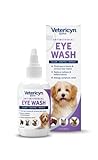
- SOOTHE PET'S IRRITATED EYES: Vetericyn Plus Eye Wash works to effectively flush the pet's eye and provide relief from symptoms of pink eye and other eye irritations
- DAILY PET EYE CLEANING: Safe to use daily to reduce allergy symptoms and redness, and can even help clean and remove tear stains
- ANTIBIOTIC FREE & NON-TOXIC: Vetericyn Plus Eye Rinse is a cost-effective, safe, and pain-free alternative to antibiotics ointments or expensive eye drops that may cause your pet discomfort
- VETERINARIAN RECOMMENDED: An essential pet first aid product giving you the ability to care for your pets from the comfort of your own home
- TRUSTED BRAND: Vetericyn is a leader in at-home animal health products manufactured to help pet owners take the best care of their animals
Tonometry
Tonometry measures intraocular pressure. It can help distinguish glaucoma and uveitis from uncomplicated conjunctivitis. A red or cloudy eye is not automatically an infection.
PCR, cytology, culture, and other testing
Laboratory testing is more useful when disease is severe, chronic, recurrent, affects several cats, fails to respond to initial treatment, or occurs in a shelter or breeding environment. PCR may be used for C. felis or herpesvirus. Cytology and culture may help investigate bacterial, fungal, or unusual infections, although test choice depends on the examination.
Drops versus ointments: which is better?
Neither formulation is automatically stronger or more effective. The active ingredient, diagnosis, tissue being treated, contact time, dosing schedule, and the cat’s ability to tolerate treatment matter more than the word “drop” or “ointment.” Veterinary ophthalmology references explain that the route and formulation are selected according to the disease and properties of the medication.
Quick wins for a faster PC:
Fix the driver behind crashes, sound loss and screen glitchesFind Drivers →Repair Windows errors before they cause bigger problemsFix Now →| Consideration | Eye drops or solutions | Eye ointments |
|---|---|---|
| Application | Usually one prescribed drop is placed on the eye or inside the lower lid | A thin prescribed strip is placed in the lower conjunctival space or as the veterinarian demonstrated |
| Contact time | Often shorter, so some products require frequent dosing | Usually remains on the ocular surface longer, although the prescribed frequency still varies |
| Vision afterward | Usually causes little temporary blurring | Can blur vision briefly while it melts over the eye |
| Ease of use | Some owners find a quick drop easier, but aiming a bottle can be difficult | The tube may be harder to control and some cats dislike the texture |
| Main applicator risk | The bottle tip touches the eye, eyelids, lashes, or discharge | The tube tip touches the eye or too much ointment is applied |
Many ophthalmic drops are prescribed several times per day at the beginning of treatment, while some ointments need fewer applications. That is not universal: the medication and the disease determine the schedule. Use exactly the amount on the prescription label or the amount demonstrated by the veterinarian. General guidance often describes one or two drops as sufficient for a liquid product, but ointment instructions vary considerably by product and case. Do not add extra because some medication spills out.
When drops may be preferable
- The prescribed drug is available only as a solution.
- Your cat tolerates a quick application better than a tube near the eye.
- Frequent dosing is manageable.
- Temporary ointment-related blurring would be inconvenient.
When ointment may be preferable
- Longer surface contact is useful for the prescribed medication.
- A less frequent schedule makes reliable treatment more realistic.
- Lubrication is part of the treatment plan.
- Your cat tolerates ointment better than repeated drops.
A formulation that is easier for you is not necessarily therapeutically equivalent to another product. If your cat fights every application, ask the veterinary practice whether a different formulation, a demonstration, a second person, pain control, or a recheck is needed. A workable plan that is actually given is better than an ideal plan that cannot be administered safely.
How to give a cat eye drops
Prepare first
- Read the label before restraining your cat, including which eye receives the medication and how often.
- Wash your hands before and after treatment.
- Gather the medication, a clean towel, treats, and a clean damp cloth if discharge needs to be removed.
- If multiple products were prescribed, confirm their order and spacing with the veterinary practice.
- Keep each bottle or tube with its own original cap. Do not swap caps between medications.
- Use a second person if your cat is painful, frightened, or difficult to hold.
Approach calmly from behind or place the cat on a stable surface. A towel wrap can help, but it should be snug rather than restrictive, and the cat’s head should remain accessible.
Clean only the surrounding discharge
Before applying medication, gently soften discharge on the surrounding fur with warm water and a clean washcloth or moistened cotton ball. Wipe away from the eye without scrubbing the cornea. Use a separate clean piece of cloth or gauze for each eye. Never put hydrogen peroxide, facial-cleaning products, household disinfectants, or other non-ophthalmic solutions into the eye.
Recommended Free Tools
If a chemical or fine debris enters the eye, first-aid guidance recommends flushing with sterile saline or clean water for 5 to 10 minutes, followed by veterinary care. Do not try to remove an embedded object. The VCA pet first-aid handbook provides this emergency guidance.
Application steps
- Support your cat’s head under the chin and gently angle the face upward.
- Hold the bottle above the eye with your other hand. Keep the tip pointed toward the eye but do not let it touch the eye, eyelids, eyelashes, or discharge.
- Pull the lower eyelid down slightly to create a small pocket.
- Squeeze the prescribed drop onto the eye or inner lower-lid area.
- Let your cat blink. Hold the head still briefly so the medication spreads.
- Recap the bottle immediately and reward your cat.
Do not force the bottle toward the eye if your cat jerks. If the dose clearly missed, contact the prescribing veterinary practice for product-specific instructions rather than automatically repeating it. Do not double the next dose unless the veterinarian directs you to do so.
How to apply cat eye ointment
- Keep the tube pointed away from the eye in case your cat suddenly moves.
- Support the head and gently pull down the lower eyelid.
- Place the prescribed thin strip along the inside of the lower eyelid, or apply it exactly as the veterinarian demonstrated.
- Release the eyelids and allow your cat to blink.
- If instructed, gently close the eyelids briefly to distribute the ointment.
- Wipe excess ointment from the surrounding fur, not from the cornea.
- Recap the tube and reward your cat.
Ointment commonly causes temporary blurred vision while it spreads. Keep your cat away from stairs or other hazards until vision appears clear. Do not use the tube tip to scrape discharge or touch the eye.
Brief blinking, pawing, or mild discomfort can occur after ointment, but persistent pain is not expected. Contact a veterinarian immediately if redness, swelling, cloudiness, or discomfort worsens, or if your cat suddenly keeps the eye shut. If a product such as Terramycin is followed within about four hours by facial swelling, itching, weakness, vomiting, or difficulty breathing, stop using it and seek immediate veterinary advice because the product label warns of potentially serious hypersensitivity reactions.
Also popular on Amazon

- Daily Cleaning - This eye drop for dogs and cats is suitable for daily eye care of pets, removes tear stains and smudges, restores the shine of the hair around the eyes and soothes canine, feline, and dog eye infection treatments, itchy foreign body discharge and other symptoms
- Effective, Gentle, and Safe - The active ingredient of our eye drops for cats is Hypochlorous Acid (HOCI). HOCI is a naturally occurring substance produced by mammalian white blood cells to boost your pet's immune system. We synthesize a stable immune factor, the HOCI molecule, through EYEMYCIN PET HOCI technology, which has revolutionized safe animal care for all pets and their owners
- Reliable Solution - This dog eye drops for infection are gentle, non-irritating, no alcohol added. Developed to strict standards and trusted by professionals, its natural ingredients and proven effectiveness make it a reliable solution for maintaining optimal eye health in your furry friend
- Easy and Precise Eye Care - EYEMYCIN PET’s innovative nozzle design ensures precise and easy dispensing of each drop, while also protecting your buddies’ eyes from accidental injury. This unique design makes the application of eye rinse quick, safe, and gentle, reflecting our genuine care for your pet’s comfort and health
- For Cats ,Dogs , Horses & Birds - This pet eye drop is suitable for cats and dogs, easy to operate, and can easily provide eye care for your furry friend. Whether indoors or outdoors, it can be used for cleaning anytime and anywhere
Using more than one eye medication
Ask the veterinary practice for the exact order and interval. As a general practical rule, less-viscous solutions are used before thicker ointments, and different eye medications are separated by approximately five minutes unless the label or veterinarian says otherwise. Ointment is usually applied last because it can interfere with a later drop reaching the eye.
- Do not assume the five-minute interval overrides product-specific instructions.
- Replace the cap on each product immediately.
- Use a separate clean tissue or gauze for each eye when wiping discharge.
- Do not allow an applicator that touched one infected eye to touch the other eye.
- If a bottle or tube tip touches the eye or discharge, contact the veterinary practice or pharmacist for advice about possible contamination.
Medication safety: what not to put in a cat’s eye
Do not reuse an old prescription
A previous episode may have been caused by a different condition. An old antibiotic may not cover the current problem, and a former antibiotic-steroid combination may be dangerous if the present eye has an ulcer. Even if the medication appeared to help last time, it should not be reused without veterinary direction.
Do not use human eye drops without veterinary instructions
Avoid human redness-relief drops, leftover prescription drops, contact-lens solutions, and human antibiotic or steroid combinations unless a veterinarian specifically directed that product for your cat. Not every human ophthalmic product is poisonous, but its ingredients, concentration, preservatives, steroid content, and intended use may not match the cat’s condition.
Be cautious with triple-antibiotic products
Some cats have developed severe hypersensitivity reactions after ophthalmic antibiotic preparations. Do not apply human triple-antibiotic products such as Neosporin unless your veterinarian specifically tells you to use a particular ophthalmic product. Even a veterinary-labeled product can carry an allergy warning.
Do these 3 things before closing this tab:
1Repair Windows errors before they cause bigger problems2Scan for outdated or missing drivers - takes under a minute3Clear out junk files and repair common Windows errorsNever use a steroid before an ulcer is ruled out
This is the most important medication warning. Steroid eye drops and ointments can be appropriate for selected inflammatory or immune-mediated conditions, but they can inhibit corneal healing, worsen or “melt” an ulcer, and reactivate or aggravate herpesvirus-associated corneal disease. Combination antibiotic-steroid products are included in this warning. “It helped last time” is not a safe reason to use one now. Read the Merck guidance on ocular anti-inflammatory agents.
Do not give human pain relievers
Never substitute acetaminophen, ibuprofen, aspirin, or another human pain reliever for veterinary pain control unless a veterinarian has given precise instructions. Acetaminophen can be fatal to cats, and other human analgesics can cause serious kidney, stomach, or intestinal injury. Contact your veterinarian or ASPCA Animal Poison Control promptly if a cat has received a human medication.
Do not rely on unproven supplements
L-lysine is sometimes promoted for feline herpesvirus, but evidence is inconsistent. Some studies have found no benefit or possible worsening, so it should not replace examination or prescribed antiviral and supportive care. Do not start it without discussing the plan with your veterinarian.
Prescription, extra-label, and product-label issues in the United States
In the United States, prescription animal drugs must be dispensed by or on the lawful order of a licensed veterinarian. A veterinarian may use an approved human or animal medication extra-label under specified conditions and within a valid veterinarian-client-patient relationship. Extra-label does not automatically mean a drug is unsafe; it means the veterinarian must choose and explain the individualized use. See the FDA information on veterinary prescribing and its extra-label drug-use guidance.
What about Terramycin?
Terramycin ophthalmic ointment is one useful example of why a product label is not a universal treatment plan. The current U.S. DailyMed label identifies oxytetracycline hydrochloride and polymyxin B sulfate as its active ingredients and lists superficial ocular infections, including conjunctivitis, keratitis, corneal ulcer, and blepharitis, in cats and several other species. It is restricted to use by or on the order of a licensed veterinarian, and its label lists topical administration two to four times daily.
The label, revised with an effective date of September 24, 2025, does not mean Terramycin is suitable for every red or discharging eye. It is an antibiotic product, so it does not treat every virus, ulcer cause, allergy, pressure disorder, anatomical problem, or intraocular disease. It also carries a warning about serious hypersensitivity reactions. Do not turn the label’s dosing range into a self-prescription.
Other treatments a veterinarian may choose
Antibiotic drops or ointments
Examples used in veterinary practice include oxytetracycline/polymyxin B, triple-antibiotic ophthalmic products, gentamicin, and other veterinarian-selected medications. These are examples, not a shopping list. An antibiotic may be prescribed for a superficial bacterial infection or a secondary bacterial infection after a viral illness has damaged the ocular surface. Purulent discharge suggests a bacterial component but does not prove that bacteria are the primary or only cause.
Antiviral treatment
For significant herpesvirus-related keratitis or recurrent ocular disease, a veterinarian may prescribe a topical antiviral or an oral antiviral such as famciclovir. Some topical antivirals are compounded or used extra-label, and not every product is commercially available, FDA-approved for cats, or suitable for every case. Evidence and product choice vary. In one randomized experimental study of 16 cats, topical ganciclovir three times daily had similar efficacy to oral famciclovir twice daily for experimental ocular FHV-1; that result does not establish a universal regimen for naturally infected cats.
Crashes, No Sound, or Screen Glitches?
Random freezes, missing sound and display glitches usually trace back to one bad driver. Find and replace yours safely.Free scan · under a minuteWindows Errors? Fix Them Before They Spread
Repair common Windows errors and clear accumulated junk for a smoother, more stable PC - no reinstall needed.Free scan · no reinstallAlso popular on Amazon

- ★★ Eye Drops for Pets Provide safe, effective relief to your pet’s eye Itchy and irritated eyes. It can also be used to remove debris or for regular eye care.
- ★★ Eye Drops For Dogs & Cat is the best solution to your pet’s eye problem. It works to clean in and around the eye and remove any foreign material, Daily maintenance to clean and prevent tear stains
- ★★ Simply Drop Solution Into Affected Area Up To 3-4 Times A Day To Relieve and Promote All Round Positive Eye Health and Hygiene! Flush Away Dirt, Debris and Stop Your Dog's or Cat's Eyes Itching!
- ★★ Eye Care Made Easy, Safe for use around the mouth, nose, ears and eyes, care for your animals where they are happy and comfortable.
- ★★ Our Gentle Pet Eye Cleaning Drops Are Used to Cleanse and Promote Healthy Eyes – Enabling Your Dog or Cat to be Discomfort Free!
Systemic antibiotics
Systemic treatment may be more appropriate for C. felis or an infection involving the respiratory tract. Drug selection and duration depend on factors such as age, hydration, kidney function, pregnancy, and other medications. Do not use a leftover oral antibiotic or stop treatment early.
Pain control and protection
Corneal ulcers can be very painful. Treatment may include veterinary-prescribed oral pain control, atropine in selected cases, and an Elizabethan collar to prevent rubbing and self-trauma. A cat that keeps pawing at the eye can worsen an ulcer even while receiving medication.
Surgery or ophthalmology referral
Deep, melting, nonhealing, or complicated ulcers may need debridement, a graft, a third-eyelid flap, or referral to a veterinary ophthalmologist. A dark brown or black spot on the cornea may be a feline corneal sequestrum, not dried discharge. It can be painful and may require specialist or surgical treatment, especially when severe.
Independent reader supportYour contribution helps us test, update, and keep practical guides available for everyone.How quickly should treatment work?
With uncomplicated conjunctivitis, discharge, redness, and discomfort may begin improving within several days. Veterinary references describe a range of treatment schedules: Cornell notes that commonly prescribed antibiotic eye treatment may be given three or four times daily for two to three weeks, while VCA notes that some drops are initially used three to six times daily. These are examples from clinical references, not instructions for treating an undiagnosed cat.
Improvement does not necessarily mean the disease is gone. Continue, stop, taper, or change medication only as the veterinarian directs. Stopping early can allow recurrence or treatment failure.
Contact the veterinarian for a recheck if:
- The eye becomes more painful after treatment.
- Redness, swelling, discharge, or cloudiness increases.
- Your cat begins keeping the eye shut.
- There is no clear improvement within the timeframe your veterinarian gave you.
- The problem returns repeatedly.
- The second eye becomes affected.
- Your cat develops sneezing, nasal discharge, fever, lethargy, poor appetite, or breathing difficulty.
- You cannot administer the medication reliably or the cat repeatedly rubs the eye.
For a corneal ulcer, veterinary sources commonly describe a re-examination after roughly two to three days of treatment to verify healing, but the interval depends on the ulcer’s depth and severity. A recheck may lead to a different diagnosis, not simply a stronger antibiotic.
Safe supportive care at home
- Gently wipe discharge from the surrounding fur with warm water and a clean cloth.
- Use an appropriately fitted Elizabethan collar if your veterinarian recommends one or your cat is rubbing the eye.
- Keep the cat hydrated and offer palatable food if nasal congestion reduces appetite.
- Reduce smoke, dust, chemical irritants, crowding, and stress.
- Use humidification for upper-respiratory congestion only as directed and without exposing the cat to excessive heat.
Supportive care does not replace an eye examination when the cat is painful, the eye is cloudy, or vision may be affected. Do not use hydrogen peroxide, essential oils, household disinfectants, homemade medicated solutions, or non-ophthalmic creams near the eye. Hydrogen peroxide can seriously damage ocular tissue.
Are cat eye infections contagious?
Some feline eye diseases are associated with contagious respiratory pathogens. Transmission can occur through eye, nasal, or oral secretions and through contaminated hands, bowls, bedding, toys, and other objects. Ask your veterinarian whether the affected cat should be separated, particularly if you have kittens, unvaccinated cats, or medically fragile animals.
Quick wins for a faster PC:
Clear out junk files and repair common Windows errorsFree Scan →Fix the driver behind crashes, sound loss and screen glitchesFind Drivers →Repair Windows errors before they cause bigger problemsFix Now →In a multi-cat household:
- Wash your hands after handling the face, discharge, medication bottles, or bedding.
- Give medications to each cat separately.
- Do not let applicator tips touch more than one eye or cat.
- Use separate towels and eye-cleaning cloths.
- Wash bowls, bedding, and washable toys.
- Reduce crowding and stress.
- Ask about testing or treatment of housemates if C. felis or an outbreak is suspected.
Feline herpesvirus and calicivirus are contagious to cats but are not known to pose a human health risk. C. felis appears to have a low but nonzero reported zoonotic risk. Vaccination reduces the risk or severity of some respiratory diseases but does not eliminate every infection or guarantee that a vaccinated cat cannot develop conjunctivitis. Chlamydia vaccination is generally considered for selected multi-cat environments or situations where infection has been confirmed.
Why treatment may fail
If an antibiotic improves the discharge but the eye remains red, painful, or recurrent, the medication may be treating only a secondary problem. Other possibilities include:
- Herpesvirus or another viral disease
- A corneal ulcer or foreign body
- A medication that is not reaching the eye
- The need for systemic rather than topical treatment
- An organism not covered by the medication or resistant to it
- Irritation or allergic reaction to the medication
- Dry eye, entropion, tear-duct disease, glaucoma, or uveitis
- Recurrent herpesvirus, immune-mediated disease, or an anatomical problem
- A schedule that is too difficult to follow consistently
Repeatedly switching to a stronger antibiotic without a re-examination can delay the correct treatment. Recurrent disease deserves a fresh assessment, which may include fluorescein staining, tear testing, pressure measurement, PCR, cytology, culture, or referral.
Also popular on Amazon

- Lubricating Solution with Viscoadaptive Biopolymers: I-DROP VET PLUS is a leader in ocular surface disorder (OSD) management, providing a safe and effective formula that refreshes and stabilizes the tear film. Its viscoadaptive biopolymers offer long-lasting lubrication for dogs, cats, horses, and other companion animals with dry eyes.
- Unique Formulation: I-DROP VET PLUS for dogs is formulated by I-MED Animal Health, a leader in ocular surface disorder management, offering uniquely formulated hyaluronan-based products.
- 10-mL Sterile Packaging: Each package of I-DROP VET PLUS contains a convenient 10-mL sterile bottle, ensuring the freshness and safety of the lubricating solution. It’s easy to use and provides an adequate supply for your dog's eye care needs.
- Trusted by Veterinarians: I-DROP VET PLUS is the trusted choice of veterinarians for managing ocular surface disorders in dogs, cats, horses, and other companion animals. Its high-quality ingredients and proven effectiveness make it a reliable solution for maintaining optimal eye health in your furry friend.
- Supports Ocular Health: Help your dog's eyes stay comfortable by promoting natural moisture and overall eye health. I-DROP VET PLUS works gently to hydrate and protect the eyes without causing irritation.
Frequently Asked Questions
Can a cat eye infection go away on its own?
Some mild viral conjunctivitis cases improve with supportive care, but discharge and redness do not prove that the condition is mild. A painful, cloudy, closed, injured, or worsening eye needs prompt veterinary care. Even a non-emergency-looking discharge deserves a veterinary appointment rather than a fixed wait-and-see period.
PC Slower Than It Used to Be?
A free scan shows the junk files, broken settings and background clutter dragging Windows down - then fixes them in one click.Free scan · Windows 10 & 11Outdated Drivers Are Slowing You Down
One free scan finds every outdated or missing driver and matches the right update for your exact hardware.Free scan · exact hardware matchIs clear discharge less serious than yellow or green discharge?
Clear tearing can occur with irritation, allergy, viral disease, an ulcer, or other eye problems. Yellow or green discharge may suggest a bacterial component, but it does not prove that a primary bacterial infection is the only cause. Pain, squinting, cloudiness, and changes in vision matter more for urgency than discharge color alone.
Can I use human eye drops on my cat?
Do not use human redness-relief drops, contact-lens solutions, or leftover prescription eye medication unless a veterinarian specifically directs you to use a particular product. Ingredients, concentrations, preservatives, and steroid content may be inappropriate, and the product may delay treatment of an ulcer or another serious condition.
Are ointments better than drops for cats?
No formulation is automatically better. Ointment may remain on the eye longer but can be harder to apply and can blur vision temporarily. Drops may be easier to administer but may require more frequent dosing. The diagnosis and active ingredient determine which product is appropriate.
What if some of the eye medication runs out?
Do not automatically give extra. One or two drops are usually enough for a liquid product, but ointment amounts vary. Follow the prescription label or the amount demonstrated by your veterinarian. If the dose clearly missed, ask the prescribing practice what to do rather than repeating or doubling it.
What if my cat will not hold still for eye medication?
Ask another person to help, use a calm towel wrap, prepare treats beforehand, and have the veterinarian demonstrate the technique. Do not force a bottle or tube against the eye. If pain or fear makes treatment unsafe, the veterinarian may need to address pain, change the formulation, or recheck the eye.
Can I use a previous prescription for the same symptoms?
No, not without veterinary direction. A new episode may be an ulcer, foreign body, herpesvirus flare, allergy, glaucoma, or another condition. An old antibiotic may not help, and an old steroid combination can worsen an ulcer or herpetic corneal disease.
How long does herpesvirus conjunctivitis last?
The course varies. Acute signs may improve over days with appropriate care, but herpesvirus remains latent in many cats and can reactivate, so recurrent disease is possible. Antibiotics do not eliminate the virus. Severe, recurrent, or poorly responsive cases may need veterinary-directed antiviral treatment and investigation for other causes.
Why is the eye still red after the discharge improves?
The antibiotic may have reduced secondary bacteria without resolving the underlying virus, ulcer, allergy, dry eye, eyelid problem, or inflammation inside the eye. Persistent redness, pain, cloudiness, or recurrence warrants a recheck rather than automatic escalation to another antibiotic.
The Tool Desk
Outbyte PC Repair FREERepair Windows errors before they cause bigger problemsFix Now →Outbyte Driver Updater FREEScan for outdated or missing drivers - takes under a minuteDriver Scan →What does a black or brown spot on my cat’s eye mean?
A dark brown or black corneal spot may be a feline corneal sequestrum, not dried discharge. It can be painful and may require specialist or surgical treatment. Do not try to scrape it off or treat it with leftover medication.
Does a positive herpesvirus PCR prove herpesvirus is causing the eye problem?
No. Herpesvirus shedding can be intermittent, and clinically normal cats may test positive. The result must be interpreted with the eye examination and other findings. A positive result does not rule out an ulcer, foreign body, allergy, anatomical disease, or another concurrent problem.
When does a cat need a veterinary ophthalmologist?
Referral may be appropriate for a deep, melting, nonhealing, or complicated corneal ulcer; a sequestrum; vision-threatening disease; recurrent unexplained disease; glaucoma; severe intraocular inflammation; or a condition that does not respond as expected. Your primary veterinarian can advise when referral is needed.
The Bottom Line
The safest cat eye infection treatment is the treatment matched to the diagnosis. Use prescribed drops or ointment exactly as directed, usually placing drops before ointment when both are prescribed. Keep applicator tips clean, never use steroid eye medication before an ulcer has been ruled out, and do not substitute human products, human pain relievers, or leftover prescriptions. Squinting, a closed or cloudy eye, trauma, blood, unequal pupils, vision changes, or worsening during treatment calls for same-day veterinary care.





Leave a Reply