
Free tools Windows power users keep installed
One-click scans. No signup required.
Cat grass can be a safe, optional enrichment activity for many cats, but it is not a required nutrient, a proven hairball cure, or a treatment for vomiting or constipation. The practical choice is to offer a small pot of clean, untreated cereal grass, monitor how your cat responds, and involve a veterinarian if eating or vomiting becomes frequent.
What cat grass is—and what it is not
“Cat grass” usually means the young shoots of cereal plants such as oat, wheat, barley, alfalfa, or rye. It is not catnip: catnip is a mint-family herb with different compounds and effects. Cats may nibble grass whether they live indoors or outdoors, and eating it alone does not show that a cat is ill. A veterinary-reviewed PetMD explanation notes that studies on the behavior are limited.
As an Amazon Associate I earn from qualifying purchases.
A cat eating a complete and balanced diet does not need grass to meet its nutritional requirements. Researchers have not established which nutrients cats absorb from grass or whether eating it corrects a deficiency. Think of cat grass as an optional plant, sensory activity, and source of roughage—not as a vitamin supplement or medical product.
Quick wins for a faster PC:
Repair Windows errors before they cause bigger problemsFix Now →Fix the driver behind crashes, sound loss and screen glitchesFind Drivers →Clear out junk files and repair common Windows errorsFree Scan →The list below therefore describes 11 possible or practical benefits. They vary by individual cat and are not 11 clinically proven health outcomes.
#1 Best Overall

- Your Cat Deserves the Best: Our cat grass blend adds important nutrients to your cat’s diet, including wheat grass, oat, barley and rye. Organic and loaded with all the fiber your pet needs for healthy digestion, our cat grass kit provides hairball control for cats as well as a tasty edible grass treat.
- Cat Plant Magic: Add a soil disk, a splash of water, and a sprinkling of seeds, and watch your cat grass planter kit sprout like magic. Read our Cat Ladies insert for easy-to-follow instructions and growing tips, and watch your organic cat grass sprout up to 4” in just 4–7 days. No green thumb required.
- Good for Cats, Good for All: Not only are our grow kits organic and GMO-free, but our cat grass for indoor cats deters them from eating toxic household plants and digging up your favorite blooms, making our cat grass good for cats and their humans.
- Purrfectly Giftable: A great gift for cat moms everywhere, our cat grass growing kit keeps your feline friends healthy and happy while keeping your house looking greener and cleaner.
- What’s Inside: Our Cat Grass Growing Kit includes 3 organic soil disks (number may vary), 3 packages of our locally sourced cat grass seed blend, 3 BPA-free containers, and simple instructions.
11 possible benefits and reasons owners offer cat grass
1. It may provide a little roughage
Grass contains fibrous material that is not fully digested. The roughage may add bulk and stimulate normal movement through the digestive tract. VCA Animal Hospitals describes this as a possible aid to digestion and elimination, not a guaranteed effect. A cat that already has persistent digestive symptoms needs a diagnosis rather than extra fiber at home.
2. It may support a bowel movement in a mildly constipated cat
Some blades can pass into stool and add material that helps movement through the colon. This is a limited, practical possibility for an otherwise well cat, not a treatment plan for recurrent constipation. Straining, hard stools, no stool, lethargy, or repeated episodes warrant veterinary advice; do not use grass to delay an examination.
3. It might help pass indigestible material
One theory is that fiber or subsequent regurgitation helps move hair or another indigestible item. Evidence does not show that grass reliably prevents or reduces hairballs. In a 2021 peer-reviewed study of plant-eating behavior in domestic cats, the summarized findings did not show different grass-eating tendencies in long- versus short-haired cats. That observation cannot establish a hairball benefit.
4. It gives indoor cats an outlet for natural grazing
Plant eating is common feline behavior. A pot placed where an indoor cat can investigate lets it perform a behavior that would otherwise be unavailable indoors. This is an enrichment and husbandry benefit, not proof that the cat has a dietary need for greens.
Rank #2

- Healthy Alternative to Cat Treats: Cats crave the taste of grass, and our cat grass adds important nutrients, like niacin and B vitamins, to your cat’s diet; It also provides cats with the fiber they need for healthy digestion and hairball control
- Cat Grass For Indoor Cats: Cat-A’bout cat grass reduces your cat’s urge to eat house plants; Each cat grass kit includes everything required to grow grass except water; Can be grown year round and makes a great gift
- Easy & Fast Cat Grass Kit: Our unique formula requires watering only once and sprouts magically straight from the container; CatGrass Plus has a 98% germination rate so your cat can start enjoying healthy, vibrant grass in as little as one week
- From Nose to Toes We've Got Your Pet Covered: Our goal is to improve the human-animal bond by offering a complete line of innovative, solutions-driven products and accessories for animals, both small and large
- Trusted by Professionals: Miracle Care health and grooming products have been trusted and recommended by veterinarians and professional groomers for more than 40 years; Proudly Made in the USA in our Dayton, OH facility
5. Chewing can add entertainment and exploration
VCA lists entertainment as a possible reason to provide grass. The texture, resistance, smell, and movement of blades create a short sensory activity. Some cats ignore it, while others return regularly. Rotate it with play, climbing, scratching, and food puzzles rather than expecting grass to solve boredom on its own.
6. It can be an alternative to chemically treated lawn grass
Outdoor lawns may have pesticide, herbicide, fertilizer, or other residue. Growing a small crop specifically for your cat can reduce that particular exposure when the seeds, soil, container, and care products are also suitable. “Homegrown” is not automatically safe: contaminated seed, mold, or treated potting material can still create hazards.
7. It may redirect attention from some houseplants
A deliberately offered grass pot gives a cat an acceptable plant to investigate and may reduce chewing on other greenery. It does not make toxic plants safe or guarantee that a cat will leave them alone. Keep known poisonous houseplants inaccessible even when cat grass is available.
8. The taste and texture provide individual sensory enrichment
Some cats prefer fine oat shoots; others favor broader wheat or barley blades, and some show no interest at all. Offering a small amount lets you learn your cat’s preference without changing its balanced food. Preference is individual and should not be interpreted as evidence of a missing nutrient.
Rank #3

- Complete Kit: Cat grass kit includes cat grass seeds, coconut coir soil discs, wooden cat grass planter, and mini tools.
- Indoor Friendly: Cat grass for indoor cats with easy indoor grass for cats to grow year-round.
- Digestive Support: Grass for cats helps hairball control and supports healthy digestion.
- Fast Sprouting: Just add water, plant cat grass seed, and see catgrass sprout in days.
- Pet Friendly: Plants for cats and dogs, ideal pet grass for cats in any home.
9. Regular grazers may have more predictable elimination
VCA guidance says cats that graze regularly may have more regular gastrointestinal tracts, fewer hairballs, or less constipation. These are clinical impressions and proposed associations, not controlled proof that grass produces those outcomes. Track your cat’s stool, appetite, and vomiting rather than assuming a benefit from continued nibbling.
10. Grass contains micronutrients, but absorption is uncertain
Young plants contain vitamins and minerals, which is why grass is sometimes marketed as a supplement. However, PetMD’s veterinary review cautions that studies have not established exactly what cats absorb from the plant. A healthy cat should obtain required nutrients from a complete diet; never substitute grass for food or a veterinarian-prescribed supplement.
11. It gives your cat a choice in its environment
A small indoor pot is an optional resource the cat can approach or ignore. Providing that choice can improve an indoor environment without forcing a behavior. Remove it if the cat eats large amounts, digs in the soil, or develops digestive signs after access.
Why do cats eat grass, and why do some vomit afterward?
There is no single established explanation. Cats may seek roughage, respond to taste or texture, express an inherited grazing behavior, or simply explore. The 2021 study, “Characteristics of Plant Eating in Domestic Cats”, used owner reports to examine motivations. Its observations do not prove that plant eating prevents illness or treats hairballs.
Rank #4
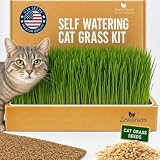
- EASIEST WAY TO GROW EDIBLE CAT GRASS FOR INDOOR CATS IN YOUR HOME. Water once at the beginning and that’s it! No need to use messy soil or have to calculate how much water to give on daily basis. Guaranteed to grow in just a few days with no green thumb required.
- BEAUTIFULLY STYLISH: Our Cat Grass Growing Kit system includes a dish washer friendly grass tray measuring 12” x 6” (one of largest Cat grass systems on Amazon!) and insert for continual use, a beautiful bamboo surround because we want it to look good in your home, 1 biodegradable hemp mat, full instructions and certified organic USDA non-GMO wheatgrass seeds with an incredible germinate rate.
- CONVENIENT REFILLS AVAILABLE SEPERATELY: Make growing your own grass for cats a healthy habit and hobby with our easy to use economical refill packs so you will never be without. One kit produces 72 square inches of grass for your purry love!
- WATCH THE MAGIC HAPPEN: No soil needed which means that no chance of your purry love pulling out seeds and dirty soil all over the place! Simply soak seeds, pour water over hemp mat, spread the seeds out and cover with the black out lid, for 3 days and then take the lid off and your wheatgrass will be ready in another 3 – 4 days!
- ZERO RISK SATISFACTION: Our seeds have an excellent germination rate and are guaranteed to grow. If you need any help, our US based ZestiGreens team would love to help you as we want you and your furry friends to love growing your own cat grass as much as we do. We offer full refunds if you are unhappy for any reason.
Vomiting after grass is possible because blades and larger quantities can irritate the stomach or be difficult to digest. A single episode in an otherwise normal cat is not automatically an emergency, but frequent vomiting should never be normalized as successful hairball clearing. PetMD notes that repeated grass eating followed by vomiting can accompany gastrointestinal disease, including inflammatory bowel disease or parasites.
Safety rules before offering cat grass
- Use untreated plants. Do not offer grass exposed to pesticides, herbicides, fertilizer, or unknown lawn chemicals.
- Prevent mold. Discard wilted, slimy, or moldy growth and clean the container before reseeding.
- Control the soil. Cats may ingest potting material while chewing. Use a cat-safe growing medium and supervise a cat that digs or eats soil.
- Limit access to large quantities. Long blades and heavy consumption can trigger vomiting and, rarely, contribute to an obstruction risk.
- Remove toxic plants. Cat grass does not protect a cat that can still reach poisonous houseplants.
- Watch the whole cat. Loss of appetite, repeated vomiting, abdominal pain, lethargy, diarrhea, straining, or inability to pass stool calls for prompt veterinary guidance.
Contact your veterinarian if grass eating is new, rapidly increasing, or repeatedly followed by vomiting. The change may be unrelated to grass and could signal gastrointestinal disease or parasites.
Independent reader supportYour contribution helps us test, update, and keep practical guides available for everyone.How to grow cat grass indoors
VCA lists oat, wheat, barley, alfalfa, and rye as common choices. A shallow container with drainage is easier to manage than a deep pot and lets excess water escape.
- Choose seed and a clean container. Use seed sold for growing edible plants, a shallow pot with drainage holes, and clean, suitable growing medium. Avoid seed or soil treated with pesticides or fungicides unless the label specifically indicates it is appropriate for this use.
- Sow the seed. Follow the packet’s depth and spacing directions. Cover seeds lightly and place the container where a cat cannot reach it while the seeds are germinating.
- Keep the medium damp, not saturated. Water gently so seeds stay moist without standing water. Waterlogged conditions encourage mold.
- Wait for sprouting. VCA and PetMD describe sprouts commonly appearing in about 3–7 days, although temperature, light, seed age, and moisture change the timing.
- Provide light after emergence. Move the pot to a bright location. Water sparingly enough to keep the roots hydrated while allowing the surface to dry slightly between waterings.
- Offer it at a short, edible height. The grass is often ready in roughly 10–14 days after planting or when it reaches around four inches, but use appearance and condition rather than the calendar. Do not offer blades that are yellowing, collapsed, or moldy.
- Introduce it under supervision. Let your cat nibble for a short period and observe chewing, stool, appetite, and vomiting. Remove the pot if your cat pulls up roots or consumes soil.
- Replace the crop. Once the grass becomes tired or contaminated, discard it, wash the container, and start a fresh batch.
These timelines are general estimates, not guarantees. A clean, well-drained crop is more important than forcing rapid growth.
Best Value

- 🌱 Grows in Just 3-7 Days – Fast & Foolproof: Our 100% wheat grass seeds germinate quickly and reach 4–6 inches tall in as little as 3–7 days. No green thumb required. Simply soak seeds for 6 hours, sprinkle on soil, water once, and place on a sunny windowsill. Watch your indoor cat grass kit sprout like magic – perfect for impatient cats and busy owners alike.
- 🌾 Premium Wheat Seeds – High Germination & Freshness This 3-pack contains high-germination wheat seeds, carefully selected for consistent, vigorous growth.
- 🐱 Helps Support Natural Hairball Management: Fresh wheat grass provides natural fiber that helps your cat expel hairballs and support healthy digestion. The tender greens act as a gentle internal aid, reducing hairball formation while satisfying your cat's instinct to chew on plants – keeping them away from toxic household flowers and your favorite blooms.
- 🐰 A Healthy Treat for Small Pets Too: Not just for cats! Rabbits, guinea pigs, hamsters, and even reptiles love this fresh wheat grass supplement. Unlike dry hay alone, our nutrient-rich greens provide essential vitamins, hydration, and natural foraging enrichment. Grow a living snack that supports oral health and overall well-being for all your small furry family members.
- 🎁 Complete 3-Piece Growing Kit—Everything You Need: Each kit includes 3 packets of wheatgrass seeds, 1 BPA-free container, 3 sheets of coconut coir growing medium, and easy-to-follow instructions. Just add water and watch it grow. Whether you’re a first-time cat owner or a seasoned “plant parent,” this kit is perfect for year-round indoor gardening. It makes an excellent gift for cat lovers everywhere.
Choosing a seed packet or growing kit
A kit is convenient but not medically superior to seeds and a draining planter bought separately. Compare the practical details that affect safety and upkeep:
| Feature | What to check | Why it matters |
|---|---|---|
| Seed type | Oat, wheat, barley, alfalfa, rye, or a stated blend | Texture and growth rate vary, and individual cats have different preferences. |
| Container | Shallow, stable pot with drainage holes | Drainage lowers the chance of waterlogging and mold. |
| Growing medium | Ingredients and treatment status clearly stated | Cats may ingest loose soil while chewing or digging. |
| Instructions | Watering, light, sprouting, and replacement guidance | Clear directions make it easier to maintain a clean crop. |
| Replacement ease | Whether spare seed is included or readily available | Grass should be discarded when it wilts or molds. |
If you buy a ready-made product, inspect it for damp, sour-smelling, or fuzzy growth before giving it to your cat. No individual kit has been established as a veterinary treatment.
Common mistakes and what to do instead
- Calling grass a supplement: Keep the complete diet unchanged; grass nutrient absorption is not established.
- Using it as a hairball cure: Brush long-haired cats as appropriate and ask a veterinarian about recurrent hairballs.
- Assuming vomiting is beneficial: Record frequency and associated signs; repeated episodes need veterinary assessment.
- Putting a pot beside toxic plants: Move or remove poisonous species rather than relying on redirection.
- Overwatering for faster growth: Damp, stagnant soil promotes mold; use drainage and moderate watering.
- Letting the cat eat unlimited blades: Offer access that you can monitor and remove long or damaged growth.
Should you give your cat grass?
For a healthy cat on a complete diet, cat grass is optional. It can provide a safe outlet for grazing, chewing, and exploration when grown from suitable seed in clean, mold-free conditions. It is not necessary for nutrition, proven to prevent hairballs, or appropriate as an explanation for recurring vomiting. Offer a small crop if your cat enjoys it, monitor the response, and call your veterinarian for any persistent digestive signs or a sudden change in plant-eating behavior.
Do these 3 things before closing this tab:
1Clear out junk files and repair common Windows errors2Scan for outdated or missing drivers - takes under a minute3Repair Windows errors before they cause bigger problemsQuick Recap
Product prices and availability are accurate as of the date/time indicated and are subject to change. Any price and availability information displayed on Amazon at the time of purchase will apply.





Leave a Reply