
PC Slower Than It Used to Be?
A free scan shows the junk files, broken settings and background clutter dragging Windows down - then fixes them in one click.Free scan · Windows 10 & 11Outdated Drivers Are Slowing You Down
One free scan finds every outdated or missing driver and matches the right update for your exact hardware.Free scan · exact hardware matchShort answer: The ASPCA lists basil, rosemary, common thyme and garden sage as non-toxic to cats. It lists Greek oregano, parsley, garden mint, marjoram, and Spanish thyme (also called Indian borage) as toxic. That is nine supported herbs, not ten. Do not add an unverified tenth herb just to match a headline.
“Non-toxic” is a plant-list classification, not a feeding recommendation. Cats can still vomit or develop gastrointestinal upset after eating any plant material, and the ASPCA entries do not establish safe serving sizes, nutritional benefits, or safety for concentrated oils and extracts.
As an Amazon Associate I earn from qualifying purchases.
How to read the ASPCA herb classifications
The ASPCA cat plant database separates plants by reported toxicity. A non-toxic listing means the plant is not expected to contain the toxic principles covered by that entry when a cat encounters it. It does not mean the herb is part of a cat’s proper diet, that every preparation is safe, or that a particular amount can be predicted to cause no reaction.
The ASPCA’s general plant-safety guidance says consumption of any plant material may cause vomiting and gastrointestinal upset in dogs and cats. A cat that nibbles a listed non-toxic herb therefore still needs observation. A toxic listing also is not a dose calculator: the amount eaten, the cat’s size and health, the plant part, and the time since exposure all affect the individual risk.
#1 Best Overall

- Your Cat Deserves the Best: Our cat grass blend adds important nutrients to your cat’s diet, including wheat grass, oat, barley and rye. Organic and loaded with all the fiber your pet needs for healthy digestion, our cat grass kit provides hairball control for cats as well as a tasty edible grass treat.
- Cat Plant Magic: Add a soil disk, a splash of water, and a sprinkling of seeds, and watch your cat grass planter kit sprout like magic. Read our Cat Ladies insert for easy-to-follow instructions and growing tips, and watch your organic cat grass sprout up to 4” in just 4–7 days. No green thumb required.
- Good for Cats, Good for All: Not only are our grow kits organic and GMO-free, but our cat grass for indoor cats deters them from eating toxic household plants and digging up your favorite blooms, making our cat grass good for cats and their humans.
- Purrfectly Giftable: A great gift for cat moms everywhere, our cat grass growing kit keeps your feline friends healthy and happy while keeping your house looking greener and cleaner.
- What’s Inside: Our Cat Grass Growing Kit includes 3 organic soil disks (number may vary), 3 packages of our locally sourced cat grass seed blend, 3 BPA-free containers, and simple instructions.
The source material reviewed for this article supports four non-toxic herb names and five toxic ones. Because no tenth herb was established by the same evidence, the safest answer to a “10 herbs” headline is to explain the nine verified entries rather than invent a plant or imply that an unverified herb is safe.
Quick reference: nine herbs in the ASPCA entries
| Herb name used in shops or kitchens | Botanical identity | ASPCA cat-list classification | Signs or important caveat stated by the source |
|---|---|---|---|
| Basil | Ocimum basilicum | Non-toxic | Non-toxic classification only; eating plant material can still cause vomiting or gastrointestinal upset. |
| Rosemary | Rosmarinus officinalis | Non-toxic | Non-toxic classification only; no safe serving size or extract assessment is established. |
| Common thyme | Thymus vulgaris | Non-toxic | Different plant from Spanish thyme; plant-eating caveat still applies. |
| Garden sage | Salvia officinalis | Non-toxic | Non-toxic classification only; no feeding dose or concentrated-product assessment is established. |
| Greek oregano | Origanum vulgare hirtum | Toxic | ASPCA lists gastrointestinal irritation, including mild vomiting and diarrhea. |
| Parsley | Petroselinum crispum | Toxic | Photosensitization is listed; large amounts are needed for that effect according to the entry. |
| Garden mint | Mentha sp. | Toxic | Vomiting and diarrhea are listed after large ingestions. |
| Marjoram | Origanum majorana | Toxic | Vomiting and diarrhea are listed. |
| Spanish thyme (Indian borage) | Coleus ampoinicus | Toxic | Vomiting, diarrhea, depression, anorexia, and occasionally bloody vomiting or diarrhea are listed. |
Herbs the ASPCA lists as non-toxic
Basil (Ocimum basilicum)
Basil is listed as non-toxic to cats. That classification can help you decide what to do if a cat brushes against a basil plant or takes a small exploratory nibble. It does not make basil a treat, supplement, or source of a proven feline health benefit. The ASPCA does not provide a serving size for cats, and the general guidance still warns that plant consumption can upset the stomach.
Keep the botanical name in mind when buying a plant. “Basil” can refer to several cultivated varieties, while the ASPCA entry identifies Ocimum basilicum. If a label identifies a different species or a blend, do not automatically transfer this classification to it.
Recommended Free Tools
Rosemary (Rosmarinus officinalis)
Rosemary is also listed as non-toxic. A cat’s contact with the living herb is therefore not treated the same way as contact with a plant listed as toxic. Nevertheless, the classification does not establish that rosemary leaves should be deliberately fed, nor does it cover concentrated oils, extracts, or products with additional ingredients.
Rank #2

- Healthy Alternative to Cat Treats: Cats crave the taste of grass, and our cat grass adds important nutrients, like niacin and B vitamins, to your cat’s diet; It also provides cats with the fiber they need for healthy digestion and hairball control
- Cat Grass For Indoor Cats: Cat-A’bout cat grass reduces your cat’s urge to eat house plants; Each cat grass kit includes everything required to grow grass except water; Can be grown year round and makes a great gift
- Easy & Fast Cat Grass Kit: Our unique formula requires watering only once and sprouts magically straight from the container; CatGrass Plus has a 98% germination rate so your cat can start enjoying healthy, vibrant grass in as little as one week
- From Nose to Toes We've Got Your Pet Covered: Our goal is to improve the human-animal bond by offering a complete line of innovative, solutions-driven products and accessories for animals, both small and large
- Trusted by Professionals: Miracle Care health and grooming products have been trusted and recommended by veterinarians and professional groomers for more than 40 years; Proudly Made in the USA in our Dayton, OH facility
If your cat chews rosemary and then vomits, do not assume the plant list proves another illness is impossible. The ASPCA’s general warning allows for gastrointestinal upset from any plant material, and persistent or severe signs warrant veterinary advice.
Common thyme (Thymus vulgaris)
Common thyme is listed as non-toxic. The exact species matters because another plant sold under a thyme common name—Spanish thyme—is listed as toxic. Use Thymus vulgaris when identifying the non-toxic entry, particularly if a nursery tag, recipe, or social-media post uses only “thyme.”
The ASPCA entry does not say how much common thyme a cat may eat safely. Treat the classification as information for exposure triage, not permission to add thyme to meals or give a thyme preparation by mouth.
Garden sage (Salvia officinalis)
Garden sage, identified as Salvia officinalis, is listed as non-toxic. As with the other three plants in this group, the listing concerns plant toxicity and does not establish dietary value, a cat-safe dose, or the safety of concentrated sage products.
Rank #3

- Complete Kit: Cat grass kit includes cat grass seeds, coconut coir soil discs, wooden cat grass planter, and mini tools.
- Indoor Friendly: Cat grass for indoor cats with easy indoor grass for cats to grow year-round.
- Digestive Support: Grass for cats helps hairball control and supports healthy digestion.
- Fast Sprouting: Just add water, plant cat grass seed, and see catgrass sprout in days.
- Pet Friendly: Plants for cats and dogs, ideal pet grass for cats in any home.
When a cat has access to several plants, identify each one rather than relying on a visual guess. A plant sold as “sage” may have a different botanical identity, and a mixed planter can contain both listed and unlisted species.
Herbs the ASPCA lists as toxic
Greek oregano (Origanum vulgare hirtum)
Greek oregano is listed as toxic to cats. The ASPCA entry describes gastrointestinal irritation, with mild vomiting and diarrhea among the reported signs. These are source-listed effects, not a prediction that every cat will develop them or that the signs reveal how much was eaten.
Do not use the non-toxic listing for common thyme as a reason to treat oregano as interchangeable. Oregano and thyme are different plants, and the Greek oregano entry has its own botanical identity and warning.
Parsley (Petroselinum crispum)
Parsley is listed as toxic. The ASPCA entry identifies photosensitization as the concern and notes that large amounts are needed to cause that effect. Photosensitization can make skin unusually reactive to light; a cat showing skin problems after a possible exposure needs a veterinarian’s assessment rather than a home diagnosis.
Rank #4
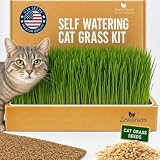
- EASIEST WAY TO GROW EDIBLE CAT GRASS FOR INDOOR CATS IN YOUR HOME. Water once at the beginning and that’s it! No need to use messy soil or have to calculate how much water to give on daily basis. Guaranteed to grow in just a few days with no green thumb required.
- BEAUTIFULLY STYLISH: Our Cat Grass Growing Kit system includes a dish washer friendly grass tray measuring 12” x 6” (one of largest Cat grass systems on Amazon!) and insert for continual use, a beautiful bamboo surround because we want it to look good in your home, 1 biodegradable hemp mat, full instructions and certified organic USDA non-GMO wheatgrass seeds with an incredible germinate rate.
- CONVENIENT REFILLS AVAILABLE SEPERATELY: Make growing your own grass for cats a healthy habit and hobby with our easy to use economical refill packs so you will never be without. One kit produces 72 square inches of grass for your purry love!
- WATCH THE MAGIC HAPPEN: No soil needed which means that no chance of your purry love pulling out seeds and dirty soil all over the place! Simply soak seeds, pour water over hemp mat, spread the seeds out and cover with the black out lid, for 3 days and then take the lid off and your wheatgrass will be ready in another 3 – 4 days!
- ZERO RISK SATISFACTION: Our seeds have an excellent germination rate and are guaranteed to grow. If you need any help, our US based ZestiGreens team would love to help you as we want you and your furry friends to love growing your own cat grass as much as we do. We offer full refunds if you are unhappy for any reason.
The “large amounts” qualification is important but should not be turned into a home dosing threshold. The source does not provide a reliably safe amount for an individual cat, and a cat may have eaten more than its owner saw.
Garden mint (Mentha sp.)
Garden mint is listed as toxic, with vomiting and diarrhea reported after large ingestions. “Mint” is a broad common name, so identify the plant as closely as possible and retain its label or a photograph for the veterinarian. Do not assume that a mint-flavored product has the same composition as a mint plant, or that a product is safe because the amount of leaf is unknown.
Marjoram (Origanum majorana)
Marjoram is listed as toxic, and the ASPCA entry reports vomiting and diarrhea. It belongs to the same broader genus as Greek oregano but is a distinct species. A kitchen jar, dried seasoning, or garden label may not make the identity obvious; bring the packaging when seeking advice.
Do these 3 things before closing this tab:
1Fix the driver behind crashes, sound loss and screen glitches2Clear out junk files and repair common Windows errors3Scan for outdated or missing drivers - takes under a minuteSpanish thyme or Indian borage (Coleus ampoinicus)
Spanish thyme, also called Indian borage, is listed as toxic. The ASPCA entry reports vomiting, diarrhea, depression, loss of appetite, and occasionally bloody vomiting or bloody diarrhea. Those signs can indicate a more serious illness, especially when a cat is weak, refusing food, or losing fluids.
Best Value

- 🌱 Grows in Just 3-7 Days – Fast & Foolproof: Our 100% wheat grass seeds germinate quickly and reach 4–6 inches tall in as little as 3–7 days. No green thumb required. Simply soak seeds for 6 hours, sprinkle on soil, water once, and place on a sunny windowsill. Watch your indoor cat grass kit sprout like magic – perfect for impatient cats and busy owners alike.
- 🌾 Premium Wheat Seeds – High Germination & Freshness This 3-pack contains high-germination wheat seeds, carefully selected for consistent, vigorous growth.
- 🐱 Helps Support Natural Hairball Management: Fresh wheat grass provides natural fiber that helps your cat expel hairballs and support healthy digestion. The tender greens act as a gentle internal aid, reducing hairball formation while satisfying your cat's instinct to chew on plants – keeping them away from toxic household flowers and your favorite blooms.
- 🐰 A Healthy Treat for Small Pets Too: Not just for cats! Rabbits, guinea pigs, hamsters, and even reptiles love this fresh wheat grass supplement. Unlike dry hay alone, our nutrient-rich greens provide essential vitamins, hydration, and natural foraging enrichment. Grow a living snack that supports oral health and overall well-being for all your small furry family members.
- 🎁 Complete 3-Piece Growing Kit—Everything You Need: Each kit includes 3 packets of wheatgrass seeds, 1 BPA-free container, 3 sheets of coconut coir growing medium, and easy-to-follow instructions. Just add water and watch it grow. Whether you’re a first-time cat owner or a seasoned “plant parent,” this kit is perfect for year-round indoor gardening. It makes an excellent gift for cat lovers everywhere.
This plant is the source of the most confusing name issue in the list. Spanish thyme is not common thyme. Spanish thyme is Coleus ampoinicus and is listed as toxic; common thyme is Thymus vulgaris and is listed as non-toxic. Check the botanical name before deciding how to respond.
Independent reader supportYour contribution helps us test, update, and keep practical guides available for everyone.What to do if your cat eats an herb
- Move the plant away. Prevent further chewing, but do not force food, water, or a home remedy into the cat’s mouth.
- Identify the exact plant. Photograph the plant and its label, note the botanical name if available, and keep packaging for dried herbs or prepared products.
- Estimate the exposure without guessing a dose. Record when the cat could have reached it, which part was eaten, and whether any leaves or stems are missing.
- Call for professional advice. Contact your local veterinarian if the plant is listed as toxic, the identity is uncertain, or any signs develop. The ASPCA general guidance also lists its 24-hour poison hotline at (888) 426-4435; verify the current contact details when you need them.
- Watch for changes while arranging help. Vomiting, diarrhea, depression, loss of appetite, weakness, breathing problems, collapse, or blood in vomit or stool should not be managed by comparing symptoms with an online list.
Do not induce vomiting unless a veterinary professional specifically instructs you to do so. A plant list cannot account for a cat’s age, medical conditions, medications, or the possibility that another household substance was involved.
Growing herbs in a cat household
Plant labels are your first safety control. Keep the botanical name with the common name, especially for plants sold under confusing names such as “Spanish thyme.” Separate listed toxic plants from areas your cat can enter, and remember that a hanging basket or high shelf is not secure if the cat can climb or the leaves can fall within reach.
Use clean pots and soil intended for plants, and avoid assuming that a non-toxic classification covers fertilizers, pesticides, decorative treatments, or a container’s other contents. The ASPCA entries concern the named plant, not every substance used to grow or preserve it.
If you want to grow basil, rosemary, common thyme, or garden sage, grow them for household use while preventing nibbling. A plant being classified as non-toxic makes accidental contact less concerning than contact with a listed toxic species, but it does not turn the plant into a feline food item.
Limits of the list
- The entries do not establish a safe quantity to feed any herb.
- They do not establish nutritional or medicinal benefits for cats.
- They do not evaluate essential oils, concentrated extracts, tinctures, or multi-ingredient products.
- They do not diagnose an individual exposure or predict how quickly signs will appear.
- They cannot identify an unlabeled plant from a common name alone.
For those reasons, the most useful practice is precise identification followed by prompt professional advice when exposure is possible. Use “non-toxic” to distinguish the four listed plants from the five toxic entries—not as a recommendation to feed herbs.
Bottom line
According to the ASPCA plant entries, basil, rosemary, common thyme (Thymus vulgaris) and garden sage are non-toxic to cats, while Greek oregano, parsley, garden mint, marjoram and Spanish thyme/Indian borage are toxic. The list supports nine herbs, not ten. Any cat that becomes ill or may have eaten a toxic plant should be assessed by a veterinarian or poison-control professional.
The Tool Desk
Outbyte Driver Updater FREEScan for outdated or missing drivers - takes under a minuteDriver Scan →Outbyte PC Repair FREERepair Windows errors before they cause bigger problemsFix Now →Quick Recap
Product prices and availability are accurate as of the date/time indicated and are subject to change. Any price and availability information displayed on Amazon at the time of purchase will apply.





Leave a Reply