
The Tool Desk
Outbyte Driver Updater FREEScan for outdated or missing drivers - takes under a minuteDriver Scan →Outbyte PC Repair FREERepair Windows errors before they cause bigger problemsFix Now →Do not try to eliminate scratching. Scratching is normal feline behavior used to maintain the claws, stretch the body and leave visual—and possibly scent—marks. The practical solution is to redirect that behavior to a surface your cat chooses, while making furniture and carpet less rewarding targets.
Start by observing what your cat already prefers, then place a stable, appealing scratcher beside the problem area. Reward its use, protect the household surface temporarily and avoid punishment. A cat that still scratches is not being spiteful or disobedient; it is expressing an innate need in a location you can change.
As an Amazon Associate I earn from qualifying purchases.
Why do cats scratch furniture?
Scratching serves several ordinary feline purposes at once. It helps maintain the claws, provides a full-body stretch and leaves a visible mark. Scratching may also leave a scent mark. Because the behavior is innate, a cat will continue to seek an outlet even if a particular sofa, rug or doorframe is covered.
Recommended Free Tools
The useful question is not “How do I stop my cat scratching?” but “What does my cat want to scratch, and where can I provide a better option?” ASPCA summarizes the humane objective this way: “The best tactic when dealing with scratching is not to try to stop your cat from scratching, but instead to teach her where and what to scratch.”
#1 Best Overall
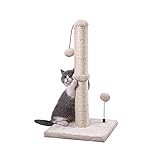
- Premium Quality Materials - This product is made of 100% natural sisal hemp.The base and top is a weighted MDF covering the carpet.Nature High Quality Sisal Safe Plush Long Lasting Usage Stable basement, never tip over easily.
- Protect your furniture - Grab sticks and plush toys combine to attract cats to play and grab, natural sisal is suitable for cats to grab, effectively preventing cats from grabbing furniture
- Designed for indoor use - Neutral colors work well with existing decor in your home.ideal for any living room, bedroom, or home office
- 22"Tall Cat Scratching Post -11.8 x 11.8 x 22 Inches,design for kitties or smaller cats.
- Easy Assemble - ust screw all parts together,Assemble needed, all tools and instructions included.Please contact us if you have any further questions.
Furniture is often attractive because it is stable, tall or positioned in a socially important part of the home. Carpet may appeal because it offers a horizontal or angled surface with a familiar texture. Those clues tell you how to choose an alternative.
How to identify your cat’s scratching preference
Watch the cat rather than buying a random post and hoping it works. Record the surface, direction and location of each scratching episode for several days.
- Orientation: Does your cat stand and reach upward, scratch along the floor, or use an intermediate angle?
- Material: Does it choose cardboard, sisal, wood, carpet, rough fabric or another texture?
- Height and movement: Does the cat stretch its entire body, brace against a heavy object or scratch a flexible surface?
- Timing and location: Does scratching happen after waking, during play, near a doorway or beside a favorite resting place?
These observations are more useful than a product label. Cats do not all favor the same design, and a premium-looking tower can be ignored if its texture or orientation does not match the existing habit.
Free tools Windows power users keep installed
One-click scans. No signup required.
Rank #2
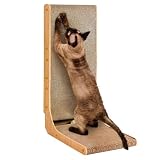
- HIGH QUALITY MATERIALS: The surface of the cat scratching board is made of non-toxic and high-density corrugated paper, which is durable enough to withstand cat scratching.
- INNOVATIVE DESIGN: Our cat scratcher for indoor cats features an L-shaped design. Please place it against wall and sofa to protect your furniture. The L-shaped cat scratcher provides more scratching area for cats to scratch in a variety of positions.
- MULTIFUNCTIONAL USE: Cats can scratch, relax and stretch on our cardboard cat scratcher. Our cat scratch pad also comes with a toy ball to play with. It provides a safe and comfortable environment for cats.
- MULTIPLE SIZES: We offer three sizes of cat scratching pad for you to choose from. The smallest size is specially for kittens. No matter what size your cat is, it enables your cat to scratch and play to its heart's content!
- EASY INSTALLATION: Our cat scratching board adopts a simple installation method and comes with instructions and necessary tools. We also provide an installation video so that you can install it quickly and easily.
Choosing a scratcher that can compete with the furniture
Match the replacement to the behavior you observed. The following framework covers the decisions that matter without implying that one model suits every cat.
| What to match | Options | How to decide |
|---|---|---|
| Orientation | Vertical, horizontal or angled | Choose the direction your cat already uses. A cat that pulls up on a sofa arm is more likely to try a vertical post; a carpet-scratcher may prefer a board on the floor. |
| Surface | Cardboard, sisal, wood, carpet or rough fabric | Offer the texture that appears in the cat’s current target. If uncertain, provide two different textures rather than assuming a universal favorite. |
| Stability | Weighted base, anchored post or a board that cannot slide | The scratcher should stay put when the cat leans its full weight into it. Wobbling can make an otherwise suitable item unattractive. |
| Height | Short, medium or tall | A vertical option should allow a full stretch. The American Animal Hospital Association’s 2021 feline life-stage guidance relays a study in which cats used a preferred substrate more often when the post was a simple upright type or a cat tree with at least two levels and a height of 3 feet or more. That is a study-specific finding, not a guarantee for every cat. |
| Placement | Beside furniture, near a resting area, by a doorway or in another favored spot | Put the first scratcher where the behavior already occurs. A scratcher hidden in a rarely used room is easy to ignore. |
If you are deciding between a sturdy cat scratching post, a horizontal cardboard scratcher and a sisal scratching post, use your cat’s observed direction and material as the deciding evidence. Try one well-matched item before filling the home with products.
How to stop a cat scratching the furniture: a humane redirection plan
- Map the target. Note the exact furniture edge, carpet patch or other surface being scratched. Identify whether the cat reaches upward or works along the floor.
- Place the matching scratcher immediately beside it. Do not begin across the room. The first alternative should be as convenient as the unwanted target.
- Make the scratcher safe and stable. Check that a post does not tip and that a board does not slide. For a vertical post, select enough height for the cat to extend fully. For a horizontal scratcher, keep the entire scratching area accessible.
- Invite investigation without pressure. Put a toy near the item, offer a treat after the cat approaches or use catnip if your cat responds to it. These are invitations, not requirements; some cats will ignore catnip.
- Reward the behavior you want. When the cat scratches the approved surface, calmly deliver a treat, praise or another reward the cat values. Rewarding after use helps establish the location without interrupting the scratching motion.
- Protect the original target temporarily. Cover a furniture corner, block access when practical or use a furniture scratch guard or double-sided tape as a secondary aid. Protection works best when the acceptable scratcher remains directly beside the old target.
- Keep the alternative available. Do not discard a worn scratcher merely because it looks used. A familiar, well-scratched item can remain appealing. Replace it only when it no longer provides a usable surface or cannot be kept stable.
- Expand the setup after success. Once the cat reliably uses the first item, add another scratcher near a second target or a different resting area. Keep the original in place while the habit is developing.
What not to do
Do not force the paws onto the post
Physically placing a cat’s paws on a scratcher can make the item—and the person holding the cat—feel threatening. Let the cat investigate and use it voluntarily. If the cat walks away, adjust the location, orientation or material instead of increasing restraint.
Rank #3

- Scratching post provides a place for cats to sharpen their claws and keep nails healthy
- Includes a single pillar scratching post in neutral colors with a replaceable dangle toy
- Natural jute fiber provides an optimal scratching surface
- Sturdy wood base helps prevent the post from tipping
- Ideal for redirecting cats away from scratching household carpet or furniture; spot clean as needed
Do not startle, spray or punish
Shouting, startling or spraying may interrupt one episode, but it can create fear or a negative association with the owner. It does not teach which surface is acceptable. Environmental redirection, temporary protection and rewards communicate the desired choice more clearly.
Do not expect nail trimming to replace scratching
Trimming can be a secondary claw-care measure, but it does not meet the cat’s need to scratch, stretch and mark. If you are unsure how to trim claws safely, ask a veterinary professional to demonstrate and advise on an appropriate schedule.
Placement examples for common household problems
Cat scratches the sofa arm
Use a stable vertical post or tall scratcher that reaches the cat’s full stretch. Position it against the sofa arm or within a few inches of the exact corner. Once the post is used consistently, you can move it gradually if another location is more practical; moving it too far at the start removes the convenience that made the alternative competitive.
Rank #4

- Scratching post provides a place for cats to sharpen their claws and keep nails healthy
- Includes a single pillar scratching post with a replaceable dangle toy
- Natural jute fiber offers an optimal scratching surface
- Sturdy base helps prevent the post from tipping
- Ideal for redirecting cats away from scratching household carpet or furniture; spot clean as needed
Cat scratches carpet
Offer a horizontal or angled board with a texture similar to the carpet, then place it over or immediately beside the preferred patch while you supervise access. If the cat also scratches upright surfaces, provide a separate vertical option rather than expecting one board to satisfy both patterns.
Cat scratches a doorframe or another vertical edge
Anchor a vertical scratcher beside the frame so the cat can stand in the same position and reach the same height. Protect the frame during the transition and reward use of the post. A narrow item that shifts under pressure is less likely to succeed than a firmly anchored alternative.
Several cats scratch in different ways
Treat each cat as an individual. One may prefer cardboard on the floor while another chooses sisal at full height. Provide enough stable outlets for the observed preferences and place them near the targets each cat uses. Do not assume that sharing one centrally located post will solve every problem.
Best Value
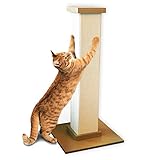
- 32″ height allows cats to stretch fully and tone muscles
- Sturdy 16″ by 16″ base eliminates tipping and wobbling
- Fibrous and durable woven sisal naturally inspires scratching
- Superior to carpeted posts that may snag nail
- Assembles with two included screws
How long does redirection take?
There is no universal timetable. Progress depends on how strongly the cat prefers the original surface, how quickly the new item is placed beside it and whether the scratcher remains stable and available. Look for measurable signs rather than a promise of total elimination: more scratches landing on the approved surface, fewer fresh marks on the protected furniture and voluntary returns to the scratcher.
Keep the setup consistent while the new pattern develops. Removing the scratcher after a few successful days, changing its texture or allowing the cat to return to an unprotected target can make the old habit more rewarding again.
When scratching may signal a problem
Ordinary scratching is not, by itself, evidence of spite or a behavioral disorder. Seek veterinary advice if the behavior changes suddenly, the cat appears injured or the cat seems to be in pain. The available behavior guidance does not provide a complete medical triage rule, so a veterinarian is the appropriate person to assess physical concerns.
For persistent cases involving several surfaces, conflict between cats or a home setup that is difficult to change, ASPCA and Cornell recommend help from a qualified professional who can create an individualized behavior plan. Bring notes or video of the scratching pattern, the surfaces offered and what happened when you tried redirection.
A practical setup checklist
- Observe whether the cat scratches vertically, horizontally or at an angle.
- Match the scratcher’s material to the texture the cat already chooses.
- Use a stable base or anchor; eliminate wobbling and sliding.
- Choose enough height for a full stretch when the cat scratches upright.
- Place the item beside the current target or near a favored resting location.
- Use toys, treats or catnip only as invitations, and reward voluntary use.
- Cover or protect furniture while the new habit develops.
- Never force the paws onto the scratcher or punish scratching.
- Keep a familiar, worn scratcher available if it remains safe and usable.
- Ask a veterinarian about sudden changes, pain, injury or safe nail trimming.
The bottom line on furniture scratching
Your cat is unlikely to stop needing to scratch, and that is not the goal. The reliable approach is to make a suitable surface easier, safer and more attractive than the furniture: match the cat’s preferred direction and texture, place a stable scratcher beside the target, reward voluntary use and protect the household surface during the transition. Humane redirection respects normal feline behavior while giving everyone in the home a workable place to live.
Quick Recap
Product prices and availability are accurate as of the date/time indicated and are subject to change. Any price and availability information displayed on Amazon at the time of purchase will apply.





Leave a Reply