
The Tool Desk
Outbyte Driver Updater FREEScan for outdated or missing drivers - takes under a minuteDriver Scan →Outbyte PC Repair FREERepair Windows errors before they cause bigger problemsFix Now →Under the 2021 AAHA/AAFP feline life-stage guidance, a cat is considered senior at 10 years and older. An AAFP caregiver brochure uses a slightly different client-facing phrasing and says cats become senior at 11. Neither number is a biological switch or a diagnosis. Age helps set a preventive-care schedule, while your cat’s health, behavior, mobility, weight and veterinary assessment determine what care is appropriate.
What age is a cat considered senior?
The most useful professional standard is the 2021 life-stage framework from the American Animal Hospital Association and the American Association of Feline Practitioners (AAHA/AAFP): senior begins at 10 years. In that framework, cats are grouped as kittens from birth to 1 year, young adults from 1 to 6, mature adults from 7 to 10, seniors from 10 onward, and end-of-life at any age.
As an Amazon Associate I earn from qualifying purchases.
You may also see 11 years used in consumer-facing advice. The AAFP caregiver brochure says cats become senior at 11. That wording is not a contradiction about a sudden change on a particular birthday; it is a different way of describing the transition for cat owners. When a source says 10, it is using the professional life-stage guideline. When it says 11, it is using the brochure’s rounded, client-oriented phrasing.
Do these 3 things before closing this tab:
1Scan for outdated or missing drivers - takes under a minute2Repair Windows errors before they cause bigger problems3Fix the driver behind crashes, sound loss and screen glitches| Source and audience | Senior threshold stated | How to interpret it |
|---|---|---|
| 2021 AAHA/AAFP feline life-stage guidance for veterinary care | 10 years and older | The professional age band used to organize preventive care and life-stage discussions. |
| AAFP caregiver brochure for cat owners | Becomes senior at 11 | A client-facing description of the same transition, expressed one year later. |
For practical purposes, start treating the 10th birthday as a prompt to discuss senior-care planning with your veterinarian. Do not wait for a label before reporting a change, and do not assume that a 10-year-old cat is unhealthy simply because the senior category applies.
#1 Best Overall

- Purina indoor cat food made with real chicken as the number 1 ingredient to support strong muscles, including a healthy heart
- High fiber cat food made with high-quality nutrients and glucosamine helps support the health of cats age 7+
- A natural fiber blend in Purina indoor dry cat food helps minimize hairballs
- Adult cat food includes four antioxidant sources to help support a strong immune system in a crunchy kibble with calcium for strong teeth and healthy gums
- Hairball control cat food features a great taste and deliciously crunchy bites with no artificial flavors or preservatives
How the feline life-stage categories fit together
Life-stage labels organize conversations; they do not predict exactly how an individual cat will look or feel. A healthy cat can remain active and comfortable well into the senior stage, while a younger cat can develop a condition that needs attention. The AAHA/AAFP categories are:
| Life stage | Age in the 2021 AAHA/AAFP framework | What the label is for |
|---|---|---|
| Kitten | Birth to 1 year | Early growth and developmental care. |
| Young adult | 1–6 years | Adult preventive care before the mature-adult transition. |
| Mature adult | 7–10 years | A period when age-related risks become more relevant to preventive discussions. |
| Senior | 10 years and older | More deliberate monitoring and, at minimum, more frequent preventive follow-up. |
| End-of-life | Any age | A care phase based on health and quality of life, not a fixed birthday. |
The final row matters. End-of-life care is not reserved for a particular age, and being classified as senior does not mean that end-of-life decisions are imminent. Your veterinarian should assess the individual cat’s medical conditions, comfort, frailty and quality of life.
How often should a senior cat see a veterinarian?
AAHA/AAFP recommends a complete physical examination at least annually at every life stage and checkups at least every six months for senior cats. The AAFP senior-care guidance gives more specific intervals by age and health:
Free tools Windows power users keep installed
One-click scans. No signup required.
| Cat’s age and health | Visit interval stated in AAFP guidance | Important qualification |
|---|---|---|
| Senior cats aged 10–15 | At least every six months | This is a minimum preventive interval; illness may require closer follow-up. |
| Healthy cats older than 15 | Every four months | The four-month recommendation is specifically for healthy cats over 15. |
| Any senior cat with a chronic condition | More often when needed | The schedule should be set around the condition and your veterinarian’s advice. |
These are guidance intervals, not guarantees that every cat needs the same appointment plan. A cat with a chronic illness, a new symptom or a change in comfort may need to be seen sooner than the age-based minimum. Conversely, a cat that appears well still benefits from scheduled examinations because gradual changes can be difficult to notice at home.
Rank #2

- Purina indoor cat food made with real chicken as the number 1 ingredient to support strong muscles, including a healthy heart
- High fiber cat food made with high-quality nutrients and glucosamine helps support the health of cats age 7+
- A natural fiber blend in Purina indoor dry cat food helps minimize hairballs
- Adult cat food includes four antioxidant sources to help support a strong immune system in a crunchy kibble with calcium for strong teeth and healthy gums
- Hairball control cat food features a great taste and deliciously crunchy bites with no artificial flavors or preservatives
At each visit, bring a concise account of what has changed since the last appointment. The AAHA/AAFP guidance emphasizes a full physical examination, and the AAFP senior-care guidance focuses on pain management, disease and coexisting conditions, nutrition, weight, frailty, quality of life and end-of-life decisions. Those topics are best handled as an ongoing partnership between the veterinary team and the caregiver.
Changes you should not dismiss as normal aging
Cornell’s cat-health education advises caregivers not to write off health or behavior changes as old age. The AAFP brochure likewise encourages owners to discuss gradual weight shifts and other changes. A useful rule is to record a new pattern and tell your veterinarian rather than trying to decide at home whether it is harmless.
Mobility and jumping
Notice whether your cat still climbs, jumps, walks and settles comfortably. A reluctance to jump to a familiar perch, a slower route through the home or difficulty getting up is a meaningful observation even if your cat still eats and seeks attention. Do not force a diagnosis from one sign; describe when it started, how often it occurs and which activities have changed.
Quick wins for a faster PC:
Clear out junk files and repair common Windows errorsFree Scan →Fix the driver behind crashes, sound loss and screen glitchesFind Drivers →Repair Windows errors before they cause bigger problemsFix Now →Appetite and weight
Weight can drift gradually enough that a household does not notice. Track your cat’s weight in a consistent way when possible and tell the veterinarian about a sustained increase, decrease or change in appetite. The AAFP brochure specifically recommends discussing weight changes, while senior-care guidance treats nutrition and weight management as individual clinical questions.
Rank #3

- 100 percent complete and balanced nutrition for adult cats 7 and older. Includes antioxidants to support immune system health
- Contains taurine, an essential amino acid for cats. High levels of vitamin E support a healthy coat
- High protein cat food recipe supports strong muscles. Our Fancy Feast Senior 7+ recipes are crafted in U.S. facilities
- From the number 1 gourmet cat food brand in the U.S.. The delectable flavors and appealing textures you expect from Fancy Feast
- Convenient pull-tab cans for easy feeding. Tailored nutrition to help meet senior cats’ special needs
Daily routine and behavior
Changes in sleeping places, interaction, grooming, movement around the home or other familiar routines are worth recording. A single unusual day may not establish a pattern, but a repeated or progressive change gives the veterinary team useful context. Write down dates and examples instead of relying on memory at an appointment.
Litter-box access
If getting into or out of the litter box appears harder, that is both a mobility observation and a practical access problem. A lower-entry box can help an individual cat that struggles with a high-sided box. The accommodation supports access; it does not explain why the difficulty appeared, so report the change as well.
Home changes that can help a senior cat
Senior-proofing is not a mandatory makeover. It is a set of optional adjustments chosen for the cat in front of you. The AAFP caregiver brochure identifies steps or ramps for reaching favorite spaces and a lower-entry litter box when access is difficult.
Keep favorite places reachable
If your cat routinely rests on a sofa, bed or other elevated location but no longer jumps there easily, offer a stable step or ramp. Place it so the cat can approach and leave without an awkward leap. Watch how your cat uses it and reposition it if the route is not appealing. A ramp is useful only if it is secure and does not create a new obstacle.
Rank #4

- Veterinarians Recommend IAMS: Feed your favorite feline IAMS Proactive Health dry cat food to support their whole-body health
- Discover the Proactive 5 Difference: The Proactive 5 health benefits for IAMS Proactive Health are scientifically designed to support five key areas of your cat’s health, keeping them full of life, for more of life
- #1 Ingredient is Real Chicken. This nutrient-rich senior cat food is made with real chicken, contains high-quality protein sources, and supports a healthy body
- Maintains Healthy Digestion: A specialized fiber blend and prebiotics help nourish the intestinal cells and improve the absorption of nutrients
- Healthy Immune System: IAMS Proactive Health Senior dry cat food contains an elevated level of vitamin E, which helps restore immune response to that of a healthy adult cat
Reduce litter-box effort
Choose a box with an entry height your cat can manage. Keep the route clear and make the location easy to reach. If you change the box, observe whether your cat uses it normally and tell your veterinarian about any continuing difficulty.
Make monitoring practical
The AAFP brochure also mentions a scale suitable for weighing a cat at home. Consistent measurements can reveal a gradual trend that is hard to see visually. Use the same method and record the date and result; the value is in the pattern you can share with the veterinary team, not in a single number interpreted without context.
Independent reader supportYour contribution helps us test, update, and keep practical guides available for everyone.Nutrition and weight are individual decisions
A senior label alone does not prove that your cat needs a particular commercial diet. The AAFP senior-care guidance includes nutrition and weight management, and the caregiver brochure advises regular weight monitoring. Ask your veterinarian whether feeding amounts, meal format or diet composition should change for your cat’s health status.
Avoid making a major feeding change solely because a package says senior. The appropriate plan depends on the cat’s current weight trend, appetite, diseases, medications and overall condition. Bring the food label and a typical day of feeding information to the appointment so the discussion is specific. If appetite changes, contact the veterinary practice rather than assuming the change is an inevitable part of aging.
Best Value
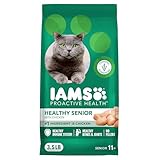
- Veterinarians Recommend IAMS: Feed your favorite feline IAMS Proactive Health dry cat food to support their whole-body health
- Discover the Proactive 5 Difference: The Proactive 5 health benefits for IAMS Proactive Health are scientifically designed to support five key areas of your cat’s health, keeping them full of life, for more of life
- #1 Ingredient is Real Chicken. This nutrient-rich senior cat food is made with real chicken, contains high-quality protein sources, and supports a healthy body
- Maintains Healthy Digestion: A specialized fiber blend and prebiotics help nourish the intestinal cells and improve the absorption of nutrients
- Healthy Immune System: IAMS Proactive Health Senior dry cat food contains an elevated level of vitamin E, which helps restore immune response to that of a healthy adult cat
What an individualized senior-care plan addresses
Pain and comfort
Senior-care guidance places pain management among its central topics. Your role is to report changes in movement, posture, activity, jumping or interaction; the veterinarian decides what evaluation and treatment are appropriate. Never give a cat a human pain medicine unless a veterinarian has specifically directed you to do so.
Disease and coexisting conditions
Older cats may have more than one health concern at the same time. The AAFP guidance uses the term comorbidities for these coexisting conditions and encourages an integrated plan rather than treating each issue in isolation. Tell the veterinarian about every medication, supplement, appetite change and behavior change so recommendations can be coordinated.
Frailty
Frailty is not the same as reaching a particular age. A frail cat may need a different balance of handling, nutrition, environmental support and appointment frequency than a robust cat of the same age. Ask what signs of reduced resilience your veterinarian wants you to monitor and when to call.
Quality of life and end-of-life decisions
Quality of life belongs in senior-care conversations before a crisis. Discuss how your veterinarian wants you to assess comfort, daily function and enjoyment for your individual cat. End-of-life decisions are personal and medical decisions made with veterinary guidance; the senior label by itself does not determine them.
Common mistakes to avoid
- Waiting for the 11th birthday. The professional guideline starts the senior category at 10, so planning can begin earlier.
- Assuming every change is aging. New mobility, routine, appetite or weight changes deserve a conversation with the veterinarian.
- Using one visit schedule for every cat. Age bands provide minimum guidance, but chronic illness can require more frequent care.
- Changing food automatically. Nutrition and weight plans should match the individual cat rather than a label alone.
- Installing equipment without observing the cat. Steps, ramps and low-entry boxes are optional aids; keep the ones that genuinely improve access.
- Tracking only emergencies. Gradual trends are easier to address when you record them before they become severe.
A practical senior-cat action plan
- Mark the 10-year point. Use it as a prompt to review preventive care, even if your cat appears well.
- Schedule the appropriate examination. Plan at least twice-yearly visits for ages 10–15, and discuss the four-month interval recommended for healthy cats over 15.
- Start a simple home log. Record weight when feasible, appetite, mobility, jumping, litter access and notable routine changes.
- Report trends promptly. Share the dates and examples rather than waiting for a routine appointment if a change is persistent or concerning.
- Adapt the environment only where needed. Add a stable step or ramp, lower-entry litter box or home scale when your cat’s observed needs justify it.
- Review the plan as health changes. Revisit pain, disease, nutrition, weight, frailty and quality-of-life goals with the veterinary team.
A cat becomes senior by an age convention, but senior care succeeds through observation and individualized planning. Treat 10 years as the professional starting point, understand why some owner materials say 11, and let your cat’s actual health determine the next step.
Quick Recap
Product prices and availability are accurate as of the date/time indicated and are subject to change. Any price and availability information displayed on Amazon at the time of purchase will apply.





Leave a Reply