
Free tools Windows power users keep installed
One-click scans. No signup required.
A cat that suddenly sniffs every corner, object, bag, or person is usually gathering information through its strongest sense: smell. A changed household scent, another animal, a possible marking site, or an unfamiliar odor on your clothes can all trigger a burst of investigation. The behavior alone does not prove that your cat is ill, but a clear change from its normal pattern deserves observation and, when it persists or comes with other signs, a conversation with your veterinarian.
Why cats investigate with their noses
Sniffing is how a cat samples chemical information in its environment. Odors can tell a cat that a person or animal has passed through, that an object is new, or that a location may be useful for scratching, rubbing, or marking. Cats may pause to smell a surface, follow a scent trail, or repeatedly return to one spot. Those actions are forms of information gathering rather than a single, specific symptom.
As an Amazon Associate I earn from qualifying purchases.
Feline smell is exceptionally sensitive. VCA Animal Hospitals estimates that cats have roughly 45 million to 80 million olfactory receptors, with a possible upper estimate of 200 million, compared with about 5 million in humans. These figures are estimates rather than a definitive count, and they describe feline olfaction generally—not the reason one individual cat has started sniffing more.
The Tool Desk
Outbyte PC Repair FREERepair Windows errors before they cause bigger problemsFix Now →Outbyte Driver Updater FREEScan for outdated or missing drivers - takes under a minuteDriver Scan →When a cat draws air toward the roof of its mouth, it may be using the vomeronasal (Jacobson’s) organ to analyze chemical cues. Air-sniffing or a particular facial posture does not, by itself, diagnose illness or identify a specific cause.
#1 Best Overall
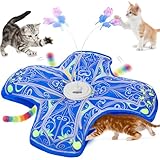
- Top-Tier Dual Interactive Fun: Qraxond's new indoor cat toy has dual motors, controlling random rotation of butterfly and plush tail swing rod accessories, bringing fun, exciting play for kittens and adult cats. Hide-and-Seek: The animal tail-shaped plush hides under the cover cloth, rotating irregularly to appear/disappear, creating a hide-and-seek game. It mimics real prey, bringing unpredictable chases to stimulate the cat's brain and senses. Irregular Rotating Butterfly: The top has an auto-rotating butterfly that rotates, pauses or swings to simulate real flight, keeping the cat engaged. Various interactions ensure the cat gets enough exercise to avoid obesity
- 3 Adjustable Speed Modes: Customize the excitement with separate buttons for the butterfly and tail. Choose from 3 settings: Steady (Blue Light), Active (Purple Light), and Random (Yellow Light). Suitable for high-energy cats to burn off steam or for calm cats to enjoy gentle play. Keep your feline entertained and prevent boredom, especially when they are home alone
- Touch-Sensitive Activation: Your Cat's in Control! With smart touch-sensor technology, just tap the device to fire up the fun mode, it will kick off a 5-minute automatic play session instantly. Right after the play session ends, it switches directly to touch-sensitive standby mode, where the purple indicator light flashes every 20 seconds. Simply tap again to reactivate it for another 5-minute cycle. This smart loop ensures your cat gets sufficient exercise and prevents overstimulation
- Large Rechargeable Battery: Enjoy long-lasting play with the built-in 2500mAh battery. It charges fully in just 2.5 hours via the included USB cable (use a 5V adapter only). The efficient auto on/off cycle extends battery life, making it convenient for busy pet owners while ensuring your cat gets healthy, moderate exercise
- Realistic Bird Chirping: Elevate the hunt with lifelike sound. The built-in speaker emits authentic bird chirps to attract your cat's attention and stimulate their prey drive. Combined with the random motions of the butterfly and tail, it creates an irresistible and engaging play experience that keeps your cat happily chasing even when they're by themselves
Six ordinary explanations for sudden sniffing
A title-matched Catster article updated June 19, 2025 and reviewed and fact-checked by Maxbetter Vizelberg, DVM, lists six plausible explanations. They are behavioral possibilities, not six medically established diagnoses. Look at the setting and what happens immediately before and after the sniffing.
1. Your cat is checking its territory and surroundings
A room can smell different even when it looks unchanged to you. New furniture, cleaning products, packages, visitors, open windows, moved litter equipment, or an item brought in from outside can all add unfamiliar odors. Your cat may also inspect a familiar route simply to refresh its information about the territory.
Another animal’s scent is especially meaningful. A visiting pet, a cat seen through a window, or an animal that crossed a hallway outside can prompt prolonged investigation. Sniffing may continue until the cat has mapped where the odor is strongest. If the behavior is limited to a recently changed area and your cat otherwise acts normally, ordinary scent investigation is a reasonable possibility.
2. It may be evaluating a place to scratch
Cats sometimes sniff an object or vertical surface before scratching. Odor from another cat, a person, food, or a new material may make the surface worth examining. Sniffing does not mean the cat will definitely scratch, and it does not mean increased sniffing needs a scratching product.
If your cat also scratches furniture, carpet, or door frames, provide an appropriate scratching surface such as a stable post or cardboard scratcher near the preferred location. That is environmental management for scratching, not a treatment for unexplained sniffing. Watch whether the sniffing occurs only around potential scratching sites or throughout the home.
Rank #2

- A NEW CHOICE FOR INDOOR ENTERTAINMENT: Endless fun for your cat! Designed for indoor environments, this interactive toy ball rolls quickly across the carpet and emits an appealing cat-attracting chittering sound. Not only does it stimulate your cat's hunting instincts, it also allows them to enjoy outdoor chasing indoors while reducing the risk of furniture scratching
- INTELLIGENT INTERACTION AND FUN: This automatic cat toy is your pet's new playmate. It has two modes: ① Normal mode (green light), which runs for five minutes and then automatically shuts off. ② Intelligent mode (blue light), after running for five minutes the exercise ball automatically enters the dormant mode, when your cat touches it again, the exerciser will interact with your cat again. So whether it's a long game or a short interaction, this interactive cat ball meets the needs of both you and your pet, allowing your pet to entertain itself while you're busy
- TWO SPEEDS FREELY SWITCHING: The BABORUI interactive cat toy offers two speeds, fast and slow, which can be freely switched at any time. Even if your cat is cute and short-legged, it can still keep up with the pace of the exercise ball
- TRIPLE FUN, TRIPLE HAPPINESS: This cat toys for indoor cats comes with three fun tails that provide your cat with triple the fun. They can have endless fun chasing and catching the ball, while the sound of the bells on the tails will further stimulate their curiosity and desire to chase
- SAFE MATERIAL, LASTING AND DURABLE: We understand that your pet's safety is of utmost importance to you. The shell of this kitten toys is made of safe silicone material, so you don't need to worry even if your pet chews it. The durable design means it can withstand daily wear and tear, providing long-lasting companionship for you and your pet
3. The spot may be a candidate for scent marking
A cat may investigate a location before rubbing its face or body on it, leaving scent from glands on the cheeks and other body areas. Sniffing can therefore precede social marking or a decision that a place is important. The behavior may appear after rearranging furniture, introducing a new object, or detecting another animal nearby.
Note what follows the sniff: face rubbing, body rubbing, scratching, urine marking, or simply walking away. Those observations help a veterinarian understand the context, but none is a stand-alone test for a behavioral or medical condition.
Do these 3 things before closing this tab:
1Clear out junk files and repair common Windows errors2Fix the driver behind crashes, sound loss and screen glitches3Repair Windows errors before they cause bigger problems4. It is collecting information about another animal
Smell allows cats to gather information without seeing the source. A household dog, a new cat, a visiting animal, or an outdoor cat near a window can leave an odor that your cat investigates later. Even when animals have not met directly, scent can change how a cat patrols rooms or approaches shared resources.
Check whether sniffing is concentrated around food bowls, bedding, doorways, windows, carriers, or another animal’s usual resting places. Avoid forcing an interaction while your cat is investigating. Give each animal access to its own resting, feeding, toileting, and retreat areas, and observe whether the behavior settles as the unfamiliar scent fades.
5. It may be smelling odors you carried home
People routinely bring outside scents home on shoes, coats, bags, and clothing. A cat may investigate you after you return from another house, a workplace, a veterinary clinic, or an outdoor area. The odor may be unfamiliar even when the item itself is not.
Rank #3

- [Trending Interactive Entertainment]: Potaroma's new indoor cat toys provide an engaging, stimulating play experience for kittens and older cats alike. This automated toy features a rotating butterfly on the top, a removable cover, an enticing feather wand hidden under the cover, consisting a hide-and-seek game. This interactive toy is a great birthday gift for enriching your pet's daily life. Even when left at home alone, your cat can play by itself independently like having a party
- [Advanced Electronic Irregular Motion]: Powered by a smart motorized system, this electric cat toys deliver irregular movements to keep your cat entertained. The play experience includes spinning, chasing, and hunting elements that mimic real-life prey, especially the chasing feather that pops out unpredictably, stimulating your kitty's brain and senses
- [Multi Modes for Indoor Fun]: Features a range of captivating movement modes that stimulate cat's natural instincts to chase, pounce, and play. 3 rotating modes of chasing feather; Simultaneous or seperate working of chasing feather and spinning butterlfy; What's more, the cover can be removed to expose the chasing feather completely for more fun. The diverse play options ensure your cat gets the mental and physical stimulation and enough exercise to eliminate boredom
- [Durable]: Built to withstand even the most aggressive play sessions, thanks to its durable design and high-quality materials. The motors inside the toy are designed to move smoothly and resist wear and tear. Whether your cat loves to chew, scratch, or paw at their toys, Potaroma's cat toy can handle it all. Experience the magic of Potaroma's interactive cat toy, making it a must-have for cat owners seeking a durable and entertaining option for their pets
- [Rechargeable & Large Capacity Battery]: Provide hours of fun for your furry friend. With a built-in rechargeable battery that offers a long-lasting charge, your kitten can enjoy uninterrupted self playtime for up to several days. No need for frequent recharging, making it a convenient choice for busy pet owners. Keep your cat entertained and happy with our innovative cat toys, featuring a battery that's as powerful as your cat's curiosity
This explanation is particularly plausible when the sniffing begins immediately after someone comes home or after a bag or parcel enters the house. Notice whether the cat loses interest after the clothing is removed or the object has been left undisturbed for a while. Do not use perfumes, essential oils, or cleaning fragrances to mask the smell; simply allow the cat to investigate at its own pace.
What’s actually slowing this PC down?
Pick the symptom - the matching free tool is one click away.
6. An unneutered male may detect a potential mate
The reviewed article identifies a potential mate as a conditional explanation, especially when an unneutered male encounters the scent of a female cat. Hormonal and social cues can make an odor highly salient. This possibility should not be generalized to every cat that sniffs more, and sniffing alone cannot establish that mating behavior is occurring.
Consider whether an intact cat has access to outdoor scents, whether a female cat is nearby, and whether sniffing is accompanied by other reproductive or territorial behaviors. Discuss neutering, roaming prevention, and household management with a veterinarian if reproductive behavior is a concern.
How to interpret the context without diagnosing at home
Use the pattern to describe what you see, not to assign a diagnosis. The following comparison organizes useful observations:
| Context | What you might observe | What it suggests you record |
|---|---|---|
| New or altered surroundings | Sniffing clusters around furniture, packages, cleaners, or a moved object. | What changed and the date it entered the home. |
| Another animal’s scent | Repeated investigation near windows, doors, bedding, or shared areas. | Which animal may have passed through and where the odor is strongest. |
| Possible scratching site | Sniffing followed by scratching or pawing at a surface. | Surface material, location, and whether scratching is new. |
| Possible marking site | Sniffing followed by face rubbing, body rubbing, or other marking. | The exact behavior that follows and whether it repeats at one spot. |
| Nasal signs | Sniffing occurs with excessive sneezing or visible nasal discharge. | Frequency, appearance, duration, and any change in normal behavior. |
| General behavior change | Sniffing is part of a broader departure from the cat’s usual routine. | Eating, drinking, toileting, activity, social behavior, and timing of each change. |
These are observation prompts, not diagnostic tests. A cat can show ordinary scent investigation and still have a separate health problem, or show a behavior change without nasal signs.
Rank #4

- 🐱 Trigger Natural Hunting Instincts - Concealed feather wand mimics real prey with unpredictable pop-up motion + realistic mouse squeak. Satisfies your cat's predator drive even when you're away
- 🤖 3 Smart Modes for Every Personality - Normal/Active/Interactive modes adapt to lazy loungers or energy balls. Motion sensor auto-activates on touch; auto-sleep saves battery
- Beat Boredom & Anxiety - Mental stimulation + physical exercise in one. Reduces destructive scratching, over-grooming, and midnight zoomies. Perfect for solo play while you work
- ⚡ 2-Hour Charge = Weeks of Fun - Built-in 1200mAh battery eliminates disposable battery costs. USB-C charging (cable included) - eco-friendly & travel-ready
- 🛡️ Built for Rough Play - Thickened padded mat withstands pouncing & clawing. Replaceable feather wand extends toy lifespan. Rounded edges protect paws
When sudden sniffing warrants a veterinary call
Sniffing by itself is not necessarily cause for alarm. The Catster article specifically flags excessive sneezing and visible nasal discharge as possible signs of a medical problem. Contact a veterinary professional if either appears with the new sniffing, if the behavior is becoming more intense or frequent, or if your cat otherwise seems unlike itself.
Merck Veterinary Manual guidance recommends ruling out health problems that can produce a behavior change before labeling the issue behavioral. The American Association of Feline Practitioners (AAFP) feline behavior guidelines likewise advise contacting the veterinary hospital when a cat’s behavior differs from its normal pattern. A clinician may use the history, physical examination, and diagnostic testing to distinguish a behavioral response from a systemic or other medical cause.
Do not wait for a perfect pattern before asking. You do not need to prove that the sniffing is abnormal; your job is to report the change and the accompanying details. The veterinarian can decide whether examination or testing is appropriate.
Independent reader supportYour contribution helps us test, update, and keep practical guides available for everyone.Senior cats: do not write off a new behavior as aging
A new smell-focused behavior in an older cat deserves the same careful review as any other age-related change. Penn Vet professor Carlo Siracusa, DVM, PhD, DACVB, DECAWBM, emphasizes that unusual behavior changes in senior cats should be shared with a veterinarian: “These are not ‘just old age.’ They’re red flags to share with your vet.” He also states, “Cognitive dysfunction is a diagnosis of exclusion.”
Recommended Free Tools
That means cognitive dysfunction should be considered only after more common senior-cat health problems that can mimic or worsen cognitive signs have been evaluated. The Penn Vet guidance concerns behavior changes in older cats generally, not sniffing specifically. If an older cat suddenly patrols and sniffs differently, record the change and arrange veterinary discussion rather than assuming it is normal aging.
Best Value

- Ball Cat Toy: Multi-level cat toy with 3 tiers and 6 spinning balls—keeps indoor cats active, curious, and entertained
- Enrichment: Encourages batting, swatting, and chasing to satisfy hunting instincts and enhance everyday enrichment
- Durable & Safe: Sturdy, non-slip base and a secure safety bar for hours of safe independent play
- Feline Favorite: Designed for older kittens and adult cats alike; great for multi-cat homes or gifting; not recommended for kittens under 12 weeks
- Expandable: Enjoy on its own or pair with Catstages Topper Toys (sold separately) for even more interactive chaos
What to record before the appointment
A short, specific record is more useful than a general statement that your cat is “sniffing everything.” Merck guidance notes that behavioral histories and video can help a veterinarian evaluate a concern.
- Start date: Write down when you first noticed the change and whether it began abruptly or gradually.
- Frequency and duration: Count approximate episodes in a day and how long a typical episode lasts.
- Locations: List the rooms and objects involved. Mark whether the behavior is confined to one area or spread throughout the home.
- Triggers: Note visitors, deliveries, cleaning, furniture changes, outdoor animals, new clothing, or contact with another pet before an episode.
- What happens next: Record scratching, face rubbing, marking, eating, hiding, play, or a return to normal activity.
- Nasal observations: Note sneezing and any visible nasal discharge, including when they occur relative to sniffing.
- Other changes: Include differences in appetite, routine, social behavior, toileting, or activity without assuming they are connected.
- Video: If safe and practical, take a brief clip that shows the behavior and the surrounding context. Do not restrain or disturb the cat to obtain it.
Bring the timeline, video, and a list of recent household changes to the appointment. A clear sequence can help the clinician decide whether the next step is environmental observation, a physical examination, or diagnostic testing.
What you can do at home while observing
Keep the environment predictable
Do not repeatedly rearrange the area or introduce strong fragrances while you are trying to understand the pattern. Let your cat inspect new objects voluntarily, and provide quiet retreat spaces if visitors or another animal are the likely source of change.
Support normal scratching and marking outlets
If scratching is part of the sequence, place a secure, suitable scratching surface near the location your cat chooses. If rubbing or marking is occurring, avoid punishment; note the behavior and discuss recurring marking with your veterinarian. The goal is to give safe outlets while the cause of the new sniffing is clarified.
Avoid masking or testing the odor
Do not spray unfamiliar substances on your cat or on the area to see whether sniffing stops. Such experiments can add another scent, irritate the environment, or make the pattern harder to interpret. Simple observation is safer and more informative.
What the behavior does—and does not—tell you
A sudden increase in sniffing can be entirely ordinary scent investigation, particularly after a change in the home or contact with an unfamiliar animal or odor. It can also accompany a broader behavior change or nasal signs that merit veterinary attention. No sniffing posture, receptor estimate, or single context can confirm that a cat is healthy or identify a disease.
The practical decision is based on change and context: document what is new, look for excessive sneezing or visible nasal discharge, and contact a veterinary professional when the behavior differs from your cat’s normal pattern or does not settle. That approach preserves the harmless explanations while avoiding the risk of dismissing a medical problem.
Quick Recap
Product prices and availability are accurate as of the date/time indicated and are subject to change. Any price and availability information displayed on Amazon at the time of purchase will apply.





Leave a Reply