Cats can learn much more than where the food bowl is. With short, reward-based sessions, many cats can learn useful behaviors such as coming when called, entering a carrier, standing on a mat, and touching a target—along with entertaining tricks such as a high five or fetch.
The key is to teach in small steps and reward the behavior you want. A cat that walks away is not being disobedient; the session may be too difficult, the reward may be uninteresting, or the cat may be tired, stressed, uncomfortable, or unwell.
How to train a cat successfully
Use something your cat genuinely values: tiny food treats, pieces of the cat’s normal food, a favorite toy, play, petting, brushing, or access to an enjoyable activity. Food is often convenient, but it is not the only effective reward.
Train before a scheduled meal rather than immediately after one, when food motivation may be higher. Do not withhold food to force participation, and account for training treats in the cat’s daily calorie intake.
The Tool Desk
Outbyte PC Repair FREEClear out junk files and repair common Windows errorsFree Scan →Outbyte Driver Updater FREEFix the driver behind crashes, sound loss and screen glitchesFind Drivers →#1 Best Overall

- FREEZE DRIED SALMON BITES CAT TREATS – CRUNCHY, BITE-SIZED, EASY TO EAT REWARDS, 1.1 OZ BAG: High protein, grain free cat treats made with single protein salmon in a light, crunchy format designed for cats of all ages
- HELPS ENTICE EVEN PICKY FELINES: Freeze dried cat treats preserve the aroma cats instinctively recognize, helping attract attention and encourage interest during treating
- USA MADE WITH U.S. AND GLOBALLY SOURCED INGREDIENTS: Made with high-quality animal proteins from trusted suppliers. Salmon cat treats with no fillers, artificial flavors, or colors for nutrition and quality you can trust as a pet parent. Great for picky eaters and cats with allergies
- MEAT-FIRST REWARDS FOR OBLIGATE CARNIVORES: Made with salmon, these grain free cat treats deliver the protein-rich nutrition cats are naturally drawn to
- CRUNCHY CAT TREATS WORTH PURSUING: Bites of freeze-dried salmon provide a satisfying texture that helps support dental health while making treating more rewarding and fun for even the most finicky cat
A clicker is optional. It marks the precise moment the desired behavior happens, after which you deliver the reward. You can use a short word such as “Yes” instead. If the click startles your cat, muffle it in a pocket, use a quieter marker, or skip it and reward immediately. For a deaf cat, pair the reward with a consistent visual signal.
- Start with about five minutes of training.
- Work in a quiet room with few distractions.
- Mark the exact moment your cat performs the behavior.
- Give the reward immediately after the marker.
- Teach one new behavior at a time.
- Stop while your cat is still interested.
At first, reward every correct response. Once the behavior is reliable, gradually move to occasional rewards while continuing to reinforce it regularly. Everyone in the household should use the same cue and hand signal. “Sit,” “come,” or “mat” are only labels; your cat learns the association, not the English word itself.
Eight tricks and cues to teach your cat
| Behavior | Practical use | Best starting point |
|---|---|---|
| Sit | Basic control and a foundation for other cues | Capture a natural sit or use a treat lure |
| Come | Calling your cat between rooms | Begin a few feet away in a quiet room |
| Touch | Guiding movement without grabbing | Reward a nose touch to a fingertip or target |
| Mat | Creating a calm designated spot | Reward looking at and approaching a mat |
| High five | Enrichment and paw handling | Reward reaching toward a closed hand |
| Down | Settling and calm duration | Guide the nose toward the floor from a sit |
| Carrier | Vet visits and safe travel | Reward investigation before closing the door |
| Fetch | Chasing and retrieving as play | Reward interest in a favorite lightweight toy |
1. Sit
- Wait for your cat to sit naturally. When the hindquarters touch the floor, mark and reward.
- If your cat rarely offers a sit, hold a treat near the nose and slowly move it up and slightly over the head. The cat will often lower its hindquarters while following the treat.
- Once the movement is predictable, say “Sit” immediately before it happens, then mark and reward.
- Gradually reduce the treat lure so the spoken cue or hand signal does the work.
Do not push your cat’s back or physically place it in a sitting position. Capturing a natural sit or guiding the movement with a lure is less likely to create resistance.
2. Come when called
- Choose one distinctive cue, such as “Come,” a kiss sound, or your cat’s name.
- Stand only a few feet away in a quiet room.
- Call once, then show or offer the reward as your cat moves toward you.
- Mark the approach and reward when the cat reaches you.
- Practice in different rooms and gradually add distance and mild distractions.
Make coming to you worthwhile. Do not use the recall cue only for unpleasant events such as nail trimming, medication, or being put into the carrier. A trained recall can help move a cat away from a hazard, but it is not an emergency guarantee. Continue to use closed doors, window screens, and a secure carrier for physical safety.
Outdated Drivers Are Slowing You Down
One free scan finds every outdated or missing driver and matches the right update for your exact hardware.Free scan · exact hardware matchWindows Errors? Fix Them Before They Spread
Repair common Windows errors and clear accumulated junk for a smoother, more stable PC - no reinstall needed.Free scan · no reinstall3. Touch a target
- Present a fingertip, closed fist, or safe target stick a few inches from your cat’s nose.
- Mark and reward any nose touch.
- After several successful repetitions, move the target a short distance and reward the cat for following it.
- Use the target to guide your cat toward a mat, carrier, scale, or another location.
Target training is especially useful because it gives your cat a way to move voluntarily. Rather than pushing, grabbing, or placing the cat where you want it, you can guide it with a behavior it understands.
Rank #2

- REAL CHICKEN FIRST: Blue Buffalo Bursts cat treats start with real chicken as the first ingredient that deliver the savory chicken flavor cats crave
- EXPERT-LED NUTRITION: Formulated to help your pet thrive from the inside out, Blue Buffalo natural cat treats are developed by a dedicated team of veterinarians and animal nutritionists for a trusted option in healthy cat snacks
- IRRESISTIBLE DUAL TEXTURE: BLUE Bursts cat treat bites deliver crunchy texture on the outside and a creamy center for a satisfying dual-texture cat treat
- FLAVORFUL NATURAL INGREDIENTS: These Blue Buffalo natural treats for cats are made with wholesome grains like brown rice, barley, and oatmeal, and they're enhanced with vitamins, minerals, and other nutrients
- HEALTHY SKIN & COAT: These training cat treats with Omega 3 & 6 fatty acids support healthy skin and a shiny coat
4. Go to a mat or designated spot
- Put a small mat or towel on the floor and reward your cat for looking at it.
- Reward an approach, then one paw, two paws, standing, sitting, and lying on the mat as separate steps.
- Drop the treat onto the mat to reinforce staying there.
- Toss another treat away from the mat to reset your cat for the next repetition.
- When your cat routinely goes to the mat, add a cue such as “Mat” or “Place” immediately before the behavior.
Reward approximations instead of waiting for the finished behavior. A cat that is rewarded for looking at the mat can progress to approaching it; withholding rewards until the cat lies down may create frustration and slow learning.
5. High five or paw touch
- Place a treat inside a closed hand.
- When your cat reaches toward or touches the hand, mark and reward.
- Gradually change from a closed fist to an open palm.
- Say “High five” or “Paw” immediately before the cat lifts its paw.
- Reward gentle contact, not forceful scratching or grabbing.
A marker is useful here because your other hand may be occupied with the target hand. Watch your timing carefully: if you reward claws hooking into your hand, you may accidentally teach grabbing. Reset and wait for a softer paw movement.
6. Lie down
- Begin with your cat sitting, or capture a natural down.
- Use a treat to guide the nose toward the floor and slightly forward.
- Mark when the chest and elbows reach the floor, then reward.
- When the movement is predictable, say “Down” immediately beforehand.
- Build calm duration in small increments, rewarding one or two seconds at first.
Never force a cat’s body into position. If the cat struggles to lie down, seems stiff, or previously performed the behavior easily but now refuses, pain or illness may be involved.
7. Enter the carrier
Carrier training works best as a gradual behavior rather than a last-minute battle before a veterinary appointment.
- Leave the carrier in an accessible room with the door secured open.
- Reward your cat for looking at and investigating it.
- Place comfortable bedding and treats inside, then reward stepping in.
- When the cat is relaxed inside, briefly move the door and open it again.
- Progress to closing the door for a few seconds, lifting the carrier, and taking short trips.
If your cat becomes distressed, return to the last step that was comfortable. The common failure is moving too quickly from treats near the carrier to shutting the door and driving away. Give the cat several successful, uneventful repetitions at each stage.
Rank #3

- Cats Can't Resist: Your cat can't wait to get their paws on these irresistible Temptations cat treats for indoor cats that are crunchy outside and soft inside, so shake the pack and they'll come running for their cat snacks treats
- Under 2 Calories Per Treat: Feel good about rewarding your cat every day because these low calorie cat treats deliver a crunchy treat under 2 calories and can be used as a meal, or cat food toppers
- 100% Complete and Balanced For Adult Cats: Feel great about treating your phenomenal feline with cat supplies that are 100% nutritionally complete and balanced cat food treats for adult cat maintenance
- Convenient Stay-Fresh Tub: Resealable dry cat treats tub makes for easy treating and keeps your cat's paws off when you're not watching
- The Purr-fect Pairing: Try all of our irresistible options that come in a variety of flavors cats come running for
8. Fetch or retrieve
- Choose a lightweight toy your cat already enjoys.
- Reward separate steps: looking at it, touching it, picking it up, and bringing it closer.
- Toss it only a short distance at first.
- Reward the return before increasing the distance.
- End while the game is still enjoyable.
Some cats will chase and bat the toy but never return it. That is still useful play and enrichment. Fetch is an optional behavior, not a standard every cat should be expected to perform.
What to do when training goes wrong
Your cat ignores the cue
Do not repeat the cue several times. The behavior may not be learned yet, the reward may be too ordinary, or the room may be too distracting. Make the exercise easier, improve the reward, or take a break. If your cat suddenly stops responding to a previously familiar cue, consider whether pain, illness, hearing loss, or another change could explain it.
Do these 3 things before closing this tab:
1Scan for outdated or missing drivers - takes under a minute2Repair Windows errors before they cause bigger problems3Fix the driver behind crashes, sound loss and screen glitchesYour cat stares at the treat
A treat can be a useful brief lure, but it should not remain in front of the cat throughout a complex behavior. Hide it in your other hand after guiding the first movement, or switch to a target. Otherwise, your cat may simply follow food without learning the cue.
Your cat offers the wrong behavior
Check the timing of the marker and reward. If you mark while the cat is pawing aggressively at a closed hand, you are reinforcing pawing rather than a gentle touch. Wait for the specific behavior you want, even if that means rewarding a smaller, cleaner movement.
Your cat becomes frustrated or walks away
End the session without coaxing, restraining, or punishing the cat. At the next session, split the behavior into smaller steps and finish with an easy success. A voluntary, low-stress session teaches more effectively than forcing one more repetition.
Rank #4

- IRRESISTIBLE FLAVOR FOR PICKY CATS: Even the choosiest cats will crave the delicious combo of real tuna and pumpkin in every bite; With a rich, satisfying crunch and mouthwatering flavor, these treats keep picky eaters excited for treat time
- LOW-CALORIE CRUNCH: With fewer than 1 calorie per treat, these light and crunchy snacks are perfect for frequent treating without the extra calories; They’re a smart way to reward your cat while supporting healthy weight and overall well-being
- MADE WITH SUPERFOODS: Packed with nutrient-rich superfoods like pumpkin, these treats offer natural vitamins and antioxidants to help support your cat’s immune system; Delicious and wholesome, they’re a treat you can feel good about giving every day
- HEALTHY CAT TREATS: Made without wheat, corn, or soy, these treats are perfect for cats with common food sensitivities; They provide a safe, wholesome reward packed with flavor, so you can treat your feline with confidence and care every day
- SIMPLE INGREDIENTS: Made with just the good stuff, these treats deliver delicious flavor without any artificial additives, fillers, or by-products; It’s a wholesome way to treat your cat and feel confident about what you’re putting in their bowl
Why punishment backfires
Shouting, spraying water, physical correction, or forcing a cat into position may stop a behavior momentarily, but these methods can create fear and may increase hiding, scratching, swatting, or biting. Reward-based training teaches the cat what to do instead and protects trust.
Recommended Free Tools
There is no requirement to use a clicker, either. The click is a marker, not the reward. During early learning, it should be followed immediately by food, play, petting, or another meaningful reinforcer. A quiet word or visual signal can work just as well for a cat that dislikes the clicker or cannot hear it.
Older cats can learn too. They may need more repetitions and smaller movements, particularly if arthritis, reduced vision, hearing loss, or another mobility issue is present. Adapt the height of targets, use non-slip surfaces, and avoid asking for physically uncomfortable positions. A sudden change in behavior warrants a veterinary assessment rather than a training correction.
For further guidance, see the FelineVMA’s positive-reinforcement guidance, VCA’s advice on clicker and target training, and Cats Protection’s recommendations for carrier training.
FAQ
Can cats really be trained?
Yes. Cats can learn cues, tricks, recall, target training, carrier entry, and cooperative behaviors. Motivation varies between individuals, so choose rewards and activities your own cat enjoys.
Quick wins for a faster PC:
Scan for outdated or missing drivers - takes under a minuteDriver Scan →Clear out junk files and repair common Windows errorsFree Scan →Fix the driver behind crashes, sound loss and screen glitchesFind Drivers →Best Value
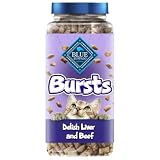
- REAL CHICKEN LIVER FIRST: Blue Buffalo Bursts cat treats start with real chicken liver as the first ingredient that deliver the savory liver and real beef flavor cats crave
- EXPERT-LED NUTRITION: Formulated to help your pet thrive from the inside out, Blue Buffalo natural cat treats are developed by a dedicated team of veterinarians and animal nutritionists for a trusted option in healthy cat snacks
- IRRESISTIBLE DUAL TEXTURE: BLUE Bursts cat treat bites deliver crunchy texture on the outside and a creamy center for a satisfying dual-texture cat treat
- FLAVORFUL NATURAL INGREDIENTS: These Blue Buffalo natural treats for cats are made with wholesome grains like brown rice, barley, and oatmeal, and they're enhanced with vitamins, minerals, and other nutrients
- HEALTHY SKIN & COAT: These training cat treats with Omega 3 & 6 fatty acids support healthy skin and a shiny coat
How long should a cat training session last?
Begin with sessions of about five minutes and stop while the cat is engaged. Several short sessions are generally more productive than one long session.
What if my cat is afraid of the clicker?
Stop clicking close to the cat. Muffle the click inside a pocket, use a quiet verbal marker such as “Yes,” or deliver the reward immediately without a marker. Deaf cats can learn with visual signals.
Why has my cat suddenly stopped doing a trick?
A sudden refusal may indicate that the exercise has become too difficult, the environment is distracting, or the reward has lost value. It can also signal pain or illness, especially if the cat is hiding, irritable, stiff, or showing other behavior changes. Contact a veterinarian if the change is sudden or persistent.
The Bottom Line
The most useful cat training is built on voluntary participation, precise timing, and rewards your cat actually values. Start with a five-minute session, teach one small step at a time, add the cue only after the behavior is predictable, and go back a step whenever your cat becomes confused or distressed. Sit and high five are fun, but recall, target training, mat work, and carrier entry can make everyday handling and veterinary care considerably easier.
What’s actually slowing this PC down?
Pick the symptom - the matching free tool is one click away.
Quick Recap
Product prices and availability are accurate as of the date/time indicated and are subject to change. Any price and availability information displayed on Amazon at the time of purchase will apply.




