
Some links on this page are affiliate links: if you buy through them we may earn a commission, at no extra cost to you.
Some cats enjoy brief belly contact, but you should never assume that a cat who exposes its stomach wants a rub. Rolling onto the back commonly signals comfort or trust, not permission to touch the abdomen. The safest approach is to let the cat initiate contact, begin with the head or cheeks, pause often, and stop at the first sign of tension.
Individual preference matters more than posture. A familiar cat that stays loose and actively solicits touch may accept a gentle stroke on its belly, while another may grab, bite or scratch within seconds. Read what the cat does during the interaction rather than treating the belly-up pose as a universal invitation.
As an Amazon Associate I earn from qualifying purchases.
What’s actually slowing this PC down?
Pick the symptom - the matching free tool is one click away.
What a belly-up cat is communicating
Cats expose their abdomen in several situations: relaxing, stretching, rolling during play, greeting a trusted person or preparing to defend themselves. The posture shows that the cat feels able to reveal a vulnerable area, but it does not specify what should happen next. Cats Protection describes a belly display primarily as a sign of comfort or trust and cautions that the belly is usually not an invitation to touch.
An exposed stomach can even be a defensive position. A cat on its back can use all four paws and its teeth if it feels restrained or surprised. Approaching hands, leaning over the cat or holding it in place can turn a calm moment into a struggle. Leave the cat free to roll away, stand up or change position.
Popular on Amazon
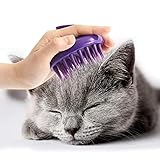
- ★ Non-Scratch Design & Gentle Grooming Experience – Crafted with premium silicone, the CeleMoon cat brush features ultra-soft rubber pins that glide smoothly over skin. The non-irritating design ensures safety for sensitive areas, while the soothing massage action makes grooming enjoyable—often encouraging a calm, purring response.
- ★ Removes Up to 90% of Loose Hair in Minutes – Effortlessly collect shedding fur with a single swipe—watch hair clump instantly on the brush surface. Testing shows up to 90% hair removal efficiency within minutes, significantly reducing shedding on furniture and floors.
- ★ Washable & Easy to Clean – Unlike traditional bristle brushes, this waterproof design allows thorough rinsing under tap water. Shake dry in seconds—no lingering odors or hair residue.
- ★ Ergonomic Non-Slip Grip – The handle fits comfortably in your hand, preventing slipping during use. Lightweight (2.3 oz) and compact, it’s ideal for prolonged grooming sessions.
- ★Pro Tip: Boost Efficiency with Damp Brushing – Lightly mist the brush before use—water eliminates static for maximum hair pickup.
Trust is not the same as consent
Human touch is optional from the cat’s point of view. A cat may trust you enough to sleep beside you yet dislike abdominal handling. Treat every interaction as a new choice: allow the cat to approach, offer a still hand, and continue only while its behavior shows that it wants more.
Why the abdomen is a risky petting zone
The 2022 AAFP/ISFM Cat Friendly Veterinary Interaction Guidelines report negative behavioral responses when cats are touched on the belly and just before the tail base. The abdomen is relatively unprotected, and many cats are sensitive to pressure there. The guidelines identify the head and neck, especially areas around facial glands, as preferred touch locations and emphasize giving the animal choice during handling.
Recommended Free Tools
That evidence does not mean every cat rejects belly contact. It means the abdomen is not a generally preferred area and should not be the starting point for petting. A cat’s history, socialization, health, age and current arousal level can all change its tolerance from one moment to the next.
Where most cats prefer to be touched
When a cat approaches and solicits contact, start where feline handling guidance finds the most consistent acceptance:
Also popular on Amazon
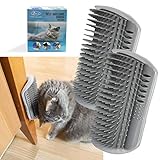
- 【Cats Favorite Combs】This is a cat corner self groomer, which is designed according to the cat's lifestyle. It provides a place for cats to rub and make them comfortable. Made of premium ABS plastic base and softer plastic bristles, ensure gentle massaging and grooming, remove fur without pain. (If your cat feels unwell after use, please stop using it promptly.)
- 【Collects Loose Hair】Our self groomer helps you remove and collect loose hair of your pets, which is a real self groomer. It can not only give your pets a rubbing place, but also gives you a cleaner and more enjoyable living environment. Such a practical product, you deserve
- 【Easy to Install】Our cat corner brush is almost fitting all of the wall corners, table legs and cabinet corners, can be easily mounted on either flat wall or corner surfaces with the screws (optional) or the adhesive strips included in the packaging. (Double-sided adhesives are not suitable for lime walls or other uneven walls, nor is it suitable for walls that are prone to dust or detachment. It is recommended to stick it on ceramic tile walls.)
- 【Easy to Disassemble and Clean】Our wall corner massage comb is easy to disassemble and clean. Just hand-wash the cat corner self groomer with natural soap (free of abrasive materials) and rinse thoroughly, then re-locked on the base, convenient for long-lasting use
- 【Buy with Confidence】Yuntop is committed to providing customers with quality products and caring services. If you have any questions during the use of our products, please tell us by email. If you are not satisfied with our products, we promise 100% refund. Customers' satisfaction is our greatest pursuit
- Cheeks and the sides of the face: These areas contain scent glands and are common sites for friendly rubbing.
- Head and around the ears: Use light strokes rather than pressing or gripping the ears.
- Under the chin: Some cats lean into a gentle chin scratch, although others prefer the cheeks.
- Neck: Short strokes in the direction of the fur are usually less intrusive than rubbing against the coat.
The peer-reviewed handling guidance recommends mainly touching around the ears and cheeks, with some cats also accepting the chin. Keep your hand relaxed, move with the fur and avoid reaching suddenly from above.
How to test whether your cat wants contact
Use a consent-based sequence instead of reaching for the belly as soon as the cat rolls over.
Windows Errors? Fix Them Before They Spread
Repair common Windows errors and clear accumulated junk for a smoother, more stable PC - no reinstall needed.Free scan · no reinstallOutdated Drivers Are Slowing You Down
One free scan finds every outdated or missing driver and matches the right update for your exact hardware.Free scan · exact hardware match- Wait for an approach. Do not chase, corner or pick up a cat to create a petting opportunity. A cat that walks away has already answered.
- Offer a still hand. Hold your fingers near the cat’s nose or cheek without touching. Let the cat sniff, rub or ignore you.
- Begin at the cheek or head. If the cat nudges your hand, make one or two light strokes in the direction of the fur.
- Pause after a few seconds. Remove your hand and watch. Leaning into you, nudging or repositioning for another stroke suggests the cat is soliciting more. Turning away or remaining motionless can mean it wants a break.
- Respect movement. Let the cat leave, sit up or change position without following it with your hand.
- Interpret a belly roll conservatively. If the cat exposes its stomach, continue with the cheeks or head, or simply admire the pose without touching the abdomen.
A pause is an information check, not a test the cat must pass. Repeated short interactions are safer than one prolonged session because they give the cat frequent opportunities to end contact.
Body-language signals that mean “continue,” “pause” or “stop”
| What you observe | Likely meaning | Your response |
|---|---|---|
| Cat approaches, rubs its cheek on you, leans into the hand or nudges after a pause | Soliciting more contact | Offer a few gentle strokes in a preferred area, then pause again. |
| Loose body, normal breathing and a still, relaxed posture | Comfort is possible, but the pose alone is not consent | Keep contact brief and remain ready to stop. |
| Head turns away, cat moves off, body becomes still or tense | Needs distance or a break | Remove your hand and give space. |
| Ears rotate backward, skin ripples, tail twitches or lashes vigorously | Rising discomfort or overstimulation | Stop before the reaction escalates. |
| Hissing, growling, swatting, biting or scratching | Clear refusal or defensive response | End the interaction immediately; do not restrain or punish. |
Signals can appear in combination. A tail that starts lashing while the pupils widen and the ears move back deserves the same response as a growl: stop and allow a cooling-off period. Do not wait for a bite to prove that the cat is uncomfortable.
Also popular on Amazon
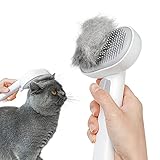
- 【Professional Cat Hair Brush】Perfect gift for pet owners, vets, and pet groomers. Using this cat brush for long haired cats on a regular basis can gently and effectively remove loose hair, tangles, knots, dander and trapped dirt. Suitable for short, medium or long, thick, thin or curly haired dogs/cats/rabbits, making your pets shiny and healthy.
- 【Skin-friendly Massage Needles】The mental pins on the cat brush with release button have round rubber tips on the ends. As a cat deshedding brush, it's perfect for shedding and massaging your pets without scratching your pet's skin, even the sensitive skin. After use, you can hang it with the silicone loop strap to protect the bent needle.
- 【Upgraded High Quality Material】The our long hair cat grooming brush made of durable 304 stainless steel and fine ABS material. Our wire bristles is 1.2 times as thick as bristles of other deshedding brush for cats. More sturdy and not easy to deform, can be used for a long time. 150° bent needles designed to penetrate deep into the coat are really easier to groom the undercoat well.
- 【One-click Cleaning Button】After brushing your pet, simply click the button. The shutter will pop out, separating the brushed hair from the metal needle, then wipe the hair off. The button of cat shedding brush on the handle saves time and energy when grooming and cleaning.
- 【SUPPORT · 365 Days】If the pet hair brush have any problems during use, we will provide you with replacement or 100% money back. And we have a professional customer service team and pet experts to provide you with the pre-sales and after-sales service. aumuca is always at your side.
Why a cat may bite during petting
Cornell University College of Veterinary Medicine describes petting-induced aggression as a situation in which a cat suddenly reacts during petting. “For reasons that remain unknown, some cats may suddenly become aggressive when being petted.” Possible explanations include sensory overstimulation and an attempt to control when the interaction ends. Dilated pupils, tail lashing and ears moving backward may precede the strike.
What to do in the moment
- Stop moving your hand as soon as warning signs appear.
- Withdraw without grabbing, pushing or holding the cat down.
- Give the cat a quiet cooling-off period and avoid restarting the session immediately.
- Never punish, shout at or spray the cat. Punishment can increase fear and make future handling less predictable.
- Record what happened: where you touched, how long the session lasted, the warning signals and whether the reaction was new.
If teeth or claws broke your skin, wash the wound promptly and seek medical advice for a deep, puncture or worsening injury. The cat’s behavior still warrants a calm, non-confrontational response.
When a new reaction needs a veterinarian
A sudden change in tolerance, sensitivity in one body area or aggression that persists after you shorten and stop petting can indicate pain or illness. Cornell advises checking for medical causes and collaborating with a veterinarian when aggression is a concern. Dental disease, skin problems, abdominal pain, arthritis and other conditions can make ordinary touch unpleasant; a cat cannot explain the source, so a behavior change may be the first visible clue.
Arrange veterinary advice if the cat reacts to touch that it previously accepted, guards a particular area, changes appetite or litter-box habits, hides more, moves stiffly, or shows aggression outside petting situations. Do not press the belly repeatedly to “find” the painful spot. A professional can decide whether an examination, pain assessment or behavior plan is appropriate.
Also popular on Amazon

- 🌟 Extended Length Cat Combs - Our cat self-grooming aid extends to 6.1 inches in length, providing more reach for your feline friends than similar products. It is thoughtfully designed to complement your cat's natural lifestyle and serves as a pleasing rubbing object for comfort and enjoyment. We've meticulously experimented with bristle hardness to ensure it's SAFE and enjoyable for all cats to use!
- 🌟 Gentle and Safe Grooming Experience - Constructed with an eco-friendly plastic base and softer plastic bristles, our self groomer offers a soothing massage without painful removal of fur or risk of scratching your cat's skin. Designed with durability in mind, the soft bristles are securely attached, ensuring safe grooming sessions. (Suitable for all cats, except hairless breeds.)
- 🌟 Hassle-Free Installation - Suitable for nearly any wall corners, table legs, or cabinet corners, our groomer can be mounted effortlessly onto flat or corner surfaces using the included double-sided stickers or screws. Follow the clear installation steps provided on our package for quick setup.
- 🌟 Convenient Cleaning Process - This innovative wall corner groomer brush not only helps remove and collect loose feline hair but also disassembles easily for stress-free cleaning, ensuring a hygienic environment and lasting utility.
- 🌟 Generous Two-Pack Set - Receive two extended length self groomers in each pack to place around your home where your cat frequents most often. While cats may take time to adjust to this new fixture, try adding some catnip to entice them toward these comfy corner scratcher brushes more quickly. For any questions or support with our grooming tools, we are always available to assist you.
Using treats for gradual handling practice
Food can reinforce calm, non-aggressive behavior during very brief handling exercises. Cornell notes that a treat may reward a cat for allowing light stroking without aggression. This is useful when a cat needs cooperative handling for routine care, not as a way to obtain a belly rub for a person’s entertainment.
- Choose a high-value, cat-safe treat and work when the cat is calm.
- Touch a preferred area for one second, then offer the treat while the cat remains relaxed.
- End the session before warning signals appear.
- Increase duration or move to a new area only over multiple successful sessions.
- If the cat refuses, stiffens or leaves, stop. Never use food to lure it into a position from which it cannot escape.
Treats reward cooperation; they do not override refusal, pain or fear. For persistent handling problems, ask a veterinarian about referral to a qualified feline behavior professional.
The Tool Desk
Outbyte Driver Updater FREEFix the driver behind crashes, sound loss and screen glitchesFind Drivers →Outbyte PC Repair FREEClear out junk files and repair common Windows errorsFree Scan →Common mistakes to avoid
- Reading the pose instead of the whole cat: A belly display is only one piece of body language.
- Starting with the most sensitive area: Begin at the cheeks, head or chin, where acceptance is more common.
- Ignoring the first warning: Skin rippling, an ear turn or a tail twitch can come before a bite.
- Holding the cat still: Removing the option to leave can convert uncertainty into defense.
- Testing repeatedly: Repeatedly touching a disliked area teaches the cat that human hands are unpredictable.
- Assuming one successful rub proves a preference: Tolerance can vary with mood, health, location and how long the session has lasted.
What the evidence can—and cannot—tell you
No verified statistic estimates what proportion of cats enjoy belly rubs, so claims that “most cats” or a specific percentage like them are unsupported. The available evidence supports a cautious generalization: many cats show negative responses to abdominal or tail-base touch, head and neck contact is more commonly preferred, and individual behavior should determine what happens next.
A 2021 study by Finka and colleagues in Frontiers in Veterinary Science initially included 114 cats. The data were collected in London in 2020. That sample size describes the study, not the percentage of cats that enjoy belly rubbing, and it should not be turned into a population-wide estimate.
Also popular on Amazon

- 🐾【Designed for Your Favorite Pet】Pet massager for cats and dogs with 4 soft silicone massage heads, covered with 96 massage nodes, which can soothe tense muscles and aching joints, promote relaxation and calm in your pets. Perfect for reducing stiffness and discomfort in the joints, delay onset of age-related arthritis, improve mobility for older pets.
- 🐾【Promote Bonding】Soft kneading nodes to imitate human fingers provides therapeutic massage for cats and dogs, creating a calming experience for both you and your cat or dog. It also works as a pampering tool to deepen bonding between you and your beloved pets.
- 🐾【Three Modes Adjustable】3 speeds adjustable, low speed, high speed and alternative speed, choose the right speed according to the different use environment. 360 ° sliding, kneading, vibration, promote blood circulation and relieve irritability. Suitable for large, medium and small pets.
- 🐾【Wet & Dry】IPX6 waterproof, pet massager can be used not only at ordinary times, but also in the shower, enhance the cleanliness of the shower, help to remove dirt. The four massage heads are removable for easy cleaning, and the soft food-grade silicone head prevents hair pulling and tangling and won't harm your pet's skin.
- 🐾【USB Rechargeable & Pocket Size】USB charging is easy with your power bank, laptop or phone adapter. Electric Cat Massager can last up to a week on a full charge (Automatically turn off after 15 minutes of inactivity to save energy). Perfect size make it easy to hold and convenient to take anywhere, enjoy massages anytime.
The practical guidance from Cats Protection was accessed on October 13, 2026. Cornell’s veterinary guidance was also accessed on that date; its publication date is not established here. The AAFP/ISFM Cat Friendly Veterinary Interaction Guidelines were published in 2022, and the handling study appeared in 2021. Together, these sources support respecting choice and watching behavior rather than applying a single rule to every cat.
A simple decision rule for everyday interactions
Use this sequence whenever a cat rolls onto its back:
- Pause: Do not touch the abdomen automatically.
- Offer: Present a hand near the head and let the cat choose.
- Observe: Continue only while the cat leans in or solicits more.
- Check: Pause every few seconds and reassess the body, ears, tail and movement.
- Stop: End contact at the earliest discomfort cue and give the cat an escape route.
- Escalate: Seek veterinary advice for sudden, painful or persistent reactions.
Some individual cats genuinely accept a light abdominal stroke from a familiar person while remaining relaxed and actively requesting contact. That preference is valid for that cat, at that moment; it is not evidence that belly rubbing is necessary for bonding or welfare. Respecting a cat’s ability to say no is the more reliable way to build trust.





Leave a Reply