What’s actually slowing this PC down?
Pick the symptom - the matching free tool is one click away.
Spay/neuter became central to the ASPCA’s work in a sequence of decisions rather than one moment. The organization required sterilization for cats and dogs adopted from its New York City shelters in 1973, handed its long-running animal-control contract to a successor agency in 1994 and moved resources into high-volume surgery, launched its first New York City mobile surgical clinic in 1996, and in 2015 acquired the Asheville, North Carolina program that is now the ASPCA Spay/Neuter Alliance. Each step is documented in the ASPCA’s own February 18, 2026 retrospective, which is the main source for the chronology below. Where the organization’s account is the only source, this article says so.
Why sterilization became a welfare priority in the 1970s
According to the ASPCA, spay/neuter was not widely used for American pets until the 1970s. The organization ties the shift to three pressures: rising pet ownership, unplanned litters, and shelter overpopulation. By the late 1960s and early 1970s, it describes a growing awareness of animal overpopulation and a normalizing of surgical sterilization. The ASPCA estimates that tens of millions of homeless dogs and cats were dying nationally in that period. That is the organization’s own estimate, not a count checked against independent data, and it should be read as the ASPCA’s characterization of the problem it was responding to.
The historical background: a shelter system built on destruction
Any account of the ASPCA’s turn toward prevention has to start with what came before it. The ASPCA’s retrospective is candid that its early approach to homeless animals relied on killing. It says New York City could see as many as 700 homeless dogs and cats drowned in a single day in the 1870s, and that founder Henry Bergh designed that system, which he considered the “quickest and kindest way.” Modern readers will find that description uncomfortable, and the ASPCA presents it as history rather than as a standard it endorses.
The organization took on more of the municipal role over time. In 1894, six years after Bergh’s death, the ASPCA agreed to take over New York City animal-control services, including humane destruction of captured animals. The retrospective reports that 24,275 animals were put to death at the ASPCA’s Brooklyn shelter that year. In the 1920s and 1930s, it says it operated shelters in all five boroughs and handled more than 300,000 animals annually, with at least 280,000 killed in 1928. These are historical figures as the ASPCA reports them. They are useful for understanding scale, but they come from the organization’s own account rather than from an independently examined archive.
Windows Errors? Fix Them Before They Spread
Repair common Windows errors and clear accumulated junk for a smoother, more stable PC - no reinstall needed.Free scan · no reinstallCrashes, No Sound, or Screen Glitches?
Random freezes, missing sound and display glitches usually trace back to one bad driver. Find and replace yours safely.Free scan · under a minute#1 Best Overall

- 【Ideal for Post-surgical Care】Our cat recovery suit is designed to prevent licking or scratching of surgical wounds, promoting faster healing and reducing the risk of infection. Versatile and suitable for post-surgery, spaying, skin issues, weaning, overgrooming, abdominal wounds, and more, this suit not only saves on vet bills but also ensures your cat's comfort and protection during recovery.
- 【Breathable & Elastic Material】Our cat recovery suit female is crafted for comfort, made from premium breathable materials. Its softness and breathability ensure extended wear without discomfort, promoting faster recovery. The elastic fabric reduces pressure on your pet's body, aiding in their comfort and healing. Plus, it's machine washable for easy maintenance, providing essential post-surgery comfort and protection for your furry friend.
- 【Substitute to E-collar/Bandage】Your pet needs a comfortable recovery! Wearing this cat bodysuit on, helps protect the problem area instead of covering the pet's entire head, perfect alternative to the cone of shame, pet can play and eat with no limit. Whether after surgery or for other medical needs, our cat surgery recovery suit ensures your pet's well-being.
- 【Easy to Use】Breathable surgical recovery shirt features adjustable neck elastic band and back velcro tape design, it is easy for your pet to wear, and you can adjust it to the appropriate size to fit your cat's body type. The larger rear opening enables cats to use the litter tray without removing the garment, keeping them comfortable and mobile while protecting floors, beds, and rugs from stains and damage.
- 【Multiple Sizes】Cat neuter suit are suitable for female cats of different body shapes and breeds, Hpetppy cat surgical onesie offers 3 sizes for you to choose from, including S, M, and L. Size S fits cats 2-3.4 lbs; Size M fits cats 3.4-7 lbs; Size L fits cats 7-14 lbs. Please choose the right size according to the actual measurement, the size is for reference only, you need to measure your pet's size carefully before purchase."
Milestones in the ASPCA’s spay/neuter work
| Year | What the ASPCA reports | Source and limits |
|---|---|---|
| 1894 | Takes over New York City animal-control services, including humane destruction of captured animals; 24,275 animals put to death at the Brooklyn shelter that year | ASPCA retrospective (February 18, 2026); historical figures as reported by the organization |
| 1973 | Requires cats and dogs adopted from its New York City shelters to be sterilized by the ASPCA or a veterinarian chosen by the adopter | ASPCA retrospective; the ASPCA’s official history timeline also lists this year |
| 1994 | Transfers New York City animal-control services to the successor agency now called Animal Care Centers of NYC and redirects resources toward spay/neuter programs | ASPCA retrospective and official history timeline |
| 1996 | Launches its first New York City mobile surgical clinic, later expanded to a fleet | ASPCA retrospective and official history timeline |
| 2006 | New York City records more shelter adoptions than euthanasia for the first time in its history, ten years after the mobile clinic launch | Reported milestone in the ASPCA retrospective; the organization does not attribute the shift solely to spay/neuter |
| 2015 | Acquires Asheville’s Humane Alliance, now the ASPCA Spay/Neuter Alliance | ASPCA retrospective and official history timeline; the organization describes the Alliance as a pioneer in high-quality, high-volume techniques and training |
1973: making sterilization a condition of adoption
The 1973 policy is the clearest early step in the ASPCA’s prevention record. Cats and dogs adopted from its New York City shelters had to be sterilized, either by the ASPCA or by a veterinarian the adopter selected. The ASPCA says other cities and states adopted similar policies over the following two decades. That spread is the organization’s claim; this article has not verified how many jurisdictions acted or on what terms.
The policy also shows an early choice that still shapes ASPCA work: sterilization was tied to the animals the organization itself placed. It was not a general law covering every pet in the city, a distinction that becomes important in the policy section below.
1994: leaving animal control to focus on prevention
After a century of animal-control work, the ASPCA transferred that role in 1994 to what is now Animal Care Centers of NYC and redirected its resources toward spay/neuter programs. The retrospective frames this as a deliberate shift from handling intake to preventing it. The organization does not say that the transfer alone produced any particular change in shelter numbers, and readers should treat the 1994 decision as a change in the organization’s priorities rather than as a measured outcome.
Expanding through mobile and high-volume surgery
The ASPCA’s model after 1994 depended on getting surgery to animals and owners who could not easily reach a fixed clinic. Two developments define it.
Free tools Windows power users keep installed
One-click scans. No signup required.
Rank #2
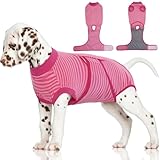
- SIZE GUIDE: X-Small (Back:8.3-11.4in,Chest:12.6-15.7in, Weight:4-7 LB), Small (Back:11.4-13.4in,Chest:15.7-19.3in, Weight:7-15 LB), Medium (Back:13.4-16.1in,Chest:19.3-23.2in, Weight:14-25 LB), Large (Back:16.1-20.1in,Chest:23.2-27.6in, Weight:23-48 LB), X-Large (Back:20.1-24.8in,Chest:27.6-32.3in, Weight:42-75 LB), XX-Large (Back:24.8-29.5in,Chest:32.3-39.3in, Weight:70+ LB)
- [PRACTICAL DESIGN]: FUAMEY dog onesie conforms to the dog's body structure, is easy to wear and take off. dog bodysuit is more flexible and lighter than collars, so that the dog will not be angry and depressed when defecation and eating, and prevent the dog from licking the wound.
- [MULTI-PURPOSE]: Our recovery suit is suitable for post-operative care such as neuter and childbirth.✔Can be used as postpartum care for female dogs to prevent dogs from catching cold.Postpartum use as weaning gown . ✔Can be used as a protective spay suit for pet neutering or post-caesarean section .✔Use with diapers to prevent male dogs from urinating .✔can also be used as a favorite home clothes with complete freedom of movement.
- [KEEP TIDY]: Our recovery suit is suitable for indoor or outdoor activities. It can effectively isolate dust and dirt, keeping your dog clean and tidy.
- [BREATHABLE FABRIC]: Our dog recovery suit is made of 95% cotton and 5% spandex. The recovery shirt is highly elastic and breathable, allowing the dog to feel comfortable and move freely after wearing it. No deformation after machine wash.
The New York City mobile surgical clinic
The first New York City mobile surgical clinic opened in 1996 and was later expanded to a fleet. The ASPCA reports that ten years after that launch, in 2006, New York City saw more animals adopted from shelters than euthanized for the first time in the city’s history. The organization presents this as a milestone in a period of expanded services. It does not claim that spay/neuter alone produced the change, and it reflects many shelter, adoption, and community factors that the retrospective does not separate out.
The Asheville Alliance and the high-volume model
In 2015 the ASPCA acquired Asheville’s Humane Alliance, which is now the ASPCA Spay/Neuter Alliance. The organization describes the Alliance as a pioneer in high-quality, high-volume techniques and training. Its central idea, in the words of Dr. Karla Brestle, a veterinarian who joined the Alliance in 1998, was to set a workable daily rhythm for a clinic:
“We showed how clinics could alter a specific quantity of animals per day with a specific number of staff to make a dent in their community’s animal population,” says Dr. Brestle. “We gave them the formula, and they ran with it.”
That description explains why the Alliance’s reach is measured partly in clinics trained rather than only in surgeries performed. The ASPCA says the model has led to more than 200 high-quality, high-volume clinics opening nationwide.
Recommended Free Tools
Rank #3

- 【Zipper for Easy Wear】 --- The Lukovee dog onesie for surgery with a zipper one back makes it easy to put on and take off, which can save you time and energy. The additional lining and magical tape are specially designed to ensure that your furry friend's hair doesn't get caught in the zipper.
- 【Toilet-friendly & Unisex】 --- With sufficient space at the back, pets can use the restroom freely while wearing a recovery suit without taking it off or getting dirty clothes. For male dogs, it also has a customizable area for a perfect fit. (1) -Caution: Before you start cutting, make sure to try on and find the ideal position.
- 【Prevent Licking & Convenient Back Magic Tape】 --- The recovery suit for dogs helps prevent your furry friend from scratching and licking their surgical wounds, which can lower the chances of getting sick from the wound and further injury. The magic tape closures at the back can be rolled up if needed. It is suitable for post-surgery, neutering, skin medication, weaning, and daily use.
- 【Adjustable Waist Belt & 8 Sizes Available for Perpert Fit】 --- Our recovery suit for dogs features a wider waist belt and loop fasten strap at the back, allowing you to easily adjust it to your pet's abdominal size. This ensures a snug fit, avoiding any discomfort or licking of the abdominal wound due to a large hind leg opening.Recommended Weight are reference only! Measure dog's back and chest for best fit. lf back length and chest girth falls in different size, choose the larger one
- 【Relaxation for Recovery】 --- Made of soft and cozy 100% polyester, our dog surgical recovery suit for female male is designed to provide comfort to your furry friend. Its breathable and stretchable fabric helps relieve stress and anxiety during the recovery period, creating a soothing environment.
What the ASPCA does now
The organization’s current work combines direct care with training, grants, and advocacy. According to its materials, the current mix includes:
- Surgical centers and mobile services
- Education for pet owners and the public
- Shelter grant funding for other organizations
- Veterinary training through the ASPCA Spay/Neuter Alliance
- Legislative advocacy on spay/neuter and related policy
The ASPCA’s current direct-service sites named in its materials are New York City, Los Angeles, and Miami, plus the Alliance in North Carolina. Clinic locations, eligibility rules, and capacity change, so confirm them directly with the ASPCA before planning a visit or a referral.
Reading the ASPCA’s figures
The ASPCA publishes many large numbers, but they count different places, years, and program scopes. Use each one with its own context rather than adding them together.
| Figure | Geography and scope | Period | Source |
|---|---|---|---|
| More than 675,000 animals spayed or neutered | New York City program | Since 2002 | ASPCA, 2026 |
| More than 164,000 animals altered, including 261 rabbits | Los Angeles program | Since 2015 | ASPCA, 2026 |
| More than 20,000 animals altered | Miami clinic | Since 2019 | ASPCA, 2026 |
| More than 566,000 cats and dogs spayed or neutered | Asheville facility | Since 1994 | ASPCA, 2026 |
| More than 18,000 surgeries | Asheville program only | Calendar year 2024 | ASPCA 2024 Annual Report |
| More than 13.6 million surgeries by clinics trained through Alliance programs | Nationwide, collective across trained clinics | From 2004 onward (2024 Annual Report); described as 2005 to 2024 in the 2026 retrospective | ASPCA 2024 Annual Report; ASPCA, 2026 |
| Projected more than 26,000 surgeries annually | Alliance headquarters | Expected by December 2027; a projection, not a result | ASPCA, 2026 |
The Alliance figure is the one most likely to be quoted without context. The two ASPCA sources give slightly different start years, so it is safest to cite the 13.6 million total together with the source that reports it.
Rank #4

- COMFORTABLE FABRIC: cyeollo dog recovery suit is made of soft fabric, breathable and has great elasticity, making it comfortable to wear. It's super soft, free movement and it can still maintain its shape after machine washing
- PROTECTIVE RECOVERY SUIT : The recovery suit helps to prevent your pet from licking and their scratching surgery wounds, and it also can ease your female male dog's anxiety after spayed or neutered. Great cone alternative of shame
- EASY TO WEAR: A piece of hook & loop on the hip to make the suit easy to put on and off. The sewing circle on the belly part is for male dog to do his business. You can cut it as needed, then your pet can pee without having to struggle to remove it
- MULTIFUNCTION DOG SUIT: Designed for spayed and neutered dogs/cats, cover and protect wounds, skin diseases, used during weaning period. It can also prevent shedding hair from sticking to the sofa, bed, and other corners of your house
- ABOUT SIZE: cyeollo dog surgical suit is suitable for small, medium and large dogs or cats. Different breeds of dogs have unique body shapes, so it's important to measure your dog's chest and back length accurately before purchasing
Adoption and intake data
The ASPCA’s 2026 retrospective includes 2025 outcome data. For New York City, it reports adoption rates of 88% for dogs and 91 to 99% for cats and small animals in 2025. It also cites Shelter Animals Count data for 2025, which the ASPCA reports as follows: private shelters and rescues placed 86 to 91% of dogs and 85 to 88% of cats, while government and municipal-contract shelters placed 51 to 60% of dogs and 55 to 73% of cats. The ASPCA notes that other outcomes, including return-to-owner cases, account for part of the gap between shelter categories. The retrospective does not give an original publishing organization and year for every underlying Shelter Animals Count figure, so these numbers should be attributed as Shelter Animals Count data cited by the ASPCA rather than as an independently examined dataset.
Also in 2025, the ASPCA reports that 25% of dogs and 23% of cats entering shelters were already spayed or neutered. That figure describes the animals that came in, not a before-and-after measure of the program’s effect.
Independent reader supportYour contribution helps us test, update, and keep practical guides available for everyone.Policy position: incentives and access, not blanket mandates
The ASPCA’s current policy position differs from its 1973 adoption rule. The organization says it supports incentives to encourage companion-animal spay/neuter. It does not support local laws that mandate sterilization of all cats and dogs. Its fuller position favors:
- Voluntary, affordable, and accessible spay/neuter services for owned pets
- Trap-Neuter-Return for feral cats
- Sterilization of shelter animals, and of dogs and cats before sale by pet stores
The organization also says communities should investigate the local causes of shelter intake and the barriers that keep people from accessing services. It recommends analyzing dogs and cats separately, so that a trend in one population does not hide what is happening in the other. That reasoning explains why the ASPCA’s program language refers to owned pets, community cats, and shelter animals as different groups.
The Tool Desk
Outbyte PC Repair FREEClear out junk files and repair common Windows errorsFree Scan →Outbyte Driver Updater FREEScan for outdated or missing drivers - takes under a minuteDriver Scan →Best Value

- Leave the Cones Behind: Swap out uncomfortable cones of shame for a cozy surgery suit for dogs. This dog surgery suit is made with soft cotton and lycra, which promotes better airflow than nylon spandex suits. It even has an inner layer pocket for ice packs and pads..
- Supercharge Your Pet’s Recovery: Our dog body suits after surgery keeps your fur babies from scratching, licking, or biting their wounds. This dog cone alternative also shields sutures, incisions, or cuts from dirt, dust, or external elements.
- From Ruff to Relaxation: Designed with elastic bands around the neck, tail, and legs, and a snap closure, this dog recovery suit provides a snug fit that can help ease your pup’s restlessness. Fits dogs with a back length of 21.7 - 27.2 in. Our dog post surgery suit also features a clip-up system for easy walks and potty breaks.
- The Suit that Won’t Quit: Perfect for busy fur parents, our dog recovery suit is machine washable and reusable for easy maintenance. It can withstand repeated washing without losing its sturdiness.
- The Way to a Happy Recovery: At Suitical, we collaborated with veterinarians, professionals, and pet owners to develop premium pet products that help improve the wellness of your beloved furry friends!
What the record can and cannot show
The ASPCA’s account supports a clear statement about its own program history: it required sterilization for animals it adopted out in 1973, moved resources toward prevention in 1994, expanded mobile and high-volume surgery from 1996, and absorbed the Asheville Alliance in 2015. It also supports the statement that sterilization can reduce unwanted litters and shelter intake, which the organization presents as its reasoning.
It does not establish that spay/neuter alone caused the later changes in shelter intake, euthanasia, or adoption that the organization reports. The retrospective itself treats declining euthanasia as a broader trend, and the adoption figures sit alongside changes in shelter practice, community programs, and other local factors. Likewise, the historical figures from the 1890s through the 1920s come from the ASPCA’s own account and have not been checked against independent archives. A fair reading is that the ASPCA made spay/neuter a central part of its work for reasons it documents, and that the size and timing of its outcomes are its own reported results, which independent studies would need to test before they could be treated as settled.
The organization’s own materials also state a position clearly: spaying and neutering are “the most effective ways to reduce pet overpopulation and euthanasia,” in the words of Dr. Brestle. Those are organizationally published statements rather than an independent evaluation. Dr. Carolyn Brown, who has overseen the ASPCA’s New York City spay/neuter operations since 2011, puts the case in terms of the individual animal: “Spaying or neutering is more than just a healthy choice for the individual pet — it’s a lifesaving one.”
For readers following the topic, February is recognized as Spay/Neuter Awareness Month, and the ASPCA’s 2026 retrospective was published in that context.
Taken together, the ASPCA’s story is a case of an organization changing its role from animal control to prevention, backed by surgical capacity it built and then extended to other clinics. The evidence presented by the ASPCA is strongest on what it did and when, and weakest on how much each action changed the outcomes it reports.
Quick Recap
The Bottom Line
“”
Product prices and availability are accurate as of the date/time indicated and are subject to change. Any price and availability information displayed on Amazon at the time of purchase will apply.




