
Free tools Windows power users keep installed
One-click scans. No signup required.
Some links on this page are affiliate links: if you buy through them we may earn a commission, at no extra cost to you.
Generally, no. Coatimundi (also called coatis) are wild, highly active mammals rather than domesticated companion animals. Their climbing, digging, persistent foraging, complex social behavior and long lifespan can be difficult to accommodate in an ordinary home. San Diego Zoo’s guidance is direct: “However, coatis are wildlife, and should not be kept as pets.”
Keeping one may also require permits and documentation that vary by country, state, province and city. A seller’s assurance or a permit issued somewhere else does not establish that possession is legal where you live.
As an Amazon Associate I earn from qualifying purchases.
Recommended Free Tools
What a coatimundi is—and why domestication matters
“Coatimundi” and “coati” refer to members of the raccoon family. The white-nosed coati is Nasua narica, one of the species described by the Smithsonian’s National Zoo. It is wildlife, not a domesticated animal bred for generations to live as a household companion.
Domestication is a population-level process that changes behavior over many generations. Hand-raising an individual coati, buying a young animal or treating it gently does not turn the species into a domestic pet. The available zoo and natural-history accounts describe what coatis do in the wild and in professional care; they do not establish a reliable household-husbandry method or show that a typical home can meet those needs.
Popular on Amazon
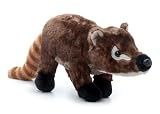
- Hunting for fun is easy and filled with action with this coatimundi plush toy with a striped tail as a toddler toy.
- The black button nose, brown shaggy fur and short legs of this realistic coatimundi showcase the beauty of nature’s species.
- As the perfect birthday gift for boys and girls, this stuffed animal coatimundi is ready to sneak into imaginative play.
- Crafted with recycled materials and durable stitching, this coatimundi animal plush allows for a lifetime of adventures.
- Combining play with Earth-sustaining practices, The Petting Zoo is committed to providing little ones with cute and cuddly plush toys that are made from recycled water bottles.
The Smithsonian warns that “Exotic animals don’t always make great pets.” That warning is especially relevant when an animal’s normal behavior conflicts with the physical limits and routines of a house.
Daily behavior creates demanding care requirements
Constant investigation and foraging
Coatis are diurnal, meaning they are generally active during the day. They use long, mobile snouts to probe holes and crevices, dig with strong claws and search widely for food. Their opportunistic diet includes fruit, invertebrates, small rodents and lizards, according to the Smithsonian National Zoo’s white-nosed coati account. The University of Michigan’s Animal Diversity Web profile likewise describes coatis as active, opportunistic omnivores.
Outdated Drivers Are Slowing You Down
One free scan finds every outdated or missing driver and matches the right update for your exact hardware.Free scan · exact hardware matchPC Slower Than It Used to Be?
A free scan shows the junk files, broken settings and background clutter dragging Windows down - then fixes them in one click.Free scan · Windows 10 & 11That behavior is more than a feeding schedule. A coati needs opportunities to search, manipulate, dig and investigate for much of its waking day. In a house, those drives can be directed at cabinets, flooring, upholstery, vents, plumbing spaces or anything that smells interesting. Confining the animal without providing meaningful activity does not remove the behavior; it can leave the animal frustrated while increasing destructive or unsafe exploration.
Climbing, digging and physical strength
Coatis forage on the ground and sometimes in trees. Their claws are built for digging and climbing, and their flexible noses let them reach into narrow spaces. A secure, three-dimensional environment would therefore need more than floor area: it would need substantial climbing structure, diggable areas, barriers against escape and constant inspection for damage. No cited source supplies a standardized minimum enclosure size for a private home, so a prospective owner should not treat a generic cage dimension as an established welfare standard.
These are welfare implications drawn from the species’ documented natural behavior, not a prescription that a particular home enclosure or toy makes ownership appropriate. San Diego Zoo’s professional-care description mentions balanced feeding and foraging enrichment, including food puzzles, in a managed zoo setting. Its example illustrates how structured and resource-intensive care can be; it is not an endorsement of a household setup. See San Diego Zoo Wildlife Alliance’s “Curious Coatis”.
Also popular on Amazon

- Package Quantity: 12
- Excellent Quality.
- Great Gift Idea.
- Satisfaction Ensured.
- Produced with the highest grade materials
Coati social behavior is not simple
Female coatis and their young commonly form bands, while adult males are usually solitary except around breeding. The Smithsonian describes typical bands of four to 20 females and young; that figure is specific to the white-nosed coati account and should not be treated as a universal group size for every coati species or population. Animal Diversity Web also distinguishes social bands from solitary adult males.
This pattern creates two problems for the pet premise. A lone animal may lack species-appropriate social contact, yet introducing another coati is not a simple solution: sex, age, temperament, space and breeding behavior all matter, and adult males naturally spend much of their time alone. A human family cannot substitute neatly for a coati band, and keeping multiple wild animals multiplies enclosure, veterinary, legal and escape-management demands.
Individual temperament can vary, but no evidence here supports predicting that a hand-raised coati will remain reliably docile. A young animal that tolerates handling may become stronger, more independent and more difficult to manage as it matures.
Lifespan makes this a long-term obligation
Longevity differs by species, population and the way the figure is calculated. For white-nosed coatis, the Smithsonian reports a lifespan of up to seven years in the wild and an average of 14 years in human care, with some individuals reaching their late teens. Animal Diversity Web gives typical captive lifespans around 17 years for coatis. These numbers should not be collapsed into one universal promise, but they show that acquiring a coati can commit a household for well over a decade.
During that time, the owner would need a secure living environment, an emergency plan, knowledgeable veterinary care, lawful transport and a plan for changes in housing, finances and family circumstances. Rehoming a wild animal is not equivalent to returning a dog or cat to a shelter; suitable facilities and legally authorized placements may be scarce.
Do these 3 things before closing this tab:
1Clear out junk files and repair common Windows errors2Scan for outdated or missing drivers - takes under a minute3Repair Windows errors before they cause bigger problemsAlso popular on Amazon

- A Glimpse into the Rainforest: Coatis, notable for their elongated snouts and lively tails, are distinctive residents of the rainforest's myriad ecosystems.
- Top-tier Craftsmanship Meets Sustainability: Lovingly sculpted and produced from recycled bottles, this plush toy champions both environmental sustainability and exceptional quality.
- This stuffed animal makes a great gift: perfect for baby showers, birthday gifts, holiday gifts, room decoration, and themed parties. This is also perfect for teaching children about wildlife.
- Toy Safety: Exceed the requirements set by CPSIA (USA) and EN71 (EU) for safety standards and specifications.
- Wild Republic is the global leader in designing and manufacturing realistic and whimsical plush and toy for kids of all ages since 1979. The company was founded on the principle of fostering the curiosity of wildlife and the wonders of nature.
Are coatimundis legal pets?
There is no worldwide yes-or-no answer. Rules can apply at several levels, and they may regulate possession, importation, transport, enclosure standards, breeding and release separately. Check the current rules with the wildlife authority in your jurisdiction before paying a seller, signing a transport agreement or bringing an animal across a border.
Florida example
Florida’s Fish and Wildlife Conservation Commission lists coatimundi as a Class III species requiring a Permit to Possess Class III Wildlife for Personal Use. The agency’s guidance also includes experience-documentation requirements. Read the current Florida Fish and Wildlife Conservation Commission personal-pet guidance and confirm the application requirements directly with the agency. A Florida permit says nothing about legality in another state, country or municipality.
Mexico example
Mexico’s environmental authority, SEMARNAT, describes an authorization process for qualifying exotic pets. The process calls for proof of legal origin and medical records. The government page also states that authorized exotic wildlife must remain confined and may not be released into the natural environment. Details are set out in the SEMARNAT exotic-pet authorization procedure.
These two examples demonstrate why location-specific checking matters; they are not a legal rule for every jurisdiction. Ask the relevant national, state or provincial and municipal authorities about the exact species, source, transport route and intended use. Confirm whether rules have changed before acquisition.
What professional zoo care tells you—and what it does not
Zoo accounts show that coatis can thrive when trained staff provide controlled diets, secure spaces, veterinary oversight and planned enrichment. San Diego Zoo describes food-based foraging activities such as puzzles. That information helps explain the animal’s behavioral needs, but a zoo has resources that most homes do not: purpose-built barriers, staff coverage, quarantine capacity, specialized nutrition and access to wildlife veterinarians.
Also popular on Amazon

- The animal's coats are meticulously hand-cut and trimmed, never stamped out by machine
- Chinese Sturgeon plush doll
- size:35 cm
- Chinese Sturgeon plush toy to the ocean aficionado for collection
There is no standardized household-care score or published minimum home enclosure specification in the cited sources. Consequently, it would be misleading to promise that a spare room, outdoor pen or collection of toys is sufficient. Any claim that a particular product, enclosure layout or feeding recipe solves the suitability problem goes beyond the evidence available here.
Questions to answer before even considering acquisition
If you are still evaluating the idea, treat the following as a decision screen rather than a shopping checklist:
- Legal permission: Do every applicable authority’s rules explicitly allow this species at your address, and do you meet experience, documentation and inspection requirements?
- Secure space: Can you provide durable, escape-resistant vertical and ground areas that support climbing, digging and searching without exposing the animal or people to household hazards?
- Daily time: Can trained caregivers provide varied, supervised activity every day, including when work, travel, illness or emergencies disrupt normal routines?
- Social planning: Do you understand the difference between female-and-young bands and solitary adult males, and have you planned for behavior changes with age rather than assuming a juvenile temperament will persist?
- Veterinary access: Is a qualified professional willing and able to treat a coati near you, including after-hours emergencies? General companion-animal availability should not be assumed to include wildlife expertise.
- Long-term contingency: What lawful, reputable facility would accept the animal if you move, can no longer provide care or discover that the arrangement is unsafe?
- Source and records: Can you verify legal origin, health documentation and transport permissions independently of the seller’s claims?
If any answer is uncertain, do not acquire the animal while trying to solve the problem afterward. Legal and welfare failures can leave both the coati and the household at risk.
Common misconceptions that lead to poor decisions
“It is basically a raccoon.”
A superficial resemblance does not provide a care plan. Coatis have their own locomotion, diet, social structure and behavioral needs. Treating one as a raccoon-like novelty pet encourages underestimating its activity and strength.
“A baby will stay tame.”
Early handling can affect an individual’s responses to people, but it does not erase species-typical drives or guarantee adult behavior. Growth, sexual maturity, environmental stress and frustration can all change how an animal responds.
Also popular on Amazon

- Adorable 2-in-1 Plush Friend: This ultra-soft black cat plush comes with a removable brown taiyaki (Japanese fish-shaped cake) costume. It’s a charming cat plushie and a cute fish stuffed animal in one, perfect for Kawaii plush lovers and Japanese culture enthusiasts
- Super Soft & Machine Washable: Crafted with high-quality polyester fiber filling, this stuffed cat is huggable and child-safe. It’s easy to clean and maintain, as it’s machine washable, ensuring long-lasting softness and freshness for years of cuddles
- Perfect Gift for Any Occasion: An ideal Kawaii gift for Christmas, birthdays, and holidays. This adorable plush toy appeals to girls, boys, adults, and collectors, making it a delightful present for anyone who loves cute plushies
- Ideal 8-Inch Size & Collectible Series: Measuring 8 inches on each side, this cat stuffed animal is portable for travel and display. It’s part of a collectible series, encouraging fans to gather all variants for a fun and growing plushies for girls and everyone collection
- Encourages Creative Play & Comfort: The detachable taiyaki costume sparks imagination and role-playing fun. This versatile fish plush and cat hybrid also serves as a cozy cute pillow, providing comfort and joy during naps, relaxation, or as a decorative buddy
“A permit proves it is suitable.”
A permit addresses legal conditions set by a particular authority. It does not certify that your household can provide appropriate enrichment, social management, veterinary care or lifelong placement.
“If I cannot keep it, I can release it.”
Releasing an exotic animal is dangerous, may be illegal and can harm the animal and local ecosystems. Mexico’s authorization guidance explicitly prohibits release of authorized exotic wildlife; other jurisdictions may impose similar or additional penalties. A rehoming plan must be arranged through lawful wildlife professionals, not abandonment or release.
Quick wins for a faster PC:
Scan for outdated or missing drivers - takes under a minuteDriver Scan →Repair Windows errors before they cause bigger problemsFix Now →Fix the driver behind crashes, sound loss and screen glitchesFind Drivers →Bottom line for a prospective owner
Coatimundi are fascinating wildlife, but the traits that make them interesting—daytime activity, powerful climbing and digging, relentless investigation, omnivorous foraging and specialized social behavior—are exactly what make ordinary pet ownership a poor fit. Their care can extend 14 years on average in human care for white-nosed coatis, with some living into their late teens, and legality depends on local rules and documentation.
Unless you can demonstrate lawful possession, purpose-built space, daily species-appropriate care, qualified veterinary support and a credible lifelong placement plan, the responsible answer is not to keep a coati as a pet. Enjoy them through accredited zoos and conservation programs instead of converting a wild animal into a household companion.





Leave a Reply