
Talking with neighbors can be one of the most effective tools a shelter has for helping outdoor cats. In St. Tammany Parish, Louisiana, shelter staff used structured conversations to find caretakers, prevent unnecessary kitten surrenders, explain trap-neuter-vaccinate-return (TNVR), and build enough public support for a parish ordinance change. Best Friends Animal Society’s 2022 case study reports that the parish’s cat save rate rose above 90%.
The approach matters because a cat brought to a shelter is not always homeless. A friendly outdoor cat may have a caregiver nearby, and newborn kittens may still depend on their mother. TNVR gives healthy, free-roaming cats a path that combines humane trapping, veterinary care, identification and return instead of treating every outdoor cat as an intake.
As an Amazon Associate I earn from qualifying purchases.
Why conversations can be better than immediate intake
An outdoor cat may already have a caregiver
Residents often know which cats live around a block, apartment complex or farm. They may be feeding a cat, arranging veterinary care or watching a nursing mother, even if the shelter has no record of that relationship. If staff assume that every outdoor cat is abandoned, they can separate cats from the people who support them and fill kennels with animals who do not need traditional shelter placement.
A short, respectful conversation can establish where a cat sleeps, who provides food, whether the animal is friendly, and whether anyone has already paid for medical care. Those details help staff decide whether the safest response is shelter intake, reunification, foster placement, or TNVR.
#1 Best Overall

- High Quality Materials:SZHLUX Live Animal Cage Trap use low carbon steel wire and medium frequency welding. In this way, the product surface is flat, the welding is firm, and it is not easy to solder off.Weather and rust resistant.
- Convenient Design: Our cat trap is foldable and can be easily loaded into the trunk of the car.It only takes 4 simple steps to set up,from nearly flat to assembled in seconds--no tools needed.
- Humane Live Animal Trap: Our raccoon trap use oblong support frame to secure the cage shape and use fixing clips to fix rear door,smoothed internal edges protect and prevent trapped animal being injured.All you need is some bait to catch and then release them back to the wild.
- User-friendly Design: The top cover guard board of the cage prevents people injured by the trapped animal's mistake.The connecting rod of the pedal mechanism is set inside the cage to prevent animals from touching the mechanism by mistake.A new tool has been designed to extend the safe distance when releasing the animal.
- Dimensions: Product Size: 32inch*10inch*12inch; Package Size: 38.2inch*11.8inch*3.15inch.Excellent choice when attempting to capture smaller animals such as stray cats, raccoons, squirrel, skunk, mole, groundhog, armadillo, rabbit and small dogs.
Residents provide information a shelter cannot see from the lobby
Neighborhood outreach reveals colony locations, feeding routines, unsterilized cats, recent litters and people willing to help. Staff can then target trapping and veterinary resources instead of responding only to individual complaints. The same conversations may identify a caretaker who needs instructions, transportation help or a continuing point of contact.
Leah Long described the value of this direct contact: “The more we can get out and talk with people, the more we can see things from a broader perspective.” That broader view turns a single cat report into a map of the people, animals and practical constraints in a neighborhood.
What TNVR means and how the process works
Trap-neuter-vaccinate-return, usually abbreviated TNVR, is a community-cat management method. Cats are humanely captured, sterilized, vaccinated, identified and returned to the place where they were found. The objective is to stop reproduction, reduce disease risk and keep healthy cats connected to their territory and caretakers.
Free tools Windows power users keep installed
One-click scans. No signup required.
The documented workflow
- Humanely trap the cat. Use a purpose-built live trap and follow local guidance for placement, monitoring and transport. A humane live cat trap is the key physical tool for the capture step.
- Arrange veterinary treatment. The cat is spayed or neutered and receives vaccinations. Sterilization prevents future litters; vaccination provides a basic layer of protection for the cat and other animals.
- Microchip the cat. A microchip creates a permanent identification record that can help connect the animal with a shelter, clinic or caretaker if it is found again.
- Ear-tip the cat. A visible ear tip signals that the cat has already been sterilized, reducing the chance that residents or field staff repeatedly trap the same animal.
- Return the cat to its neighborhood. The cat goes back to the location where it was captured, preserving its territory and the relationships that support it.
Why returning matters
Removing one cat does not remove the food source, shelter or reproductive capacity of a colony. Other cats may move into the vacant territory, and unsterilized animals can continue producing litters. Returning a treated cat addresses the individual animal’s needs while allowing a caretaker and shelter to continue managing the local group.
TNVR is not a substitute for evaluating every animal. A sick, injured, very young or genuinely owned cat may require a different intervention. Staff need a way to distinguish a community cat from a lost pet and to provide veterinary care appropriate to the animal’s condition.
How St. Tammany Parish built support
A coordinated team started in February 2021
In February 2021, Leah Long began working with St. Tammany Parish Department of Animal Services shelter director Robert Bremer, assistant director Penny Brunies and community cat coordinator Jessica White. Their work was guided by Best Friends Animal Society’s national embed program and supported by a grant from Maddie’s Fund.
Rank #2

- HUMANE CAPTURE: This large live animal trap safely captures raccoons, cats, possums, and other small animals with a 1-door design that allows full entry before closing, reducing escape chances for effective pest control
- HEAVY-DUTY CONSTRUCTION: Built with galvanized wire mesh and solid steel door, this raccoon trap resists rust and corrosion while providing long-lasting durability for outdoor use in all weather conditions
- SAFETY FIRST: Features smooth internal edges to prevent animal injuries and protective handle guards for safe handling, making this humane animal trap ideal for both novice and experienced users in wildlife management
- PROFESSIONAL DESIGN: Engineered with a refined trip mechanism specifically calibrated for heavier animals like bobcats and coyotes, this live trap minimizes false triggers while ensuring reliable capture performance
- VERSATILE SOLUTION: Perfect as a feral cat trap, skunk trap, or armadillo trap, this large animal cage trap handles a wide range of pest control situations effectively for comprehensive wildlife management
The team developed shared conversation points about TNVR rather than leaving each employee to improvise. Consistent explanations help residents hear the same information whether they speak with a community-cat coordinator, a front-desk employee or a shelter director.
Staff went to neighborhoods with concentrated outdoor-cat populations
Rather than waiting for every issue to arrive at the shelter, the team visited neighborhoods where outdoor cats were concentrated. They explained what TNVR does, listened to residents’ concerns and looked for people already caring for cats. This approach made the program local and practical: residents could discuss a specific colony, a specific feeding location and a realistic plan for trapping and follow-up.
Jessica White said, “Leah really gave us the tools that we needed to be able to solve almost any community cat problem.” The tools were not only medical services; they included language for difficult conversations, ways to identify a caretaker and a process for connecting residents with shelter support.
Front-desk conversations addressed kittens before surrender
The shelter also created kitten-intake talking points. When someone brought in newborn kittens, staff explained that the kittens should be returned to the place where they were found so their mother could continue nursing them. Separating neonates from their mother can create avoidable health and feeding problems. Returning them, when the location is safe and the mother can be monitored, keeps the family together while staff and residents plan the next step.
This guidance changes the question from “How do we admit these kittens?” to “What does this litter need right now, and how can we support the mother and caretaker?” It can prevent an intake that would otherwise consume nursery space and staff time.
Gizmo showed how a conversation changes a case
Gizmo was a friendly cat treated and returned to the place where he had been found. Children in the area recognized him, and the shelter team learned that a nearby woman had been caring for him. Staff gave the caretaker information about TNVR and a continuing shelter contact.
Rank #3
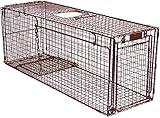
- Works for cats, skunks, rabbits, and other small animals
The outcome was a partnership rather than an adversarial intake. The cat remained connected to a person who knew his routine, while the caretaker gained information and a reliable way to ask for help. The example also shows why a friendly demeanor does not prove that a cat is unowned.
Turning resident support into policy
Preparation for the August 2021 parish-council vote
Before an August 2021 parish-council vote, Penny Brunies distributed information about TNVR and brought community-cat advocates to the meeting. Residents filled the room, demonstrating that the issue affected people beyond the shelter’s immediate staff and volunteers.
The council unanimously supported updating ordinances to allow comprehensive community-cat programming. The policy change gave staff a clearer authority to operate a return-based program instead of treating return as an informal exception. In any parish or municipality, the exact legal authority must be checked locally: ordinances may define ownership, nuisance rules, vaccination requirements, sterilization standards and who may return a cat.
Windows Errors? Fix Them Before They Spread
Repair common Windows errors and clear accumulated junk for a smoother, more stable PC - no reinstall needed.Free scan · no reinstallCrashes, No Sound, or Screen Glitches?
Random freezes, missing sound and display glitches usually trace back to one bad driver. Find and replace yours safely.Free scan · under a minuteWhy public participation helped
Residents who understand the process can explain it to neighbors, identify colonies and support a policy proposal. Their presence at the council meeting also showed that the program had community backing, not only an internal shelter preference. Long summarized the progression this way: “When the community understood they were part of the solution, they started to get more involved and these conversations only got stronger.”
What the reported outcome does—and does not—show
Best Friends Animal Society’s 2022 case study reports a cat save rate above 90% for St. Tammany Parish Animal Services. That is an organizational case-study figure, not an independently verified evaluation. The source does not provide a controlled comparison with an earlier period or another parish, the total number of cats processed, program cost, or the volume of cats handled through each TNVR activity.
| Evidence point | What is documented | How to interpret it |
|---|---|---|
| Cat save rate | Above 90% | Reported by Best Friends Animal Society in 2022 for St. Tammany Parish Animal Services; independent verification is not stated. |
| Program timing | Team work began in February 2021; ordinance support followed an August 2021 vote | Shows a rapid organizing period, but not a complete evaluation period. |
| Program components | Trapping, spay/neuter, vaccination, microchipping, ear-tipping and return | Defines the documented TNVR workflow. |
| Costs and number of cats | Not stated | Do not use the case study to estimate a per-cat cost, capacity or budget. |
| Comparison group | Not stated | The case study cannot establish that TNVR alone caused the reported save-rate result. |
The evidence still offers a practical lesson: communication, intake prevention, veterinary access and policy authority can reinforce one another. A shelter considering the model should track its own baseline intake, live-release and return-to-field data rather than copying the 90% figure as a guarantee.
Rank #4

- Wide Application: As urban and wilderness ecosystems intertwine, animals may disturb your life. Our cat trap is a versatile solution for various animals, including cats, raccoons, rabbits, groundhogs, armadillos, and opossums. It effectively addresses issues such as farmland invasion, release, and harassment.
- Humanized Designs: We prioritize humane care with our raccoon trap. The L-shaped lever ensures the trap won't harm animals when triggered. The dense mesh prevents escapes and protects against external attacks or stolen food. Smooth wire edges prevent animals from panicking or biting the wire, ensuring their safety.
- Sturdy and Durable: Our animal trap is built to last. It is constructed with sturdy, thickened wires that withstand animal bites and impacts without deformation or cracking. The galvanized coating provides excellent corrosion resistance, ensuring stability and durability in all weather conditions.
- Simple and User-friendly: Our live trap is designed for your convenience. It comes pre-assembled, saving you from tedious setup steps. Just unfold the cage, secure the rear door, and connect the trap mechanism to start using it quickly. This saves time and effort, allowing you to engage in capture work promptly.
- Portable and Easy to Store: Our efficient groundhog trap is portable and easy to store. It features a convenient handle for easy mobility, with an extended design that prevents accidental injuries from animals. The collapsible design allows for easy storage, freeing up space when not in use.
A practical conversation-based TNVR playbook
1. Prepare one consistent explanation
- Define TNVR in plain language: trap, sterilize, vaccinate, identify and return.
- Explain why a friendly outdoor cat may have a caretaker.
- State which cats need immediate medical or shelter intervention.
- Provide a phone number or email that residents can use after the conversation.
- Clarify what services are available, where they occur and whether appointments or fees apply.
2. Listen before proposing a solution
Ask where the cat was seen, how long it has been there, whether anyone feeds it, whether kittens are present and whether the animal appears injured. Ask residents what outcome they want and what they can realistically do. Listening reduces the chance that staff recommend a plan that cannot be carried out because of transportation, work schedules, landlord rules or lack of equipment.
Quick wins for a faster PC:
Repair Windows errors before they cause bigger problemsFix Now →Scan for outdated or missing drivers - takes under a minuteDriver Scan →3. Visit priority neighborhoods
Use complaints, intake records and resident reports to identify areas with multiple outdoor cats or repeated litters. Walk those areas at appropriate times, speak with people who feed cats and record colony locations. A simple contact list can prevent repeated cold starts when a new litter or injured cat is reported.
4. Handle kitten reports carefully
For newborn kittens, determine whether the mother is returning and whether the location is safe. If the mother is caring for them, explain why returning the kittens to the nest is usually preferable to immediate surrender. Arrange monitoring, veterinary guidance or foster support when the mother is absent, the kittens are ill, or the site presents a danger.
5. Match equipment and services to the plan
A humane live trap is useful only when a trained person can monitor it and transport the cat promptly. Before trapping, confirm clinic availability for sterilization and vaccination, identify who will hold the cat after treatment, and decide where and when return will occur. Microchip registration and ear-tipping should be recorded so future callers receive a consistent answer.
6. Keep the relationship open
Give caretakers a continuing shelter contact, as staff did in Gizmo’s case. Follow up after treatment to ask whether the cat returned safely, whether additional cats need care and whether neighbors have new concerns. A follow-up channel can turn one successful interaction into a local network of informed caretakers.
Recommended Free Tools
How to assess another community-cat program
Programs that use the TNVR label can differ substantially in staffing, legal authority and veterinary access. Compare the operating details, not just the name.
Best Value

- Safe & Humane Trapping – Designed with animal welfare in mind, this live trap safely captures animals without injury, making it ideal for humane relocation.
- Durable Galvanized Steel Build – Constructed from high-strength, rust-resistant steel for long-lasting performance in any weather condition.
- Reliable Trigger Mechanism – Features a highly sensitive trip plate and spring-loaded door to ensure fast and secure captures, every time.
- Spacious & Versatile Size – Accommodates a range of medium-sized animals including raccoons, groundhogs, armadillos, and stray cats.
- Simple Assembly– Folding to save space and easy assembly with no tools required—perfect for homeowners, farmers, or pest control professionals.
| Comparison area | Questions to ask |
|---|---|
| Neighborhood outreach | Does staff visit colonies, hold resident meetings, train volunteers, or rely only on shelter callers? |
| Sterilization and vaccination | Is there dependable low-cost or subsidized clinic access, and how are appointments and transport arranged? |
| Kitten-intake prevention | Do front-desk workers have guidance for nursing litters and a way to support the mother? |
| Ordinance authority | Does local law explicitly permit return, ear-tipping, colony care and vaccination practices? |
| Staffing roles | Who handles outreach, trapping, medical coordination, records, caretaker communication and follow-up? |
| Outcome measures | Are intake, live-release, return-to-field volume, sterilization numbers, complaints and save rate tracked over time? |
Common problems and practical fixes
“The cat is friendly, so it must be abandoned.”
Fix: Ask neighbors, scan for a microchip and look for a caretaker before deciding that shelter placement is the only option. Friendly behavior describes temperament, not ownership status.
“We returned the cat, but no one knows what happened next.”
Fix: Assign a contact person, record the return location and provide the caretaker with follow-up instructions. Identification and clear records help the shelter respond when the cat is reported again.
“Residents oppose TNVR because they fear more cats.”
Fix: Explain that sterilization is intended to prevent future litters and invite residents to discuss nuisance concerns, feeding practices and monitoring. Bring specific local caretakers and advocates into public meetings, as St. Tammany staff did before the parish-council vote.
What’s actually slowing this PC down?
Pick the symptom - the matching free tool is one click away.
“The shelter has a policy but no capacity.”
Fix: Match outreach promises to available traps, clinic appointments, transport and staff time. Start with a defined neighborhood, measure results and expand only when the workflow can be sustained.
“A high save rate is treated as proof of causation.”
Fix: Publish the definition, time period and denominator used for the rate, along with intake and return-to-field counts. Separate a reported case-study outcome from an independently evaluated effect.
What readers should remember
St. Tammany Parish’s experience shows that community conversations are operational work, not public-relations decoration. Staff used them to find caretakers, keep nursing kittens with their mothers, explain TNVR, organize advocates and support a legal change. The reported cat save rate above 90% is encouraging, but it belongs to that parish’s case study and should not be presented as a universal result.
For residents, the most useful first step is to gather information before trapping or surrendering a cat: observe where it lives, ask neighbors, check for a caretaker and contact the local shelter or veterinary provider about TNVR availability. For shelters, the essential foundation is a repeatable process that joins respectful outreach with humane equipment, veterinary access, identification, records and an ordinance that clearly permits the work.
The Tool Desk
Outbyte PC Repair FREERepair Windows errors before they cause bigger problemsFix Now →Outbyte Driver Updater FREEScan for outdated or missing drivers - takes under a minuteDriver Scan →Quick Recap
Product prices and availability are accurate as of the date/time indicated and are subject to change. Any price and availability information displayed on Amazon at the time of purchase will apply.





Leave a Reply