
Free tools Windows power users keep installed
One-click scans. No signup required.
A community cat is an outdoor, unowned, free-roaming cat. That description includes friendly cats, unsocialized cats, kittens, adults, healthy animals and cats needing help; it does not mean every cat seen outside is unowned. The safest response is to identify an owner or caregiver, consult a local shelter or TNR organization, and use a managed plan rather than trapping first and deciding later.
Managed Trap-Neuter-Return-Monitor (TNRM) combines humane trapping, ownership and microchip checks, veterinary care, sterilization, vaccination, ear-tipping, return to the original location and ongoing observation. A sick, injured, very young, clearly owned or poorly suited-to-outdoor-life cat may need a different pathway.
As an Amazon Associate I earn from qualifying purchases.
What is a community cat?
The ASPCA uses “community cat” for an outdoor, unowned, free-roaming cat. A cat can be friendly, wary or feral in behavior; “feral” describes socialization, not ownership status. Some community cats have a regular caretaker, while others receive no consistent human care.
Quick wins for a faster PC:
Fix the driver behind crashes, sound loss and screen glitchesFind Drivers →Repair Windows errors before they cause bigger problemsFix Now →Seeing a cat outside is not proof that it has been abandoned. A friendly animal may be lost, recently displaced, owned by a nearby resident or fed by someone who considers it part of the neighborhood. Before arranging capture, make a meaningful effort to learn the cat’s history. Ask nearby residents, post a description through local channels, and contact a shelter or animal-welfare group that can help check for a microchip or existing records.
#1 Best Overall

- High Quality Materials:SZHLUX Live Animal Cage Trap use low carbon steel wire and medium frequency welding. In this way, the product surface is flat, the welding is firm, and it is not easy to solder off.Weather and rust resistant.
- Convenient Design: Our cat trap is foldable and can be easily loaded into the trunk of the car.It only takes 4 simple steps to set up,from nearly flat to assembled in seconds--no tools needed.
- Humane Live Animal Trap: Our raccoon trap use oblong support frame to secure the cage shape and use fixing clips to fix rear door,smoothed internal edges protect and prevent trapped animal being injured.All you need is some bait to catch and then release them back to the wild.
- User-friendly Design: The top cover guard board of the cage prevents people injured by the trapped animal's mistake.The connecting rod of the pedal mechanism is set inside the cage to prevent animals from touching the mechanism by mistake.A new tool has been designed to extend the safe distance when releasing the animal.
- Dimensions: Product Size: 32inch*10inch*12inch; Package Size: 38.2inch*11.8inch*3.15inch.Excellent choice when attempting to capture smaller animals such as stray cats, raccoons, squirrel, skunk, mole, groundhog, armadillo, rabbit and small dogs.
A caretaker may feed, provide water or shelter, watch for illness, arrange sterilization and coordinate transport without being the legal owner. That distinction matters if ownership is disputed, if a cat needs emergency treatment or if local rules require an owner’s consent.
What TNRM means
TNRM stands for Trap-Neuter-Return-Monitor. It is an ongoing management process, not a single surgery.
- Trap: Use a humane live-release trap under the instructions of a local program or clinic.
- Neuter: Veterinary staff sterilize the cat and provide the services included in that program’s package.
- Return: After the clinic’s recovery instructions are complete, the cat goes back to the location where it was trapped when outdoor living there is considered appropriate.
- Monitor: A caregiver or local network watches for new cats, illness, injury, changes in condition and opportunities to sterilize newcomers.
The ASPCA describes an ideal TNRM package as including a microchip scan, vaccination (at least rabies vaccination where rabies occurs), sterilization, ear-tipping and microchipping when feasible. Clinics differ, so confirm exactly what is included rather than assuming every program offers the same services.
The ASPCA states that sterilizing at least 75% of cats in a group within six months, then continuing to sterilize at least 75% of the remaining intact cats, can help stabilize that group. This is the ASPCA’s program benchmark, not a universal guarantee or independently established threshold for every location.
Ear-tipping: the quick visual signal
During sterilization surgery, a veterinarian removes the tip of one ear. This is called ear-tipping. From a distance, it signals that the cat has been through a sterilization program and helps people avoid trapping it again or putting it through an unnecessary repeat operation.
Rank #2

- HUMANE CAPTURE: This large live animal trap safely captures raccoons, cats, possums, and other small animals with a 1-door design that allows full entry before closing, reducing escape chances for effective pest control
- HEAVY-DUTY CONSTRUCTION: Built with galvanized wire mesh and solid steel door, this raccoon trap resists rust and corrosion while providing long-lasting durability for outdoor use in all weather conditions
- SAFETY FIRST: Features smooth internal edges to prevent animal injuries and protective handle guards for safe handling, making this humane animal trap ideal for both novice and experienced users in wildlife management
- PROFESSIONAL DESIGN: Engineered with a refined trip mechanism specifically calibrated for heavier animals like bobcats and coyotes, this live trap minimizes false triggers while ensuring reliable capture performance
- VERSATILE SOLUTION: Perfect as a feral cat trap, skunk trap, or armadillo trap, this large animal cage trap handles a wide range of pest control situations effectively for comprehensive wildlife management
Programs do not describe the side identically. The ASPCA’s general information refers to either the left or right ear, while its Buncombe County example uses a left ear. Treat the local program’s convention as authoritative; never assume that one side is universal.
An ear-tipped cat can still be sick, injured, newly arrived, owned or in need of help. The mark identifies prior program participation, not current health, temperament or legal ownership.
Before you set a trap
Contact a local shelter, animal-welfare organization, veterinary clinic or TNR network first. Rules, appointment capacity, trap loans and return requirements vary by jurisdiction.
Questions to settle in advance
- Is TNRM legal and permitted at this location?
- Does the provider accept this cat, neighborhood or species of case?
- What appointment date and drop-off window are available?
- Must you provide a humane live-release trap, and can you borrow one?
- What preparation, transport and handling instructions apply?
- Which vaccinations, sterilization services, microchip scans or other procedures are included?
- How long is post-surgery recovery, and who supplies a safe recovery space?
- When and where may the cat be returned?
- What should you do if the cat is pregnant, nursing, very young, ill or injured?
Do not improvise a release plan or give medication based on general internet advice. The clinic or veterinarian should decide whether an individual cat is fit for the planned pathway.
A practical TNRM sequence
1. Observe and investigate
Record where and when the cat appears, its behavior, visible ear-tipping and any obvious concerns. Ask neighbors whether someone owns or feeds it. Friendly behavior alone does not establish that it is unowned.
Rank #3
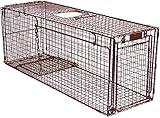
- Works for cats, skunks, rabbits, and other small animals
2. Build a local plan
Share your observations with the TNR provider. Confirm the appointment, eligibility, trap requirements, transport method and recovery arrangements before capture. If the cat belongs to someone, work through that owner or the appropriate shelter pathway.
Do these 3 things before closing this tab:
1Fix the driver behind crashes, sound loss and screen glitches2Clear out junk files and repair common Windows errors3Scan for outdated or missing drivers - takes under a minute3. Trap humanely
Use the live-release trap and preparation method the provider specifies. Alley Cat Allies places trapping at the start of the TNR sequence; the ASPCA’s Buncombe County program requires a humane live-release trap and offers trap loans. A loan may be preferable to buying equipment that you will rarely use, but availability is entirely local.
4. Let veterinary staff perform checks and procedures
Staff can scan for a microchip, assess the cat and provide the services available through that clinic. Sterilization and vaccination are central TNRM components; microchipping and other services depend on feasibility and local policy.
5. Complete recovery as directed
Keep the cat in the type of secure, quiet recovery setup the clinic instructs, and follow its release timing. If staff identify a complication or an animal that should not return, ask for the next care pathway rather than releasing the cat on your own.
6. Return and monitor
When cleared, return the cat to the original location. Continue observing the group, arrange care promptly for illness or injury, and coordinate sterilization for newcomers. A simple record of ear-tipped cats, dates, known caretakers and changes in the group helps prevent duplicate work.
PC Slower Than It Used to Be?
A free scan shows the junk files, broken settings and background clutter dragging Windows down - then fixes them in one click.Free scan · Windows 10 & 11Outdated Drivers Are Slowing You Down
One free scan finds every outdated or missing driver and matches the right update for your exact hardware.Free scan · exact hardware matchRank #4

- Wide Application: As urban and wilderness ecosystems intertwine, animals may disturb your life. Our cat trap is a versatile solution for various animals, including cats, raccoons, rabbits, groundhogs, armadillos, and opossums. It effectively addresses issues such as farmland invasion, release, and harassment.
- Humanized Designs: We prioritize humane care with our raccoon trap. The L-shaped lever ensures the trap won't harm animals when triggered. The dense mesh prevents escapes and protects against external attacks or stolen food. Smooth wire edges prevent animals from panicking or biting the wire, ensuring their safety.
- Sturdy and Durable: Our animal trap is built to last. It is constructed with sturdy, thickened wires that withstand animal bites and impacts without deformation or cracking. The galvanized coating provides excellent corrosion resistance, ensuring stability and durability in all weather conditions.
- Simple and User-friendly: Our live trap is designed for your convenience. It comes pre-assembled, saving you from tedious setup steps. Just unfold the cage, secure the rear door, and connect the trap mechanism to start using it quickly. This saves time and effort, allowing you to engage in capture work promptly.
- Portable and Easy to Store: Our efficient groundhog trap is portable and easy to store. It features a convenient handle for easy mobility, with an extended design that prevents accidental injuries from animals. The collapsible design allows for easy storage, freeing up space when not in use.
Field TNRM and shelter-based Return-to-Field
These approaches overlap but begin with different circumstances.
| Pathway | Where it starts | Typical identifying features | Key decision |
|---|---|---|---|
| Field TNRM | Cat is living outdoors at its current site | Caregiver or local network arranges trapping, veterinary care, return and monitoring | Is the cat unowned, medically suitable and safe to return to that location? |
| Return-to-Field (RTF), also called Shelter-Neuter-Return | Eligible community cat has already entered a shelter | Shelter arranges ear-tipping, sterilization and vaccination, then returns the cat to its point of origin | Can the shelter verify the origin and determine that return is appropriate? |
RTF is not a reason to bring every outdoor cat to a shelter. Ownership history, the exact point of origin, age, health, socialization and the presence of a caregiver all affect the decision.
When return may not be the right answer
TNRM is designed for community cats for whom outdoor living is feasible. Ask a veterinarian, shelter or established rescue for a different plan when:
- The cat is sick, injured, weak or showing an urgent change in condition.
- A kitten is very young, not thriving or may depend on a mother whose whereabouts are unknown.
- There is evidence of ownership, abandonment, a lost-pet report or a microchip.
- The cat is socialized enough that adoption or reunification may be realistic.
- The location has a known threat to cats, such as dangerous traffic, deliberate harm or an area where outdoor living is not feasible.
- The cat has no safe return site or the original location cannot be identified.
The ASPCA recommends operating programs where outdoor living is feasible and no known threats put cats at unacceptable risk. In dangerous or critically sensitive ecological areas, it supports deterrents or exclusion measures. Those choices require local assessment; TNRM does not eliminate every public-health, wildlife or welfare concern.
Recommended Free Tools
What caregivers do after surgery
Monitoring is the part that makes TNRM a continuing program. Caregivers commonly provide food and water, maintain or arrange shelter where appropriate, observe who is present and notice changes early. They may also transport cats, hold them briefly during clinic-directed recovery and coordinate veterinary attention when a cat is new, ill or injured.
Best Value

- Safe & Humane Trapping – Designed with animal welfare in mind, this live trap safely captures animals without injury, making it ideal for humane relocation.
- Durable Galvanized Steel Build – Constructed from high-strength, rust-resistant steel for long-lasting performance in any weather condition.
- Reliable Trigger Mechanism – Features a highly sensitive trip plate and spring-loaded door to ensure fast and secure captures, every time.
- Spacious & Versatile Size – Accommodates a range of medium-sized animals including raccoons, groundhogs, armadillos, and stray cats.
- Simple Assembly– Folding to save space and easy assembly with no tools required—perfect for homeowners, farmers, or pest control professionals.
Keep observations factual: date, location, behavior, appetite changes noticed by the caregiver, visible wounds and whether the cat is ear-tipped. Do not attempt to diagnose disease or select medication from a general guide. A veterinarian or clinic should handle case-specific treatment decisions.
Population context and what the numbers do—and do not—say
The ASPCA describes the U.S. community-cat population as being in the tens of millions. That is a broad organizational estimate; the overview does not show a methodology or a precise count. The ASPCA Spay/Neuter Alliance separately estimates approximately 28,000 community cats in Buncombe County, North Carolina. That local estimate cannot be treated as a national figure.
Alley Cat Allies reports that a Harris Interactive study conducted for the organization in 2007 found that more than 80% of Americans believed leaving a cat outdoors was more humane than capture and killing. The organization also publishes shelter-intake and outcome claims, including a figure that more than 70% of cats entering shelters are killed and that the proportion is nearly 100% for feral cats. Those figures are advocacy-source claims, and the opened material does not provide the methodology or date needed to treat them as current nationwide statistics.
Population estimates and program benchmarks are useful for planning, but they do not decide what should happen to one particular cat. Individual ownership, health, age, temperament and site safety remain decisive.
A concrete local example: Buncombe County, North Carolina
The ASPCA Spay/Neuter Alliance’s Buncombe County program illustrates why local instructions must be checked directly. Its process requires a humane live-release trap, offers traps for loan, provides the listed veterinary procedures and overnight recovery, and returns cats to their original locations when the program’s criteria are met. These are that program’s arrangements, not a nationwide promise about trap loans, services, recovery time or return policy.
Use the example as a checklist for questions to ask your own provider, not as permission to bypass your local shelter, clinic or ordinance.
Common mistakes to avoid
- Assuming outdoor means unowned: Begin with an ownership and caregiver check.
- Calling every community cat feral: Behavior varies, and friendly cats may need reunification or adoption help.
- Trapping without an appointment: A clinic may have no space, different trap rules or no recovery capacity.
- Returning to a different place: TNRM is built around return to the original location when appropriate.
- Treating an ear-tip as a health certificate: It shows prior sterilization-program identification, not current wellness.
- Generalizing one program’s rules: Local law, eligibility, services and equipment policies differ.
- Releasing a cat with unresolved concerns: Ask veterinary staff for a revised plan if the cat is ill, injured, too young or unsafe outdoors.
How to choose the next call
If you have found a cat, start with the least disruptive step that can establish its status: observe, ask neighbors and contact a local organization. If the cat appears to be an unowned outdoor adult and the location is suitable, ask a TNR provider about a managed plan. If there is a health, age, ownership or safety concern, describe those facts when you call and request the appropriate shelter, rescue or veterinary pathway instead.
The Tool Desk
Outbyte Driver Updater FREEScan for outdated or missing drivers - takes under a minuteDriver Scan →Outbyte PC Repair FREEClear out junk files and repair common Windows errorsFree Scan →The ASPCA summarizes its position this way: “The ASPCA believes that TNRM programs are the most effective, humane, and responsible ways to manage and lower the community cat population over time in conjunction with programs for owned cats, including easy access to free-/low- cost sterilization services, microchipping, and free collars and identification tags with the owner’s phone number.” That position supports managed, locally coordinated work—not a one-size-fits-all response to every cat outdoors.
Quick Recap
Product prices and availability are accurate as of the date/time indicated and are subject to change. Any price and availability information displayed on Amazon at the time of purchase will apply.





Leave a Reply