
Windows Errors? Fix Them Before They Spread
Repair common Windows errors and clear accumulated junk for a smoother, more stable PC - no reinstall needed.Free scan · no reinstallOutdated Drivers Are Slowing You Down
One free scan finds every outdated or missing driver and matches the right update for your exact hardware.Free scan · exact hardware matchSome links on this page are affiliate links: if you buy through them we may earn a commission, at no extra cost to you.
“Coral test tube babies” is a vivid nickname for corals produced through assisted sexual reproduction, usually called Coral IVF. Scientists collect eggs and sperm during a short annual spawning event, help fertilization occur, raise the resulting larvae, and place them on damaged reef habitat. It is specialist conservation work—not a consumer aquarium project—and its long-term success is still being tested.
What “coral test tube babies” actually means
The phrase describes young corals created through Coral IVF, a form of assisted sexual propagation used in reef restoration. It does not mean that corals spend their entire development in laboratory test tubes. The “test tube” image refers to the controlled collection and fertilization stage, followed by larval rearing in floating pools, tanks, or field nurseries.
As an Amazon Associate I earn from qualifying purchases.
Free tools Windows power users keep installed
One-click scans. No signup required.
For many reef-building corals, adult colonies are broadcast spawners. They release bundles containing eggs and sperm into the water, where fertilization normally happens externally. During a restoration project, researchers collect that spawn, combine it under controlled conditions, rear the developing larvae, and later deliver them to places where natural coral recruitment has been reduced.
The goal is to increase the number of larvae reaching suitable reef surfaces and to establish new breeding populations in areas that have lost too many adult corals to supply larvae naturally. Coral IVF therefore addresses a particular bottleneck—recruitment—rather than removing the causes of reef damage such as marine heat, pollution, sediment, disease, or destructive storms.
Popular on Amazon

- High-Quality Tools: Our kit includes a range of specialized tools carefully selected for their durability and functionality, ensuring precise cuts and easy manipulation of corals.
- Safety First: Each tool is designed with safety in mind, featuring comfortable grips and secure mechanisms to prevent accidental harm to you and your delicate corals.
- Comprehensive Set: The kit contains a variety of essential tools such as coral cutters, bone cutters, glue applicators, and more, offering a complete solution for all your coral propagation needs. [frag plug and glue sold separately]
- Versatile Applications: Suitable for both beginner and experienced reef keepers, this kit enables you to frag and propagate a wide range of coral species, contributing to the growth and diversity of your aquarium.
- Promotes Healthy Coral Growth: Proper coral fragging encourages healthy growth by allowing corals to spread and thrive. With our kit, you can easily create new colonies and prevent overcrowding within your aquarium.
Why assisted coral reproduction is needed
A healthy reef receives a continuing supply of larvae from nearby adult colonies. Severe bleaching, disease, storms, and other disturbances can leave damaged areas with too few mature corals to provide that supply. Coral IVF lets restoration teams collect spawn from surviving colonies and concentrate the early stages in conditions where fertilization and settlement can be managed.
The intervention is especially time-sensitive because broadcast spawning occurs during a narrow seasonal window. The Great Barrier Reef Foundation reports that relevant reef areas may spawn for only a few days each year, often a few days after the full moon in October or November. The exact nights vary with location, water temperature, tides, and other environmental conditions. Teams must therefore predict spawning, prepare collection equipment, and be on the reef at the right time.
Not every coral reproduces in the same way. NOAA’s Coral Disease & Health Consortium reports that about 15% of corals are brooding species, which release more developed larvae rather than egg-and-sperm bundles. That figure describes reproductive mode; it is not a success rate for Coral IVF. The methods in this article focus mainly on sexually propagated corals, especially broadcast-spawning species.
How Coral IVF works, step by step
1. Identify healthy parent colonies
Researchers select adult corals that can provide viable eggs and sperm. The choice of parents matters because restoration teams want genetic diversity and, where possible, traits that may help corals cope with local conditions. Collection is planned around a specific reef, species, and spawning forecast rather than performed whenever convenient.
2. Collect the spawn during the spawning window
When colonies release their bundles, teams gather them from the water before they disperse. Because the event may last only a few nights, boats, nets, containers, and holding systems must be ready in advance. The timing recorded by the Great Barrier Reef Foundation—usually several days after the full moon in October or November for the cited Great Barrier Reef locations—is a regional pattern, not a universal calendar for every reef.
Also popular on Amazon
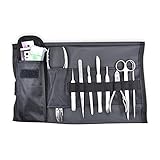
- Premium Quality Tools: Equipped with a carefully curated set of durable, high-performance instruments designed for precise coral cuts and effortless handling, making coral fragging easier and more efficient.
- Safety-Focused Design: Tools crafted with ergonomic grips and secure features to protect both you and your delicate corals, ensuring safe and confident handling every time.
- Versatile Use for All Skill Levels: Perfect for beginners and seasoned reef keepers alike, this kit supports fragging and propagation of diverse coral species, helping you enhance the beauty and biodiversity of your reef aquarium.
- Perfect for Coral Fragging & Propagation: Essential tools designed for safe, efficient coral fragging and growth in reef tanks.
- Virtually Rust-Resistant Tools & Portable Case: Durable stainless steel instruments that resist rust, all neatly stored in an easy-to-carry rollup case.
3. Bring eggs and sperm together
Collected gametes are combined so fertilization can happen in a controlled setting. This step improves the chance that eggs encounter sperm instead of being diluted or lost in open water. The resulting embryos develop into free-swimming larvae called planulae.
4. Rear the planulae
Larvae may be held in tanks or in floating pools positioned on the reef. Rearing gives the young corals time to develop before they are asked to settle. Water quality, circulation, temperature, light, and the cleanliness of the rearing system all affect whether larvae remain healthy, although the best settings differ by species and project.
5. Provide a surface and settlement cues
A planula is mobile at first. It searches for a suitable surface and then attaches, metamorphoses, and becomes a sessile juvenile coral. NOAA describes chemical signals from some crustose coralline algae as important settlement cues; signals from adult corals, microbial biofilms, and light can also influence the decision. Restoration teams therefore prepare settlement surfaces rather than simply releasing larvae into open water and assuming they will attach.
6. Move settled juveniles to reef habitat
Once larvae are mature enough and have settled, the recruits can be placed on damaged reef areas or moved through a nursery stage. The exact choice depends on the project’s species, site, and equipment. The purpose is to put young corals where they can eventually grow into colonies and contribute spawn of their own.
7. Track survival and reproduction
A successful settlement is only an early milestone. Teams must follow the recruits for years to learn whether they survive, grow, reach sexual maturity, and reproduce. Monitoring also reveals which rearing method and reef conditions produce the most surviving corals per unit of effort.
Do these 3 things before closing this tab:
1Scan for outdated or missing drivers - takes under a minute2Repair Windows errors before they cause bigger problems3Fix the driver behind crashes, sound loss and screen glitchesAlso popular on Amazon

- Precise Canada: Coral FRAG KIT Set FRAGGING PROPOGATION Reef Hard Soft CRL-0024
- MADE IN STAINLESS STEEL
- SAME AS PICTURE
- EXCELLENT QUALITY
- MADE BY PRECISE CANADA
What happens to a larva after settlement
Coral development changes sharply at settlement. A planula can swim and choose a surface; after metamorphosis, the juvenile is attached and cannot relocate if conditions deteriorate. Tiny recruits face several hazards at once:
- Fast-growing algae can cover or smother them.
- Predators can consume them before they become visible colonies.
- Sediment can bury the settlement surface or block feeding and light.
- Pollution can interfere with recruitment and early growth.
- Heat stress, disease, storms, and poor water quality can kill recruits after the restoration team has placed them.
These bottlenecks explain why producing many larvae does not automatically produce a restored reef. Coral IVF increases the supply of potential recruits; it cannot guarantee that a degraded reef will provide the stable, clean, low-stress conditions those recruits need.
What the Heron Island result shows
The Great Barrier Reef Foundation began Coral IVF trials in 2016. The first Heron Island trial corals planted that year survived long enough to reach maturity and reproduce in 2021, including after a bleaching event. That is an important field demonstration: sexually produced corals completed the life cycle far enough to create new breeding adults in the restoration area.
Peter Harrison of Southern Cross University, the lead researcher, described the objective this way: “The ultimate aim of this process is to produce new breeding populations of corals in areas of the Reef that no longer have enough live corals present, due to being damaged by the effects of climate change.”
Recommended Free Tools
The Heron Island outcome should be read as a local proof of concept, not as evidence that Coral IVF has already restored reefs at regional or global scale. One site, one set of parent colonies, and one observed milestone cannot establish consistent survival across species, climates, or repeated bleaching events.
Also popular on Amazon

- Precise Canada: Coral FRAG KIT FRAGGING Propagation Reef Hard Soft Set CRL-0030
- MADE IN STAINLESS STEEL
- SAME AS PICTURE
- EXCELLENT QUALITY
- MADE BY PRECISE CANADA
What a four-year Caribbean study found
A peer-reviewed study by Emily N. Nixon and colleagues, published in Restoration Ecology in 2025 and deposited in the NOAA Institutional Repository, compared three ways to rear sexually propagated corals in St. Croix, U.S. Virgin Islands. The study examined Diploria labyrinthiformis, Pseudodiploria strigosa, and Orbicella faveolata. Recruits were reared for one year before outplanting and then monitored for three additional years.
| Strategy | Where the young corals were reared | Four-year result | Study interpretation |
|---|---|---|---|
| Direct reef outplanting | Moved to reef habitat without the compared nursery phase | Across the study’s strategies and species, survival at four years ranged from 0% to 1.8% | Lower-performing option in the comparison |
| In situ field nursery | Raised in a nursery located in the marine environment | Had significantly higher survival than the other compared strategies, although overall survival remained very low | Most promising of the tested approaches and lower cost per seeding unit |
| Ex situ aquaculture facility | Raised in a land-based facility before outplanting | Included in the same 0–1.8% four-year survival range reported across the comparison | Did not match the in situ nursery result in this study |
The central number is the four-year survival range: 0–1.8%. It applies to these three Caribbean species, this St. Croix project, and the study’s methods; it is not a universal Coral IVF survival rate. The authors considered in situ nursery rearing promising because it performed best among the tested approaches and had a lower cost per seeding unit, while emphasizing that very low long-term survival exposes the difficulty of outplanting onto degraded reefs.
Why results vary so widely
Coral restoration combines several biological stages, and failure at any one of them reduces the final number of adult colonies. Spawning may be mistimed, gametes may be poor quality, or larvae may fail to settle. A settled recruit may then be overgrown by algae, eaten, buried by sediment, damaged by pollution, or killed by heat and disease. Even a recruit that survives its first year may not live long enough to become a reproductive colony.
The Tool Desk
Outbyte PC Repair FREERepair Windows errors before they cause bigger problemsFix Now →Outbyte Driver Updater FREEScan for outdated or missing drivers - takes under a minuteDriver Scan →Species also differ in growth rate, shape, habitat preference, and heat tolerance. A strategy that works for one coral cannot automatically be transferred to another. Geography matters as well: the water chemistry, predators, seasonal temperatures, and disturbance history at Heron Island are not the same as those in St. Croix or Florida.
Cost comparisons must be kept equally specific. The St. Croix study found lower cost per seeding unit for its in situ nursery treatment, but it did not provide a universal price for Coral IVF. Expenses depend on collection logistics, boats, staff, nursery infrastructure, monitoring duration, and the number of surviving corals—not merely on the number of larvae produced.
Also popular on Amazon
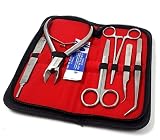
- ✅ FRAGGING PROPOGATION KIT: Our Kit comes with Instruments made from premium grade stainless steel, These Instruments promise durability, long life span, and anti corrosion/Rust properties. Resists all wear and tear that comes along with multiple usage. It is a user-friendly tool kit easy to be used by novices and professionals alike. Enables high degree of precision and flexibility for right and left hand users. Durable and sturdy with the ability to be used in freshwater/ or saltwater.
- ✅ALL-in-ONE FRAGGING KIT - The Ultimate Coral Fragging Kit! This fragging kit consists of the most essential tools to frag the wide array of corals kept in a mixed reef tank. Hard and soft corals, mushrooms and if you have to remove loose frags such as zoanthids, this kit has all the necessary tools to assist. An ideal Kit and gift for reef hobbyists, aquarists and aquascaping enthusiasts.
- ✅ CORAL CUTTER: Our Coral Cutters are of Premium Grade Quality with non-slip grip handle, box joint construction to maintain a well-aligned cutting action and a double leaf spring made of reliable spring steel.
- ✅ CORAL KNIFE: The knife comes with anti-slip grip Handle giving precise control for detailed and intricate cuts for better stability. It's Slim design Allows cutting into those hard-to-reach and hard-to-see areas. It also has a graduation scale which is etched with measurements from 0-6cm which adds extra practicality points and provides pinpoint accuracy for certain projects and uses. The Knife comes with replaceable surgical quality sharp cutting blades.
- ✅ Tongs & Forceps – These Multipurpose Forceps features Fine precision serrated tip that allows a strong grip on small objects . And refined grip to ensure a sturdy hold. This is the most versatile of all aquarium tools. All-purpose and works great for feeding, coral placement, handling plants in the aquarium and much more
What current Florida work is testing
After the 2023 Florida coral-bleaching event, NOAA and partners described several ongoing restoration and research directions. These are active investigations and program choices, not established solutions that can be applied everywhere.
- Heat-tolerant algal partnerships: introducing or encouraging algae that may help corals tolerate high temperatures, including at early life stages.
- Probiotic bacteria: investigating whether beneficial microbes can improve coral health or stress resistance.
- Larval temperature conditioning: testing whether controlled exposure to temperature can prepare larvae for later heat stress.
- Different species priorities: shifting some outplanting effort toward massive coral forms that fared better during the 2023 event.
- Sperm cryopreservation: freezing coral sperm so genetic material can be stored and used beyond a single spawning season.
These options involve trade-offs. Massive corals may be more thermally resilient, but they generally grow more slowly and can occupy limited nursery space for longer. A restoration program must therefore balance heat resilience, growth speed, available facilities, genetic diversity, and the conditions at the receiving reef.
Quick wins for a faster PC:
Repair Windows errors before they cause bigger problemsFix Now →Scan for outdated or missing drivers - takes under a minuteDriver Scan →What Coral IVF can—and cannot—do
It can
- Concentrate eggs and sperm during a brief spawning event.
- Produce large numbers of sexually generated larvae from selected parent colonies.
- Place recruits on sites where natural larval supply has been reduced.
- Preserve and distribute genetic material that might otherwise be lost.
- Create the possibility of new breeding colonies, as the Heron Island result demonstrated.
It cannot
- Prevent marine heatwaves, bleaching, storms, disease, sedimentation, or pollution.
- Guarantee that every settled larva survives to adulthood.
- Be represented by one survival figure for every coral species and reef.
- Substitute for protecting remaining adult colonies and improving reef conditions.
- Be treated as a do-it-yourself aquarium activity based on the published restoration work.
Is this something aquarium owners can try?
No. The documented work involves spawning forecasts, collection teams, specialized larval-rearing systems, settlement substrates, field nurseries, and multi-year monitoring. The reviewed conservation sources describe institutional research and restoration programs, not a consumer Coral IVF kit or a home aquarium procedure. For an ordinary aquarist, the useful lesson is ecological: coral reproduction has a narrow window and demanding early life stages, which is why restoration teams need specialized equipment and trained personnel.
How to interpret a Coral IVF claim
When a project announces “coral babies,” ask which stage the announcement describes. Fertilized embryos, free-swimming planulae, settled juveniles, surviving outplants, mature colonies, and reproducing adults are very different milestones. Also check the species, reef location, number of years monitored, and whether survival is measured per larva, per settlement tile, or per planted seeding unit.
The strongest evidence so far combines a biological milestone with long-term measurement. Heron Island supplied the milestone of restored corals reproducing in 2021 after planting in 2016. The St. Croix study supplied a cautionary multi-year measurement: 0–1.8% survival after four years across its tested species and strategies, with in situ nursery rearing performing best but still leaving substantial losses. Both findings belong in the same understanding of Coral IVF: it can produce reproductive adults, yet reliable large-scale restoration remains difficult.
The Bottom Line
Coral “test tube babies” are sexually produced coral larvae raised through Coral IVF and placed on damaged reefs. The method has produced mature, reproducing corals at Heron Island, but a 2025 St. Croix study found only 0–1.8% four-year survival across three species. Coral IVF is a promising restoration tool, not a stand-alone cure for reef decline.
What’s actually slowing this PC down?
Pick the symptom - the matching free tool is one click away.





Leave a Reply