
Some links on this page are affiliate links: if you buy through them we may earn a commission, at no extra cost to you.
In brief: Corn snakes are usually slender, orange to brownish-yellow snakes with large red dorsal blotches edged in black, a spear-shaped head marking and a checkerboard belly. “Milk snake” describes several related forms rather than one uniform appearance; the Sinaloan milk snake is only one example. Both are constrictors that can live for decades in captivity and are commonly fed thawed frozen rodents, but the exact milk-snake species, adult size and enclosure needs must be confirmed before purchase.
What is the difference between a corn snake and a milk snake?
A corn snake is the species Pantherophis guttatus. The name “milk snake” covers multiple forms in the genus Lampropeltis, with substantial geographic and taxonomic variation. That distinction is the most important starting point: a care sheet or photograph of one milk snake cannot automatically be applied to every animal sold under the common name.
As an Amazon Associate I earn from qualifying purchases.
Windows Errors? Fix Them Before They Spread
Repair common Windows errors and clear accumulated junk for a smoother, more stable PC - no reinstall needed.Free scan · no reinstallCrashes, No Sound, or Screen Glitches?
Random freezes, missing sound and display glitches usually trace back to one bad driver. Find and replace yours safely.Free scan · under a minuteBoth belong to the colubrid family and subdue prey by constriction. In captivity, veterinary care guides for both discuss appropriately sized, thawed frozen rodents, fresh water and a secure, temperature-monitored enclosure. Neither the natural-history sources nor the veterinary guides establish one as universally calmer, easier or safer to keep. Individual behavior, the exact taxon and the keeper’s setup matter more than the common name alone.
| Comparison | Corn snake | Milk snake |
|---|---|---|
| Scientific identity | Pantherophis guttatus | A common name for several forms; the Smithsonian profile cited here is specifically the Sinaloan milk snake |
| Typical appearance | Slender body, orange or brownish-yellow ground color, large red back blotches outlined in black, alternating black-and-white belly markings and a reported spear-shaped head mark | Pattern and color vary with geography and taxon; no single color rule identifies every milk snake |
| Range represented by the sources | Eastern and southeastern United States, broadly from southern New Jersey toward Florida and west to Louisiana and parts of Kentucky | The cited natural-history details concern the Sinaloan form, not the entire milk-snake group |
| Wild diet | Young snakes may eat lizards and tree frogs; adults take larger prey, including rodents, birds and bats | Opportunistic prey can include eggs, lizards, snakes, amphibians, birds and small mammals |
| Captive-food guidance | Thawed frozen rodents sized to the snake; PetMD cautions against live rodents because they can injure the snake | Whole thawed frozen rodents, fresh water and feeding tongs are described in the cited PetMD guidance |
| Reported lifespan | Up to 23 years in human care in the Smithsonian profile | Sinaloan milk snakes are reported at about 15 years in the wild and possibly up to 20 years in human care |
| Temperament or ease | No evidence here supports a universal ranking | No evidence here supports a universal ranking |
The lifespan figures are upper-end reports from separate profiles, not a promise for an individual animal or a head-to-head longevity test.
Popular on Amazon

- 【All-Metal Secure Enclosure with Locking Glass Doors】Made of heavy-duty all-metal framework, equipped with smooth sliding glass doors and a lockable clasp. This reptile cage offers great security and effective escape-proof performance, perfect for safely raising aggressive small reptiles.
- 【Convenient Carry Handles for Easy Mobility】Ergonomic carry handles are designed for easy, stable transportation. You can effortlessly move or reposition this reptile enclosure for cleaning and daily maintenance with no extra strain.
- 【Integrated Side Cable Ports for Wiring】Built-in side cable ports support neat, safe wiring for heat lamps, thermostats and other devices, and stop reptiles from chewing power cords.
- 【Smooth Back Panel for Custom Backgrounds】Flat interior back panel allows easy attachment of decorative backgrounds and insulation liners. Build a natural reptile habitat with better comfort and visual appeal.
- 【Breathable Mesh Top for Optimal Ventilation】Full mesh top delivers great airflow and humidity control, allowing smooth heat and UVB penetration to create a healthy, breathable living space for reptiles.
How can you tell a corn snake from a milk snake?
Use several features together rather than relying on a single red, orange or black band. Color can change with age, locality and captive breeding, and milk snakes are especially variable.
1. Check the corn snake’s dorsal pattern
Typical corn snakes have large red or rust-colored blotches running down the back. Each blotch is usually bordered by black, with orange or brownish-yellow surrounding color. The University of Georgia account also describes a spear-shaped marking on the head. These traits are useful clues, not an infallible test for every individual.
The Tool Desk
Outbyte Driver Updater FREEFix the driver behind crashes, sound loss and screen glitchesFind Drivers →Outbyte PC Repair FREEClear out junk files and repair common Windows errorsFree Scan →2. Look at the belly
A checkerboard or alternating black-and-white belly is characteristic of the corn-snake descriptions used by the Smithsonian and the University of Georgia. If the snake is in a position where the underside can be observed safely, the belly pattern can add confidence to an identification.
3. Treat milk-snake colors as variable
Milk snakes may show bands, saddles or other contrasting patterns depending on the species or subspecies and its geographic origin. The Sinaloan milk snake profile should be read as a profile of that form, not as a description of every milk snake. Do not identify a wild snake from a generic internet image or from a memorized color slogan.
4. Use location as supporting evidence
A corn snake’s documented range extends through much of the eastern United States, from southern New Jersey south toward Florida and west into Louisiana and portions of Kentucky. Range narrows the possibilities, but it does not replace examination of pattern, body shape and head markings. For a milk snake, first determine which species or regional form occurs where the animal was found.
Also popular on Amazon
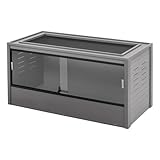
- Moisture-Resistant ECOFLEX – Eco-friendly composite resists moisture for odor control and easy cleanup; not waterproof and best for low-to-moderate humidity setups
- Provides a wide, unobstructed view of your pet—ideal for observing snakes, lizards, and tortoises in a natural-looking setting. Sliding front doors with lock allow quick, safe access for feeding, cleaning, or interaction with your reptile.
- Equipped with vented side panels and a large, mesh screen top to accommodate lighting; designed to provide superior airflow and temperature control for a comfortable environment. Interior Dimensions: 46.46"L x 22.32"W x 21.26"H. Pairs well with the matching Lo-Boy Versa Stand (sold seperately, ASIN: B0CKWGFZGK), Standard Height Versa Stand (sold seperately, ASIN: B0C3PPC849) or Stack Two Together using the matching Stacker (sold seperately, ASIN: B0CBW92G82)
- Easy Assembly – Includes all hardware and clear instructions; most customers assemble in 20–30 minutes with basic tools
- 10‑Year Warranty – Built to last with sustainable materials and backed by a manufacturer’s guarantee for peace of mind. U.S. Designed. U.S. Supported. 100% Pet Approved.
5. Do not handle an uncertain wild snake
Photograph it from a safe distance, note the location and contact local wildlife authorities or a qualified local expert. The selected sources do not provide a comparative medical-risk assessment, so the practical rule is simple: do not pick up a snake you cannot confidently identify.
Recommended Free Tools
Are corn snakes and milk snakes the same?
No. They are different snakes that share a broad family resemblance and similar captive-food requirements. “Corn snake” refers to Pantherophis guttatus; “milk snake” is a group name covering multiple Lampropeltis forms. A Sinaloan milk snake, for example, has its own range and natural-history profile. Treating the group name as though it described one standardized animal can lead to incorrect size, habitat and husbandry assumptions.
Both are constrictors. In the wild, each may eat more than the rodents normally offered in captivity, but a wild prey list is not a recommendation to feed every listed item to a pet. Captive diets should follow a current exotic-animal veterinarian’s advice for the individual snake.
Where do they live in the wild?
Corn-snake habitats
Natural-history accounts place corn snakes in woodlands, rocky hillsides, meadows, woodlots, open rocky areas and tropical hammocks. They may also use barns and abandoned buildings. Habitat destruction, road mortality, fragmentation and collection are identified as pressures in some regions. The Smithsonian characterizes the overall population as relatively stable while noting differing state-level treatment, including special-concern status in Florida and protection in Georgia.
Sinaloan milk-snake habitats
The cited Sinaloan milk snake account describes use of human-inhabited areas, barns and wood piles. NC State Extension notes that milk snakes often spend considerable time beneath cover objects. These observations explain why a snake may be found near structures or under boards, but they are natural-history descriptions rather than instructions to reproduce a particular wild habitat indoors.
Also popular on Amazon

- Moisture-Resistant ECOFLEX – Eco-friendly composite resists moisture for odor control and easy cleanup; not waterproof and best for low-to-moderate humidity setups
- Provides a wide, unobstructed view of your pet—ideal for observing snakes, lizards, and tortoises in a natural-looking setting. Sliding front doors with lock allow quick, safe access for feeding, cleaning, or interaction with your reptile.
- Equipped with vented side panels and a large, mesh screen top to accommodate lighting; designed to provide superior airflow and temperature control for a comfortable environment. Interior Dimensions: 34.56"L x 16.42"W x 15.78"H. Pairs well with the matching Versa Stand (sold seperately, ASIN: B0C3PHD1R7) or Stack Two Together using the matching Stacker (sold seperately, ASIN: B0CBWB339N)
- Easy Assembly – Includes all hardware and clear instructions; most customers assemble in 20–30 minutes with basic tools
- 10‑Year Warranty – Built to last with sustainable materials and backed by a manufacturer’s guarantee for peace of mind. U.S. Designed. U.S. Supported. 100% Pet Approved.
Why geography matters
Common names can conceal major differences. Before buying a milk snake, obtain the scientific name and, where relevant, the subspecies or locality. Before moving or collecting a wild snake, check current local wildlife rules; legal status is not uniform across the United States and can change.
What do corn snakes and milk snakes eat?
Wild feeding
Corn-snake prey changes with age. Young animals may take lizards and tree frogs, while adults can consume larger prey such as rodents, birds and bats. Milk snakes are described as opportunistic feeders whose wild prey may include eggs, lizards, other snakes, amphibians, birds and small mammals. Those lists show ecological flexibility, not a menu for a household enclosure.
Captive corn-snake feeding
PetMD’s corn-snake care guidance uses thawed frozen rodents sized to the snake. Offer prey appropriate to the animal’s body size and follow a schedule set by age, size, body condition and veterinary advice. PetMD specifically warns against live prey for corn snakes because a live rodent can injure the snake. Use feeding tools rather than your hands and remove uneaten food according to the care plan.
Captive milk-snake feeding
The cited PetMD milk-snake guidance also describes whole thawed frozen rodents, fresh water and offering food in the evening. Because “milk snake” includes multiple forms, confirm the exact species and adult size before selecting prey or a feeding interval. Feeding tongs help keep hands away from the feeding response.
Safe thawing and observation
- Keep a reliable supply of appropriately sized frozen rodents.
- Thaw prey safely and offer it with dedicated feeding tongs.
- Observe the snake after feeding and avoid unnecessary handling during digestion.
- Record meals, refusals, body condition and shedding so changes are visible to you and your veterinarian.
What equipment does either species need?
The cited veterinary sheets support the same basic priorities for both: a ventilated enclosure with a secure lid, separate warm and cool areas, digital temperature monitoring, fresh water and suitable hides. They do not establish one universal enclosure dimension for all corn snakes or all milk-snake forms. Choose dimensions and furnishings for the confirmed species, the snake’s current size and its expected adult size.
Also popular on Amazon

- Spacious 120-Gallon Terrarium - This premium 4x2x2 reptile enclosure offers a generous 120-gallon capacity, ideal for bearded dragons, snakes, geckos, and other medium-to-large reptiles. Whether you're housing one majestic pet or creating a cohabitation environment, this large reptile tank provides ample room for natural behaviors, enrichment, and comfort. TIP: This tank is not suitable for holding water. (Note: Shipped by 2 boxes, may arrive separately.)
- All-in-One Storage Base – More than just a vivarium tank, this design includes a full base cabinet with dual side compartments and a center door cabinet. Easily store all your reptile care essentials—UVB lamps, heating mats, thermometers, substrate, snacks, and tools—in one organized space.
- Panoramic Visibility - The front-facing acrylic sliding doors offer a full view of your pets’ activities while making feeding and cleaning effortless—no lifting or bending required. The upper mesh lid is fully openable, ensuring optimal airflow while securely preventing escape. A well-ventilated reptile habitat designed for peace of mind and convenience.
- Built-in Power Center - Integrated with a 4-AC socket power strip, this enclosure supports simultaneous operation of heat lamps, humidifiers, UVB lighting, and thermostats—everything you need to maintain the ideal environment.
- Durable MDF Construction - Crafted from high-quality MDF wood, the enclosure is sturdy, stable, and built to last. Its modern, clean-lined design blends seamlessly into any living space Both functional and fashionable, it's the ultimate vivarium upgrade for any reptile enthusiast.
Core setup checklist
- Secure enclosure: The lid and doors must resist pushing, lifting and gaps. Check the closure every time the enclosure is serviced.
- Ventilation: Provide the airflow specified for the enclosure design without creating escape routes.
- Temperature monitoring: Measure both warm and cool zones with reliable digital thermometers rather than estimating by touch.
- Fresh water: Supply clean water and replace it whenever it is soiled.
- Hides and cover: Give the snake places to retreat so it can regulate exposure and feel secure.
- Feeding tools: Use long feeding tongs for thawed rodents and keep them separate from routine handling tools.
“Reptile enclosure thermometer” describes a genuine setup need, but a product label alone does not prove that a particular device is accurate or suitable. Verify readings and replace unreliable equipment.
Which is easier to care for, a corn snake or a milk snake?
There is no evidence in the cited sources for a categorical winner. Both require the same kind of commitment: escape-proof housing, measured temperatures, clean water, appropriately sized frozen-thawed prey, safe handling and access to an exotic-animal veterinarian. A keeper who is comfortable with rodents but cannot provide secure, monitored housing is not prepared for either species.
Factors that can change the decision
- Exact identity: A corn snake is one species; a milk snake purchase should be tied to a named species or subspecies.
- Adult size: Corn snakes are reported at 61–182 centimeters (24–72 inches). Confirm the expected adult size of the particular milk-snake form.
- Availability of care: Locate an exotic-animal veterinarian before acquiring the snake, not after an illness appears.
- Food logistics: Ensure a dependable source of correctly sized frozen rodents and freezer space for them.
- Long-term plans: Prepare for a commitment measured in many years, including moves, travel and changes in housing.
- Personal comfort: Select the animal whose adult size, appearance and handling needs fit your household, rather than choosing from a color pattern alone.
Temperament, handling and individual variation
Neither the Smithsonian profiles nor the selected veterinary sheets prove that one species is universally docile or easier to handle. Behavior varies among individuals and may change with stress, recent feeding, shedding, illness and the quality of the enclosure. A calm animal still needs gradual, supported handling; a defensive response should be treated as information about the snake’s state, not as a species-wide label.
What’s actually slowing this PC down?
Pick the symptom - the matching free tool is one click away.
Use slow movements, support the body and avoid handling immediately after feeding. Keep interactions brief while a new snake settles, and stop if the animal shows persistent stress. Ask the seller or rehoming organization for the exact feeding and handling history, but verify claims with your own observation and a veterinarian.
Independent reader supportYour contribution helps us test, update, and keep practical guides available for everyone.Common mistakes to avoid
Assuming every milk snake has the same pattern
Milk-snake color rules often circulate as simplified identification tips. They cannot replace species, locality and multiple physical features. The Sinaloan profile is not a universal milk-snake template.
Also popular on Amazon

- New Upgrade Tempered Glass: Tempered glass has characteristics of impact resistance, non-friability, and high-temperature resistance, making it safe to use.
- Easy to Install &Flat Packing: Easy to install or disassemble in 5 minutes with step-by-step instructions; Our glass terrariums are carefully packaged with heavy boxes of tough cardboard and thickened reinforced foam for transportation.
- Front Sliding Door: It can open separately, is easy to feed your pet and clean, and the lock prevents escape.
- Side Ventilation & Wire Organization: Small Side panel ventilation only for better balance of moisture and ventilation. Prepared 6 inlets on top and right for wires and tubing, an extra cable pass allows 4 wires more to pass through.
- 100% quality assurance: we provide 12 months of quality assurance, Should you have any inquiries regarding our product, please reach out to us, and we will respond promptly to assist you within 24 hours.
Using wild prey lists as captive menus
A snake that eats amphibians, birds or other reptiles in nature does not automatically need those foods in captivity. The care sheets cited here support thawed frozen rodents for both groups.
Guessing temperatures
Feeling the enclosure surface with a hand cannot verify a warm and cool zone. Use digital thermometers, check their placement and act on readings that fall outside the plan provided by your veterinarian.
Buying before confirming the taxon
Common names may be used loosely in advertisements. Obtain the scientific name, expected adult size, origin and feeding record before paying a deposit.
Ignoring local rules
Wildlife protection differs by state and locality. Corn snakes are noted as protected in Georgia and a species of special concern in Florida in the Smithsonian account; those examples do not establish a nationwide rule. Check current regulations where you live.
A practical decision process for prospective keepers
- Identify the animal precisely. For a corn snake, confirm Pantherophis guttatus. For a milk snake, obtain the species or subspecies rather than accepting only “milk snake.”
- Project the adult animal. Compare expected length, body mass, enclosure footprint and the amount of frozen food required over time.
- Build and test the enclosure first. Install the secure lid, ventilation, hides, water dish and digital thermometers. Verify the warm and cool zones before the snake arrives.
- Plan feeding and veterinary care. Arrange frozen-rodent storage, feeding tongs and an exotic-animal clinic. Ask how emergencies will be handled outside normal hours.
- Evaluate the commitment. The cited upper-end figures reach 23 years for corn snakes and 20 years for Sinaloan milk snakes in human care. Plan for that possibility, not for a short-term novelty.
- Choose on fit, not a universal ranking. Select the exact animal whose size, care requirements and behavior suit your household.
Bottom line for identification and ownership
Choose the corn snake when you specifically want Pantherophis guttatus and can accommodate a potentially 24–72-inch adult with a secure, monitored enclosure. Choose a milk snake only after identifying the exact form, because “milk snake” is a varied group rather than one standardized care profile. For either choice, correct identification, thawed frozen rodents, reliable temperature monitoring, fresh water, escape prevention and long-term veterinary planning matter more than claims that one species is automatically easier or calmer.





Leave a Reply