To cycle a new freshwater aquarium, run its filter and build up beneficial nitrifying bacteria before adding fish. The beginner-friendly approach is a fishless cycle: use an aquarium maturation product according to its instructions, then test ammonia, nitrite, nitrate, and pH as the filter develops. Add fish only after ammonia and nitrite have reached zero and remain there.
What cycling an aquarium does
Cycling establishes biological filtration. Beneficial nitrifying bacteria colonize the filter media and other oxygenated surfaces, converting ammonia from waste and decaying food first into nitrite and then nitrate. A new filter may not yet have enough of these bacteria, so ammonia and nitrite can build up while the aquarium matures. Both can harm fish.
As an Amazon Associate I earn from qualifying purchases.
Water can look clear while still containing unsafe ammonia or nitrite. Testing—not appearance—is how you track the cycle. The guidance here is for home freshwater aquariums; saltwater systems and species-specific needs require separate advice. OATA’s freshwater tank setup guidance explains the cycle and aquarium setup.
Choose a fishless cycle
For a new aquarium, fishless cycling develops the filter’s bacterial community without exposing fish to the ammonia and nitrite peaks that can occur during maturation. OATA recommends using an aquarium maturation product and following its instructions. Its guidance also recognizes proprietary bacterial cultures as a possible aid; it does not establish that a particular product will guarantee a faster or more successful cycle.
#1 Best Overall

- Professional Quality Testing Kit: The AAwipes Aquarium test kit (50 strips) is developed by experts for fish enthusiasts. It offers 8-in-1 testing capabilities, made with high-quality fiber paper and non-bleeding colors. The kit measures key parameters like Free Chlorine, Nitrate, Nitrite, Hardness, Sodium Chloride, Total Alkalinity, pH and Ammonia nitrogen. By identifying potential issues, our fish tank testing kit helps prevent hidden water problems and ensures the safety and well-being of your fish.
- Versatile Use for Freshwater and Ponds: This aquarium water test kit is versatile and suitable for both freshwater and saltwater environments. It can be used in various aquariums, fish tanks, ponds, pools, and shrimp tanks, making it easy to monitor water quality and ensure your filter functions properly. Experts recommend testing your aquarium water at least twice a week to maintain optimal water quality.
- Fast and Accurate Results: Get accurate results in minutes with just 3 steps: 1) Dip the test strip into water for 2 seconds for pads 1-7; dip pad 8 (Ammonia nitrogen) separately for 5 seconds. 2) Remove the strip without shaking off excess water. Hold horizontally for 30 seconds for pads 1-7, wait 180 seconds to read Pad 8 (Ammonia nitrogen). 3) Compare the colors to the chart for up to 99% accuracy and take necessary action.
- Extended Shelf Life: The test strips are packaged in a well-sealed bottle to ensure they remain effective over time. This protects the strips from moisture and other environmental factors, ensuring you have reliable testing materials on hand when needed.
- Convenient Use: With this kit, you can test your aquarium water at home without the need to send samples to a lab, saving you both time and money. Enjoy peace of mind knowing your aquarium water is balanced and safe without the stress or extra expense.
There is no universal ammonia dose to use for every aquarium. Products differ, and the amount needed depends on the water volume and test results. Use the product’s directions and any dose calculation it provides rather than guessing or copying a dose from another tank. OATA’s planted aquarium guidance also discusses fishless dosing and bacterial cultures.
Fishless versus fish-in cycling
| Method | Fish welfare during cycling | Monitoring and suitability |
|---|---|---|
| Fishless | No fish are exposed to cycling ammonia and nitrite peaks. | Use a measured ammonia source as directed and test the water as the filter matures. Recommended for beginners setting up a new tank. |
| Fish-in | Fish may be exposed to harmful ammonia or nitrite if the process is not managed carefully. | OATA says this requires great care and guidance to safeguard fish welfare; it is not an equivalent easy shortcut. |
If fish are already in the aquarium, test the water and seek qualified aquarium-care guidance. OATA notes that partial water changes and good husbandry can address elevated ammonia or nitrite.
Rank #2

- 𝗛𝗼𝗺𝗲 𝗔𝗾𝘂𝗮𝗿𝗶𝘂𝗺 𝗪𝗮𝘁𝗲𝗿 𝗧𝗲𝘀𝘁 𝗞𝗶𝘁 - Ensure the health of your fish with aquarium water testing kit & ammonia test strips for fish tank. This complete freshwater & saltwater tank test kit provides a reliable water tester for ammonia, pH, iron, chlorine, total hardness (GH), carbonate, nitrate, nitrite, total alkalinity, copper, and temperature, allowing you to have a complete understanding of your aquarium water quality. Trusted by fish enthusiasts, it adapts to your needs, making it an essential tool for aquarium care.
- 𝗔𝗰𝗰𝘂𝗿𝗮𝘁𝗲 & 𝗙𝗮𝘀𝘁 𝗧𝗲𝘀𝘁𝗶𝗻𝗴 𝗥𝗲𝘀𝘂𝗹𝘁𝘀 - Our aquarium water test strips deliver reliable results. Each fish tank water testing kit comes with easy-to-read color charts. This fish tank test strips are highly sensitive, detecting low levels of impurities and foreign substances in aquarium water. Our aquarium water quality tester helps prevent any invisible water problems.
- 𝗜𝗻𝘀𝘁𝗮𝗻𝘁 𝗛𝗼𝗺𝗲 𝗧𝗲𝘀𝘁𝗶𝗻𝗴—𝗡𝗼 𝗧𝗿𝗶𝗽𝘀 𝘁𝗼 𝘁𝗵𝗲 𝗦𝘁𝗼𝗿𝗲 - Testing 11 key parameters in your aquarium is easier than ever with just one kit. Just dip the strip in water and use the provided color chart for instant, reliable results. Say goodbye to frequent trips to pet stores because now you have our home water test kit with the ability to monitor your aquarium's water quality in the comfort of your own home.
- 𝗧𝗲𝘀𝘁 𝗦𝗺𝗮𝗿𝘁𝗲𝗿 𝘄𝗶𝘁𝗵 𝗘𝘅𝘁𝗲𝗻𝗱𝗲𝗱 𝗦𝗵𝗲𝗹𝗳 𝗟𝗶𝗳𝗲 𝗦𝘁𝗿𝗶𝗽𝘀 - Our aquarium test kit contains 150 test strips for aquarium fish tank: 50 strips in a bottle and 100 in a separate bags to maintain freshness. Once opened, it's recommended to use the strips within 3 months for maximum accuracy of the fish water testing kit. These water testing strips allow regular water quality checks without using all water test strips at once.
- 𝗩𝗲𝗿𝘀𝗮t𝗶𝗹𝗲 𝗪𝗮𝘁𝗲𝗿 𝗧𝗲𝘀𝘁𝗶𝗻𝗴 𝗞𝗶𝘁 𝗳𝗼𝗿 𝗔𝗹𝗹 𝗔𝗾𝘂𝗮𝘁𝗶𝗰 𝗡𝗲𝗲𝗱𝘀 - Our Aquarium water quality test kit is designed to cater to a wide range of aquariums including saltwater aquariums, freshwater fish tanks, betta fish tank, and fish ponds. Our hard water test kit can be used to test the water quality effectively, which ensures that you can maintain optimal water conditions in different aquarium setups.
Set up the tank and test kit
Before cycling, set up the aquarium, treat the water to remove chlorine or chloramine, and make sure the filter is running. Let the equipment and temperature settle. You will need a test kit that measures ammonia, nitrite, nitrate, and pH; these readings help you follow the changes rather than relying on water clarity. See OATA’s freshwater water-testing guidance.
Track the cycle with water tests
Test more frequently during setup than during routine maintenance, and record ammonia, nitrite, nitrate, and pH readings so you can see the trend. During maturation, ammonia and nitrite are expected to rise and then fall as the biological community develops. Nitrate usually rises as nitrification progresses.
Rank #3

- Professional Quality Testing Kit: The AAwipes Aquarium test kit (25 strips) is developed by experts for fish enthusiasts. It offers 8-in-1 testing capabilities, made with high-quality fiber paper and non-bleeding colors. The kit measures key parameters like Free Chlorine, Nitrate, Nitrite, Hardness, Sodium Chloride, Total Alkalinity, pH and Ammonia nitrogen
- Versatile Use for Freshwater and Ponds: This aquarium water test kit is versatile and suitable for both freshwater and saltwater environments. It can be used in various aquariums, fish tanks, ponds, pools, and shrimp tanks, making it easy to monitor water quality and ensure your filter functions properly. Experts recommend testing your aquarium water at least twice a week to maintain optimal water quality
- Fast and Accurate Results: Get accurate results in minutes with just 3 steps: 1) Dip the test strip into water for 2 seconds for pads 1-7; dip pad 8 (Ammonia nitrogen) separately for 5 seconds. 2) Remove the strip without shaking off excess water. Hold horizontally for 30 seconds for pads 1-7, wait 180 seconds to read Pad 8 (Ammonia nitrogen). 3) Compare the colors to the chart for up to 99% accuracy and take necessary action
- Extended Shelf Life: The test strips are packaged in a well-sealed bottle to ensure they remain effective over time. This protects the strips from moisture and other environmental factors, ensuring you have reliable testing materials on hand when needed
- Convenient Use: With this kit, you can test your aquarium water at home without the need to send samples to a lab, saving you both time and money. Enjoy peace of mind knowing your aquarium water is balanced and safe without the stress or extra expense. By identifying potential issues, our fish tank testing kit helps prevent hidden water problems and ensures the safety and well-being of your fish
A nitrate increase can support the interpretation that the cycle is progressing, but nitrate alone does not prove the filter is ready. The practical maturity criterion is that ammonia and nitrite have both fallen to zero and remain at zero continually. Do not add fish based on a single reading, a nitrate result alone, or clear-looking water.
Understand ammonia readings
Total ammonia tests can include both un-ionized ammonia (NH3) and ammonium (NH4+). UF/IFAS explains that the proportion present as NH3 increases with pH and temperature, and that NH3 is approximately 100 times more toxic to fish than NH4+. A total-ammonia reading therefore cannot be interpreted as a universal risk level without considering water chemistry and the fish species. See UF/IFAS’s explanation of ammonia in aquatic systems.
Rank #4
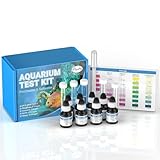
- 5-in-1 Master Test Kit: Monitor all 5 critical water parameters – pH, nitrite, nitrate, ammonia, and phosphate – in one comprehensive aquarium test kit. The rigorous analysis helps you maintain an ideal haven for your aquatic friends
- Freshwater & Saltwater Application: This aquarium water master test kit works perfectly for both freshwater and marine fish tanks. Precise color-matching charts are included – simply compare your water’s hue to the color swatches for instant results
- Enhanced Accuracy: Using professional liquid reagents, the aquarium water test kit delivers high accuracy that far exceeds traditional test strips. Get laboratory-quality results every time, safeguarding a stable and enjoyable fish tank environment
- Regular Testing: Complete with 265 measurements across all parameters – pH (100), nitrite (45), nitrate (50), ammonia (30), phosphate (40). This fish tank water testing kit supports months of consistent monitoring to keep your aquarium perfectly balanced
- Essential Fish Care: Your trusted solution to prevent fish loss from fatal ammonia, nitrite buildup, or pH imbalances! Proper water quality maintenance ensures your aquatic pets stay healthy and your plants thrive in optimal conditions
How long does cycling take?
There is no single reliable number of days or weeks that applies to every home aquarium. The endpoint is determined by test results: ammonia and nitrite must reach zero and stay there, not merely by how long the tank has been running. UF/IFAS describes six to eight weeks for a new biofilter to build sufficient bacteria in the aquaculture context discussed in its publication. That is not a guaranteed timetable for every home aquarium.
Quick wins for a faster PC:
Scan for outdated or missing drivers - takes under a minuteDriver Scan →Repair Windows errors before they cause bigger problemsFix Now →Keep the developing filter working
Nitrification needs oxygen and alkalinity. UF/IFAS explains that the process produces hydrogen ions, which can lower pH if the water does not have sufficient buffering. Poor oxygenation or depleted alkalinity can impair bacterial function and allow ammonia or nitrite to rise. Keep the filter operating throughout maturation.
Best Value

- Professional Quality Testing Kit: The AAwipes Aquarium test kit (100 strips) is developed by experts for fish enthusiasts. It offers 8-in-1 testing capabilities, made with high-quality fiber paper and non-bleeding colors. The kit measures key parameters like Free Chlorine, Nitrate, Nitrite, Hardness, Sodium Chloride, Total Alkalinity, pH and Ammonia nitrogen.
- Versatile Use for Freshwater and Ponds: This aquarium water test kit is versatile and suitable for both freshwater and saltwater environments. It can be used in various aquariums, fish tanks, ponds, pools, and shrimp tanks, making it easy to monitor water quality and ensure your filter functions properly. Experts recommend testing your aquarium water at least twice a week to maintain optimal water quality.
- Fast and Accurate Results: Get accurate results in minutes with just 3 steps: 1) Dip the test strip into water for 2 seconds for pads 1-7; dip pad 8 (Ammonia nitrogen) separately for 5 seconds. 2) Remove the strip without shaking off excess water. Hold horizontally for 30 seconds for pads 1-7, wait 180 seconds to read Pad 8 (Ammonia nitrogen). 3) Compare the colors to the chart for up to 99% accuracy and take necessary action.
- Extended Shelf Life: The test strips are packaged in a well-sealed bottle to ensure they remain effective over time. This protects the strips from moisture and other environmental factors, ensuring you have reliable testing materials on hand when needed.
- Convenient Use: With this kit, you can test your aquarium water at home without the need to send samples to a lab, saving you both time and money. Enjoy peace of mind knowing your aquarium water is balanced and safe without the stress or extra expense. By identifying potential issues, our fish tank testing kit helps prevent hidden water problems and ensures the safety and well-being of your fish.
Chlorine and chloramine in untreated tap water can harm fish and beneficial filter bacteria. Do not rinse filter media under untreated tap water. If it needs cleaning, OATA advises gently rinsing it in aquarium water removed during a routine water change rather than under a tap. Avoid over-cleaning the media while it matures.
Add fish gradually after the cycle
After ammonia and nitrite have reached zero continually, introduce fish gradually rather than stocking the whole aquarium at once. Each increase in fish or feeding adds waste, and the bacterial population needs to grow to handle the larger load. Continue monitoring water quality as you add fish.
For routine care, OATA recommends testing at least once a week and gives up to 25% weekly as general partial-water-change guidance for freshwater home aquaria. These are general recommendations, not fixed requirements for every tank: suitable frequency and volume depend on aquarium conditions and the species kept. Use temperature-matched, treated water for changes.
Windows Errors? Fix Them Before They Spread
Repair common Windows errors and clear accumulated junk for a smoother, more stable PC - no reinstall needed.Free scan · no reinstallOutdated Drivers Are Slowing You Down
One free scan finds every outdated or missing driver and matches the right update for your exact hardware.Free scan · exact hardware matchLive plants can take up some nitrate, but they do not replace filtration or water changes. Tap-water nitrate and suitable aquarium targets vary, so follow advice appropriate to the species rather than applying one universal nitrate limit.
Quick Recap
Product prices and availability are accurate as of the date/time indicated and are subject to change. Any price and availability information displayed on Amazon at the time of purchase will apply.




