“Dirt toxicity” is not one cattle diagnosis. Cattle can swallow soil incidentally or while grazing without being poisoned, but contaminated soil, plants, water, feed, or farm debris can expose them to harmful substances—especially lead. If cattle may have eaten a battery, paint, ash, or other suspect material, contact a veterinarian promptly.
Can cattle get lead poisoning from eating dirt?
Yes, if the soil or material mixed into it contains lead. Soil ingestion—whether deliberate or incidental—is an exposure route, not proof of poisoning. The U.S. Geological Survey’s review of soil ingestion explains that soil can expose domestic and wild animals to environmental contaminants.
Cattle may take in lead by eating contaminated soil or herbage, or by swallowing lead-bearing fragments directly. Possible sources include old flaking paint, vehicle or electric-fence batteries, ash from burning lead-containing materials, lead shot, contaminated feed or water, and soil affected by historic mining or smelting. High-lead soil can also be exposed by erosion. These routes are described in guidance from the UK Government and the Ontario Ministry of Agriculture, Food and Rural Affairs.
Swallowed lead fragments can lodge in a cow’s reticulum and continue to be absorbed, so signs may not appear immediately. Soil pH alone does not rule out risk: UK soil-health guidance notes that lead in ingested contaminated soil may be absorbed regardless of pH, while the chemical and physical form of the lead affects how much is absorbed. See the UK guidance on managing soil health.
#1 Best Overall

- Certified Organic Kelp for Livestock Health: Enriched with high-quality organic kelp powder, this supplement provides essential minerals to support the health and vitality of cattle, goats, and horses across all life stages.
- Balanced Calcium-Phosphorus Ratio: With a 2:1 calcium to phosphorus ratio, this kelp supplement helps to ensure optimal mineral balance, promoting bone and muscle strength for mixed herds and pasture-raised animals.
- Natural & Non-GMO Sea Kelp Formula: Made from 100% non-GMO ingredients, this sea kelp powder includes organic dried kelp and other essential minerals for a clean and natural supplement you can trust.
- Supports Digestion and Nutrient Absorption: Includes organic kelp granules and plant-based nutrients that aid in digestion, helping animals better absorb vital nutrients from their diet.
- Ideal for Mixed Herds in All Environments: Perfectly suited for mixed pastures, this kelp-based mineral mix is designed to be a versatile supplement for cattle, goats, and horses, delivering reliable mineral support in any setting. This mineral should not be fed to sheep as it contains copper.
Could it be arsenic or another contaminant?
Some sites have other specific hazards. Queensland’s Department of Primary Industries warns that soil at historic arsenical dip sites can contain absorbable arsenic capable of causing fatal poisoning. Other contaminants need to be assessed based on the site and exposure evidence; soil-eating alone cannot identify the substance or establish poisoning. See Queensland’s arsenic guidance.
What are signs of lead poisoning in cattle?
Reported signs include blindness, circling or aimless wandering, teeth grinding, muscle tremors or spasms, poor coordination, seizures, and dullness. Sudden death can occur. NSW Government guidance describes these signs in its overview of lead poisoning in livestock; Alberta also warns of clinical and food-chain risks in its lead-toxicity guidance.
Rank #2
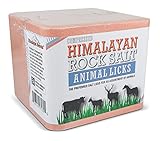
- 100% NATURAL & MINERAL-RICH: Crafted from pure Himalayan rock salt, each lick contains 84 essential minerals and trace elements that support hydration, bone strength, and overall animal wellness.
- DURABLE COMPRESSED DESIGN: Formed under high pressure to resist crumbling and withstand outdoor conditions, ensuring long-lasting mineral supplementation for your animals.
- SAFE & COMFORTABLE FOR ANIMALS: Smooth edges and a polished surface make licking safer and gentler on animals’ tongues while promoting steady mineral intake.
- IDEAL FOR LIVESTOCK & WILDLIFE: Suitable for horses, cows, goats, sheep, deer, and other farm or wild animals, a perfect mineral supplement for multi-species care.
- SUSTAINABLY SOURCED: Our Himalayan rock salt is sourced from the foothills of the Himalayas in Pakistan, supporting sustainable and ethical mining practices, bringing natural nutrition to your animals.
These signs are not unique to lead poisoning. Other conditions can cause similar neurological illness; for example, Cornell’s account of a Hereford calf with lead poisoning discusses polioencephalomalacia, hepatoencephalopathy, and rabies as possible differentials. A veterinarian needs to assess the animal and the exposure history. Some exposed cattle may show no obvious illness yet still have residues in products. The Cornell case discussion and UK cattle guidance describe these concerns.
What should I do if cows ate a battery or other suspect material?
- Move cattle away from the suspected source if it is safe to do so. Prevent further access to batteries, paint, ash, debris, contaminated feed, or suspect ground.
- Call a veterinarian promptly. Give the veterinarian the best available account of what was eaten, where and when exposure may have occurred, which animals were involved, and what signs you have observed.
- Keep the suspect material available for investigation if safe. Do not handle hazardous debris unnecessarily; ask the veterinarian how to preserve or identify it.
- Do not move, sell, or send potentially exposed cattle or products to slaughter until you have local veterinary or regulatory advice. Rules vary by jurisdiction. For example, Ontario’s advisory says affected livestock must not be transported off the premises or enter the food chain; that is an Ontario-specific instruction, not a universal rule. Check the Ontario advisory and follow the rules that apply where the farm is located.
Do not attempt a home treatment or use a chelating drug without veterinary direction. Treatment and supportive care are veterinary decisions, and treatment may be difficult or unsuccessful after substantial exposure or serious nervous-system injury. NSW guidance says early cases are more likely to respond and prognosis is generally poor after significant lead intake; Queensland describes chelation as veterinary-supervised care. See NSW’s guidance and Queensland’s poisoning guidance.
What’s actually slowing this PC down?
Pick the symptom - the matching free tool is one click away.
Rank #3

- CORRECTS MINERAL DEFICIENCIES: Harvested from an ancient sea deposit in Central Utah, Beef Mineral Mix starts with our expansive profile of 60+ trace minerals and is fortified with added phosphorus, calcium, selenium (60 ppm), magnesium, cobalt, copper, iodine, zinc and vitamins A, D, & E.
- HIGHLY PALATABLE TO YOUR HERD: Redmond's higher salt to mineral ratio makes our mixes much more palatable than those other heavy mineral mixes. When offered a choice between our mixes and other minerals, animals choose Redmond every time!
- LOW DAILY COSTS: Reduce your costs on custom mineral mixes.
- NO CHEMICAL PROCESSING: All of our products are unrefined. Beef mineral mix is free of fillers and dyes. Whether your approach is organic or conventional, Redmond Beef Mineral Mix can help you get back to what you love about raising animals.
- CRAFTED BY FARMERS: Founded by farmers over 50 years ago, Redmond is proud of our roots and legacy of supporting healthy farms the world over. We often hear from customers “our animals just do better on Redmond,” -- we are happy to help your farm simplify your mineral program, save money, and improve the health and productivity of your operation.
How do veterinarians test cattle or pasture for lead?
Diagnosis combines the exposure history and clinical assessment with suitable laboratory testing. Animal samples can help establish whether cattle were exposed; environmental samples can help locate the source or assess risks to feed and animal products. The veterinarian or relevant authority can advise which samples are appropriate and where to send them.
| Sample | What it can help establish | When it may be used |
|---|---|---|
| Blood from a live animal | Evidence of lead exposure in that animal | When a living animal is being investigated; the veterinarian arranges and interprets the test. |
| Post-mortem tissue | Evidence of exposure after an animal has died | When a post-mortem investigation is appropriate. |
| Soil, water, feed, or herbage | Whether a suspected environmental or feed source is contaminated | When tracing the source or evaluating possible continuing exposure. |
| Animal products | Whether residue concerns affect meat, offal, or milk | When advised by the veterinarian or food-safety authority. |
The Ontario advisory, NSW guidance, and UK cattle guidance describe animal and environmental testing in investigating lead exposure. A consumer soil test is not automatically suitable for decisions about livestock health; ask a veterinarian, local authority, or laboratory experienced in the relevant testing before relying on a result.
Rank #4

- Safe copper levels balanced with other minerals that work together to help regulate healthy copper absorption
- Full spectrum of sea minerals from our ancient deposit in Utah
- No fillers, processed grain byproducts, or sweeteners your animals don't need
- Vitamins A, D, + E fortified
Can contaminated cattle products be eaten or sold?
Lead residues can make meat, offal, or milk unsafe. An animal that appears healthy may still have residues, and UK guidance notes that offal can retain higher lead levels for longer than meat or milk. The UK Government’s cattle-health guidance and Alberta’s lead-toxicity guidance address these food-chain risks.
Movement restrictions, notification duties, testing decisions, and food-safety limits depend on local rules. Do not apply a threshold or withdrawal period from another jurisdiction. Ask the attending veterinarian and the relevant animal-health or food-safety authority what to do with affected cattle and products.
Best Value

- Balanced mineral nutrition - Contains the proper balance and ratios of all 14 essential cattle minerals
- Exclusive Storm formulation - Storm formulation nearly eliminates water retention and clumping or bricking; cattle will consume the mineral even after it’s been wet. Though it resists moisture, Purina research reveals that is does not prevent digestion, resulting in less waste.
- Large particle size ingredients and rain protection - Resistant to wind losses and rain damage.
How can farms reduce the risk?
Remove lead-bearing hazards
Keep batteries, flaking paint, ash, lead shot, machinery debris, and other suspect material out of livestock areas. Fence off or otherwise exclude cattle from ground where contamination is suspected until it has been assessed. Testing and follow-up should be guided by a veterinarian or relevant authority; removing visible debris does not establish that nearby soil is safe.
Limit soil pickup on known high-lead pasture
Where professional assessment identifies high-lead soil, UK guidance recommends keeping soil consumption low. Measures include maintaining adequate sward height, avoiding overgrazing and grazing waterlogged or poached ground, fencing bare areas, and reducing soil pickup when harvesting silage. Appropriate salt and mineral supplements may also be advised. These steps manage exposure; they do not certify contaminated land as safe. See UK cattle guidance and UK soil-health guidance.
Investigate the source rather than guessing
If cattle have unexplained neurological signs, sudden deaths, or access to a suspected contaminant, record the animals affected and their access to pasture, water, feed, and farm debris. A veterinarian can help decide whether to test animals, environmental sources, or products. The appropriate response depends on the suspected substance, evidence of exposure, severity, and local food-chain rules; there is no single risk ranking for all soils and contaminants.
Quick Recap
Product prices and availability are accurate as of the date/time indicated and are subject to change. Any price and availability information displayed on Amazon at the time of purchase will apply.
Recommended Free Tools




