
Free tools Windows power users keep installed
One-click scans. No signup required.
Some links on this page are affiliate links: if you buy through them we may earn a commission, at no extra cost to you.
Some bats have tails and some appear not to. Among tailed species, the tail may stay inside the membrane between the hind legs, end at its edge, poke through it, or extend beyond it. That membrane is the uropatagium (also called the interfemoral membrane or tail membrane), and it is not the tail itself.
The short answer: bat tails vary by species
There is no single tail design shared by every bat. Tail presence, length and position differ among species. In some bats, a narrow tail is enclosed within the skin membrane joining the hind legs. In others, the tail reaches the membrane’s margin, its tip passes through the membrane, or much of the tail projects past the free edge. A few bats appear to lack a tail altogether, according to Animal Diversity Web.
As an Amazon Associate I earn from qualifying purchases.
Geography matters as well. Virginia Tech Extension notes that every bat species recorded in Virginia has a tail, while not every bat species worldwide does. Therefore, an answer that is accurate for one state or region cannot automatically be applied to all bats.
When someone asks about a bat’s “tail,” they are often looking at two different structures at once: the tail vertebrae and the broad sheet of skin around them. Separating those structures resolves most of the apparent contradiction.
Popular on Amazon

- Your backyard's new favorite wildlife home: Our 2-chamber bat house is designed to be a cozy Bat Box for up to more than 75 bats. This bat house for outdoors provides a perfect roosting spot, especially for bachelor bats and early bat activity.
- Bats Keep Bugs Away: It’s not just about looks; bats play a huge role in maintaining your garden's ecosystem balance. So, inviting them over is a win for your backyard! This bat house for your yard attracts bats that help with mosquitoes. Made to withstand snow, rain, and heat.
- Sturdy Cedar Design: Handcrafted from high-quality cedar, this durable 2-chamber outdoor bat house withstands any climate. Cedar naturally resists rot and decay, keeping this large bat boxes for outside in top shape for years.
- Simple Install Kit: Setting up your WildYard two-chamber bat box is a breeze and a fun project for anyone. With our wall-mounted recommended install bat house kit, including stainless steel hardware, setting up your bat house is a breeze. Assemble it in just 6 simple steps.
- Support Biodiversity: Bats are crucial for the ecosystem, and our bat box encourages them to roost in your backyard. It's a win-win for nature lovers, gardeners, and outdoor enthusiasts. By providing a safe, warm spot for bats, you're doing your bit for the local wildlife community.
Tail versus the uropatagium: two different structures
The tail is a narrow anatomical structure
A bat’s tail is the small, vertebra-containing extension of the spine behind the pelvis. Depending on the species, it can be relatively short, partly hidden by surrounding skin, or long enough to project outside the membrane. The visible amount in a photograph does not always indicate how much tail is present, because a portion may be enclosed within the membrane.
The uropatagium is a skin membrane
The uropatagium, also called the interfemoral membrane, stretches between the hind legs. “Tail membrane” is a useful everyday label, but it should not be treated as a synonym for the tail. The New Zealand Department of Conservation’s comparative anatomy diagram labels the tail and tail membrane separately and shows a lesser short-tailed bat whose tail tip protrudes through the membrane to the dorsal surface.
Quick wins for a faster PC:
Fix the driver behind crashes, sound loss and screen glitchesFind Drivers →Clear out junk files and repair common Windows errorsFree Scan →The membrane is part of the bat’s flight-surface system. The Smithsonian National Museum of Natural History explains that the interfemoral membrane can form a basket or pouch that helps catch and hold insects captured in flight. In that role, the membrane is a broad flexible surface, whereas the tail is a slim internal support structure that may or may not be visible outside it.
Also popular on Amazon
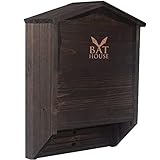
- Great Bat Shelter - Makes Bats Feel At Home: The 16.5x10.2x4” large bat houses with the efficient two chamber design offer an ideal roosting area for bats; Thanks to the dark brown cedar Kibaga bat houses for outdoor use, the flying mammals can find excellent conditions to live in
- True Ecosystem Idols: Bats are vital as pollinators & seed dispensers which makes them crucial for our ecosystems and functional economic agricultures; Set up a bats house to support these versatile creatures
- Eco-Friendly: Introducing a bat habitat provides many benefits - one of them, having a approach against mosquitoes & other insects, that are not only pesky but also damage crops & plants
- Superb Bat Boxes For Outside: Bats are important and with the Kibaga premium bat house, made of long-lasting waterproof cedar, you create an appealing home for them for many years to come - just like bats love it
- Easy To Mount & Maintain: Simply follow the recommendations to install the pre-assembled bat house with the included screws, in just the right place for our beautifully flying friends to settle, as well as to maintain it for a functional bat home every year
Five ways a bat tail can relate to the membrane
These arrangements are useful for understanding photographs and field descriptions. They are categories of placement, not rules that apply to every member of a large bat group.
| Arrangement | What you would see | Example or evidence |
|---|---|---|
| Enclosed | The tail remains within the uropatagium and may be difficult to see from above or below. | Animal Diversity Web describes tails that can be enclosed by the membrane. |
| Reaches the edge | The tail extends to the membrane’s margin but does not clearly project past it. | Animal Diversity Web identifies this as one of the possible relationships between tail and membrane. |
| Tip through the membrane | Only the tail tip emerges through an opening or passes across the membrane. | The New Zealand Department of Conservation diagram shows this arrangement in the lesser short-tailed bat. |
| Beyond the membrane | A conspicuous section of tail sticks out past the free edge of the uropatagium. | UF/IFAS Extension describes Florida free-tailed bats as having tails that extend beyond the tail membrane. |
| Apparently absent | No obvious external tail is visible; the species may have a very reduced tail or a configuration that makes it hard to detect. | Animal Diversity Web notes that a few bats appear to lack tails, but it does not provide a complete worldwide list. |
The same bat can also look different in flight, at rest, or from different viewing angles. A folded membrane can hide a tail that would be visible when the animal spreads its hind legs during flight.
Examples that show why “all bats” is misleading
Florida free-tailed bats
UF/IFAS Extension uses Florida free-tailed bats as a clear example of a tail extending beyond the tail membrane. The projecting tail is sufficiently distinctive that “free-tailed” describes the animal’s appearance. In a side view, the tail can look like a narrow rod continuing past the membrane’s trailing edge.
What’s actually slowing this PC down?
Pick the symptom - the matching free tool is one click away.
Also popular on Amazon
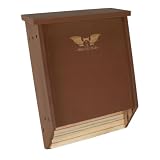
- Bat Retreat Heaven: This brown bat house is a cozy spot for up to 75 bats, perfect for nature lovers. Ideal for a backyard retreat, this wooden bat house helps you support local wildlife and biodiversity
- Tough All-Weather Design: Our bat house cedar is built to last through rain or shine. Whether it's cold or hot, this brown bat box stands strong, making it a top choice for bat houses for outdoors
- Cedar Power: Made from cedar wood, this bat box for tree or house is naturally tough against rot. Cedar bat houses for outdoors are perfect for anyone seeking a long-lasting, natural solution
- Easy-Peasy Setup: Get this cedar bat box up and running in no time. With only six simple steps and stainless steel hardware included, installing on trees or houses is a breeze
- Nature's Allies: Bats are nature's helpers, and this bat house cedar supports them while boosting local wildlife. Perfect for outdoor enthusiasts looking to welcome more critters into their space
Lesser short-tailed bats in New Zealand
The New Zealand Department of Conservation anatomy diagram shows the lesser short-tailed bat with the tip of its tail protruding through the membrane to the dorsal surface. This is different from a tail simply hanging beyond the membrane: the diagram depicts the tail passing through the membrane itself.
Bats in Virginia
Virginia Tech Extension states that all bat species in Virginia have tails. That regional statement is useful because it demonstrates why local observations can produce a different answer from a worldwide one. Seeing tailed bats in a Virginia attic, cave or woodland does not establish that every bat species on another continent has the same anatomy.
What the membrane does during flight
The uropatagium is more than a border around the tail. It links the hind limbs and can change shape as the bat maneuvers. When it forms a pouch, it can help catch and hold insects intercepted during flight, as described by the Smithsonian National Museum of Natural History. The membrane may therefore be visible as a broad scoop-like surface even when the actual tail is hidden within it.
Also popular on Amazon

- Great Bat House Makes Bats Feel At Home: 16"x9.2"x4.4" bat box features an efficient three-room design capable of housing up to 100 bats, providing an ideal habitat for bats, bats can find good living conditions thanks to the black one used outdoors
- True Ecosystem Idols: Bats are vital as pollinators & seed dispensers which makes them crucial for our ecosystems and functional economic agricultures, Set up a bats house to support these versatile creatures
- Eco-Friendly: Introducing a bat habitat provides many benefits - one of them, having a approach against mosquitoes & other insects, that are not only pesky but also damage crops & plants
- Superb Bat Boxes For Outside: Bats are important and with the premium bat house, made of long-lasting waterproof cedar, you create an appealing home for them for many years to come - just like bats love it
- Easy To Mount & Maintain: Simply follow the recommendations to install the assembled bat house with the screws, in just the right place for our beautifully flying friends to settle, as well as to maintain it for a functional bat home every year
That function also explains why a photograph can be deceptive. A spread membrane occupies much more visual area than the tail, so observers may call the entire flap a “tail.” Anatomically, however, the flap is skin and the tail is the narrow structure associated with the spine. A useful caption for an image should identify the slim tail separately from the larger uropatagium.
How tail shape helps identify bat species
Tail morphology and the uropatagium are among the features used to distinguish bat species, according to the American Museum of Natural History. Identification does not depend on tail length alone. A careful comparison considers several features together:
- Presence: Is a tail visible, reduced, enclosed or apparently absent?
- Relative length: How long is the tail compared with the membrane?
- Position: Does it remain inside the membrane, meet its edge, pass through it or project beyond it?
- Membrane outline: Is the uropatagium broad, shallow, deeply curved or shaped into a pouch in the observed pose?
- Species and region: Which bat is being considered, and where was it observed?
These traits should be used with other anatomical and geographic information rather than as a single diagnostic test. Two species can have similar-looking tail arrangements, and the same species can appear different when its membrane is folded.
Also popular on Amazon

- Bat House —— 15.1x10.5 x 3.6 inches bat box, holding up to 75 bats. The bat houses is designed with 2 chamber, and the internal alcove makes it easier for bats to land and roost. it provides bats with an perfect roosting place.
- Benefit of Bat Boxes —— Due to urbanization, deforestation, and expansion of agricultural land, many bats have lost their natural roosts, so they sometimes enter rooftops, chimneys, or barns, impacting our lives. The bathouse provide them with suitable roosts and can effectively reduce the probability of our direct contact with bats.
- Meaningful of Batbox —— Bats are nature's way of eliminating night-flying insects, a bat can eat up to 600-1000 mosquitoes in an hour; Bats are vital as pollinators & seed dispensers, They are involved in the pollination needed for many plants, fruits and vegetables. Go to set up a bats house to support these versatile creature!
- Natural Wood —— Bat house for tree is made of natural wood, with strong corrosion resistance and durability and other characteristics, can be used outdoors for a long time, the service life can be more than 10 years!
- Easy to Install —— Bat nesting box comes with screws, you just need to install it as recommended, you should hang the house on the south east side of a building if possible or tall pole roughly 8 -to 12 feet high-and it must get at least 6 hours of direct sunlight
How to read a bat photograph without mislabeling the tail
- Locate the hind legs. The membrane spans the area between them. Do not begin by treating every dark or translucent flap as a tail.
- Trace the narrow structure from the pelvis. The tail is the slim extension associated with the spine. It may disappear inside the membrane.
- Check the membrane’s free edge. If the narrow structure continues beyond that edge, the bat has an externally projecting tail in that pose.
- Look for a perforation or crossing point. A tail tip that appears on the opposite surface of the membrane may be passing through it, as shown in the Department of Conservation diagram.
- Record the location and species if known. A regional field guide can prevent a local observation from being generalized to all bats.
Lighting, motion blur and folded wings can hide the relevant boundary. For an identification decision, use several images or a field description rather than relying on one silhouette.
Does a bat without a visible tail truly have no tail?
Not necessarily. “No visible tail” can mean that the tail is enclosed by the uropatagium, extremely short, concealed by the bat’s posture or genuinely reduced. Animal Diversity Web reports that a few bats appear to lack tails altogether, but the available overview does not establish a complete list of tailless species worldwide.
That limitation matters when interpreting broad claims. It is accurate to say that some bats appear tailless and that tail arrangements vary. It is not accurate to name every supposedly tailless bat, or to infer that an unseen tail is absent, without a dedicated taxonomic source for the species in question.
Why the phrase “tail membrane” causes confusion
Common names often compress two related structures into one phrase. Calling the uropatagium a “tail membrane” emphasizes its location around the tail, but the wording can make the membrane sound like an enlarged tail. In anatomy, the distinction is straightforward:
- The tail is the narrow extension of the vertebral column.
- The uropatagium/interfemoral membrane is the sheet of skin between the hind legs.
- The tail may be enclosed by that sheet, end at its edge, pass through it or extend beyond it.
Using the precise terms makes descriptions clearer for wildlife rescuers, educators and anyone comparing species. It also explains why two reliable sources can appear to disagree: one may be describing tail presence, while the other is describing how much of the tail is exposed outside the membrane.
What to remember
Bats do have tails as a group, but not every species presents a conspicuous external tail. The important question is not simply whether a tail exists; it is how that tail relates to the uropatagium. Some tails stay enclosed, some reach the edge, some pass through the membrane and free-tailed species project beyond it. A few bats appear to lack tails, and local patterns can differ from worldwide ones. The membrane itself is a separate flight structure that can help catch and hold insects, so identifying it correctly prevents the most common visual mistake.
Recommended Free Tools





Leave a Reply