
Do these 3 things before closing this tab:
1Repair Windows errors before they cause bigger problems2Fix the driver behind crashes, sound loss and screen glitches3Clear out junk files and repair common Windows errorsSome links on this page are affiliate links: if you buy through them we may earn a commission, at no extra cost to you.
Yes. Eating the placenta is usually normal for a mother cat (queen) during labor. She may swallow each afterbirth while licking the newborn and cleaning birth fluids, so owners often never see the placentas. Veterinary guidance says a queen does not have to eat them, however. The important issue is not whether she consumes an afterbirth, but whether she and her kittens remain well after delivery.
What the placenta is and when it appears
The placenta is the temporary organ attached to a kitten through the umbilical cord. It transfers oxygen and nutrients during pregnancy and is expelled as an afterbirth after the kitten is born.
As an Amazon Associate I earn from qualifying purchases.
Free tools Windows power users keep installed
One-click scans. No signup required.
Feline labor alternates between two relevant stages:
- Stage II: delivery of a kitten.
- Stage III: delivery of that kitten’s placenta.
A queen may deliver a placenta immediately after a kitten, deliver several kittens and then several placentas, or consume an afterbirth before an owner can identify it. The MSD Veterinary Manual notes that placentas may be rapidly eaten, passed unnoticed, or passed normally within 24 hours. Therefore, failing to see every placenta does not by itself prove that one is retained.
Popular on Amazon

- 【Safe quality material】The pet playpen is made of high-grade thick mesh and 600D waterproof polyester oxford with reinforced seams. Consists of 8 mesh side panels and a half mesh top, well ventilated. You can have a 360-degree view of your pet's condition, and you can also give your pet a panoramic view of its surroundings.
- 【Easy to use】The pet playpen on the side of this pet pen can be easily rolled up and pasted, making it easy for your pet to get in and out of the pet pen. Close the door and keep your pet safely inside. The detachable semi-mesh zipper top can be easily removed for indoor use and closed for outdoor use to provide shade. Make sure your pet is comfortable in any environment.
- 【No Assembly required】Opening the dog pen takes only a few seconds, is lightweight, strong, and does not require assembly. When not in use, it can be folded into the tote bag provided by us, which takes up minimal space and is easy to carry and store. Spacious interior Spaces allow your pet to play, sleep, hide or isolate. Perfect for indoors, lawns, beaches, parks, Tours, camping and more!
- 【Wide applicability】 This pet crate is suitable for cats, dogs, rabbits, ferrets, hamsters, chickens, pregnant pets, and pets in recovery. It also provides a safe and secure temporary isolation area, comprehensively meeting your pet's needs throughout different life stages.
- 【The dog pen tent is easy to clean】 simply wipe off any dirt or wash it with water, then let it air dry and continue to use. You can also put a blanket under the fence and wash it if it gets dirty.
Why a queen eats the afterbirth
Veterinary references describe the behavior as probably related to nutrition and hygiene. Removing and consuming birth tissue can keep the nesting area cleaner and reduce odors that might attract other animals. Those explanations describe likely adaptive reasons, not a requirement for modern domestic cats.
There is no established need for a queen to obtain hormones from placenta-eating. A UC Davis feline behavior text states: “There is no evidence that eating the placenta contributes important hormones to the mother or that there is any difference in maternal responsiveness, whether or not the mothers are allowed to eat the placenta.” In other words, eating the afterbirth is common behavior, but current evidence does not show that it is necessary for milk production, bonding, or maternal care.
Should you stop your cat from eating a placenta?
Do not force a healthy queen to eat an afterbirth, and do not try to pull tissue from her mouth. If she consumes it, that is generally part of normal post-delivery behavior. If she leaves it, remove it with disposable gloves or a clean tool, place it in a sealed bag, and keep the nesting area clean without repeatedly disturbing her or the kittens.
Also popular on Amazon
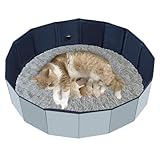
- SPECIALIZED DESIGN: Whelping Box Designed for cats,easy to use, easy to clean and easy to store.
- BEAUTIFUL AND PRACTICAL: Use warm colors to put your cat at ease, folding design, easy to open and close.
- PERFECT SIZE: Carefully designed to be the perfect size for cats to give birth and for cats to nurse their kittens, just the right height for easy access to the cat.
- DURABLE MATERIAL: Carefully selected high quality oxford cloth material, well made and very durable. It will not be harmed by sharp cat claws.
- MULTI-PURPOSE POOL: This birthing pool for cats can not only be used to give birth to cats with peace of mind, but it can also be used as a bathing pool for cats and as a pool for cats to play in.
The choice between leaving an uneaten placenta briefly and removing it depends on the queen’s condition and the cleanliness of the nest:
| Situation | Leave the queen undisturbed | Remove the uneaten placenta |
|---|---|---|
| Queen’s condition | She is alert, caring for kittens, and not showing illness. | She is comfortable but has left the tissue in the nest. |
| Kittens and placentas | You are still observing deliveries and cannot yet account for everything. | Delivery appears complete and the tissue is clearly separate from the queen. |
| Nest hygiene | The area remains clean enough for the queen and kittens. | The tissue is soiling bedding, attracting insects, or creating an odor. |
| Warning signs | No continued straining, fever, depression, foul discharge, or unusually heavy bleeding. | Contact a veterinarian rather than relying on cleanup if any warning sign is present. |
There is no evidence-based reason to buy or administer a commercial placenta product. Veterinary sources do not require one for a normal feline birth.
What to do if you cannot find every placenta
Try to record each kitten and, when possible, each placenta as labor progresses. A missing placenta is not automatically retained: the queen may have eaten it, or it may have passed unnoticed in bedding or litter. Counting is useful, but clinical signs are more important than a perfect count.
PC Slower Than It Used to Be?
A free scan shows the junk files, broken settings and background clutter dragging Windows down - then fixes them in one click.Free scan · Windows 10 & 11Outdated Drivers Are Slowing You Down
One free scan finds every outdated or missing driver and matches the right update for your exact hardware.Free scan · exact hardware matchAlso popular on Amazon

- ① 27.6 x 21.7 x 17.7 in Footprint That Fits a Litter Box The 27.6 x 21.7 x 17.7 in interior leaves room for a small litter box on one side and a bed on the other, so this cat cage works as a short-term holding pen or a longer-term indoor cat crate. Measure your pet nose to tail before ordering.
- ② 600D Oxford Cloth With Reinforced Edges The body is 600D Oxford cloth with reinforced binding along every edge, so the walls hold their shape when a pet leans or pushes against them. A 360-degree mesh ceiling and side windows for airflow keep air moving and let anxious pets see you, and two roll-up doors plus a side pocket make feeding and reach-in easy. A pocket on side could be used for storing small items for pets
- ③ Built for Pets That Push Against the Sides This portable cat playpen is lightweight enough to carry from room to room, so we recommend placing a litter box or other weight inside to press the base down and keep the frame steady. The 600D Oxford cloth is wear-resistant and odor-free, and the reinforced bottom binding resists scratching at the corners.
- ④ Waterproof Bottom That Wipes Clean in Seconds The waterproof bottom means accidents wipe away with a damp cloth or a spot clean, no soaking and no machine wash. Add a blanket on top and it lifts out in one piece when it needs a wash, which keeps this kitten playpen usable day after day.
- ⑤ Sets Up in About 3 Minutes, Folds Flat for Travel Unfold the panels, slide in the support rods, and the pen is standing in about 3 minutes with no tools. It folds flat when not in use, which makes it practical for travel, camping, RV trips, and backyard use, and easy to store in a closet between uses.
MSD Veterinary Manual guidance says a placenta normally may pass within 24 hours. That timing does not mean an owner should wait 24 hours in the presence of illness. Call a veterinarian promptly if the queen appears unwell, continues to strain as if in labor, or develops abnormal discharge. A retained fragment can contribute to metritis, an infection of the uterus.
Signs that require veterinary advice
Seek veterinary advice after birth if you notice any of the following:
- Continued or repeated straining after the expected delivery period, especially if no kitten is produced.
- Fever, marked depression, weakness, or collapse.
- Foul-smelling discharge or discharge that is unusually heavy.
- A queen that stops caring for kittens, will not settle, or seems painful.
- Any concern that a kitten or placenta is stuck in the birth canal.
These signs can have causes other than a retained placenta, but they need professional assessment. A veterinarian may examine the queen and use imaging or other tests to determine whether material remains in the uterus and whether treatment is needed. Do not attempt to remove suspected retained tissue yourself.
Also popular on Amazon

- SPECIALIZED DESIGN: Whelping Box Designed for cats,easy to use, easy to clean and easy to store.
- BEAUTIFUL AND PRACTICAL: Use warm colors to put your cat at ease, folding design, easy to open and close.
- PERFECT SIZE: Carefully designed to be the perfect size for cats to give birth and for cats to nurse their kittens, just the right height for easy access to the cat.
- DURABLE MATERIAL: Carefully selected high quality oxford cloth material, well made and very durable. It will not be harmed by sharp cat claws.
- MULTI PURPOSE POOL: This birthing pool for cats can not only be used to give birth to cats with peace of mind, but it can also be used as a bathing pool for cats and as a pool for cats to play in.
Monitor the kittens as closely as the queen
Placenta-eating is rarely the most useful measure of whether a litter is doing well. Nursing and weight gain provide better information. Weigh each kitten accurately once it is dry and then twice daily during the first week, recording the results so a trend is visible.
Quick wins for a faster PC:
Scan for outdated or missing drivers - takes under a minuteDriver Scan →Repair Windows errors before they cause bigger problemsFix Now →MSD Veterinary Manual guidance advises immediate attention for a kitten that loses weight or fails to gain 10% of body weight per day after the first 24 hours. This is a kitten-monitoring threshold, not a statistic about how many queens eat placentas. A kitten that is cold, weak, repeatedly separated from the litter, or unable to nurse also warrants prompt veterinary advice, even before a full day of weight data is available.
Protect the umbilical cords
Normal grooming includes licking newborns, but excessive licking or biting at an umbilical stump can seriously injure a kitten. Merck veterinary guidance specifically warns about this risk. Watch the queen’s grooming and seek veterinary instructions if she persistently pulls at a cord, causes bleeding, or damages the stump. Do not apply household antiseptics or cut tissue unless a veterinarian has told you exactly what to do.
Also popular on Amazon

- All-Around Safe Haven for Multi-Pets: More than a daily indoor dog playpen, MZNZ pet enclosure serves as a soft, secure cat playpen, and gentle space for small animals need (rabbits,ferrets, hamsters, chickens), or recovering/pregnant pets. Whether separating a new rescue pet, setting up a nursing space for mom pets, or providing a calm retreat for post-surgery/sick pets, this soft puppy playpen meets your furry friend’s needs through every life stage. It’s a safe containment solution for various small to medium pets.
- Durable & Breathable Materials for Long-Lasting Use: Crafted with high-grade chew-resistant thick mesh and waterproof 600D polyester Oxford cloth, MZNZ puppy playpen stand up to daily use. Reinforced seams and corners prevent tearing, enhancing the enclosure’s sturdiness—ideal for energetic puppies. Equipped with 8 mesh sides and a half-mesh top offer superior ventilation while letting you keep a 360° eye on your pet, reducing their anxiety.
- Easy Access Design for Pets & You: The side door of MZNZ dog playpen rolls up easily and fastens securely, allowing your pet to enter/exit effortlessly, close it to keep them safely contained when needed. The detachable semi-mesh zippered top removes quickly for indoor use and zips closed to provide shade—perfect for creating a weather-friendly play space outdoors. Ensuring your furry friend stays happy whether they're lounging indoors or exploring the great outdoors.
- No Assembly & Portable: MZNZ puppy play pen for indoors pops open in just a few seconds—no tools required! Lightweight yet sturdy, it offers a spacious interior for pets to play, sleep, hide, or rest comfortably, and is suitable as puppy crates for small dogs. When not in use, fold it into the included carrying bag for minimal storage space. Ideal for trips, camping, beaches, parks, or home storage without clutter, meeting your on-the-go pet containment needs.
- Easy Clean for Mess-Free Pet Care: Keeping dog crate clean is a breeze! Simply wipe off dirt with a damp cloth or rinse it with water—its waterproof material makes cleanup quick and easy. Let it air dry, and it's ready for use again. For extra convenience, place a mat under the dog fence; if it gets dirty, just throw the mat in the wash—no stress over pet messes.
A practical postpartum monitoring plan
- Record deliveries. Note the time each kitten arrives and, when visible, the time each placenta is expelled.
- Check the queen’s behavior. She should be responsive and able to settle with the litter. Note persistent straining, obvious pain, weakness, fever, or foul discharge.
- Keep the nest hygienic. Replace wet or heavily soiled bedding calmly. Remove uneaten placental tissue without separating the queen from the kittens for long periods.
- Check every kitten. Confirm breathing, warmth, and access to a nipple. Observe whether each kitten nurses rather than assuming the litter is thriving.
- Start weight records. Weigh dry kittens and continue twice-daily checks through the first week. Escalate a loss or failure to gain 10% per day after the first 24 hours.
- Call early when uncertain. If you cannot distinguish a normal postpartum change from illness, contact a veterinary service for postpartum advice or emergency triage.
Common misunderstandings about feline placentas
“I did not see a placenta, so it must be trapped.”
Not necessarily. It may have been eaten or passed unnoticed. The queen’s overall condition and the warning signs above determine urgency.
“The queen must eat every placenta to bond with her kittens.”
Current evidence does not support that claim. The UC Davis text found no evidence that placenta-derived hormones change maternal responsiveness, and MSD states that consuming the placentas is not necessary.
Recommended Free Tools
“I should make her eat it for extra nutrition.”
Do not force consumption. A healthy queen can be left to choose, and an uneaten placenta can be removed hygienically.
“A placenta product will replace what she lost.”
Veterinary sources do not identify commercial placenta products as necessary after a normal birth. Use professional advice instead of supplements marketed for this purpose.
When a routine call becomes an emergency
Arrange urgent veterinary care when a queen has severe weakness, collapse, persistent straining, heavy bleeding, fever, or foul discharge, or when a kitten appears stuck or cannot nurse. Transport the queen and kittens in a warm, secure carrier if instructed by the clinic. Tell the veterinarian the number and timing of kittens, any placentas you observed, the queen’s symptoms, and the kittens’ recorded weights. Those details are more useful than whether she ate an afterbirth.
Quick Recap
Key takeaways for owners
- Placenta-eating is usually normal during feline labor.
- A queen does not need to consume the placenta; never force her.
- A missing placenta may have been eaten or passed unnoticed, and passage can occur within 24 hours.
- Judge risk by the queen’s clinical signs, especially continued straining, fever, depression, foul discharge, or unusually heavy discharge.
- Monitor kittens by weighing them twice daily during the first week; seek attention for weight loss or failure to gain 10% per day after the first 24 hours.
- Prevent excessive licking or biting of umbilical stumps, which can injure kittens.





Leave a Reply