
Research has not established that cats feel jealousy in the human sense. Cats can react strongly when an owner gives attention to another animal or when their routine and access to resources change, but those observations do not identify a particular emotion. One controlled experiment found that cats—especially household pets—reacted more intensely to a realistic toy cat their owner had petted. The researchers did not observe enough of the other behaviors used to identify jealousy in infants and dogs, so they said the result could not prove that cats are jealous.
In everyday language, “jealous” can be a useful shorthand for a cat that pushes between people, vocalizes, swats, hides, or demands attention. Scientifically, those actions need to be interpreted in context. Stress, insecurity, territorial concerns, frustration, competition over food or resting places, pain, and ordinary attention-seeking can look similar.
As an Amazon Associate I earn from qualifying purchases.
What the evidence actually shows
The strongest direct evidence comes from a 2020 experiment by Benoit Bucher, M. Arahori, H. Chijiwa, S. Takagi, and K. Fujita, published in Pet Behaviour Science. The study involved 52 cats recruited from Japanese households and cat cafés. Each cat watched either its owner or an unfamiliar experimenter pet a realistic soft-toy cat, treated as a possible social rival, or a furry cushion.
Windows Errors? Fix Them Before They Spread
Repair common Windows errors and clear accumulated junk for a smoother, more stable PC - no reinstall needed.Free scan · no reinstallCrashes, No Sound, or Screen Glitches?
Random freezes, missing sound and display glitches usually trace back to one bad driver. Find and replace yours safely.Free scan · under a minuteCats, particularly those living in households, reacted more intensely toward the toy cat that their owner had petted. They did not react differently depending on whether the person was the owner or an unfamiliar experimenter. That pattern suggests that some cats notice and respond to a socially relevant object receiving human attention. It does not show that the cats experienced the private emotion people call jealousy.
#1 Best Overall

- Complete Calming Solution: This cat calming diffuser kit includes diffusers and refills (48mL per bottle). Each refill delivers a 30-day supply of continuous support to help ease your cat’s anxiety. Ideal for addressing stress triggered by vet visits, traffic noise, fireworks, thunderstorms, or loneliness, this cat pheromone calming diffuser creates a safe and serene environment for felines of all ages and breeds
- Effective Stress & Behavior Support: Our cat pheromone diffuser works to reduce common signs of feline stress such as excessive scratching, urine spraying, hiding, and restlessness. By mimicking natural feline pheromones, this cat calming diffuser provides gentle, drug-free relief, making it a reliable choice for multi-cat households or cats experiencing tension during home changes or new pet introductions
- Long-Lasting & Wide Coverage: Each refill of the cat calming diffuser releases calming pheromones for up to 30 days, with coverage for areas up to 700 square feet. The diffuser features an automatic operation with a simple press of a button, and proper placement (vents facing up) ensures optimal performance and leak prevention, maximizing the effectiveness of your cat diffuser
- Safe & Non-Toxic Formula: The cat pheromone calming diffuser uses an odorless, non-toxic, and chemical-free formula that is safe for both humans and pets. Unlike harsh treatments, this cat calming diffuser does not cause drowsiness and poses no risk to your cat’s health, making it a trusted choice for daily use in any living space
- Easy to Use & Maintain: Setting up the cat calming diffuser is effortless—simply plug it into a standard outlet, keep the bottle upright, and press the button to activate. The heated diffuser and refill system operates quietly and continuously, requiring minimal maintenance; just replace the refill every 30 days to maintain consistent calming support for your feline friend
The authors specifically noted that behaviors reported as evidence of jealousy in infants and dogs were absent. Their conclusion was: “The absence of other behaviors indicative of jealousy reported in infants and dogs precludes drawing firm conclusions about the existence of jealousy in domestic cats.” The finding is therefore suggestive, not decisive.
Why the experiment cannot settle the question
- A behavioral reaction is observable; a cat’s subjective emotional experience is not directly measurable in this design.
- A realistic toy cat is not a live newcomer, another household pet, or a person receiving attention. The result may not generalize to those situations.
- The procedure created a short, unusual interaction rather than following cats through a real household change over days or weeks.
- The study did not establish that the response was caused by fear of losing affection, which is central to the everyday meaning of jealousy.
The evidence base is also small. A 2015 review of cat-cognition research described substantial unanswered questions, and a 2023 review of domestic-cat social behavior warned that human assumptions about feline sociality can be misleading. Neither review proves that cats lack complex emotions; both support caution about assigning a human label to a behavior.
Jealousy, attention seeking, and stress are not the same diagnosis
Owners often use the word jealousy for a cat that interrupts cuddling, climbs onto a lap when another animal arrives, cries when a person talks to someone else, or attacks a housemate after attention shifts. Those descriptions are useful observations, but they do not identify the cause.
A change in attention
If a new baby, partner, visitor, or pet receives much of a person’s time, a cat may vocalize, follow the person, or insert itself into the interaction. The cat may be seeking a predictable response, reacting to a disrupted routine, or trying to regain access to a valued resting or social area. Calling the behavior jealousy can obscure these more testable possibilities.
Rank #2
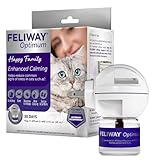
- HELPS REDUCE SIGNS OF STRESS USING A PATENTED PHEROMONE: FELIWAY Optimum is an advanced cat pheromone diffuser that helps reduce signs of stress in cats and helps ease tension between cats.*
- HELPS CATS FEEL CALM IN EVERYDAY SITUATIONS: FELIWAY Optimum is a cat calming diffuser that helps reduce stress‑related behaviors like urine spraying, scratching, hiding, and fearful reactions to change. Cat parents reported noticeable reductions in these behaviors, including a 77% reduction in urine spraying.
- SUPPORTS HARMONY IN MULTI‑CAT HOMES: Helps promote calmer interactions between cats. 72% of cat parents noticed reduced tension between their cats
- SAFE** AND NON-SEDATING: FELIWAY Optimum is not a sedative. It’s safe for use around cats, kittens, people and other pets.
- CONTINUOUS CALMING SUPPORT: This plug‑in cat pheromone diffuser provides 24/7 support when used as directed. To get started, plug into an open outlet with the vents pointed upward, allow at least 4 feet of clearance, and follow the label instructions.
Territory and access
A newcomer can alter who uses doorways, beds, windows, litter boxes, feeding areas, and hiding places. A cat that hisses near a doorway or blocks another cat from a resource may be responding to space and access rather than comparing affection. Territorial tension can occur even when the cats are not competing for the owner’s attention.
Insecurity and household stress
Veterinary guidance describes insecurity and stress around household changes, territory, attention, and resources as possible explanations for behavior people call jealousy. Stress can produce avoidance as well as confrontation: hiding, reduced play, changes in vocalization, or reluctance to enter a room are not proof of jealousy, but they signal that the cat may not be coping well.
Health and other causes
A sudden behavior change can have a medical cause, including pain or illness, and a cat may become irritable when touched or approached. Resource conflict, fear, predatory play, redirected arousal, and learned behavior can also produce swatting or chasing. An individual cat’s history and environment matter more than a generic label.
The Tool Desk
Outbyte PC Repair FREEClear out junk files and repair common Windows errorsFree Scan →Outbyte Driver Updater FREEScan for outdated or missing drivers - takes under a minuteDriver Scan →How to assess a “jealous” reaction at home
Instead of trying to decide what emotion the cat “really” feels, record what happens before, during, and after the behavior. This makes a veterinary or behavior consultation more useful and helps you change the relevant conditions.
Rank #3

- HELPS REDUCE COMMON SIGNS OF TENSION BETWEEN CATS: FELIWAY MultiCat, developed by the #1 vet recommended brand, helps reduce common signs of tension between cats such as: conflict, fighting, chasing, and blocking
- ENHANCED CALM AT HOME FOR MULTICAT HOUSEHOLDS: FELIWAY MultiCat plug-in diffuser uses the science of pheromones to send calming messages that mimic a mother cat’s natural pheromones to help reduce tensions & conflicts. 84% of cat owners saw significant improvement in conflict between cats when using FELIWAY MultiCat
- DRUG FREE & SAFE TO USE: FELIWAY diffusers are drug-free, non-sedating, and while cat pheromone analogs may help your cat, they won't affect humans or other pets
- PROVIDES 4 WEEKS OF CALMING SUPPORT: With just one refill, the diffuser offers up to 30 days of continuous calming benefits, helping your cat feel calmer
- COVERS LARGE LIVING SPACES: Each diffuser covers an area up to 700sqft, ensuring widespread calming support throughout your home for cats of all ages. To get started, simply plug your diffuser into an open outlet with 4+ feet of space to diffuse, with the vents pointed upward
- Describe the trigger precisely. Note whether the episode follows petting another animal, a person entering, a change in feeding time, access to a room, handling, or a particular sound. “Jealous” is not specific enough to guide a solution.
- Record the observable response. Write down the sequence: staring, approaching, rubbing, vocalizing, blocking, swatting, chasing, hiding, urinating outside the litter box, or refusing food. Include duration and intensity.
- Check whether the behavior is new or escalating. A long-standing mild interruption differs from a sudden attack or a rapid decline in eating and social tolerance. Timing can point to a household change or a health problem.
- Map access to resources. Identify where each cat eats, drinks, sleeps, rests, hides, scratches, and uses the litter box. Look for narrow passageways or single locations that force cats to pass close to one another.
- Look for welfare effects. Reduced appetite, persistent hiding, injuries, repeated conflict, disrupted sleep, or inability to reach food, water, or litter facilities means the situation needs attention regardless of which emotion is involved.
- Use video only when it is safe. A short recording from a distance can show body language and triggers to a professional. Do not provoke a confrontation or restrain a frightened cat to obtain footage.
Practical ways to reduce conflict without assuming a jealousy cure
No product or household technique has been established as a treatment for feline jealousy. The following steps address common environmental sources of stress and competition; they are management measures, not proof that a cat is jealous.
Keep the routine predictable
Feed, play with, and settle the cat at broadly consistent times when possible. If a new schedule is unavoidable, shift it gradually and pair changes with calm, familiar activities. Predictability can reduce uncertainty without requiring you to interpret the cat’s feeling.
Protect access to essential resources
Place food, water, resting spots, scratching areas, and litter facilities so a cat can use them without being cornered by another animal. Separate feeding areas when cats guard bowls or stare at one another. Provide hiding and elevated resting options with more than one route in and out. These arrangements help whether the underlying issue is stress, territorial conflict, or competition.
Free tools Windows power users keep installed
One-click scans. No signup required.
Introduce changes in manageable stages
For a new cat or other major household change, avoid forcing immediate close contact. Give the resident cat a secure area, allow investigation of scents and sounds at a distance, and increase access only while both animals remain calm. If either cat repeatedly escalates, return to an easier stage and seek individualized guidance rather than allowing fights to “sort it out.”
Rank #4

- HELPS REDUCE CAT STRESS: FELIWAY Classic is a cat calming diffuser that helps individual cats feel calm and reduce stress behaviors like scratching, urine spraying, and hiding
- CREATES A CALMING HOME ENVIRONMENT: FELIWAY Classic uses calming pheromone messages that cats naturally understand to help them feel comfortable and safe during everyday changes in routine or environment. 9 out of 10 cat parents noticed reduced urine spraying and 8 out of 10 saw reduced scratching
- SAFE* AND NON-SEDATING: FELIWAY Classic is not a sedative. It’s safe for use around cats, kittens, people and other pets.
- CONTINUOUS CALMING SUPPORT FOR SHARED SPACES: Plug‑in cat pheromone diffuser provides 24/7 calming support. To get started, plug into an open outlet with vents pointed upward and allow 4+ ft of clearance, and follow the label instructions.
- #1 VET RECOMMENDED BRAND**: FELIWAY is the #1 vet recommended brand, and is backed by 30 years of feline stress expertise
Give attention without rewarding dangerous behavior
Notice and reinforce calm approaches, quiet waiting, and relaxed body language. If a cat is swatting or biting, do not punish, yell, or physically push it away; those responses can increase fear and arousal. End the interaction safely, create distance, and offer attention later when the cat is settled.
Do not use a purchase as a diagnosis
Interactive toys, feeding stations, calming products, and behavior books may be useful in a broader enrichment or management plan, but the available evidence does not establish any of them as a solution for jealousy. A toy that distracts a cat from a tense moment does not demonstrate what caused the reaction or guarantee that the conflict is resolved.
When to involve a veterinarian or behavior professional
Arrange an individual assessment when behavior is sudden, severe, worsening, or associated with appetite changes, elimination problems, injuries, persistent hiding, or inability to rest and access resources. A veterinarian can look for medical contributors and advise whether referral to a qualified animal behavior professional is appropriate. Professional help is especially important when cats are fighting, because repeated confrontations can create lasting fear and injury risk.
Bring a timeline, household-change history, resource map, and safely obtained video if available. Be explicit about what each cat does and when; avoid presenting “jealousy” as an established diagnosis. The goal is to identify triggers, protect welfare, and choose a plan suited to the individual animals.
What “jealous” behavior may mean in common situations
| What you observe | Context to check | Interpretation to avoid |
|---|---|---|
| Cat pushes between you and another pet | Where attention was directed, whether the cat can access you, and whether another resource is nearby | Assuming it is trying to punish the other pet or reclaim “ownership” of you |
| Vocalizing when a newcomer receives attention | Routine changes, duration of separation, and whether the cat can retreat safely | Treating the sound alone as proof of jealousy |
| Swatting or chasing a housemate | Blocked pathways, food and litter access, staring, fear, and redirected arousal | Assuming the cats are competing only for affection |
| Hiding after a household change | Noise, unfamiliar smells, loss of safe areas, appetite, and elimination | Calling withdrawal a quiet form of jealousy without checking health or stress |
Bottom line on whether cats feel jealousy
Cats can show reactions that look jealous, and the 2020 toy-cat experiment found a stronger response when an owner had petted the potential rival. That is the limit of what the study establishes. Because the experiment lacked other jealousy-indicative behaviors and did not measure a private emotional state, science has not proved that cats feel jealousy as humans describe it. Treat the label as a question about context, stress, territory, attention, and resources—not as a diagnosis—and seek veterinary or qualified behavior help when a cat is not adjusting well.
Quick Recap
Product prices and availability are accurate as of the date/time indicated and are subject to change. Any price and availability information displayed on Amazon at the time of purchase will apply.





Leave a Reply