
Usually, no. A cat that meows, acts restless, or seems different after you leave is not necessarily angry or trying to punish you. Changes in routine, boredom, frustration, feeding expectations, restricted outdoor access, or a health problem can all alter behavior. True separation anxiety—intense distress tied specifically to an attached person leaving—is considered very uncommon in cats. The useful question is not whether your cat is “mad,” but what happens, when it starts, how intense it is, and whether it settles.
What “mad” means in a cat context
People naturally describe a cat as offended when it avoids them, vocalizes, knocks things over, or behaves differently after an absence. Those observations are real, but “mad” implies a human-style grudge or deliberate punishment that the available guidance does not establish. A behavior change after you leave is better treated as information about the cat’s routine, environment, expectations, or wellbeing.
As an Amazon Associate I earn from qualifying purchases.
Cats Protection defines true separation anxiety as “intense distress associated with an attached person leaving.” Its guidance also says cats are not generally known to show this type of separation anxiety and considers it very uncommon. “Very uncommon” is qualitative guidance, not a measured percentage, so it should not be converted into a prevalence statistic.
Many cats sleep while their owners are away and become more active when they return. Brief meowing followed by settling is not, by itself, evidence of a serious problem. A meaningful concern is a marked change from the individual cat’s normal behavior, especially when the reaction begins around departure and remains intense.
#1 Best Overall

- Complete Calming Solution: This cat calming diffuser kit includes diffusers and refills (48mL per bottle). Each refill delivers a 30-day supply of continuous support to help ease your cat’s anxiety. Ideal for addressing stress triggered by vet visits, traffic noise, fireworks, thunderstorms, or loneliness, this cat pheromone calming diffuser creates a safe and serene environment for felines of all ages and breeds
- Effective Stress & Behavior Support: Our cat pheromone diffuser works to reduce common signs of feline stress such as excessive scratching, urine spraying, hiding, and restlessness. By mimicking natural feline pheromones, this cat calming diffuser provides gentle, drug-free relief, making it a reliable choice for multi-cat households or cats experiencing tension during home changes or new pet introductions
- Long-Lasting & Wide Coverage: Each refill of the cat calming diffuser releases calming pheromones for up to 30 days, with coverage for areas up to 700 square feet. The diffuser features an automatic operation with a simple press of a button, and proper placement (vents facing up) ensures optimal performance and leak prevention, maximizing the effectiveness of your cat diffuser
- Safe & Non-Toxic Formula: The cat pheromone calming diffuser uses an odorless, non-toxic, and chemical-free formula that is safe for both humans and pets. Unlike harsh treatments, this cat calming diffuser does not cause drowsiness and poses no risk to your cat’s health, making it a trusted choice for daily use in any living space
- Easy to Use & Maintain: Setting up the cat calming diffuser is effortless—simply plug it into a standard outlet, keep the bottle upright, and press the button to activate. The heated diffuser and refill system operates quietly and continuously, requiring minimal maintenance; just replace the refill every 30 days to maintain consistent calming support for your feline friend
Why a cat may act differently after you leave
Routine disruption
Cats often experience the household through repeated patterns: when people rise, feed them, open a door, play, or return. A new work schedule, travel pattern, or school timetable can remove an expected interaction or shift a meal. The resulting behavior may look personal even when the trigger is simply an altered routine.
Boredom and frustration
Time alone can mean fewer opportunities for play, exploration, or interaction. A cat may be more energetic when you return because it has been inactive, or it may vocalize when stimulation has been limited. Frustration can also arise when a desired activity—such as following a person or going outdoors—is blocked.
Food and access expectations
Vocalizing may follow a delayed meal. It can also occur when outdoor access is restricted or a door is closed. In these cases, the sound is not proof of anger; it may be an attempt to obtain food, access, or contact that the cat has learned to expect.
The Tool Desk
Outbyte PC Repair FREEClear out junk files and repair common Windows errorsFree Scan →Outbyte Driver Updater FREEScan for outdated or missing drivers - takes under a minuteDriver Scan →Health or another environmental change
A sudden or significant behavior change can have a medical contribution. Changes in eating, drinking, toileting, sleep, energy, or vocalization should therefore be considered alongside the departure pattern rather than attributed automatically to emotion.
Use timing and intensity to interpret the pattern
The same behavior can mean different things depending on when it starts and whether the cat settles. Cats Protection’s guidance recommends paying attention to these distinctions. The comparison below is a practical way to organize observations; it is not a diagnostic test.
| Observation | What it may suggest | What to check next |
|---|---|---|
| Behavior begins before departure or immediately after the person leaves | A departure-linked reaction, including possible separation-related distress | Whether the intensity remains high and whether the cat can settle |
| Behavior becomes noticeable only after many hours alone | Boredom, frustration, a delayed meal, or another unmet need during the absence | Feeding timing, stimulation, outdoor access, and the length of the absence |
| Short meowing followed by calm behavior | An ordinary greeting or request is possible | Whether this is a brief, familiar pattern rather than a new escalation |
| Intense vocalization or distress that persists for 15 minutes or more after departure | A level of concern for which Cats Protection advises seeking qualified behaviorist advice | Record the episode and arrange professional guidance |
| A sudden, broad change in behavior, appetite, toileting, or sleep | A possible health or welfare problem, not simply “being mad” | Contact a veterinarian |
The 15-minute figure is Cats Protection’s practical referral guidance for intense vocalization or distress after departure. It is not a validated diagnostic threshold or a published study statistic.
Rank #2
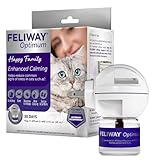
- HELPS REDUCE SIGNS OF STRESS USING A PATENTED PHEROMONE: FELIWAY Optimum is an advanced cat pheromone diffuser that helps reduce signs of stress in cats and helps ease tension between cats.*
- HELPS CATS FEEL CALM IN EVERYDAY SITUATIONS: FELIWAY Optimum is a cat calming diffuser that helps reduce stress‑related behaviors like urine spraying, scratching, hiding, and fearful reactions to change. Cat parents reported noticeable reductions in these behaviors, including a 77% reduction in urine spraying.
- SUPPORTS HARMONY IN MULTI‑CAT HOMES: Helps promote calmer interactions between cats. 72% of cat parents noticed reduced tension between their cats
- SAFE** AND NON-SEDATING: FELIWAY Optimum is not a sedative. It’s safe for use around cats, kittens, people and other pets.
- CONTINUOUS CALMING SUPPORT: This plug‑in cat pheromone diffuser provides 24/7 support when used as directed. To get started, plug into an open outlet with the vents pointed upward, allow at least 4 feet of clearance, and follow the label instructions.
Signs owners may notice—and what they do not prove
Possible changes around absences include:
- Eating or drinking differently.
- Changes in toileting or sleep.
- More vocalization than usual.
- Unusually high energy or frantic behavior when the owner returns.
- Other departures from the cat’s established normal behavior.
None of these signs alone proves separation anxiety. A cat that races to greet you may simply be more active after sleeping. A cat that meows at the door may be asking to follow, requesting outdoor access, or responding to a closed door. The interpretation depends on the complete pattern: the cat’s baseline, the timing, the intensity, the recent schedule, and whether the behavior resolves.
Do these 3 things before closing this tab:
1Scan for outdated or missing drivers - takes under a minute2Clear out junk files and repair common Windows errors3Fix the driver behind crashes, sound loss and screen glitchesKeep the focus on observable details rather than labels. “Meowed for two minutes, then ate and slept” is more useful than “was angry.” “Paced and vocalized intensely from the moment the door closed and did not settle” gives a veterinarian or behaviorist information they can use.
Separation anxiety is different from ordinary alone-time behavior
In Cats Protection’s wording, true separation anxiety involves intense distress associated with an attached person leaving. The departure itself is central: signs begin around that event, rather than appearing only because a long period without stimulation has passed.
The organization says cats are not generally known to show this form of anxiety and describes it as very uncommon. That does not mean a distressed individual cat should be dismissed. It means owners should avoid diagnosing the condition from a single meow, a messy room, or energetic behavior at reunion.
A useful distinction is whether the cat reacts specifically to one attached person leaving, whether the reaction is immediate, and whether it stays intense. Also ask whether a recent routine change, feeding delay, loss of outdoor access, reduced stimulation, or health issue offers a more direct explanation. A qualified cat behaviorist can assess the pattern when departure-linked distress is severe.
What’s actually slowing this PC down?
Pick the symptom - the matching free tool is one click away.
How to make time alone easier
1. Prepare before a schedule change
If your hours will change, move toward the new pattern gradually where possible. A sudden shift can remove familiar feeding, play, or interaction cues. Small changes give you a chance to see whether the cat remains comfortable and to identify which part of the routine matters most.
Rank #3

- HELPS REDUCE COMMON SIGNS OF TENSION BETWEEN CATS: FELIWAY MultiCat, developed by the #1 vet recommended brand, helps reduce common signs of tension between cats such as: conflict, fighting, chasing, and blocking
- ENHANCED CALM AT HOME FOR MULTICAT HOUSEHOLDS: FELIWAY MultiCat plug-in diffuser uses the science of pheromones to send calming messages that mimic a mother cat’s natural pheromones to help reduce tensions & conflicts. 84% of cat owners saw significant improvement in conflict between cats when using FELIWAY MultiCat
- DRUG FREE & SAFE TO USE: FELIWAY diffusers are drug-free, non-sedating, and while cat pheromone analogs may help your cat, they won't affect humans or other pets
- PROVIDES 4 WEEKS OF CALMING SUPPORT: With just one refill, the diffuser offers up to 30 days of continuous calming benefits, helping your cat feel calmer
- COVERS LARGE LIVING SPACES: Each diffuser covers an area up to 700sqft, ensuring widespread calming support throughout your home for cats of all ages. To get started, simply plug your diffuser into an open outlet with 4+ feet of space to diffuse, with the vents pointed upward
2. Keep regular opportunities for interaction
Maintain predictable opportunities for play and social interaction rather than concentrating every activity at the moment you return. The goal is not constant attention; it is a routine that includes dependable engagement before and after absences.
3. Provide safe occupation
Offer safe things the cat can do while alone. A puzzle feeder or food-dispensing enrichment toy is one optional form of occupation when it is suitable for the individual cat and used safely. It is enrichment, not a guaranteed treatment for anxiety, and purchasing one is not required.
4. Check practical needs
Consider whether the absence changes meal timing, access to the outdoors, or access to a preferred room. Vocalizing can reflect these concrete frustrations. Adjusting a predictable need may help more than treating the behavior as a social insult.
5. Arrange care for long absences
For a long time away, Cats Protection says a trusted caregiver and stimulation can improve a cat’s quality of life. The organization does not set one universal maximum number of hours that every cat can be left alone. The appropriate plan depends on the individual cat’s needs, health, environment, and the length and nature of the absence.
Independent reader supportYour contribution helps us test, update, and keep practical guides available for everyone.When a veterinarian or behaviorist should be involved
Start with a veterinarian for sudden or significant change
Contact a veterinarian when behavior changes noticeably or is accompanied by altered eating, drinking, toileting, sleep, or energy. Medical problems can contribute to behavioral changes, and a health assessment should come before assuming the issue is emotional.
Seek qualified behavior advice for intense departure-linked distress
If intense vocalization or other distress starts with departure and persists, seek advice from a suitably qualified cat behaviorist. Cats Protection specifically advises behaviorist input when intense vocalization or distress continues for 15 minutes or more after departure. Bring a clear account of what happens before leaving, immediately afterward, and later in the absence.
Rank #4

- HELPS REDUCE CAT STRESS: FELIWAY Classic is a cat calming diffuser that helps individual cats feel calm and reduce stress behaviors like scratching, urine spraying, and hiding
- CREATES A CALMING HOME ENVIRONMENT: FELIWAY Classic uses calming pheromone messages that cats naturally understand to help them feel comfortable and safe during everyday changes in routine or environment. 9 out of 10 cat parents noticed reduced urine spraying and 8 out of 10 saw reduced scratching
- SAFE* AND NON-SEDATING: FELIWAY Classic is not a sedative. It’s safe for use around cats, kittens, people and other pets.
- CONTINUOUS CALMING SUPPORT FOR SHARED SPACES: Plug‑in cat pheromone diffuser provides 24/7 calming support. To get started, plug into an open outlet with vents pointed upward and allow 4+ ft of clearance, and follow the label instructions.
- #1 VET RECOMMENDED BRAND**: FELIWAY is the #1 vet recommended brand, and is backed by 30 years of feline stress expertise
Do not punish the reaction
Punishment does not explain the underlying need and can add stress to the return home. Instead, record the behavior, check routine and welfare factors, and obtain professional help when the pattern is severe or new.
Crashes, No Sound, or Screen Glitches?
Random freezes, missing sound and display glitches usually trace back to one bad driver. Find and replace yours safely.Free scan · under a minuteWindows Errors? Fix Them Before They Spread
Repair common Windows errors and clear accumulated junk for a smoother, more stable PC - no reinstall needed.Free scan · no reinstallA simple observation record
For several departures, write down:
- The date, departure time, expected return time, and which person left.
- What happened in the 15 minutes before leaving: feeding, play, outdoor access, or a closed door.
- When the behavior began: before departure, immediately afterward, or much later.
- What you observed: vocalization, changes in eating or drinking, toileting, sleep, energy, or reunion behavior.
- How long the intense part lasted and what appeared to help the cat settle.
- Any recent schedule, household, access, or health change.
This record separates a brief, repeatable greeting from a persistent departure-linked episode and gives professionals concrete information instead of an interpretation such as “my cat was mad.”
Common assumptions to avoid
“My cat ignored me, so it is holding a grudge.”
Withdrawal after an absence is a behavior, not proof of a grudge. Look for changes from the cat’s normal pattern and for practical triggers such as routine, food, access, stimulation, or health.
“Any meowing when I leave is separation anxiety.”
Brief meowing followed by settling is not enough to establish a serious problem. The concern rises when distress is intense, departure-linked, persistent, and unlike the cat’s usual behavior.
“A puzzle feeder will cure anxiety.”
Enrichment can provide safe occupation, but the guidance does not present a puzzle feeder as a treatment or a requirement. Severe distress needs professional assessment.
Quick wins for a faster PC:
Clear out junk files and repair common Windows errorsFree Scan →Fix the driver behind crashes, sound loss and screen glitchesFind Drivers →Repair Windows errors before they cause bigger problemsFix Now →“There is a safe number of hours for every cat.”
No universal maximum is given. Planning for an absence should account for the individual cat and should include a trusted caregiver and stimulation when the time away is long.
Bottom line for owners
A cat’s changed behavior after you leave usually calls for observation, not a conclusion that the cat is angry. Track when the reaction starts, how long it lasts, what practical needs changed, and whether the pattern is new. Keep routines as predictable as possible, provide play and safe enrichment, and arrange trusted care for long absences. Ask a veterinarian about sudden or significant changes; seek a qualified behaviorist when intense distress is specifically tied to departure and persists.
For the underlying guidance, see Cats Protection, “Can cats get separation anxiety?” (published September 5, 2026; accessed October 13, 2026).
Quick Recap
Product prices and availability are accurate as of the date/time indicated and are subject to change. Any price and availability information displayed on Amazon at the time of purchase will apply.





Leave a Reply