
Some links on this page are affiliate links: if you buy through them we may earn a commission, at no extra cost to you.
Short answer: cats are not proven medical healers. No good evidence shows that a cat can cure an infection, reverse a disease, or replace prescribed treatment. Living with or interacting with a cat may help some people feel calmer, less lonely, or more supported, but those are wellbeing effects—not a cat-delivered medical therapy.
The evidence is also easy to overstate. Studies of animal-assisted programs often involve trained dogs rather than cats, while studies of cat ownership usually show associations rather than cause and effect. The useful question is therefore not whether cats possess a general healing power, but which outcomes have been studied, how strong those findings are, and whether the benefits outweigh the risks for a particular person.
As an Amazon Associate I earn from qualifying purchases.
Quick wins for a faster PC:
Scan for outdated or missing drivers - takes under a minuteDriver Scan →Clear out junk files and repair common Windows errorsFree Scan →Fix the driver behind crashes, sound loss and screen glitchesFind Drivers →What “healing powers” means in scientific terms
“Healing powers” is not a clinical or research category. Investigators measure specific outcomes, such as stress hormones, blood pressure, anxiety scores, pain, mood, loneliness, hospital recovery, disease incidence, or mortality. A change in one of those measures does not automatically mean an animal has treated an illness.
| Evidence type | What it can show | What it cannot show by itself |
|---|---|---|
| Structured animal-assisted intervention | Whether a planned visit or activity is associated with short-term changes in symptoms or physiology | That ordinary cat ownership produces the same effect, or that the animal treats the underlying disease |
| Everyday cat ownership | Whether owners and non-owners differ in health outcomes | That the cat caused the difference; owners may differ in income, housing, health, lifestyle, or social support |
| Physiological or self-reported outcomes | Possible changes in stress, mood, blood pressure, or perceived pain | Prevention of disease, longer life, or replacement of medical care |
| Randomized clinical treatment studies | Causal effects under the tested conditions | That results automatically apply to every cat, owner, setting, or diagnosis |
This distinction prevents a comforting interaction from being marketed as a cure. A cat can be part of a person’s support system without being a substitute for a clinician, medication, surgery, psychotherapy, or emergency care.
Popular on Amazon

- This plush is approx. 3" x 8" x 4" in size
- Made from deluxe materials for a cloud-like softness!
- This light and fluffy Cat plush makes for a great cuddling partner
- Mini Flopsies are designed to lay resting on its belly for easy, fun play
- To ensure stability and quality, this plush contains bean pellets suitable for all ages
What hospital animal-assisted research has found
A 2016 systematic review in the European Journal of Integrative Medicine examined animal-assisted interventions for hospitalized patients. The authors identified 432 records and included 36 studies after screening. The review reported possible reductions in stress, pain, and anxiety, but it also emphasized that the studies differed substantially in patient populations, medical problems, intervention length, animals, and outcome measures. That heterogeneity makes a single pooled “healing effect” difficult to interpret. Read the systematic review.
Most of the included interventions used dogs. Other animals appeared as well, but the findings cannot simply be relabeled as cat findings. A trained animal visiting a ward under a written protocol is also a different exposure from living with a pet at home. The handler, visit duration, patient selection, hospital environment, and expectations may all influence the result.
Do these 3 things before closing this tab:
1Repair Windows errors before they cause bigger problems2Fix the driver behind crashes, sound loss and screen glitches3Clear out junk files and repair common Windows errorsWhy the distinction matters
- A dog-assisted visit that eases anxiety before a procedure does not establish that a household cat will produce the same change.
- A short-term reduction in a stress score does not demonstrate that an animal has treated the medical cause of the stress.
- Positive findings in a small or varied collection of studies may not apply to every age group, diagnosis, or hospital.
The review also recorded adverse events and practical hazards, including allergies, infections (including zoonotic and hospital-acquired infections), and animal-related accidents. Any program has to manage those risks alongside potential comfort.
What the NIH says about human–animal interaction
The National Institutes of Health describes human–animal interaction research as relatively new and mixed. Its February 2018 NIH News in Health overview discusses studies reporting possible changes in cortisol, blood pressure, loneliness, social support, and mood, while stressing that results vary and that no single type of pet fits every person or goal. The article quotes Layla Esposito, who oversees NIH’s Human-Animal Interaction Research Program: “There’s not one answer about how a pet can help somebody with a specific condition,” followed by, “So there’s no one type fits all.” Read the NIH overview.
Also popular on Amazon
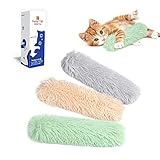
- Cozy Companion: Our catnip kicker toys are all made of soft plush material and baby-level cotton, soft and comfortable enough for your feline friends to snuggle and chew.
- Organic Catnip Filled: Stuffed with 100% pure, potent and organic catnip. Catnip, the favorite natural herb of most cats, will maximize the chance to make cats excited and make interactive playtime irresistible.
- Boredom Relief: Cats have a natural instinct to pat and pounce. Kitten kicker toy can help cats chase and chew training and stimulate their hunting instincts, help cats grow up better and healthier, and strengthen the interaction between you and cats.
- Perfect Gift: In 3 different colors, green, yellow, and violet, which are bright in color, attracting the attention of your feline friends, perfect for kittens to hold or scratch. The crinkly paper inside the toys makes playtime even more exciting when cats bite and wrestle with the cat toy
- We stand behind each product we sell. If any issue, please contact our customer service and we'll do anything possible to fix it.
The examples in that overview include therapy dogs, guinea pigs, and fish. They provide context about possible human–animal pathways, not proof of cat-specific effects. NIH also quotes child-development expert James Griffin describing the research goal as understanding “the subjective quality of the relationship with the animal” and how that bond may translate into health benefits. That wording is important: the relationship, a person’s expectations, the animal’s temperament, and the setting may matter as much as the species.
For background only, the same 2018 issue estimated that 68% of U.S. households had a pet. That figure is dated and should not be treated as a current prevalence estimate.
What cat-specific evidence says about heart and lifespan outcomes
The strongest prominently cited cat-specific result is not a clinical trial. A 2020 systematic review and meta-analysis by El-Qushayri and colleagues screened 2,818 reports and included 26 studies on pet ownership and cardiovascular outcomes. Among cat owners, the pooled adjusted estimate for cardiovascular mortality was a hazard ratio of 0.79 (95% confidence interval 0.63–0.99). In the same analysis, the adjusted estimate for overall mortality was 1.04 (95% confidence interval 0.90–1.21). See the PubMed record.
| Outcome | Pooled adjusted estimate among cat owners | How to interpret it |
|---|---|---|
| Cardiovascular mortality | HR 0.79 (95% CI 0.63–0.99) | An association with lower cardiovascular mortality in the included observational studies |
| Overall mortality | HR 1.04 (95% CI 0.90–1.21) | No demonstrated reduction in death from all causes |
A hazard ratio from observational studies does not prove that owning a cat prevented a cardiovascular death. People who keep cats may differ from non-owners in ways that are difficult to measure or fully adjust for. The studies may also vary in how they define ownership, follow participants, and account for prior disease. The result is a reason for further study, not a prescription to acquire a cat for cardiovascular prevention.
Also popular on Amazon

- PRODUCT: This high-quality plush toy is crafted with soft polyester and acrylic fabrics, filled with polypropylene for a delightfully snuggly texture and a lightweight foam head for a lifelike, structured shape.
- DETAIL: Realistically detailed stripes line the tiger’s fur. The face features airbrushed details around the ears, eyes, and muzzle for a realistic and kid-friendly appearance.
- MEET YOUR NEEDS: If you want to have a cat, but you think it’s troubled to feed or clean it. Now you can choose one, you needn’t do anything for it. It will stay with you when you are working or alone, you can stroke its smooth hair, and this make you calm down.
- Safe for Kids 3+: Tested for safety standards, this plush toy is phthalate-, lead-, BPA-, and heavy metal-free, making it a worry-free playtime companion for young children.
- [CUSTOMER SERVICE] -- With customer satisfaction as our first priority, we offer a satisfaction service for all of our merchandise. we strive to provide a shopping experience by meeting your expectations. If you have any problems, please contact us in time. We will give you replies as soon as possible.
How a cat might support wellbeing without “healing” disease
Several ordinary features of companionship could plausibly influence wellbeing. Feeding and play can add structure to a day. A responsive animal may provide social contact for someone who feels isolated. Quiet interaction can be comforting during stress, and caring for a pet can create a sense of responsibility and routine. These are reasonable pathways to investigate, but they are not guarantees and are not unique to cats.
NIH’s summary of possible changes in cortisol, blood pressure, loneliness, social support, and mood should be read as a description of mixed findings across human–animal research. It does not establish that every cat lowers its owner’s blood pressure or that a cat will improve a particular person’s anxiety. Temperament, the owner’s attachment, housing conditions, finances, allergies, and the demands of care all shape the experience.
Situations in which companionship may be useful
- Stress and mood: A predictable, welcome interaction may feel calming, but persistent anxiety or depression still warrants assessment and evidence-based treatment.
- Loneliness: A cat can provide company and a reason to maintain routines; it does not replace human relationships or professional support when isolation is severe.
- Daily activity: Play and care may encourage movement and structure, although a cat is not an exercise program.
- Care settings: Any animal-assisted visit should follow the facility’s infection-control, consent, allergy, and handling rules rather than relying on assumptions about a species.
What cats cannot be relied on to do
There is no established evidence that cats cure cancer, eliminate infections, heal broken bones, dissolve blood clots, replace vaccines, or treat high blood pressure on their own. Do not stop medication, delay an appointment, or substitute a cat for psychotherapy because an interaction feels therapeutic. If symptoms are new, severe, worsening, or accompanied by breathing difficulty, chest pain, confusion, weakness, or fainting, seek medical care promptly.
Even when an owner reports feeling better, the improvement may reflect relaxation, attention, routine, placebo-like expectations, natural symptom fluctuation, or concurrent treatment. Those experiences can be meaningful while still falling short of proof that the cat changed the disease process.
Also popular on Amazon

- 3 Pack Of Ethical Pets Skinneeez Forest Creatures For Cats
- Stuffingless Cat Toy.
- Catnip filled.
- Creatures may vary.
Risks, allergies, and people who need extra precautions
Animal contact is not risk-free. The hospital-intervention review identified allergy, infection, and accident risks. Scratches, bites, falls around animals, and contamination of clinical spaces are practical concerns. Cats can also carry organisms that may cause illness in people, particularly when hygiene or immune defenses are compromised.
NIH advises handwashing after animal contact and extra care for children, pregnant people, and people with weakened immune systems. During pregnancy, avoid cleaning the litter box when possible because infected cat feces can transmit toxoplasmosis; if no one else can do it, use appropriate protective measures and follow medical advice. NIH’s guidance is summarized here.
The Tool Desk
Outbyte Driver Updater FREEScan for outdated or missing drivers - takes under a minuteDriver Scan →Outbyte PC Repair FREERepair Windows errors before they cause bigger problemsFix Now →Cat allergy
Cat exposure can worsen symptoms in people with cat allergy, including sneezing, itchy or watery eyes, wheezing, cough, and asthma flares. A 2021 review of human allergy to cats describes reducing environmental exposure as an important part of management and recommends coordination with healthcare professionals. Exposure should never be presented as a therapy for an allergic person. Read the allergy review.
- Ask a clinician about persistent nasal, eye, skin, or breathing symptoms rather than assuming they are a normal adjustment to a pet.
- People with asthma should discuss cat exposure if symptoms change after visits or adoption.
- Children, pregnant people, older adults with frailty, and immunocompromised individuals may need individualized hygiene and contact advice.
How to include a cat safely in a wellbeing plan
- Define the goal. Decide whether you want companionship, a daily routine, social contact, or a structured animal-assisted visit. “Healing” is too broad to measure.
- Check health constraints first. Review allergies, asthma, pregnancy, immune status, fall risk, and any clinician’s advice before increasing exposure or adopting.
- Match the cat and setting. Consider temperament, energy level, handling tolerance, housing rules, and who will provide care if you are ill or away.
- Use hygiene and safe handling. Wash hands after contact, clean supplies appropriately, supervise children, and avoid rough play that encourages scratches or bites.
- Keep clinical care in place. Continue prescribed treatment and track symptoms separately from time spent with the cat. A diary can show whether a change is consistent or only occasional.
- Reassess the burden. Food, veterinary care, litter, housing, and emergency planning are ongoing responsibilities. If care becomes unsafe or unaffordable, seek help from a veterinarian, social service, or trusted support person.
How to judge a claim that a cat is “healing” you
- Ask what outcome was measured: stress, pain, blood pressure, a diagnosis, or mortality.
- Check whether the study involved cats specifically or another animal, especially dogs.
- Separate a structured intervention from ordinary ownership.
- Look for randomization and a comparison group before treating an association as causal.
- Check the population, duration, sample size, and confidence interval.
- Balance possible benefits against allergies, infection exposure, injury, and caregiving demands.
The evidence supports a modest, conditional conclusion. A cat may be a valuable source of comfort and routine for some people, and human–animal interaction deserves careful study. But “healing powers” overstates what current research demonstrates. Keep the companionship if it is safe and beneficial, while using qualified medical care for disease prevention, diagnosis, and treatment.





Leave a Reply