
The Tool Desk
Outbyte Driver Updater FREEFix the driver behind crashes, sound loss and screen glitchesFind Drivers →Outbyte PC Repair FREEClear out junk files and repair common Windows errorsFree Scan →Yes—some cats genuinely enjoy fetch, and many interested cats can learn it. The important distinction is between chasing a toy and completing the whole game: a cat may sprint after a ball, pick it up and then carry it somewhere else. Returning the toy is usually the part that needs to be shaped with rewards. Fetch is an individual preference, not a behavior every cat will perform.
Veterinary behavior guidance describes fetch as a game worth trying, while breed profiles often mention Somali and LaPerm cats as enthusiastic players. Those descriptions are tendencies, not guarantees. A mixed-breed cat, senior cat or shy cat may become an excellent retriever, while an individual from a so-called “fetching” breed may ignore the game.
As an Amazon Associate I earn from qualifying purchases.
What “playing fetch” means for a cat
For a cat, fetch is usually a sequence of separate behaviors:
- Notice and pursue a moving toy.
- Grab or pick up the toy.
- Turn back toward the person.
- Carry the toy closer.
- Release it so the game can continue.
These steps do not always appear together. Chasing is part of the normal stalk-and-pounce play pattern, but cats are not automatically motivated to bring a captured “prey” item back to a person. VCA Animal Hospitals notes that some cats are natural retrievers, while others chase without feeling any obligation to return the toy. Training therefore works best when you reward each small step instead of expecting a complete retrieve immediately.
#1 Best Overall
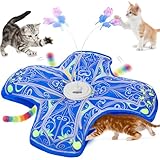
- Top-Tier Dual Interactive Fun: Qraxond's new indoor cat toy has dual motors, controlling random rotation of butterfly and plush tail swing rod accessories, bringing fun, exciting play for kittens and adult cats. Hide-and-Seek: The animal tail-shaped plush hides under the cover cloth, rotating irregularly to appear/disappear, creating a hide-and-seek game. It mimics real prey, bringing unpredictable chases to stimulate the cat's brain and senses. Irregular Rotating Butterfly: The top has an auto-rotating butterfly that rotates, pauses or swings to simulate real flight, keeping the cat engaged. Various interactions ensure the cat gets enough exercise to avoid obesity
- 3 Adjustable Speed Modes: Customize the excitement with separate buttons for the butterfly and tail. Choose from 3 settings: Steady (Blue Light), Active (Purple Light), and Random (Yellow Light). Suitable for high-energy cats to burn off steam or for calm cats to enjoy gentle play. Keep your feline entertained and prevent boredom, especially when they are home alone
- Touch-Sensitive Activation: Your Cat's in Control! With smart touch-sensor technology, just tap the device to fire up the fun mode, it will kick off a 5-minute automatic play session instantly. Right after the play session ends, it switches directly to touch-sensitive standby mode, where the purple indicator light flashes every 20 seconds. Simply tap again to reactivate it for another 5-minute cycle. This smart loop ensures your cat gets sufficient exercise and prevents overstimulation
- Large Rechargeable Battery: Enjoy long-lasting play with the built-in 2500mAh battery. It charges fully in just 2.5 hours via the included USB cable (use a 5V adapter only). The efficient auto on/off cycle extends battery life, making it convenient for busy pet owners while ensuring your cat gets healthy, moderate exercise
- Realistic Bird Chirping: Elevate the hunt with lifelike sound. The built-in speaker emits authentic bird chirps to attract your cat's attention and stimulate their prey drive. Combined with the random motions of the butterfly and tail, it creates an irresistible and engaging play experience that keeps your cat happily chasing even when they're by themselves
A cat that bats a toy back toward you, looks back after picking it up or carries toys around the house may already be showing useful building blocks. A cat that walks away after the chase is not being stubborn; the return simply has not become valuable to that individual cat.
Which cats and breeds are most likely to learn fetch?
Interest, play style and reinforcement history matter more than a breed label. Breed descriptions can suggest where to start, but they cannot predict an individual cat’s behavior or establish that one breed is more successful than another.
| Cat or breed | What the available descriptions say | How to use that information |
|---|---|---|
| Somali | VCA describes Somali cats as high-energy and playful, and says they enjoy fetch and chase games. | A Somali may be an appealing candidate for an active fetch game, but train the individual cat in front of you. |
| LaPerm | VCA’s LaPerm profile lists fetch among the breed’s favorite games. | Offer a short, positive trial; the profile does not guarantee retrieving in every LaPerm. |
| Other pedigree or mixed-breed cats | No reliable comparative success rate is established. Any cat may show individual interest. | Use the cat’s response to a toy as your guide rather than excluding or selecting a cat on breed alone. |
There is no established prevalence figure for fetch-playing cats and no rigorous head-to-head breed study that supports a percentage chance of success. Treat “fetching breed” as a useful behavioral hint, not a promise.
What’s actually slowing this PC down?
Pick the symptom - the matching free tool is one click away.
Prepare the game before you train
Good preparation removes distractions and makes the desired behavior easy to reward.
Rank #2

- A NEW CHOICE FOR INDOOR ENTERTAINMENT: Endless fun for your cat! Designed for indoor environments, this interactive toy ball rolls quickly across the carpet and emits an appealing cat-attracting chittering sound. Not only does it stimulate your cat's hunting instincts, it also allows them to enjoy outdoor chasing indoors while reducing the risk of furniture scratching
- INTELLIGENT INTERACTION AND FUN: This automatic cat toy is your pet's new playmate. It has two modes: ① Normal mode (green light), which runs for five minutes and then automatically shuts off. ② Intelligent mode (blue light), after running for five minutes the exercise ball automatically enters the dormant mode, when your cat touches it again, the exerciser will interact with your cat again. So whether it's a long game or a short interaction, this interactive cat ball meets the needs of both you and your pet, allowing your pet to entertain itself while you're busy
- TWO SPEEDS FREELY SWITCHING: The BABORUI interactive cat toy offers two speeds, fast and slow, which can be freely switched at any time. Even if your cat is cute and short-legged, it can still keep up with the pace of the exercise ball
- TRIPLE FUN, TRIPLE HAPPINESS: This cat toys for indoor cats comes with three fun tails that provide your cat with triple the fun. They can have endless fun chasing and catching the ball, while the sound of the bells on the tails will further stimulate their curiosity and desire to chase
- SAFE MATERIAL, LASTING AND DURABLE: We understand that your pet's safety is of utmost importance to you. The shell of this kitten toys is made of safe silicone material, so you don't need to worry even if your pet chews it. The durable design means it can withstand daily wear and tear, providing long-lasting companionship for you and your pet
- Choose a proven toy. Start with a small, lightweight ball, soft toy mouse or another object your cat already chases or carries. A toy that is too large, heavy or unfamiliar can reduce interest.
- Use a safe, uncluttered area. A hallway or open room gives the cat a short, clear route without forcing a long jump or a collision with furniture.
- Keep the first distance tiny. VCA’s training guidance recommends rolling the toy only a couple of feet at first. A short roll makes a return possible before the cat loses interest.
- Have rewards ready. Small food treats are optional; enthusiastic praise, another roll or access to the toy can also reinforce the behavior. If you use food, account for those calories in the cat’s daily intake.
- Consider a clicker. Cats Protection describes clicker training as a way to mark the exact behavior you want. The clicker is an aid, not a requirement.
- Train when the cat is receptive. End while the cat is still engaged rather than continuing until it walks away.
Inspect toys regularly. Remove loose threads, detachable parts or pieces small enough to swallow, and supervise play with string-like toys. Fetch should be an interactive game, not an opportunity for a cat to chew and ingest a toy.
How to teach fetch step by step
1. Make the toy worth pursuing
Roll the chosen toy a couple of feet, rather than throwing it across the room. Let the cat watch it move. If the cat follows, pounces or touches it, allow that interaction to finish before asking for anything else. At this stage you are identifying a toy and movement pattern that naturally holds the cat’s attention.
2. Reward the pickup
The moment the cat takes the toy in its mouth—or makes a clear attempt to pick it up—mark the behavior with a click if you use one, then praise and offer a reward. Do not wait for a return yet. Several successful repetitions teach the cat that holding the toy, not merely watching it, makes good things happen.
3. Shape a turn back toward you
Once pickup is reliable, call the cat’s name or use a friendly cue while it still has the toy. Reward a glance in your direction, a body turn or one step toward you. VCA specifically recommends reinforcing a smaller approximation, such as looking back after picking up the toy, when the full sequence is too difficult.
Rank #3

- [Trending Interactive Entertainment]: Potaroma's new indoor cat toys provide an engaging, stimulating play experience for kittens and older cats alike. This automated toy features a rotating butterfly on the top, a removable cover, an enticing feather wand hidden under the cover, consisting a hide-and-seek game. This interactive toy is a great birthday gift for enriching your pet's daily life. Even when left at home alone, your cat can play by itself independently like having a party
- [Advanced Electronic Irregular Motion]: Powered by a smart motorized system, this electric cat toys deliver irregular movements to keep your cat entertained. The play experience includes spinning, chasing, and hunting elements that mimic real-life prey, especially the chasing feather that pops out unpredictably, stimulating your kitty's brain and senses
- [Multi Modes for Indoor Fun]: Features a range of captivating movement modes that stimulate cat's natural instincts to chase, pounce, and play. 3 rotating modes of chasing feather; Simultaneous or seperate working of chasing feather and spinning butterlfy; What's more, the cover can be removed to expose the chasing feather completely for more fun. The diverse play options ensure your cat gets the mental and physical stimulation and enough exercise to eliminate boredom
- [Durable]: Built to withstand even the most aggressive play sessions, thanks to its durable design and high-quality materials. The motors inside the toy are designed to move smoothly and resist wear and tear. Whether your cat loves to chew, scratch, or paw at their toys, Potaroma's cat toy can handle it all. Experience the magic of Potaroma's interactive cat toy, making it a must-have for cat owners seeking a durable and entertaining option for their pets
- [Rechargeable & Large Capacity Battery]: Provide hours of fun for your furry friend. With a built-in rechargeable battery that offers a long-lasting charge, your kitten can enjoy uninterrupted self playtime for up to several days. No need for frequent recharging, making it a convenient choice for busy pet owners. Keep your cat entertained and happy with our innovative cat toys, featuring a battery that's as powerful as your cat's curiosity
4. Reward the return
When the cat brings the toy even a short distance, reward immediately. Gradually wait for a little more distance before paying. Increase the throw or roll by small increments only after the current distance is easy. If the cat starts dropping the toy or wandering away, shorten the distance again.
5. Teach the handoff
At first, accept a drop anywhere near you. Then place your open hand under the toy. Reward as soon as the cat releases it into your hand, even if the release is accidental. Your hand becomes the predictable place where the next roll begins.
6. Fade frequent food rewards
VCA advises moving from treats on every repetition toward intermittent treats after the behavior is reliable, while continuing verbal praise. You can also make the next throw the reward. Do not remove reinforcement abruptly while the behavior is still fragile.
7. Add a cue only after the behavior exists
Say “fetch” or another short cue as the cat begins the established sequence. A cue cannot create interest by itself; it labels a behavior the cat already understands. Keep your voice calm and consistent.
Rank #4

- 🐱 Trigger Natural Hunting Instincts - Concealed feather wand mimics real prey with unpredictable pop-up motion + realistic mouse squeak. Satisfies your cat's predator drive even when you're away
- 🤖 3 Smart Modes for Every Personality - Normal/Active/Interactive modes adapt to lazy loungers or energy balls. Motion sensor auto-activates on touch; auto-sleep saves battery
- Beat Boredom & Anxiety - Mental stimulation + physical exercise in one. Reduces destructive scratching, over-grooming, and midnight zoomies. Perfect for solo play while you work
- ⚡ 2-Hour Charge = Weeks of Fun - Built-in 1200mAh battery eliminates disposable battery costs. USB-C charging (cable included) - eco-friendly & travel-ready
- 🛡️ Built for Rough Play - Thickened padded mat withstands pouncing & clawing. Replaceable feather wand extends toy lifespan. Rounded edges protect paws
If your cat chases the toy but will not bring it back
This is the most common sticking point. Do not chase the cat or pull the toy away. Chasing can turn the return into a keep-away game, while forcibly taking the toy removes the reason to approach you.
- Reward the first turn. Deliver praise or a treat when the cat looks back, even if it does not move closer.
- Use two identical toys. Roll the second toy only after the cat releases the first near you. This keeps the exchange moving without grabbing at the cat.
- Reduce the distance. Roll the toy beside your feet so the cat’s natural stopping point is close to you.
- Place your hand under the toy. This creates a gentle target for the drop without tugging.
- Stop before frustration. If the cat carries the toy away repeatedly, end the session neutrally and try another day.
VCA’s explicit guidance is to use positive reinforcement only: “Remember that throughout your cat’s training, you want to use positive reinforcement only.” The same guidance says not to punish a cat that wanders off with the toy. Punishment can make the person, the toy or the training area unpleasant without teaching a return.
Independent reader supportYour contribution helps us test, update, and keep practical guides available for everyone.If your cat does not chase toys
Some cats need to discover that toys predict a useful reward. VCA suggests a gradual progression:
Free tools Windows power users keep installed
One-click scans. No signup required.
- Offer a small treat and observe whether the cat follows your hand or moves toward it.
- Use a toy that contains or dispenses treats so movement and reward occur together.
- Once the cat is pursuing that object, transition toward a similar toy without food inside.
Move slowly through the progression. If the cat loses interest at one stage, return to the last stage that produced relaxed engagement. A cat that prefers slow batting, stalking or floor-level movement may dislike an airborne throw; match the toy’s motion to the cat’s play style.
Best Value

- Ball Cat Toy: Multi-level cat toy with 3 tiers and 6 spinning balls—keeps indoor cats active, curious, and entertained
- Enrichment: Encourages batting, swatting, and chasing to satisfy hunting instincts and enhance everyday enrichment
- Durable & Safe: Sturdy, non-slip base and a secure safety bar for hours of safe independent play
- Feline Favorite: Designed for older kittens and adult cats alike; great for multi-cat homes or gifting; not recommended for kittens under 12 weeks
- Expandable: Enjoy on its own or pair with Catstages Topper Toys (sold separately) for even more interactive chaos
Using treats and a clicker responsibly
Treats are optional reinforcers, not a requirement for fetch. VCA nutrition guidance warns that high-value treats can add significant calories, so use small portions and monitor the cat’s total daily intake. A toy, praise or another turn can replace food once the behavior is established.
A clicker can mark the exact instant of pickup, return or release. Pair the click with a reward before expecting the cat to understand its meaning. If the sound startles your cat, muffle it in your pocket or use a quiet verbal marker instead. The clicker should make timing clearer, never make the game stressful.
Common problems and practical fixes
| What you see | Likely issue | Try this |
|---|---|---|
| The cat watches the toy but does not move. | The toy, motion or timing is not motivating. | Try a familiar toy, slower floor-level movement or a treat-toy progression. |
| The cat picks up the toy and runs away. | Pickup is rewarding, but returning has no value yet. | Reward a glance back, shorten the distance and avoid chasing or punishment. |
| The cat returns but drops the toy several feet away. | The handoff has not been shaped. | Accept the nearby drop first, then place your hand under the toy and reward releases closer to you. |
| The cat fetches once and quits. | The session may be too long or the reward too weak. | End after a successful repetition and try again later with a higher-value toy or reward. |
| The cat becomes tense, bites or swats. | The game has crossed the cat’s comfort threshold. | Stop immediately, give space and reassess the toy, distance and handling. Never force a retrieve. |
| The cat performs only when food is visible. | The food lure has not been replaced by intermittent reinforcement. | Hide treats, continue verbal praise and use the next throw as the reward. |
When to stop and how to judge success
Success does not have to mean a perfect handoff across a large room. For one cat, success may be picking up a toy and turning toward you; for another, it may be returning and dropping the toy consistently. Set the next training goal at the smallest step the cat can repeat comfortably.
Crashes, No Sound, or Screen Glitches?
Random freezes, missing sound and display glitches usually trace back to one bad driver. Find and replace yours safely.Free scan · under a minutePC Slower Than It Used to Be?
A free scan shows the junk files, broken settings and background clutter dragging Windows down - then fixes them in one click.Free scan · Windows 10 & 11Stop the session when the cat loses interest, begins carrying the toy away every time, shows signs of agitation or has completed a good repetition. Keep the toy stored safely between sessions so it remains a special, supervised activity rather than an object the cat can destroy unnoticed.
Fetch is worthwhile when the cat chooses to participate. Somali and LaPerm descriptions make them reasonable breeds to try, but the decisive evidence is your own cat’s relaxed pursuit, pickup and willingness to come back. If those behaviors never develop, interactive wand play, food puzzles or simple chase games can provide the same enrichment without forcing a retrieve.
Quick Recap
Product prices and availability are accurate as of the date/time indicated and are subject to change. Any price and availability information displayed on Amazon at the time of purchase will apply.





Leave a Reply