
Recommended Free Tools
Some links on this page are affiliate links: if you buy through them we may earn a commission, at no extra cost to you.
Sometimes, but not in a predictable way for every cat. Cats may eat more in late autumn and winter and less in summer, yet a four-year study found no corresponding seasonal pattern in bodyweight. A 2025 longitudinal study found lower summer and autumn body-condition scores and weights in female cats, while male cats were more consistent. Season is therefore one possible influence, not an explanation you can safely apply to an individual cat without considering health, food intake, activity, age, sex, lifestyle and veterinary findings.
What the studies actually found
A four-year study found seasonal appetite changes, not a universal weight cycle
Serisier and colleagues followed 38 adult colony cats in southern France for four years in a prospective observational study. Voluntary food intake was approximately 15% lower in summer than in winter. Intake was lowest from June through August, highest from October through February, and generally intermediate in spring and early autumn.
As an Amazon Associate I earn from qualifying purchases.
Free tools Windows power users keep installed
One-click scans. No signup required.
Despite that intake pattern, the study did not find a seasonal pattern in bodyweight. That distinction matters: the amount a cat chooses to eat and the number on a scale are related, but they are not interchangeable measurements. Changes in activity, energy use, metabolism, body composition or feeding conditions could offset a change in appetite.
The colony setting also limits what can be inferred. These were not a representative sample of all household cats, and the result does not establish that a typical indoor cat will eat exactly 15% less in summer or gain a predictable amount in winter. The authors discussed temperature and daylight as possible drivers, but those factors were not proven causes for every pet cat.
Popular on Amazon

- 🔧 No Assembly Required: The all-in-one design enhances stability and durability, requiring no assembly. Ready to use right out of the box, it’s ideal for busy pet owners who want convenience and reliability in one product
- ⚖ Accurate Weighing for Small Pets:30g‑40kg (88LB) weighing range with 5g precision.Ideal for whelping breeders, track weight gain of newborn puppies and kittens in litter, monitor health for each newborn pet, ensuring accurate weight readings every time for all types of pets
- 🚀 Convenient Hold Function: The Hold function captures your pet’s weight even when they move, making the process stress-free and simple. No need for your pet to stay still-just place them on the scale and get an accurate result
- 📺 Clear LED Display: The bright LED display ensures easy reading even in dim light, making it ideal for senior users. Track your pet’s weight day or night with effortless clarity
- 🌍 Multi-Unit Options for Versatility: Switch seamlessly between g, kg, oz, lb, and lb oz with the push of a button. This feature is perfect for global users and varying pet measurement needs
A newer study found a sex-specific seasonal pattern
Foreman-Worsley and colleagues reported seasonal differences in a 2025 longitudinal analysis of domestic cats. Female cats had lower body-condition scores and bodyweights in summer and autumn. Male cats’ body-condition scores were more consistent across seasons.
This finding shows why a single rule such as “cats gain winter weight” is too broad. It also does not prove that season itself caused the female cats’ changes. The investigators could not directly match bodyweight and body-condition records with diet, outdoor access or multicat-household information because those data were collected at different times. Those missing variables could influence both food intake and weight.
The Tool Desk
Outbyte Driver Updater FREEScan for outdated or missing drivers - takes under a minuteDriver Scan →Outbyte PC Repair FREERepair Windows errors before they cause bigger problemsFix Now →| Evidence | Animals and design | Main seasonal result | Important limitation |
|---|---|---|---|
| Serisier et al., PLOS ONE, 2014 | 38 adult colony cats in southern France; four-year prospective observational study | Voluntary intake was about 15% lower in summer than winter; no seasonal bodyweight pattern | Colony cats are not a representative sample of household cats |
| Foreman-Worsley et al., Veterinary Record, 2025 | Longitudinal domestic-cat observations | Female cats had lower body-condition scores and weights in summer and autumn; males were more consistent | Diet, outdoor access and multicat-household data could not be aligned directly with measurements |
Together, the studies support seasonal variation in some cats, but they do not establish a universal percentage of cats that gain weight in winter or lose it in summer.
Why appetite and bodyweight can move differently
Food intake is only one part of energy balance
A cat’s weight reflects the balance between energy consumed and energy used over time. A cat may eat less during warm weather yet maintain weight if it is using less energy, absorbing food efficiently or making up the difference on other days. Conversely, a cat that eats more in colder weather may not gain weight if activity or energy demands also rise.
Also popular on Amazon

- 𝗗𝗲𝘀𝗶𝗴𝗻𝗲𝗱 𝗳𝗼𝗿 𝗚𝗿𝗼𝘄𝗶𝗻𝗴 & 𝗔𝗴𝗶𝗻𝗴 𝗣𝗲𝘁𝘀: Easily monitor your pet’s weight from kitten and puppy growth to adult care and senior health. Ideal for multi-pet homes, foster families, and anyone who wants a simple way to support pet wellness between vet visits.
- 𝗪𝗶𝗴𝗴𝗹𝗲-𝗣𝗿𝗼𝗼𝗳 𝗪𝗲𝗶𝗴𝗵𝗶𝗻𝗴 𝗬𝗼𝘂 𝗖𝗮𝗻 𝗧𝗿𝘂𝘀𝘁: Pets don’t always sit still, so the scale is built to account for natural movement and stabilize readings as they move. A paw icon appears on the display when the weight is locked in, making it easy to read with confidence.
- 𝗡𝗼𝘁𝗶𝗰𝗲 𝘁𝗵𝗲 𝗦𝗺𝗮𝗹𝗹 𝗖𝗵𝗮𝗻𝗴𝗲𝘀: With 0.1 lb precision and a 44 lb capacity, this scale helps you see subtle changes in your pet’s weight over time. Ideal for breeders monitoring puppies and for pet owners supporting a healthy weight at home.
- 𝗠𝗮𝗱𝗲 𝗳𝗼𝗿 𝗘𝘃𝗲𝗿𝘆𝗱𝗮𝘆 𝗨𝘀𝗲: The tare function lets you weigh your pet with a bowl, blanket, or favorite spot—just zero it out for an accurate reading. The 24 x 11.5 in removable tray makes cleanup simple and adds flexibility for different pets and setups.
- 𝗔 𝗥𝗲𝗹𝗶𝗮𝗯𝗹𝗲 𝗧𝗼𝗼𝗹 𝘄𝗶𝘁𝗵 𝗥𝗲𝗮𝗹 𝗦𝘂𝗽𝗽𝗼𝗿𝘁: Built around a single-sensor design that keeps readings consistent from one weigh-in to the next. Switch seamlessly between lb, lb:oz, and kg, start right away with 4 AAA batteries included, and count on our St. Louis team for support, backed by 5-year product coverage.
The 2014 study measured voluntary intake and bodyweight separately. Its result is a useful reminder not to convert an observed appetite percentage directly into an expected weight change. A 15% intake difference in a colony study is not a recommended portion adjustment for a household cat.
Season can coincide with several lifestyle changes
Temperature and daylight vary with season, but so do household routines. A cat may spend more time indoors, play less, encounter a different feeding schedule, or have access to more than one food source. Outdoor cats may alter the distance and timing of their roaming. In a multicat home, one animal may eat another’s food. These are plausible contributors, not proven explanations for a particular cat’s change.
Because the 2025 study could not pair measurements with diet and outdoor-access records, treat any connection between season and an individual cat’s weight as a question to investigate rather than a diagnosis.
Use body condition as well as the scale
What a body-condition score adds
Cornell Feline Health Center describes body-condition scoring as a subjective assessment that considers bodyweight and muscle mass. On the commonly used nine-point examples, a score of 5 is ideal. The score helps distinguish a numerical change from a meaningful change in fat or muscle.
Also popular on Amazon

- HIGH ACCURACY MEASUREMENT: Accurately weigh up to 44 lbs in pounds, kilograms, or ounces, this scale features an easy-to-read backlit LCD display and non-slip, abrasion-resistant rubber feet for enhanced stability
- MULTI-FUNCTIONAL: Versatile functionality ideal for weighing babies, puppies, kittens, and small animals, it also features a safe, edge-free design
- HOLD FUNCTION: The automatic and manual hold records stable weight measurements, while the auto-lock feature ensures accurate readings once the scale is fully stabilized
- TARE FUNCTION: Equipped with a tare function that allows you to zero out the scale and deducts the weight of a baby's blanket or other items - this helps achieve accurate readings
- WEIGHING PLATFORM: The curved design provides a secure, comfortable surface for weighing babies and pets, with an easy-to-clean surface for added convenience
For example, two cats can weigh the same while having different muscle mass, or a cat can lose muscle while its total weight changes very little. A scale cannot identify that difference by itself. Ask your veterinarian to assign a body-condition score and establish the ideal bodyweight for your cat rather than choosing a target from a generic chart.
Simple observations between examinations
The U.S. Food and Drug Administration recommends discussing weight at every veterinary examination and describes three screening observations:
Quick wins for a faster PC:
Clear out junk files and repair common Windows errorsFree Scan →Scan for outdated or missing drivers - takes under a minuteDriver Scan →Repair Windows errors before they cause bigger problemsFix Now →- From above, look for a visible waist behind the ribs.
- Feel whether the ribs are readily palpable without pressing through a thick covering.
- From the side, look for an abdominal tuck rather than a straight or bulging underside.
These checks can alert you to a trend, but they are not a diagnosis. Long-haired coats, posture, age-related muscle loss and individual body shape can make visual assessment difficult. Have a veterinary professional confirm what you are seeing.
A safe way to track a possible seasonal trend
Tracking can help your veterinarian distinguish a stable seasonal pattern from progressive gain or loss. The aim is consistent information, not frequent dieting or home diagnosis.
Also popular on Amazon
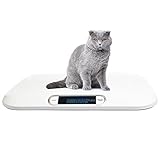
- ✔【Expansive & Comfort Platform】- Our scale features comfortable and non-intimidating platform encourages cats to step onto the scale willingly, reducing stress during weighing sessions. The expansive 21.7” x 13” flat top surface, providing ample space for cats to walk on without feeling confined or restricted. This spacious design ensures that cats can move freely, reducing stress and facilitating accurate weight measurements.
- ✔【 Large Weighing Capacity at 44 lb / 20 kg】- This ample capacity ensures that even the largest or heaviest feline companions can be comfortably accommodated and accurately weighed, providing comprehensive monitoring of their health and well-being. Whether you have a small domestic shorthair or a larger breed like a Maine Coon, our scale's generous capacity guarantees reliable and precise measurements for all cats, fostering optimal care and management.
- ✔【 Weighting Accuracy at 0.2 lb / 10g】- This level of precision ensures meticulous weight measurements, capturing the subtlest changes in a cat's weight with exceptional detail. This finely tuned increment allows for detailed tracking of even the slightest fluctuations in a cat's weight, enabling pet owners and veterinarians to closely monitor their health and well-being with utmost confidence. Whether it's monitoring weight loss or gain, managing dietary changes, or tracking growth progress, the high weighing increment of our scale offers unparalleled accuracy, empowering caregivers to make informed decisions and provide optimal care for their feline companions.
- ✔【Large LED display - Clear and Visible】- Our cat scale features a large and easily readable display, ensuring weight readings are clear and legible. Its size guarantees readability even from a distance. With intuitive controls and a user-friendly interface, our cat scale makes the weighing process simple and efficient. The large, easy-to-read display provides clear weight readings, allowing users to monitor their cat's health and track their progress with ease.
- ✔【 Versatility 】- With the UNIT button, you can effortlessly switch between different units, including ounces, pounds, and kilograms, to suit your preference. The ability to measure weight in various units accommodates different user preferences and requirements. The level of accuracy extends to various applications beyond weighing cats, making our cat scale a versatile tool across veterinary practices, research facilities, and pet care environments.
- Set an individual baseline. At a veterinary visit, ask for the cat’s bodyweight, body-condition score, muscle assessment and ideal-weight range. Record the date and any relevant health findings.
- Use comparable measurements. If you and your veterinarian decide home tracking is useful, weigh under similar conditions and with the same equipment. A digital pet scale is optional; it does not replace a veterinary scale, examination or body-condition assessment.
- Keep a context log. Note appetite, the type and amount of food offered, treats, access to other animals’ bowls, activity, indoor or outdoor access and any vomiting, diarrhea or other changes. Record season and approximate weather, but do not assume they are the cause.
- Look for direction over time. A single reading can reflect hydration, recent eating, stool or measurement differences. A pattern across comparable readings is more informative than one number.
- Bring the record to checkups. The FDA advises discussing a pet’s weight at every exam. Show the trend and context so the veterinarian can interpret it alongside the physical examination.
- Change food only with guidance. Cats differ substantially in how much food they need. If the trend indicates excess gain, loss, or a change in body condition, have the veterinarian recommend dietary adjustments rather than sharply restricting food on the assumption that winter is responsible.
No universal home-weighing interval is specified by the cited guidance. Your veterinarian can suggest an interval based on age, health, prior weight changes and the practicality of obtaining reliable measurements.
Independent reader supportYour contribution helps us test, update, and keep practical guides available for everyone.Indoor and outdoor cats: what you can and cannot conclude
Indoor cats
An indoor cat may experience seasonal changes in daylight, indoor temperature, play opportunities and household routines even when food is available year-round. Those changes can affect activity or appetite, but the available studies do not provide a standard indoor-cat percentage or a schedule for changing portions. Monitor the individual cat’s body condition and follow a veterinary plan.
Windows Errors? Fix Them Before They Spread
Repair common Windows errors and clear accumulated junk for a smoother, more stable PC - no reinstall needed.Free scan · no reinstallCrashes, No Sound, or Screen Glitches?
Random freezes, missing sound and display glitches usually trace back to one bad driver. Find and replace yours safely.Free scan · under a minuteOutdoor and indoor-outdoor cats
Outdoor access adds variables such as roaming, hunting, weather exposure and food from neighbors or other animals. A weight change may therefore reflect access to calories or altered activity rather than season alone. Ask the veterinarian about the cat’s entire daily food environment, including any outdoor feeding, when interpreting a trend.
Multicat households
When several cats share a home, unequal access to bowls can create gradual gain in one cat and loss in another. The 2025 study could not align multicat-household information with the bodyweight records, so it cannot tell us how common this effect was. If food competition is possible, describe the feeding setup at the veterinary visit before changing portions.
Also popular on Amazon

- 𝐀𝐜𝐜𝐮𝐫𝐚𝐭𝐞 𝐚𝐧𝐝 𝐏𝐫𝐞𝐜𝐢𝐬𝐞 𝐌𝐞𝐚𝐬𝐮𝐫𝐞𝐦𝐞𝐧𝐭: The built-in high-precision sensor and smart chip of this infant scale make it reliable and accurate for measuring your baby's weight and height. It offers five different display units to choose from (lb: oz, oz, lb, g, and kg), so you can select your preferred unit to ensure precise and reliable readings every time.
- 𝐋𝐚𝐫𝐠𝐞 𝐂𝐚𝐩𝐚𝐜𝐢𝐭𝐲 𝐔𝐩 𝐭𝐨 𝟑𝟑𝟎 𝐥𝐛𝐬: This smart weighing scale made of ABS material, which is not just for weighing babies, but also puppies, cats and even adults up to 330 lbs. It's a practical and useful addition to any home, whether you're a pet owner or a parent.
- 𝐒𝐚𝐟𝐞𝐭𝐲 𝐚𝐧𝐝 𝐂𝐨𝐦𝐟𝐨𝐫𝐭𝐚𝐛𝐥𝐞 𝐇𝐞𝐢𝐠𝐡𝐭 𝐌𝐞𝐚𝐬𝐮𝐫𝐞𝐦𝐞𝐧𝐭: The baby weight scale adopts patented design, with non-slip, hard-wearing rubber feet and a platform for 27 inch height and weight measurement.It is simple installation and no tool required, ensuring your baby or pet feels safe and comfortable while being measured, providing a complete picture of their growth.
- 𝐇𝐨𝐥𝐝 𝐅𝐮𝐧𝐜𝐭𝐢𝐨𝐧 𝐢𝐧 𝐌𝐨𝐭𝐢𝐨𝐧: Even if your baby is moving or wiggling, you can obtain accurate measurements with the automatic or manual hold function.
- 𝐄𝐚𝐬𝐲 𝐭𝐨 𝐔𝐬𝐞 𝐚𝐧𝐝 𝐒𝐭𝐨𝐫𝐞: With a touchscreen button, auto-off function after 2 minutes of no operation, and detachable design, this digital scale is easy to assemble, use, and store. Grownsy's baby scale is the perfect companion for monitoring your baby's growth and development with ease.
When a weight change needs veterinary attention
Unplanned loss or refusal to eat
A cat that is losing weight unexpectedly, especially one that refuses food, should be examined rather than observed through another season. Cornell specifically advises veterinary evaluation when a cat refuses food and loses weight. Many medical conditions can reduce appetite or alter metabolism, and delaying care can make treatment more difficult.
Progressive gain
Steady gain can lead to obesity-related problems. Cornell notes associations between obesity and health problems including arthritis and diabetes. Do not put a cat on a sharply restricted ration without professional direction; safe weight reduction depends on the cat’s starting condition, diet and health.
Other accompanying changes
Contact a veterinarian promptly if weight change occurs with marked thirst or urination changes, repeated vomiting or diarrhea, weakness, breathing difficulty, pain, or a major change in behavior. Those signs cannot be explained safely by a seasonal appetite pattern alone.
How your veterinarian can interpret the pattern
At an examination, the veterinarian can compare the current weight with prior records, assign a body-condition score, assess muscle, review the diet and look for illness. Bring the food labels or feeding instructions, treat amounts, medication details and your trend log. Mention whether the cat is indoor-only, outdoor-access or living with other cats.
The veterinarian may decide that a small fluctuation is acceptable, that portions need a measured adjustment, or that diagnostic testing is appropriate. The decision should be based on the cat’s condition and trajectory, not on a calendar assumption. Carmela Stamper, DVM, of the U.S. FDA Center for Veterinary Medicine, explains why this conversation belongs at routine care: “There’s a good reason why your pet gets weighed at every vet visit. The owner and vet should have a conversation about the pet’s weight at every exam.”
Bottom line
Seasonal appetite shifts are documented, and newer evidence suggests that some female cats may weigh less and have lower body-condition scores in summer and autumn. Other cats show little seasonal change, and one four-year study found no seasonal bodyweight pattern despite intake differences. Treat season as background context. The reliable approach is to establish an individual ideal weight with a veterinarian, assess body condition, track comparable measurements when advised, and investigate sudden loss, refusal to eat or progressive gain.





Leave a Reply