
Free tools Windows power users keep installed
One-click scans. No signup required.
Sometimes, but not in a way that controls algae. Corydoras are bottom-foraging omnivores. They may swallow a little algae while searching the substrate or scavenging, yet they are not specialized surface grazers and should never be kept as an algae-cleanup crew. Their barbels help them locate food; they do not turn the fish into a suckermouth algae eater. Feed Corydoras deliberately with suitable sinking foods even when algae, detritus, or leftover food is present.
The practical answer to “Do Corydoras eat algae?”
Corydoras can incidentally ingest algae, especially when it is mixed with debris or food on the bottom. That occasional intake is very different from grazing algae off glass, leaves, wood, and rocks as a primary diet. Petco’s care guidance says Corydoras do not typically eat algae and should not be relied on to clean an aquarium.
As an Amazon Associate I earn from qualifying purchases.
Think of them as small catfish that search rather than scrape. They patrol the substrate, use their whisker-like barbels to find edible material, and pick up sinking foods, worms, insect larvae, detritus, and scraps. A tank may still have algae after Corydoras have been fed, because algae control is not their biological job or a dependable result of keeping them.
The Tool Desk
Outbyte PC Repair FREERepair Windows errors before they cause bigger problemsFix Now →Outbyte Driver Updater FREEFix the driver behind crashes, sound loss and screen glitchesFind Drivers →What their mouths and barbels actually indicate
Barbels are search equipment
Corydoras’ barbels are sensory appendages used while the fish investigates the bottom. Aquarium Co-Op describes them as helping Corydoras find food. This explains the characteristic nose-down, constant-searching behavior: the fish probes the substrate and detects potential food before picking it up.
#1 Best Overall

- Superior nutrition has been scientifically proven by decades of research to meet the dietary needs of corydoras catfish, loaches and other bottom feeders
- High levels of vegetable matter that bottom feeders prefer, along with highly nutritious spirulina, silkworm and krill
- Unique disc shape and small wafer size accommodates a wider variety of bottom feeders; fortified with vitamin C and other important vitamins and minerals
- Wafers can be swallowed easily by larger fish, or will soften gradually allowing smaller fish to eat with ease
- Extreme digestibility thereby reducing the chances of water clouding
Barbels therefore tell you where and how Corydoras feed, not that they scrape algae from hard surfaces. A fish can investigate an algae-coated area and swallow particles encountered there without being adapted to harvest algae as its main food.
Foraging is not the same as grazing
Grazers deliberately rasp or pick a coating from a surface and spend much of their feeding time removing that coating. Bottom foragers search among sand, gravel, leaf litter, and organic particles for a mixture of foods. Corydoras fit the second description. Their feeding route may cross an algae patch, but the route itself is not evidence that algae is the target.
What the available descriptions do not establish
The care sources reviewed for this topic do not quantify how much algae an individual Corydoras consumes. They also do not establish a detailed anatomical mechanism such as algae-scraping teeth. It is more accurate to describe the fish by its observed feeding ecology than to infer a specialized mouth structure from the presence of barbels.
PC Slower Than It Used to Be?
A free scan shows the junk files, broken settings and background clutter dragging Windows down - then fixes them in one click.Free scan · Windows 10 & 11Crashes, No Sound, or Screen Glitches?
Random freezes, missing sound and display glitches usually trace back to one bad driver. Find and replace yours safely.Free scan · under a minuteWhat Corydoras eat in a naturalistic feeding model
UF/IFAS Extension’s publication Freshwater Ornamental Fish Commonly Cultured in Florida, reviewed July 2025, summarizes the genus this way: “These catfish consume worms, insect larvae, and detritus (organic material) from the bottom.” That sentence captures the key distinction: Corydoras are omnivores collecting varied material from the bottom, not algae specialists.
Rank #2

- Bottom feeder fish food that contains up to 40%, nutrient-rich Black Soldier Fly Larvae, the first ingredient
- High in multiple proteins like whole salmon – rich in Omega 3 and 6 for healthy skin, scales and fins
- Fortified with essential vitamins, amino acids and minerals for a balanced daily diet
- Sinking granule format (1.4-1.6mm) – ideal for bottom feeders; feed as much as fish can eat in two minutes, two or three times daily
- Sustainably processed in small batches for quality control and maximum freshness
In an aquarium, the bottom can contain uneaten food, decomposing plant material, microorganisms, and detritus. Corydoras may pick through that mixture and take in a small amount of algae along the way. Such incidental ingestion cannot be treated as a complete diet because the quantity and nutritional value are unknown and will vary with the aquarium.
Other fish leaving scraps does not solve the feeding problem either. Scraps arrive unpredictably, may be unsuitable for Corydoras, and can be eaten by faster tank mates before they reach the substrate. A deliberate feeding routine lets you check that each fish has access to appropriate food.
How to feed Corydoras when algae is present
1. Choose a sinking staple
Use a food that reaches the bottom intact or becomes available there. Aqueon lists bottom-feeder tablets, shrimp pellets, tropical granules, and algae rounds among foods used for omnivorous bottom feeders. Aquarium Co-Op recommends sinking wafers, gel food, and small foods such as worms. OATA likewise advises giving catfish appropriate sinking foods so their nutritional needs are met.
Recommended Free Tools
These are food formats and categories, not a guarantee that every product has the same formulation. Check the label for the species and life stage you keep, and use a complete staple rather than assuming an algae wafer alone supplies everything Corydoras require.
Rank #3

- High Palatability : Sword Prawn Flavor - A blend of wild sword prawns, fresh squids, vegetables and seaweed. A perfect 7:3 meat/vegetable protein ratio even the pickiest bottom feeding fish can’t resist. Quickly soften with water and does not disintegrate easily. Suitable for bottom feeder that use live bait as their staple food
- Superior Quality Ingredient : Made from carefully selected ingredients. All natural protein from fresh meat, vegetables and seaweed. No additives, no artificial flavors or coloring, no byproducts and other harmful ingredients
- Healthy Growth Formula : Rich in protein and vitamin D. It's not only tasty but also keeps fishes healthy! Jam-packed with a variety of vitamins (A, C, D3, E, B1, B2, B6, B12) great for bottom feeding fish's growth and keeping color vibrant. Added probiotics to increase the feed conversion rate, improve immune system and gut health
- Supplemental Use : Ultra Fresh food do not contain adhesives, the flat food sticks to the glass simply by applying pressure. Can be combined with the original feed to supplement additional nutrition. Adequate and diversified sources of nutrients will make the fish more healthy and strong. *Feed 1-3 times per day, no more than your fish can consume within 3 minutes
- No More Cloudy Water : 3 million CFUs/g probiotics are within the food to help dissolve fish excrements, residuals and keeps water clean. Tablets won’t dissolve or break down easily, so the food will not cloud the water
2. Offer variety without making algae the plan
Rotate a suitable sinking staple with other appropriate foods, such as gel food or small worm-based foods, when those foods fit your fish and water-quality routine. Variety can make feeding more reliable, but it does not require a complicated menu. The essential point is that the fish receive food intentionally instead of depending on algae, detritus, or leftovers.
3. Set a measured portion
Feeding directions differ between reputable care guides. Aqueon says to provide what fish can consume in two to three minutes, once or twice daily. OATA says once daily and only what can be eaten within a few minutes. Treat those instructions as examples rather than a universal prescription: species, age, group size, food density, tank mates, and filtration all affect the right portion.
Start with a small amount that reaches the bottom, watch the group, and adjust at the next feeding. Food that remains after the intended feeding window is a signal to reduce the portion or improve distribution. Remove persistent leftovers so they do not decay and add to the aquarium’s nutrient load.
4. Make sure the Corydoras, not only the fastest fish, get fed
Place sinking food where Corydoras forage and observe the group during feeding. If surface or midwater fish seize everything first, use several small feeding spots or add food after the lights have been dimmed, provided that approach suits the other inhabitants. The goal is even access, not simply seeing food disappear somewhere in the tank.
Rank #4

- Ideal for bottom dwelling fish
- Nutritious food ingredients that fish are naturally attracted to
- Formulated so that fish utilize more of what they eat and create less waste
- Supports a healthy immune system, brings out their true colors and provides the essentials for proper growth and vitality
- Will not cloud water when fed as directed
5. Judge success by condition and water quality
Look for active foraging, normal body condition, and clean water rather than using algae disappearance as the success test. If food is routinely left behind, reduce the amount and remove what remains. If Corydoras are consistently outcompeted, change placement or timing so they receive a dependable share.
Food formats: what each one is for
| Food format | How it helps bottom feeders | Important qualification |
|---|---|---|
| Bottom-feeder tablets | Sink quickly and can be portioned for a group. | Aqueon lists them as an option; formulation and completeness depend on the product. |
| Sinking wafers | Remain available on the substrate while Corydoras search. | Recommended by Aquarium Co-Op as part of a varied diet, not as proof that Corydoras eat algae. |
| Shrimp pellets | Provide a compact sinking food format. | Listed by Aqueon; use an appropriate formulation and amount for your fish. |
| Tropical granules | Can supply sinking particles when they reach the bottom. | Aqueon includes tropical granules among suitable categories; particle size matters. |
| Gel food | Can be placed on the bottom and offered as a different texture. | Included in Aquarium Co-Op’s range of options; prepare and remove it according to the product directions. |
| Small foods such as worms | Fit the animal-food portion of an omnivorous diet. | Aquarium Co-Op mentions small foods such as worms; avoid portions that foul the water. |
| Algae rounds or wafers | May be used as one food item in some feeding plans. | Aqueon lists algae rounds, but Corydoras are not primarily algae eaters and still need direct, varied feeding. |
Why algae remains after Corydoras are fed
Algae grows when light, nutrients, and available surfaces allow it. Corydoras do not remove those underlying conditions. Even if a fish swallows algae particles while foraging, the amount is too inconsistent to function as algae management. Treat the algae problem separately: review the light schedule, avoid excess food, maintain routine cleaning, and remove growth manually when appropriate for the aquarium.
Do not increase Corydoras’ food in an attempt to make them eat more algae. Extra food generally means more organic waste and can create conditions that support additional algae. Feed the fish for their nutritional needs, then manage algae with husbandry and a stocking plan suited to the specific tank.
What’s actually slowing this PC down?
Pick the symptom - the matching free tool is one click away.
Corydoras compared with common algae-grazing fish
Otocinclus and plecos are often discussed in algae conversations, but a comparison of feeding behavior is not a blanket recommendation to add either animal. Exact species, adult size, water requirements, group needs, existing tank mates, and available food all determine whether a fish belongs in a particular aquarium.
Best Value
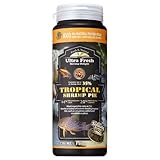
- High Palatability : Sword Prawn Flavor - A blend of wild sword prawns, fresh squids, vegetables and seaweed. A perfect 7:3 meat/vegetable protein ratio even the pickiest bottom feeding fish can’t resist. Quickly soften with water and does not disintegrate easily. Suitable for bottom feeder that use live bait as their staple food
- Superior Quality Ingredient : Made from carefully selected ingredients. All natural protein from fresh meat, vegetables and seaweed. No additives, no artificial flavors or coloring, no byproducts and other harmful ingredients
- Healthy Growth Formula : Rich in protein and vitamin D. It's not only tasty but also keeps fishes healthy! Jam-packed with a variety of vitamins (A, C, D3, E, B1, B2, B6, B12) great for bottom feeding fish's growth and keeping color vibrant. Added probiotics to increase the feed conversion rate, improve immune system and gut health
- Supplemental Use : Ultra Fresh food do not contain adhesives, the flat food sticks to the glass simply by applying pressure. Can be combined with the original feed to supplement additional nutrition. Adequate and diversified sources of nutrients will make the fish more healthy and strong. *Feed 1-3 times per day, no more than your fish can consume within 3 minutes
- No More Cloudy Water : 3 million CFUs/g probiotics are within the food to help dissolve fish excrements, residuals and keeps water clean. Tablets won’t dissolve or break down easily, so the food will not cloud the water
| Fish or group | Typical feeding location | Food behavior described by the sources | What that means for algae claims |
|---|---|---|---|
| Corydoras | Bottom and substrate | Search for worms, insect larvae, detritus, and prepared sinking foods. | May ingest algae incidentally; not a dependable algae cleaner. |
| Otocinclus | Surfaces such as leaves, glass, and décor | Aquarium Co-Op describes them as grazing softer algae and biofilm. | More surface-grazing oriented, but still not guaranteed to eliminate algae and still dependent on suitable tank conditions. |
| Plecos | Often surfaces and the bottom, depending on species | UF/IFAS notes that plecos consume algae among other foods. | “Pleco” covers many species with different diets and adult sizes; algae consumption alone is not a stocking plan. |
The useful decision is not “Which fish will clean my tank?” It is “What is this species adapted to eat, where will it feed, and can my aquarium support it for life?” Corydoras answer the first two questions as bottom-foraging omnivores, so they should be selected and fed on that basis.
Common feeding problems and practical corrections
Food disappears before it reaches the bottom
Use a denser sinking format, place food in more than one bottom area, or adjust the feeding time so Corydoras can forage with less competition. Confirm that the fish are actually receiving food rather than assuming a clean surface means everyone ate.
Food is still present several minutes later
Reduce the next portion and remove the excess. Repeated leftovers indicate that the amount, frequency, or distribution does not match the current group and tank. Decomposing food contributes to poor water quality and should not be left as an improvised food source.
The fish search under algae-covered décor
That behavior is normal bottom foraging. It does not demonstrate that the fish are harvesting the algae coating. Continue the normal feeding plan and address algae separately if its amount is increasing.
You are tempted to buy Corydoras for cleanup
Do not use algae removal as the reason to purchase them. Corydoras need an aquarium that meets their own care requirements and a reliable food supply. Choose them for their behavior and compatibility, not for a promise of algae control.
A simple decision checklist
- Identify Corydoras as bottom-foraging omnivores, not surface-grazing specialists.
- Provide a suitable sinking staple and at least occasional appropriate variety.
- Use measured portions; Aqueon’s two-to-three-minute, once-or-twice-daily example and OATA’s once-daily, few-minutes example are guidance points, not rigid rules.
- Watch the fish during feeding and correct competition or uneven distribution.
- Remove uneaten food instead of letting it decay.
- Manage algae through light, nutrient, maintenance, and stocking decisions rather than relying on Corydoras.
The mouth-and-barbel combination tells you that Corydoras are built for finding food along the bottom. Occasional algae ingestion is compatible with that lifestyle, but it does not change what they are or what they need to eat.
Quick Recap
Product prices and availability are accurate as of the date/time indicated and are subject to change. Any price and availability information displayed on Amazon at the time of purchase will apply.
Do these 3 things before closing this tab:
1Repair Windows errors before they cause bigger problems2Scan for outdated or missing drivers - takes under a minute3Clear out junk files and repair common Windows errors




Leave a Reply