
Quick wins for a faster PC:
Fix the driver behind crashes, sound loss and screen glitchesFind Drivers →Clear out junk files and repair common Windows errorsFree Scan →No. An Epsom salt bath is not a dependable flea treatment for cats. A bath may wash or dislodge some adult fleas that are on the coat at that moment, but it does not stop new fleas from emerging in the home, protect the cat afterward, or eliminate eggs and immature stages in carpets, bedding and cracks. No controlled study establishes an Epsom-salt bath’s flea-killing effectiveness or safety in cats.
For a cat with fleas, use a flea comb for immediate physical removal and ask a veterinarian to choose a cat-labeled product suited to the cat’s age, weight, health and medications. Never use a dog flea product on a cat. Expect an established household infestation to take time to resolve: the Merck Veterinary Manual says complete control typically takes two to three months because environmental stages continue to emerge.
As an Amazon Associate I earn from qualifying purchases.
What an Epsom salt bath can—and cannot—do
Fleas are not confined to the adult insects you can see on a cat. Adult fleas feed on the animal, while eggs, larvae and pupae develop in the surrounding environment. A bath reaches only the cat’s coat and only during the bathing event. It cannot reach most of the flea population in rugs, upholstery, floor gaps, carriers, bedding or other resting areas.
The veterinarian-reviewed Catster article “Epsom Salt Bath for Fleas on Cats: Vet-Reviewed Effectiveness, Safety & Alternatives,” updated September 15, 2026 and reviewed by Dr. Lauren Demos, DVM, describes the realistic effect as temporary removal of some fleas present during the bath. It does not describe the bath as a cure or as protection against reinfestation. That is secondary, vet-reviewed guidance rather than evidence from a controlled clinical trial.
#1 Best Overall

- Advantage II Large Cat is a leading brand in cat flea treatment and prevention for large cats over 9 lbs., at least 8 weeks of age
- Vet-recommended, easy-to-apply monthly topical treatment – no hard-to-swallow pills, no prescription needed
- Delivers total flea protection – kills adult fleas, flea larvae and flea eggs through contact
- Same-day effectiveness – kills fleas within 12 hours of application and keeps working for 30 days
- Fragrance-free formula, waterproof after 24 hours of application
No percentage kill rate, duration of protection or dosage for Epsom salt baths on cats has been established in the authoritative material available for this question. Treating visible fleas in the tub as proof that the infestation is controlled is a mistake: fleas can return from the environment as soon as the bath is over.
Is an Epsom salt bath safe for a cat?
The safety of soaking cats in Epsom salt specifically for flea control has not been established by the sources reviewed. Cats groom themselves, so any residue left on the coat can be swallowed. You should not assume that drinking bathwater or licking salt residue is harmless, and you should not apply a home remedy to a cat without discussing it with the cat’s veterinarian.
Extra caution is appropriate for kittens, elderly cats, cats that are ill or underweight, pregnant or nursing cats, and cats taking other medicines. Their ability to regulate body temperature, tolerate stress or handle an exposure may differ from that of a healthy adult. A veterinarian can also identify skin disease, anemia or another problem that a home bath would not address.
Why bathing itself can be a problem
Many cats become frightened or struggle in water. Dr. Alison Diesel, clinical associate professor at the Texas A&M College of Veterinary Medicine & Biomedical Sciences, said in the university’s March 10, 2022 article, “In general, cats do not need to be given a bath by their owners.” The statement concerns routine bathing, not Epsom salt or flea treatment, but the same article notes that bathing can be stressful. Stress, chilling, falls and scratches are practical risks even before any ingredient is considered.
If a veterinarian says a bath is appropriate
Ask exactly what product, concentration, water temperature, contact time and rinsing procedure the veterinarian wants. Do not improvise a stronger mixture or leave crystals on the coat. Keep the cat’s head out of the water, prevent licking during and after the bath, rinse as directed, dry the cat fully in a warm, draft-free area and stop if the cat is panicking, weak, cold or having trouble breathing. These precautions reduce obvious hazards; they do not turn an Epsom salt bath into a proven flea treatment.
Rank #2

- EFFECTIVE, WATERPROOF FLEA TREATMENT FOR CATS: PetArmor Plus is a waterproof, flea & tick topical prevention for cats that kills fleas, flea eggs, flea larvae, ticks, and chewing lice for up to 30 days after application.
- TRUSTED, VET QUALITY FORMULA: Containing fipronil and (S)-methoprene, the same active ingredients as FRONTLINE Plus for Cats. PetArmor Plus for Cats has a powerful formula that starts to kill fleas within 24 hours.
- BREAK THE FLEA CYCLE: Unlike other flea and tick treatments that may temporarily suppress flea activity, PETARMOR Plus Cat Flea Treatment works by effectively breaking the flea life cycle Kill flea eggs and larvae to prevent re-infestation.
- FLEA AND TICK PROTECTION: PetArmor Plus for Cats flea drops protects your furry family members from brown dog ticks, American dog ticks, Lone Star ticks, and deer ticks (which may transmit Lyme disease).
- EASY-TO-USE, LONG-LASTING: PetArmor Plus flea and tick treatment comes with three (3) waterproof topical applications that provides your pet flea protection and control for three (3) months.
What works better for immediate flea removal?
Use a flea comb
The U.S. Food and Drug Administration specifically recommends a flea comb to remove fleas and eggs. This is especially useful for kittens that are too young for some flea-control products. Combing can lower the number of live fleas on the cat without exposing the animal to an insecticide, but it has no lasting preventive effect and cannot remove the stages hidden in the home.
- Work in a bright, warm area where the cat can be restrained gently. Have a fine-toothed flea comb, a bowl of soapy water for captured fleas, paper towels and a towel ready.
- Comb slowly from the head and neck toward the tail, then cover the chest, back, sides, belly and legs. Pay attention to the base of the tail and around the neck, where fleas are often found.
- After each short stroke, dip the comb into the soapy water and wipe it clean. Fleas can jump off a dry comb and return to the cat.
- Continue until you are finding few or no fleas, then repeat at least daily while you arrange sustained control. Check the comb and the cat’s skin for black specks that turn reddish-brown when moistened; this can be flea dirt.
- Wash your hands and clean the comb. Dispose of the captured insects and soiled material where pets cannot contact them.
Do not use combing results to estimate a kill rate for an Epsom salt bath. A comb removes what it catches; it does not demonstrate that salt killed fleas or interrupted their life cycle.
How to choose ongoing flea control with a veterinarian
For continuing protection, discuss a cat-labeled topical, oral or other appropriate flea-control product with a veterinarian. VCA Animal Hospitals describes these as available treatment forms, but the correct choice depends on the individual cat rather than on a single product being best for every household.
| Decision factor | What to verify before use |
|---|---|
| Species | The label must explicitly say the product is for cats. A dog product is not an acceptable substitute. |
| Age and life stage | Check the minimum age and whether the product is permitted for kittens, pregnant cats or nursing cats. If the label is unclear, ask the veterinarian. |
| Weight or size | Use only the weight range on the label. Do not split a tube intended for a larger animal unless the manufacturer and veterinarian expressly direct it. |
| Health and medication history | Tell the veterinarian about illness, seizures, skin sensitivity and every medicine or supplement the cat receives. |
| Route and practicality | Choose a route you can administer exactly as labeled, whether topical, oral or another form. Missed doses leave gaps in protection. |
| Coverage and duration | Confirm which parasites the label covers and how long each dose lasts. Do not assume a product that controls one parasite controls all others. |
| Other pets in the home | Ask how to treat dogs and other cats safely and how to prevent one pet from licking another immediately after application. |
U.S. FDA and U.S. Environmental Protection Agency guidance both emphasize species-, life-stage- and size-specific labeling. Never apply a dog flea product to a cat. Some dog products contain ingredients that cats cannot safely metabolize.
What about isoxazoline products?
The FDA states that isoxazoline products are considered safe and effective for dogs and cats as a class, while also reporting neurologic adverse reactions in some animals. That class-level statement is not a guarantee for an individual cat. The veterinarian should weigh the cat’s seizure history, neurologic signs, other illnesses and current medicines before recommending any product.
Rank #3
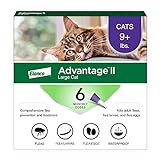
- Advantage II Large Cat is a leading brand in cat flea treatment and prevention for large cats over 9 lbs., at least 8 weeks of age
- Vet-recommended, easy-to-apply monthly topical treatment – no hard-to-swallow pills, no prescription needed
- Delivers total flea protection – kills adult fleas, flea larvae and flea eggs through contact
- Same-day effectiveness – kills fleas within 12 hours of application and keeps working for 30 days
- Fragrance-free formula, waterproof after 24 hours of application
Questions to take to the appointment
Bring the cat’s current weight, age, medical history and a list of all medicines and supplements. Ask which flea species and life stages the product controls, when the first dose should be given, how often it must be repeated, what to do after a missed dose, and whether every pet in the household needs treatment. Confirm whether the cat should be separated from other animals after a topical application and which symptoms require an emergency call.
Free tools Windows power users keep installed
One-click scans. No signup required.
How to deal with fleas in the home
Even an effective cat treatment cannot instantly remove eggs, larvae and pupae already present indoors. Vacuum carpets, rugs, upholstered furniture, floor edges and areas where the cat sleeps; empty the vacuum contents safely so fleas cannot escape. Launder washable bedding and carrier liners using the hottest setting that the fabric and manufacturer allow, then dry them thoroughly. Clean favorite resting areas repeatedly rather than expecting one pass to end the problem.
Ask the veterinarian whether an environmental product or professional pest-control service is appropriate for your home, especially when there are children, birds, fish or other sensitive animals. Follow every label restriction. Never apply a household pesticide directly to a cat, and keep pets away from treated areas exactly as directed.
How long will flea control take?
The Merck Veterinary Manual’s full review, dated April 2026, says complete control of an existing infestation typically takes two to three months because immature flea stages remain in the environment and continue to emerge. This time frame describes the household flea life cycle when effective control is being used; it is not a result from an Epsom salt bath.
You may still see an occasional adult flea after treatment begins. Record when you apply each dose, continue the veterinarian-approved schedule and keep cleaning the environment. Contact the veterinarian if the number of fleas is not declining, if new pets are affected, or if the cat develops persistent itching, hair loss, scabs or skin infection.
Recommended Free Tools
Rank #4

- SHIPMENT CONTAINS: One 6-dose pack of Amazon Basics Flea Topical for Large Cats (over 9 pounds)
- FAST ACTING: Eliminates fleas in just 12 hours, providing your cat with swift relief from discomfort with our effective flea medication
- DUAL INGREDIENT FORMULA: Formulated with Imidacloprid and Pyriproxyfen to kill adult fleas and prevent flea infestations
- LONG-LASTING PROTECTION: Protect your cat from infestations for up to 4 weeks with each application, killing reinfesting fleas within 2 hours and efficiently halting the flea lifecycle
- EASY APPLICATION: Designed for monthly use, apply directly to dry skin between the shoulder blades for best results
What to do if a flea product causes a reaction
Follow the product label’s first-aid instructions and contact a veterinarian promptly if the cat drools excessively, vomits, trembles, becomes uncoordinated, has seizures, develops severe skin irritation, seems weak or has difficulty breathing. Remove access to the product as directed; do not give another medicine or induce vomiting unless a veterinary professional tells you to do so.
Keep the package, applicator and label. The exact active ingredient, concentration, lot information and application time help the veterinarian decide what treatment is needed. Report suspected adverse events through the appropriate FDA channel if your veterinarian advises it.
Special considerations for kittens
Kittens can become seriously ill from fleas because blood loss may contribute to anemia. They also may be too young or too small for commonly used flea products. Use a flea comb for immediate removal and call a veterinarian rather than selecting an adult-cat product by guesswork. Ask about the kitten’s age, current weight, hydration, gum color and feeding; these details affect urgency and product eligibility.
Do not put Epsom salt, essential oils, concentrated shampoos or any dog flea treatment on a kitten unless a veterinarian has specifically prescribed and explained it. A bath can chill a small kitten quickly, and struggling can cause injury.
Do these 3 things before closing this tab:
1Fix the driver behind crashes, sound loss and screen glitches2Clear out junk files and repair common Windows errors3Scan for outdated or missing drivers - takes under a minuteWhen fleas require prompt veterinary attention
- The cat is a kitten, elderly, pregnant, nursing, underweight or chronically ill.
- Gums look pale or white, the cat is unusually tired, weak or breathing faster than normal.
- There are open sores, spreading crusts, pus, severe hair loss or nonstop scratching.
- The cat has seizures, tremors, vomiting, collapse or other signs after a flea product.
- Fleas continue despite correctly used, cat-labeled treatment and environmental cleaning.
- Several pets or people in the home are being bitten, suggesting a substantial household infestation.
Common mistakes that keep an infestation going
- Relying on one bath: It addresses only fleas on the coat during that event and leaves environmental stages untouched.
- Repeating a home remedy instead of starting sustained control: Frequent baths can increase stress and skin irritation while providing no residual protection.
- Using a dog product because it is convenient: Species labels are not interchangeable; dog products can poison cats.
- Ignoring weight and age limits: A dose for a different size or life stage can be unsafe or ineffective.
- Stopping when adult fleas disappear: Pupae and other immature stages may still emerge for weeks.
- Treating only the visibly itchy cat: Every pet and the environment need a coordinated plan approved by a veterinarian.
- Applying multiple products without advice: Combining treatments can increase exposure and obscure which product caused a reaction.
A practical decision checklist
- Confirm that the cat actually has fleas by finding live fleas or flea dirt with a comb, while remembering that absence on one inspection does not rule them out.
- Call a veterinarian promptly for kittens, medically fragile cats or cats with skin disease, anemia signs or neurologic history.
- Use a flea comb for immediate physical removal, especially when the cat is too young for a labeled product.
- Select one veterinarian-approved, cat-labeled treatment that matches the cat’s age, weight, health and medication history.
- Treat other pets and clean the household according to veterinary and product-label directions.
- Track applications and observations for at least the expected two-to-three-month control period, and report worsening signs or persistent fleas.
The bottom line on Epsom salt baths
An Epsom salt bath may dislodge a few fleas temporarily, but it has no established kill rate, no proven residual protection and no demonstrated ability to end a household infestation. Because feline safety has not been established and cats may ingest residue while grooming, consult a veterinarian before using it. A flea comb is the evidence-supported immediate tool, while correctly labeled, veterinarian-selected flea control plus environmental management addresses the infestation’s full life cycle.
Best Value
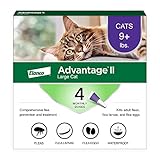
- Advantage II Large Cat is a leading brand in cat flea treatment and prevention for large cats over 9 lbs., at least 8 weeks of age
- Vet-recommended, easy-to-apply monthly topical treatment – no hard-to-swallow pills, no prescription needed
- Delivers total flea protection – kills adult fleas, flea larvae and flea eggs through contact
- Same-day effectiveness – kills fleas within 12 hours of application and keeps working for 30 days
- Fragrance-free formula, waterproof after 24 hours of application
Frequently Asked Questions
Does an Epsom salt bath kill fleas on cats?
It may remove or dislodge some fleas present during the bath, but no controlled study establishes a kill rate, dosage or lasting protection. Visible fleas going down the drain do not show that the household infestation has been eliminated.
Can I use Epsom salt on a kitten with fleas?
Do not use it without specific veterinary direction. Kittens can chill quickly, may be too young for many flea products and can become anemic from fleas. The FDA recommends a flea comb for kittens that are too young for flea-control products.
Is Epsom salt water safe if my cat licks its coat?
Safety for feline flea treatment has not been established. Because cats groom themselves, residue or bathwater could be swallowed. Ask your veterinarian before using any salt bath or other home remedy.
What is the safest immediate way to remove fleas?
Use a fine-toothed flea comb, dipping it in soapy water after each stroke. Combing removes fleas and eggs physically, but it does not provide continuing prevention or treat immature stages in the home.
Can I use a dog flea treatment on my cat?
No. FDA and EPA guidance requires products to be used only for the species, life stage and size listed on the label. Dog products can seriously poison cats.
How long does it take to get rid of an established flea infestation?
The Merck Veterinary Manual says complete control typically takes two to three months because eggs, larvae and pupae in the environment continue to emerge, even after effective treatment begins.
What should I do if my cat reacts to a flea product?
Contact a veterinarian promptly for signs such as drooling, vomiting, tremors, incoordination, seizures, severe skin irritation, weakness or breathing difficulty. Keep the package and label so the active ingredient and application details are available.
The Bottom Line
Epsom salt baths are not proven or reliably safe flea treatment for cats. Use a flea comb for immediate removal, then obtain veterinarian-guided, cat-labeled control and manage the home environment over the expected two-to-three-month period.
Quick Recap
Product prices and availability are accurate as of the date/time indicated and are subject to change. Any price and availability information displayed on Amazon at the time of purchase will apply.





Leave a Reply