Do fish have a spine? Yes—most fish have a backbone, also called a vertebral column, because they are vertebrates. The important exception is the hagfish, which lacks true vertebrae and retains a notochord. A fin spine is a separate structure, not the fish’s internal backbone.
The everyday word “fish” covers animals with very different skeletons, so “most fish” is more accurate than “all fish.”
As an Amazon Associate I earn from qualifying purchases.
Key takeaways
- Most fish have a backbone, also called a vertebral column, because most fish are vertebrates.
- Hagfish are the important exception: hagfish lack true vertebrae and retain a persistent notochord.
- Fish vertebral columns vary in shape and number between species; NOAA gives one documented lingcod example with 57 vertebrae.
- A fish’s backbone is an internal vertebral column, while a fin spine is a separate supporting structure in a fin.
- The word “fish” covers many different groups, so one fish skeleton should not be treated as a universal fish body plan.
What is the backbone of a fish called?
A fish backbone is called a vertebral column or spinal column. The vertebral column is a line of individual vertebrae running through the body and providing internal support. Fish with vertebrae are vertebrates, a group that also includes mammals, birds, reptiles, amphibians, and humans. NOAA’s vertebrate and spinal-column glossary uses the vertebral column as the defining internal support structure of vertebrate animals.
In most familiar fish—such as trout, salmon, goldfish, and cod—the vertebral column supports the body and works with the muscles and fins during swimming. The column is not identical in every species. NOAA explains that The shape and number of vertebrae in different fish species are different.
The difference matters because a trout skeleton, a shark skeleton, and a hagfish skeleton do not represent the same anatomical design.
#1 Best Overall

- Real Animal in clear lucite material. The specimen is crystal clear, indestructible and transparent. Safe, authentic and completely unbreakable product put Animal right at your fingertips!
- Anyone can safely explore the Animal from every angle.It is clear enough for microscope observation
- Size of the lucite block is 200*90*40MM Each one comes with a cardboard box for easy storage.
- This is a handmade real animal specimen craft. Each one will be a bit different (specimen size, color and posture) even in the same production batch.The pictures in the listing are just for reference as we are selling multiple pieces with same pictures.
- It is an ideal learning aid for students and kids and also a very good collectible item for every body.
Do all fish have a backbone?
No. Most fish have a backbone, but not every animal classified as a fish has true vertebrae. Hagfish are the clearest important exception in the sources reviewed. Hagfish lack true vertebrae and bone and retain a flexible, persistent notochord instead. NOAA’s guide describes jawless fishes as having a “large, unsegmented notochord without vertebrae,” while its Atlantic hagfish population profile documents the hagfish’s unusual axial support.
A notochord is not the same thing as a normal segmented backbone. It is a flexible supporting rod that occurs in chordate animals and, in hagfish, remains the principal axial support rather than being replaced by a conventional series of vertebrae. That is why the accurate short answer is “most fish have a spine,” not “all fish have a spine.”
| Fish group | Axial support | Jaws and paired fins | What to remember |
|---|---|---|---|
| Jawless fish, including hagfish | Hagfish lack true vertebrae and retain a large, unsegmented notochord. | Jawless fish differ from familiar jawed fish groups. | Hagfish are the key exception to the simple “all fish have backbones” answer. |
| Bony fish | Vertebral column made of individual vertebrae. | Jawed fish with paired fins in the familiar bony-fish body plan. | Common examples such as goldfish, trout, salmon, and cod have backbones. |
| Cartilaginous fish | Vertebral support is present, with a skeleton characterized by cartilaginous support rather than the familiar bony-fish skeleton. | Jawed fish with paired fins. | Sharks and related fish are vertebrates even though their skeleton differs from that of bony fish. |
How does a fish vertebral column differ from a human spine?
A fish vertebral column differs from a human spine in its arrangement, flexibility, and relationship to swimming muscles. Fish columns are adapted to bodies that move through water, and their shape and vertebral count vary substantially among species. A human spine is commonly discussed as a single column divided into regions such as cervical, thoracic, lumbar, sacral, and coccygeal sections; fish anatomy should not be forced into that same template.
The Tool Desk
Outbyte Driver Updater FREEScan for outdated or missing drivers - takes under a minuteDriver Scan →Outbyte PC Repair FREEClear out junk files and repair common Windows errorsFree Scan →NOAA’s fisheries reference divides the fish vertebral column into major areas including trunk or abdominal vertebrae, precaudal vertebrae, and caudal vertebrae. The exact structure and count depend on the species. NOAA’s vertebral-column reference records a lingcod example with the formula 22 + 3 + 32 = 57 vertebrae. According to the NOAA Alaska Fisheries Science Center reference, accessed in 2026, the cited lingcod example has 57 vertebrae; 57 is a species example, not a typical count for all fish.
Rank #2

- AUTHENTIC SPECIMENS - Real fish bone specimen and is specially treated, meticulously articulated and individually boxed, making it the best Osteological specimen of its kind.
- PERFECT DISPLAY - Used by instructors, anatomy educators, veterinary students and other animal care professionals. It's also fantastic learning and studying resource for medical students.
- DEMONSTRATE LESSONS: Through the study of fish skeleton, students have a more complete understanding of the fish skeleton. It is an ideal learning aid for students and children, and a very good collection for everybody. Ideal learning tool for classrooms and student.
- PERFECT GIFT - This is a very good skeleton, it will be a good entry series, a unique Christmas or birthday present. It is an excellent gift for collectors and teachers.
- MULTIPLE USAGE - Suitable decor for Haunted houses, chambers, bars, aquariums, tanks or a memorable gift. It also makes an excellent medical education reference tool for learning and studying.
Vertebral counts can help scientists identify fish and distinguish related species. A fish’s number of vertebrae is therefore not just a classroom curiosity: it can be a useful anatomical and identification character. It is still unsafe to infer that every fish has the same number of bones, the same degree of flexibility, or the same skeleton as the lingcod example.
Is a fish fin spine the same as its backbone?
No. A fish fin spine is not the fish’s backbone. The backbone is the internal vertebral column running through the body. A fin spine is a separate stiff supporting element located in a fin, often most visibly in the dorsal fin of some fish.
Fish may also have fin rays, which support and spread fins. Fin rays and fin spines are fin structures, not sections of the vertebral column. NOAA Fisheries lists “spines, vertebrae, and fin rays” separately among the hard, calcified structures examined in fish-ageing work in its groundfish-ageing explainer.
The distinction is useful when handling or identifying a fish. A sharp point on the dorsal fin does not mean the fish’s backbone is exposed. The vertebral column is inside the body, while a fin spine projects from or supports a fin.
Rank #3

- EXQUISITE DESIGN - The Fish Skeleton Model measures 210x100x43mm(L x W x H), lightweight for portable carry.
- DEMONSTRATE LESSONS: Through the study of fish skeleton, students have a more complete understanding of the fish skeleton. It is an ideal learning aid for students and children, and a very good collection for everybody. Ideal learning tool for classrooms and student.
- SCIENTIFIC EXPLORATION- For the young scientist, This is a very good fish skeleton, it will be a good entry series, a unique Christmas or birthday present; It can provide ongoing learning opportunities while also providing a unique decoration or Feng Shui Ornaments.
- OCCASION - It can be easily set in desk or other places. Great decoration for Halloween, and perfect performance prop for Cosplay and other stage shows.
- ECO-FRIENDLY RESIN - Made of eco-friendly resin, with excellent workmanship, which is durable, anti fade and easy to clean sturdy and durable.
Why is the answer more complicated than “fish have spines”?
The word “fish” describes an extremely diverse collection of aquatic vertebrates and a few unusual jawless animals, not one uniform skeleton. The Smithsonian National Museum of Natural History’s fish research collection and research program covers systematic and taxonomic assessment, comparative anatomy, phylogeny, and biogeography across many fish groups.
The Smithsonian estimates that about 36,000 fish species are known to science, according to its fish research page accessed in 2026. That is a diversity estimate, not the percentage of fish that have vertebrae. The available sources do not establish one authoritative percentage answering what share of all fish have a backbone, so a precise percentage should not be claimed.
Comparative anatomy is necessary because fish groups differ in their evolutionary history and body structures. A single diagram of a bony fish can correctly show that species while still misleading readers about hagfish, sharks, rays, or other groups.
Free tools Windows power users keep installed
One-click scans. No signup required.
How can you visualize a fish’s backbone?
A labeled fish anatomy chart can help readers distinguish the vertebral column from the skull, ribs, fins, fin rays, fin spines, and internal organs. The visual should be treated as an introduction rather than a universal blueprint, because fish anatomy varies among groups and species. For learners who want a physical reference, a fish anatomy poster is a relevant optional study aid; one educational listing describes a laminated 24-by-36-inch poster comparing jawless, cartilaginous, and bony fish. The Fish anatomy poster listing supports the category, but availability through any particular retailer or affiliate program should be checked separately.
Rank #4

- You will receive a real Sea Robin skeleton, measurement approx 8 inches - 9 inches
- 100% natural & real fish skeleton, high quality bone
- These fish specimens are unique and authentic, and will be outstanding in your home
- Our animal taxidermy possessing joint bones will arouse the imagination and curiosity of young science enthusiasts. It is a wonderful gift for collectors and teachers
- These specimens will vary slightly in color and shape. Each one is truly unique and beautiful.
For deeper study, museum and science-education resources are more useful than a generic fishing product. The Smithsonian Marine Station’s fish anatomy educational resource introduces anatomical characteristics shared by most types of fish while helping explain why individual groups can differ.
Independent reader supportYour contribution helps us test, update, and keep practical guides available for everyone.What fish does not have a backbone?
Hagfish are the best-known fish in this context that do not have true vertebrae. Hagfish retain a persistent, unsegmented notochord instead of developing the segmented vertebral column found in most familiar fish. The answer should not be expanded into the claim that every jawless fish lacks every form of vertebral support unless the specific species and anatomical definition are stated.
So, if “spine” means a true vertebral column, the final answer is conditional: most fish have one, hagfish do not have true vertebrae, and a fin spine is a separate structure altogether.
Quick wins for a faster PC:
Fix the driver behind crashes, sound loss and screen glitchesFind Drivers →Repair Windows errors before they cause bigger problemsFix Now →Scan for outdated or missing drivers - takes under a minuteDriver Scan →Frequently Asked Questions
Do all fish have a backbone?
Most fish have a backbone, also called a vertebral column. Hagfish are the important exception: hagfish lack true vertebrae and retain a persistent notochord instead.
Best Value
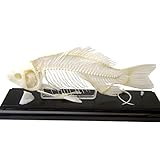
- Authentic specimens, using real bone
- Articulated in a natural posture
- Mounted on a finished wooden base, with an Acrylic cover
- Country of origin: China
What is the backbone of a fish called?
A fish backbone is called a vertebral column or spinal column. The vertebral column is an internal line of individual vertebrae that supports the fish’s body.
Is a fish fin spine the same as its backbone?
No. A fish fin spine is a separate rigid supporting structure in a fin, while the backbone is the internal vertebral column running through the fish’s body.
What fish does not have a backbone?
Hagfish do not have true vertebrae. Hagfish retain a persistent, unsegmented notochord as their principal axial support.
The Bottom Line
Most fish do have a spine—a vertebral column made of vertebrae—but hagfish lack true vertebrae and retain a notochord. A sharp fin spine is also different from the internal backbone.
Quick Recap
Product prices and availability are accurate as of the date/time indicated and are subject to change. Any price and availability information displayed on Amazon at the time of purchase will apply.




