What’s actually slowing this PC down?
Pick the symptom - the matching free tool is one click away.
Yes—but not often. Pufferfish are eaten by a range of marine animals, including tiger sharks, sea snakes, common octopuses, several predatory fish, seabirds, and sea turtles. Their ability to inflate, prickles or spines, and tetrodotoxin make them difficult and dangerous prey, but not impossible prey.
Yes—but not often. Pufferfish are eaten by a range of marine animals, including tiger sharks, sea snakes, common octopuses, mantis shrimp, lizardfish, tuna, groupers, seabirds, and sea turtles. They are not invulnerable, but their ability to inflate, their prickles or spines, and—in many species—the presence of tetrodotoxin make them unusually difficult and risky prey.
As an Amazon Associate I earn from qualifying purchases.
That list needs context. A predator recorded catching or swallowing a pufferfish may have taken a juvenile, encountered an unusually vulnerable individual, avoided the most toxic tissues, or simply made an unsuccessful attack. The evidence does not mean that every predator routinely eats healthy adult pufferfish, nor that every species of pufferfish is equally toxic or equally well defended.
Free tools Windows power users keep installed
One-click scans. No signup required.
Which marine animals eat pufferfish?
Predation records cover the pufferfish family Tetraodontidae, not one single species. The best-documented predators include:
#1 Best Overall

- Realistic Natural Environment: These fish tank decorations replicate the natural environment, and once placed in the tank, they are virtually indistinguishable from real plants. Your fish will enjoy the environment these plants provide, and they can play and hide in it
- Soft and Safe Design: The leaves are soft and lifelike without scratching the fish. They swing with the water waves in the fish tank, making them look very vivid and beautiful in the water. They can be planted in both freshwater and saltwater. Each plant has its own base for holding it in the gravel
- Low Maintenance Solution: Unlike live plants in fish tanks, plastic artificial plants do not need special lighting and other substrates. They neither die nor become wilted or unattractive. They remain beautiful all the time without any pruning
- Convenient Aquarium Setup:We provide the suitable aquarium products for different sizes of aquariums in order to save you time. Simply buy them according to your needs and place them in your fish tank to create a beautiful underwater world for your pet fish, making fish life more interesting and happier
- Complete Decoration Set: The set contains 1 rockery aquarium decoration, 3 short aquarium plants, 3 medium aquarium plants and 1 tall aquarium plant with a total of 8 different styles. Heights vary from 2 inches to 8 inches. Suitable for 5 gallon or larger fish tanks
| Predator | What the records show |
|---|---|
| Tiger sharks | Among the larger predators known to take pufferfish. Their broad diet and size allow them to attempt prey that many animals avoid. |
| Lemon sharks | Have been recorded attacking pufferfish. In one reported case, inflation interfered with water flow over the shark’s gills, apparently killing the would-be predator rather than producing a successful meal. |
| Common octopuses | Documented predators of pufferfish and among the animals most often highlighted as capable of handling them. |
| Sea snakes | Recorded predators in the Indo-Pacific, although the available records do not establish that every sea-snake species regularly eats pufferfish. |
| Mantis shrimp | Included among recorded Indo-Pacific predators. Their powerful striking appendages may help them injure or break apart prey instead of swallowing an inflated fish whole. |
| Other predatory fish | Records include lizardfish, catfish, cobia, skipjack tuna, and other large fish. These observations vary in detail and should not automatically be interpreted as frequent feeding behavior. |
| Birds | Western Atlantic records include yellow-footed gulls, great blue herons, tricolored herons, and ospreys. A bird may attack or handle a pufferfish without safely consuming all of it. |
Common octopuses, tiger sharks, and sea snakes are particularly useful examples because they illustrate that pufferfish defenses are effective but not absolute. The broader record is important too: it shows that pufferfish can be prey at several points in a marine food web.
Juvenile pufferfish may be more vulnerable than adults
Size and life stage matter. A small pufferfish is easier to overpower and swallow than a large adult, and its defenses may not have the same practical effect against a much larger predator.
This is especially clear in records involving the invasive silver-cheeked toadfish, Lagocephalus sceleratus, in the Mediterranean. Adult silver-cheeked toadfish have been documented as prey of loggerhead sea turtles. Juveniles have been recorded as prey of common dolphinfish, garfish, white grouper, and larger silver-cheeked toadfish.
Do these 3 things before closing this tab:
1Repair Windows errors before they cause bigger problems2Scan for outdated or missing drivers - takes under a minute3Clear out junk files and repair common Windows errorsCannibalism has also been reported repeatedly: juvenile pufferfish have been found inside adult specimens. That does not mean adult puffers commonly specialize in eating their own young everywhere, but it confirms that pufferfish defenses do not prevent predation within the family.
Why are pufferfish difficult to eat?
1. They inflate into a larger, harder-to-swallow shape
When threatened, many pufferfish rapidly draw water into an elastic stomach. Their apparent size can increase roughly two- to four-fold, depending on the species and the source describing the response.
Rank #2

- 【100% Safe Resin Material】 Aquarium decorations and water plants are made of safe resin materials, no special smell, and will not affect the water quality in the water tank. Artificial plastic plants are soft enough to allow fish to shuttle back and forth, providing hiding and rest.
- 【Provide Hiding and Hatching for Fish】The small castle decorations provide a natural environment for the fish tank, including bright colors and doors, which are very suitable for home aquariums. Turn your aquarium into a beautiful landscape. The mini castle will not fade or fade, and adds a natural flavor to your fish tank or aquarium. There are many holes for small fish to swim through, which is a perfect hiding place for fish.
- 【Decorate Your Fish Tank】The mountain view rockery has a hidden cave. It can accommodate your underwater environment, aquarium, fish tank and garden. Cool artificial cave decorations add a natural touch to your fish tank.
- 【Wash decorations before use】Rinse and soak the decaying tree trunk decoration with a small amount of baking soda or water, soak it in cold water for half an hour to clean it and make the appearance more realistic. The fish tank decoration kit can be wiped and rinsed with water, effortlessly, providing a comfortable and interesting environment for fish, making beautiful decorations and adding charm to the home.
- 【Dimensions】Size: The castle is approx. 5.9x3.1x5.3In, the rockery is approx 4.3x4x2.1In, 4 small Plastic plant is 3.9In, medium plastic plant is 7.8In, large plastic plant is 11.8In
Inflation changes the problem for a predator. A fish that was small enough to bite or swallow may suddenly become too large to fit in the predator’s mouth. The rounded shape can also make it difficult to get a secure grip. For predators that depend on swallowing prey whole, that may end the attack immediately.
Inflation is not a force field. It does not prevent a large predator from biting a pufferfish, crushing it, tearing it apart, or handling it in a way that avoids swallowing it whole. It can also create risks for the predator: a pufferfish lodged in the mouth or throat may be difficult to dislodge.
2. Spines and prickles become more problematic
Many pufferfish have prickles or spines on the skin. These structures are especially awkward when the fish is inflated, because they can make the puffer harder to grip and more painful or dangerous to swallow.
Not every pufferfish has identical external defenses. The number, size, and prominence of prickles vary among species, so a description of a heavily prickled puffer should not be applied uniformly to every member of the family.
3. Many species contain tetrodotoxin
The most important chemical defense is tetrodotoxin, usually abbreviated TTX. It is a potent neurotoxin that blocks nerve signaling and can cause paralysis. In pufferfish, it is often concentrated especially in tissues such as the liver, ovaries, skin, and intestines.
Rank #3
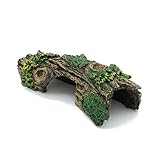
- The natural and detailed bark pattern resin hollow tree trunk ornament is great for nano beta fish and guppies.
- Made of durable resin material and natural brown colors are vivid and not washed out.
- Makes the tank look realistic and add much fun for the fish.
- There are 3 holes on the trunk fish decor, your lovely pet betta or other smaller fish would be super happy to go in and out the trunk cave to sleep, rest, hide, play, breed
- Measures 5.7" x 2.5" x 2.1" (L*W*H). Great for aquarium decorations, model making, terrarium, miniature garden and marine aquariums.
TTX is not distributed identically in every pufferfish. Toxicity can differ by species, tissue, geographic population, and life stage. Some pufferfish are far more toxic than others, and the toxicity of an individual fish cannot be judged safely from its appearance. “Pufferfish” is therefore not a synonym for “equally poisonous in every case.”
Outdated Drivers Are Slowing You Down
One free scan finds every outdated or missing driver and matches the right update for your exact hardware.Free scan · exact hardware matchWindows Errors? Fix Them Before They Spread
Repair common Windows errors and clear accumulated junk for a smoother, more stable PC - no reinstall needed.Free scan · no reinstallThe toxin is also not necessarily manufactured by the fish itself. Evidence indicates that marine pufferfish generally acquire and accumulate TTX through their food web. Toxin-producing marine bacteria are thought to provide the starting point, with the toxin then moving through prey organisms and eventually accumulating in pufferfish. Captive-diet studies show that changing a pufferfish’s diet can change its toxin levels.
That food-web relationship helps explain why toxicity may vary between populations and environments. It also means that a predator’s interaction with one pufferfish species, or one population, does not prove that it can safely consume every pufferfish.
How can any predator eat a toxic pufferfish?
There is no single answer because the documented predators do not all use the same strategy—and scientists have not established the physiological basis for every predator record.
Possible advantages include:
- Toxin resistance: Some predators appear to possess changes in sodium channels or other adaptations associated with reduced sensitivity to TTX. The evidence is strongest for a general association between predation on toxic tetraodontids and toxin resistance, not for proven immunity in every predator on the list.
- Selective feeding: A predator may eat less toxic tissues while discarding the liver, ovaries, intestines, or other organs where toxin concentration is high.
- Mechanical handling: An octopus, bird, or fish may tear apart a pufferfish, manipulate it, or remove flesh without swallowing an inflated whole animal.
- Size advantage: A large predator may be able to overpower a pufferfish before it inflates or may be less affected by a dose that would be dangerous to a smaller animal.
- Individual or regional variation: A pufferfish’s toxin level may be lower than expected because of its species, age, location, or diet.
These are explanations for how predation may occur, not guarantees of safety. A predator that can sometimes handle pufferfish is not necessarily immune to TTX, and a recorded interaction may have ended with the predator abandoning the fish.
The Tool Desk
Outbyte Driver Updater FREEFix the driver behind crashes, sound loss and screen glitchesFind Drivers →Outbyte PC Repair FREERepair Windows errors before they cause bigger problemsFix Now →Rank #4

- Ameliade aquarium decorations perfectly replicates the natural environment, and once you put it in the tank, you won't even be able to recognize that it's actually made of plastic. Your fish will enjoy the environment these plants provide,and they can play and hide in it.
- Unlike live plants in fish tank, plastic artificial plants do not need special lighting and other substrates. They neither die nor become wilted or unattractive. They remain beautiful all the time without any pruning.
- Leaves of different sizes and heights provide a comfortable environment for your betta or other types of fish. They will like to play, rest and hide on these aquarium plants.
- The leaves are soft and lifelike without scratching the fish. They swing with the water waves in the fish tank, making them look very vivid and beautiful in the water. They can be planted in both of freshwater and seawater. Each plant has its own base for holding it in the gravel.
- The set contains 12 short aquarium plants, 7 medium aquarium plants and 6 tall aquarium plants with a total of 25 different styles. Heights vary from 2 inches to 12 inches. It is suitable for 10 gallon or larger fish tanks.
Can a pufferfish kill a shark?
It can potentially do serious harm, and at least one reported attack illustrates the danger. In the documented lemon-shark incident, an inflated pufferfish interfered with water flow over the shark’s gills. The attack therefore appears to have been fatal to the shark rather than successful predation.
This is an important distinction: the event demonstrates that inflation can be dangerous to a predator, but it does not mean pufferfish routinely kill sharks or that every encounter has the same outcome. Tiger sharks and other large predators are still documented pufferfish predators.
Independent reader supportYour contribution helps us test, update, and keep practical guides available for everyone.Do dolphins eat pufferfish to get high?
This popular claim is not established. Rough-toothed dolphins have been filmed manipulating a pufferfish and appearing to enter an unusual or trance-like state. The footage is intriguing, but the behavior has not been studied well enough to prove that the dolphins were deliberately dosing themselves with tetrodotoxin.
Nor is the footage evidence that dolphins routinely eat pufferfish. The safest conclusion is narrower: dolphins have been observed interacting with pufferfish, while the purpose of the interaction and its physiological outcome remain uncertain. It may involve play, exploration, social behavior, prey handling, or exposure to toxin; the available observation does not settle the question.
Recommended Free Tools
Does a predator record mean pufferfish are common prey?
No. A scientific record can document capture, attempted ingestion, stomach contents, or an animal found inside a predator, but it may not reveal how often the behavior occurs. It may also represent:
Best Value
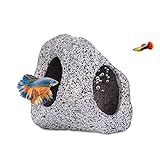
- Quality & Professional:The aquarium cave is made of ceramic with the function of filtering water, and it is environmentally friendly and odorless, imitating the natural stone texture to create a more natural visual effect.
- Visual feast:Aquarium decorative hiding cave provides you with a visual feast. It provides a "house" for your fish. The hollow caves provide shelter, hiding spots as well as spawning and privacy space for your fish.
- Multiple Placement:You can put it in the fish tank alone, or you can buy several fish tank caves of different sizes to put them together. In order to achieve the best aquarium decoration effect.
- Easy to clean: When you clean your fish tank, a simple rinse of the rock cave decorations with water is all you need.
- Make your Aquarium Vivid And Lively: Provide a natural environment feeling with vivid and detailed colors to add lively life to your aquarium.
- a juvenile pufferfish rather than a defended adult;
- an isolated opportunity rather than a regular food source;
- scavenging rather than an active kill;
- selective consumption of flesh with little contact with the most toxic organs;
- an attack that failed when the puffer inflated; or
- a predator with unusual tolerance or specialized handling behavior.
For that reason, it would be inaccurate to say that only sharks, octopuses, or sea snakes eat pufferfish. It would be equally inaccurate to imply that every animal listed above routinely consumes healthy adult puffers.
What does this mean for pufferfish in the food web?
Pufferfish occupy a more complicated position than the familiar image of an almost untouchable poisonous fish suggests. Their defenses reduce the number of predators willing or able to consume them, but they remain connected to food webs through attacks on adults, heavier predation on juveniles, occasional cannibalism, and interactions with predators capable of tolerating or working around their defenses.
The best overall answer is therefore: yes, other marine animals eat pufferfish, but predation is selective and often difficult. Inflation, prickles, and TTX make pufferfish uncommon prey for many animals—not impossible prey. The exact risk and outcome depend on the pufferfish species, its size and toxin level, the predator’s anatomy and physiology, and whether the encounter results in a successful meal at all.
Quick wins for a faster PC:
Repair Windows errors before they cause bigger problemsFix Now →Fix the driver behind crashes, sound loss and screen glitchesFind Drivers →Clear out junk files and repair common Windows errorsFree Scan →Frequently Asked Questions
What animals eat pufferfish?
Yes. Documented marine predators include tiger sharks, lemon sharks, common octopuses, sea snakes, mantis shrimp, lizardfish, catfish, cobia, skipjack tuna, loggerhead sea turtles, seabirds, and larger pufferfish. The records apply to the pufferfish family overall, not equally to every species.
Are pufferfish poisonous to predators?
Some can, but the evidence does not show that every predator is immune. A predator may have some TTX resistance, avoid highly toxic organs, handle the fish mechanically, or encounter an individual with relatively low toxin levels. Toxin tolerance has not been established for every predator record.
Do dolphins get high from pufferfish?
The claim is unproven. Rough-toothed dolphins have been filmed manipulating pufferfish and appearing unusual or trance-like, but researchers have not established that the dolphins deliberately consume TTX or routinely eat pufferfish.
The Bottom Line
Bottom line: Pufferfish are eaten by documented marine predators including tiger sharks, common octopuses, sea snakes, loggerhead sea turtles, several predatory fish, seabirds, and even larger pufferfish. Their defenses make them difficult and dangerous prey, but they do not make them invulnerable. Because toxin levels and defensive traits vary, no predator on the list should be described as universally immune or as a routine pufferfish eater without species-specific evidence.
Quick Recap
Product prices and availability are accurate as of the date/time indicated and are subject to change. Any price and availability information displayed on Amazon at the time of purchase will apply.




