Wild animals may get allergies; the evidence does not show that they do not. Allergies have been documented in captive animals, while a 2017 review said its authors knew of no descriptions in wild animals. That is a limit of the published record, not proof that wildlife is biologically immune.
Can animals other than people and pets have allergies?
Yes. Allergic disease is not unique to humans or household pets. A 2015 comparative immunology review describes allergic responses in humans, rodents, non-human primates, birds, and domestic animals. It also discusses naturally occurring asthma in cats, atopic dermatitis in dogs and horses, food allergies, and anaphylactic shock. Read the review.
What does the black leopard case show?
A 2013 veterinary case report described an 11-year-old female black leopard with food hypersensitivity and atopic dermatitis associated with airborne environmental triggers. An elimination diet followed by a food challenge supported the food-hypersensitivity diagnosis. Itching that persisted during the diet supported the separate diagnosis of atopic dermatitis. The report says the conditions were controlled with antihistamines and transmucosal immunotherapy for seven years after diagnosis. Read the case report.
This is evidence that an individual zoo animal can be diagnosed with allergic disease—not a measure of how common allergies are in zoo animals, and not evidence that all skin problems in wildlife are allergies.
#1 Best Overall
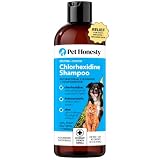
- A HEALING CLEAN : Yes, it’s shampoo for dogs! Yes, it’s shampoo for cats! And yes, it’s shampoo that cleans & heals! It soothes irritated skin, providing itch relief for cats, & dogs. An effective shampoo for dogs with allergies & cats, it promotes a shiny coat, reduces inflammation, & helps heal hot spots. This cat & dog antibacterial shampoo also reduces smelly odors associated with bacteria & fungus. Basically, our cat & dog shampoo for yeast & itching is 16 ounces of a better clean routine.
- FROM THE INSIDE OUT: Made with a veterinary strength formula, our shampoo for dogs with itchy skin & cats is made with soothing aloe & without sulfates, parabens, phthalates, alcohol, & artificial colors. Our shampoo with chlorhexidine & ketoconazole for dogs & cats is a gentle, safe & effective way to help heal skin issues while keeping your pet comfortable & clean.
- THE PET, PET WASH: You know our cat & dog shampoo for sensitive skin provides relief for itchy skin, soothes irritated & inflamed skin, targets smelly odors, & promotes a shiny coat. But did you know that’s it’s the #1 chlorhexidine shampoo on Amazon*? Don’t wait to give your pet the healing wash they deserve. *Based on Stackline Atlas data (had to combine all grooming & other pet health supplies to capture entire market*L52W as of December 2024
- ON THE RIGHT SCENT: Not only does our medicated dog shampoo for itchy skin soothe irritation, promote a health coat & leave your pet feeling fresh & clean, it also has a light cucumber melon scent that helps with unpleasant odors from fungus & bacteria.
- THE HONEST DIFFERENCE: Our products are made with clean, science-backed ingredients for results you can trust, & with no fillers, artificial preservatives, colors, or flavors, you'll have no doubt your dog is getting the best. Proudly supporting pets in need nationwide & using recycled plastic in our packaging, there's also no doubt that we're committed to doing our best. -- All products are made in the U.S.A. | NASC Member Company
Why are allergies better documented in captive animals?
Captive animals can be observed and examined over time
Keepers and veterinarians may see an animal regularly, track symptoms, and arrange a sustained clinical work-up. The leopard case illustrates how that can help distinguish food-related reactions from symptoms associated with environmental triggers.
Free-ranging animals are harder to follow diagnostically
Wild animals are not generally observed as routinely or available for the same prolonged testing and follow-up. That makes under-recognition and under-reporting plausible reasons for fewer published diagnoses. The available reviews do not measure how much observation or diagnostic access accounts for the difference, so this is an explanation—not an established cause.
Rank #2

- HELPS SUPPORT HEALTHY SKIN - With a wash and soaking of the coat for 5-10 minutes, our powerful ingredients work to help soothe red, scaly, greasy, or smelly skin that may cause your pet discomfort
- FAST ACTING – Works fast to soothe your pet's sensitive skin that may be affected by environmental stressors
- VET-RECOMMENDED – This pet shampoo is pH balanced for your pet's skin and is paraben and soap-free to promote overall skin and coat health without damaging detergents
- FOR DOGS AND CATS – Our cat and dog shampoo is intended for pets over 12 weeks of age. Use twice weekly until skin clears up, then once a week to help maintain skin health
- APPLICATION: This product is intended for topical use only. Read directions carefully before applying to your pet's coat. Test on a small area to avoid further sensitivity before using
Domestication is a hypothesis, not a verdict on zoos
A 2017 review, Tracing the Origins of IgE, Mast Cells, and Allergies by Studies of Wild Animals, states: “To our knowledge, allergies have not been described in wild animals.” The authors discuss domestication and selection as possible factors, but their statement does not demonstrate that wild animals cannot develop allergies. Nor does it show that zoo conditions cause them: a zoo is not the same thing as domestication, and the cited evidence does not compare matched populations. Read the review.
How should zoo and wildlife evidence be compared?
| Question | What the evidence supports |
|---|---|
| Are allergic diseases documented in animals? | Yes, across several animal groups; the comparative immunology review includes examples in domestic animals and other species. |
| Is there a documented zoo-animal case? | Yes: the 2013 black leopard case report describes diagnoses and treatment for one animal. |
| Does a lack of published wild-animal diagnoses prove allergies do not occur? | No. The 2017 review reports that its authors knew of no descriptions; it does not establish biological absence. |
| Are allergy rates in zoo animals and free-ranging wildlife known? | No directly comparable prevalence figure is established in these sources. |
Why isn’t every rash or itch an allergy?
Dermatitis—skin inflammation—has many possible causes. A review of wildlife dermatitis catalogs varied causes among free-living, captive, and laboratory mammals. A rash or itch alone is therefore not enough to identify an allergic disease; that requires a clinical diagnosis. Read the review.
Free tools Windows power users keep installed
One-click scans. No signup required.
Rank #3
- Hypoallergenic formula Washes dander off your dog. Conditions dog’s skin while neutralizing allergens, removing dander and destroying odor.
- All-natural blend of non-ionic surfactants emulsified in a proprietary natural herbal complex with tea tree oil extract.
- Washes out easily, so it won't irritate your pet's sensitive skin
- Does not contain hazardous components under current OSHA definitions
- One treatment lasts approximately 30 days No dyes or ammoniates. Gluten-Free Made from plant and root extracts. All natural, biodegradable and fragrance free.
Do zoo-worker allergy statistics tell us about animal allergies?
No. A 2002 study of 68 zoological-garden workers measured allergies in people exposed to animals. It reported occupational asthma attributed to feathers in 2% of workers and asthma attributed to fur in 10% of workers in contact with birds and furred animals. Those figures describe human workers, not the animals, and cannot be used as zoo-animal prevalence estimates. Read the study.
Likewise, a National Academies chapter about human allergies caused by exposure to wild animals addresses the opposite direction of the question: people reacting to animals, not animals having allergies. Read the chapter.
Quick Recap
Best Value

- CLINICALLY PROVEN RESULTS: DOUXO S3 is proven to show results in as soon as 7 days.
- DOG SHAMPOO FOR ALLERGIES AND ITCHING: Formulated for dogs with sensitive or allergic skin, including those showing signs such as scratching, licking, chewing, or biting — DOUXO S3 CALM dog shampoo helps soothe itchy skin and support skin comfort.
- #1 TOPICAL BRAND RECOMMENDED BY VETS: Confirmed by veterinary and scientific expertise. DOUXO provides the best and the safest care for your pet.
- ENRICHED WITH OPHYTRIUM: Contains 0.75% Ophytrium, a purified, natural ingredient that helps soothe irritated skin and support skin hydration.
- FREE FROM soaps, sulphates, parabens, colorants, nanoparticles, and phthalates.
Rank #4

- Allergist recommended for allergy control
- Removes allergy-causing pet dander as it cleans
- Mild, gentle formula conditions pet's skin while removing animal odor
- Protects against fleas and ticks
- Non-toxic and non-allergenic formula. Non-ionic surfactants, proprietary natural anti-allergen base, and emollients
Product prices and availability are accurate as of the date/time indicated and are subject to change. Any price and availability information displayed on Amazon at the time of purchase will apply.




