
Recommended Free Tools
Yes—bear spray often works when it is a bear-specific product, immediately accessible, deployed at an effective distance, and the bear enters the spray cloud. A 2008 analysis of 83 reported Alaska encounters found that red pepper spray stopped undesirable behavior in 92% of brown-bear cases, 90% of black-bear cases, and both reported polar-bear cases. Those are retrospective incident results, not a guaranteed success rate for every encounter. Bear spray is a last-line deterrent, not a repellent or a substitute for distance, alertness, and other bear-safety practices.
What the evidence says about bear spray effectiveness
The strongest widely cited field evidence comes from a study published in the Journal of Wildlife Management in 2008 (72(3):640–645). Researchers examined 83 reported Alaska incidents involving brown, black, and polar bears from 1985 through 2006. The sample included 61 brown bears, 20 black bears, and two polar bears. People used spray defensively in 72 of the incidents: 50 involving brown bears, 20 black bears, and two polar bears.
As an Amazon Associate I earn from qualifying purchases.
| Bear type | Reported incidents where spray was used | Spray stopped undesirable behavior |
|---|---|---|
| Brown bear | 50 | 92% |
| Black bear | 20 | 90% |
| Polar bear | 2 | 100% (both cases) |
The figures describe what happened in this particular retrospective incident sample. They do not establish that a canister has the same probability of success in every park, weather condition, distance, or type of charge. The study was not a randomized experiment, and it did not compare brands or prove that spray prevents all injuries.
Injury and exposure findings
Among people carrying spray in close-range encounters, 98% were uninjured by bears. Three bear-inflicted injuries associated with defensive spraying were reported; all involved brown bears, were described as minor, and required no hospitalization. These results show substantial risk reduction in the reported cases, not invulnerability.
#1 Best Overall

- EPA REGISTERED TO PROTECT AGAINST 9 SPECIES: Approved by the EPA to deter Bears, Mountain Lions, Coyotes, Feral Dogs, Moose, Bison, Wild Boars, Possums & Raccoons. Maximum-strength formula with 2.0% Major Capsaicinoids and HPLC lab-tested performance
- PROTECTION FROM A SAFE DISTANCE: Powerful spray deploys a dense 6ft-wide fog with an effective range up to 40 feet (12 m), with 6-7 seconds of total spray time, giving you more time and space to react to a bear attack or deter a charging mountain lion
- FAST, RELIABLE ACCESS IN BEAR COUNTRY: Quiet quick‑draw elastic belt holster for a secure & accessible carry while hiking or camping, the glow‑in‑the‑dark safety clip helps locate the spray at night, the bell helps to warn bears that you’re in the area
- EVERY BATCH VERIFIED FOR PERFORMANCE: Manufactured in the USA and HPLC lab tested to verify strength and consistency in every batch. Features a glow-in-the-dark safety wedge for fast identification in low-light conditions
- FIELD-TESTED & ENVIRONMENTALLY RESPONSIBLE: Federal EPA and Health Canada approved. Features eco-friendly 1234ze propellant and proven bear deterrent performance, delivering trusted protection without long-term environmental impact
Users also reported effects from their own spray. Of 71 incidents with information about side effects, 14% included a negative effect: minor irritation in 11% (8 of 71) and near incapacitation in 3% (2 of 71). Wind interfered with accuracy in 7% (5 of 71), although the spray still reached the bear in those incidents. Because these are reports from selected encounters, they should not be read as population-wide rates.
What bear spray is—and what it is not
Bear spray is an aerosol irritant formulated to create a broad cloud that affects a bear’s eyes, nose, and lungs temporarily. The immediate goal is to interrupt an approach or charge long enough for the bear to change direction. It is a deterrent used during an encounter, not a product that keeps bears away before they arrive.
Bear spray is not a repellent
Do not spray it on skin, clothing, backpacks, tents, food containers, vehicles, or a campsite. Pre-sprayed objects can attract bears rather than repel them, and exposing yourself or companions to the cloud creates another emergency.
Why human pepper spray is not an equivalent
National Park Service guidance says personal-protection and law-enforcement sprays are not adequate substitutes for bear spray. Human-defense products commonly project a narrow stream; bear spray is designed to disperse a larger cloud in the space between you and a bear. The formulation, discharge pattern, canister size, and labeled range are all relevant. A small pocket can of human spray may be useful for a different threat, but it should not be treated as bear equipment.
Rank #2

- EPA REGISTERED TO PROTECT AGAINST 9 SPECIES: Approved by the EPA to deter Bears, Mountain Lions, Coyotes, Feral Dogs, Moose, Bison, Wild Boars, Possums & Raccoons. Maximum-strength formula with 2.0% Major Capsaicinoids and HPLC lab-tested performance
- PROTECTION FROM A SAFE DISTANCE: Powerful spray deploys a dense 6ft-wide fog with an effective range up to 40 feet (12 m), with 6-7 seconds of total spray time, giving you more time and space to react to a bear attack or deter a charging mountain lion
- FAST, RELIABLE ACCESS IN BEAR COUNTRY: Quiet quick‑draw elastic belt holster for a secure & accessible carry while hiking or camping, the glow‑in‑the‑dark safety clip helps locate the spray at night, the bell helps to warn bears that you’re in the area
- EVERY BATCH VERIFIED FOR PERFORMANCE: Manufactured in the USA and HPLC lab tested to verify strength and consistency in every batch. Features a glow-in-the-dark safety wedge for fast identification in low-light conditions
- FIELD-TESTED & ENVIRONMENTALLY RESPONSIBLE: Federal EPA and Health Canada approved. Features eco-friendly 1234ze propellant and proven bear deterrent performance, delivering trusted protection without long-term environmental impact
Choose a canister that can do the job
Buy a product specifically marked for bears and EPA-approved, then inspect the label before every trip. No evidence here establishes one brand as superior, so selection should focus on specifications and condition rather than marketing claims.
- Expiration date: Replace an expired canister. Propellant pressure and spray performance can change with age.
- Labeled range: Note the distance printed on the canister; this is the range to use for slower approaches and when local instructions refer you to the manufacturer’s specification.
- Safety mechanism: Make sure you understand how the safety is removed and reset without accidentally pressing the trigger.
- Condition: Check for dents, corrosion, a damaged trigger, or a missing cap. Do not carry a compromised canister.
- Carry system: A waist or chest holster keeps the canister reachable while hiking, climbing, or wearing a pack.
In Yellowstone, visitors may be able to rent bear spray through Bear Aware kiosks identified by the National Park Service near the Canyon Visitor Education Center and Old Faithful. Operating details can change, so confirm availability and hours with the park before relying on a rental.
Carry it where your hand can find it immediately
A canister buried in a backpack may be as ineffective as one left at home. Use a holster on your belt, chest strap, or another position you can reach with either hand. In dense vegetation or poor visibility, Denali National Park guidance says to carry it in hand. Keep the nozzle pointed away from people and avoid attaching it where brush, straps, or climbing equipment can snag the trigger.
Do these 3 things before closing this tab:
1Scan for outdated or missing drivers - takes under a minute2Clear out junk files and repair common Windows errors3Fix the driver behind crashes, sound loss and screen glitchesPractice before entering bear country
Practice drawing the canister, orienting the nozzle, and removing the safety while keeping it pointed safely. Do not practice by discharging a live canister. Inert training canisters are available; verify that a practice unit is genuinely inert. Rehearse with the clothing, gloves, pack, and harness you will actually wear, because those details can slow a draw.
Rank #3

- Outdoor adventure self-defense: Having a sense of security in the wild, such as camping, hiking or fishing
- Regarding portability: Small in size, lightweight and easy to carry, it can be placed in the outer pocket of a backpack
- Regarding usage: Pull out the upper buckle and it will spray forward. After use, plug it back into the buckle and it can be carried
- Pepper Spray: Simple and compact, a safety spray that focuses on functionality. The designed system is easy to use, even for women
When and how to deploy bear spray
Local park instructions and the canister label take priority. Distances differ because a fast charge leaves less time than a slow approach, and parks describe scenarios differently.
| Situation or guidance | Distance information | How to interpret it |
|---|---|---|
| Yellowstone charging-bear guidance | Create a cloud at about 30–60 feet; another Yellowstone encounter page says 60 feet or less | Use the park’s current wording and your product label; do not wait until the bear is on top of you. |
| Denali fast charge | About 50–60 feet | Prepare to deploy earlier because a fast-moving bear closes distance quickly. |
| Denali slower approach | Follow the manufacturer’s stated range, usually 30–40 feet | Keep the bear under observation and use the label’s effective range. |
- Recognize the encounter: If a bear is approaching, charging, or showing behavior that makes contact likely, keep it in view and prepare the canister. Do not use spray simply because a bear is far away and leaving.
- Remove the safety: Use the practiced motion while maintaining control of the canister.
- Angle the nozzle slightly downward: This helps place the cloud between you and the bear rather than shooting over its head.
- Account for wind: Position yourself, when possible, so the wind does not blow the cloud back into your face or toward companions. Do not lose the time needed to create distance while trying to find a perfect position.
- Spray a cloud between you and the bear: Use short, controlled bursts according to the canister’s instructions. The objective is for the bear to encounter the cloud, not to make a pinpoint shot at its face.
- Continue while the bear advances: Keep spraying as needed until the bear changes direction, then move away without running. Follow the local park’s instructions for the specific encounter.
Cold temperatures, rain, strong wind, and the actual distance can reduce how far the spray travels or increase blowback. A canister that works well in a calm test may behave differently in a storm or at high elevation. Keep your own eyes and breathing protected as much as the situation allows, but do not delay a necessary deployment over minor positioning concerns.
Why a successful canister can still fail to protect you
Late deployment
Spray needs time and space to form a cloud. If a bear is already making contact, there may be no opportunity to deploy it effectively. The National Park Service reported that a solo hiker in Yellowstone sustained significant but non-life-threatening injuries during a surprise encounter in September 2025; the hiker began deploying spray when the bear made contact. That report does not test spray failure under controlled conditions. It demonstrates that deploying at the last possible moment cannot guarantee protection.
Wind and visibility
Wind can bend the cloud toward the user, reduce the effective range, or make it harder to judge where the cloud is. Dense brush, darkness, rain, and blowing snow can also hide the bear’s path. These conditions make accessible carry and prior practice more important, not less.
Rank #4

- LONG RANGE PROTECTION: This Mace bear deterrent spray protects from a safe distance with a powerful fogger pattern, giving you more time to react to a charging bear with up to 9 seconds of total spray time.
- MAX STRENGTH FORMULA: Made with 20% OC wildlife safe formula for maximum heat and potency, helping deter attacks and giving you time to retreat to safety.
- ALWAYS BE PREPARED: Essential for hiking, camping, and hunting. Its potent formula and long range spray coverage offers reliable protection so you can always be prepared for wildlife encounters.
- EASY TO USE: Designed with a finger loop handle for easy carrying and quick deployment in critical moments. To use, pull off the orange safety wedge and press down on the actuator.
- INCLUDES HOLSTER: Durable, heavy-duty nylon spray holster keeps your bear deterrent canister secure and within reach. Hook-and-loop closure allows for quick and easy access.
Equipment and human factors
An expired, overheated, damaged, or inaccessible canister may not perform as expected. Gloves, pack straps, panic, and unfamiliarity with the safety can delay a response. Practice reduces those avoidable delays, but no technique removes the uncertainty of a live wildlife encounter.
Bear spray works best as one layer of prevention
National Park Service guidance describes spray as a non-lethal, last-line tool. Continue the behaviors that reduce the chance of needing it:
- Stay alert, especially near streams, dense vegetation, carcasses, or areas where visibility is limited.
- Maintain distance from bears and never approach for photographs.
- Travel in a group when possible and make your presence known according to local park guidance.
- Keep food, garbage, and scented items secured as required by the land manager.
- Learn the current instructions for the park or wilderness area you are visiting, because encounter procedures and deployment distances can differ.
Yellowstone Bear Management Specialist Kerry Gunther summarized the conservation reason for carrying it: “Carrying bear spray is the best way for visitors to participate in bear conservation because reducing potential conflicts protects both people and bears.” The point is not to seek an encounter; it is to have a non-lethal option when prevention fails.
What’s actually slowing this PC down?
Pick the symptom - the matching free tool is one click away.
Storage, transport, and disposal
Heat and vehicles
Do not leave a canister in a hot, enclosed vehicle. Yellowstone National Park warns that a canister can explode at 120°F (49°C). Store it in a cool, secure place away from direct sun, heaters, and ignition sources, while keeping it accessible for the trip.
Best Value
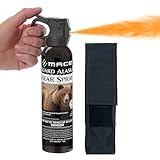
- LONG RANGE PROTECTION: This Mace bear deterrent spray protects from a safe distance with a powerful fogger pattern, giving you more time to react to a charging bear with up to 9 seconds of total spray time.
- MAX STRENGTH FORMULA: Made with 20% OC wildlife safe formula for maximum heat and potency, helping deter attacks and giving you time to retreat to safety.
- ALWAYS BE PREPARED: Essential for hiking, camping, and hunting. Its potent formula and long range spray coverage offers reliable protection so you can always be prepared for wildlife encounters.
- EASY TO USE: Designed with a finger loop handle for easy carrying and quick deployment in critical moments. To use, pull off the orange safety wedge and press down on the actuator.
- INCLUDES HOLSTER: Durable, heavy-duty nylon spray holster keeps your bear deterrent canister secure and within reach. Hook-and-loop closure allows for quick and easy access.
Air travel
Yellowstone guidance says bear spray cannot be taken on airplanes. Check current airline, airport, and local hazardous-material rules before traveling; regulations can change, and a canister that is legal to carry on a trail may not be legal in baggage or through security.
End-of-life canisters
Do not puncture, burn, or place a pressurized canister in ordinary trash unless local authorities specifically allow it. Ask the park, municipal waste service, or hazardous-materials facility about current disposal instructions.
Common questions answered plainly
Does a larger canister guarantee better protection?
No. Capacity and labeled range may affect how many seconds of spray are available, but access, expiration, wind, distance, and timing determine whether the cloud reaches the bear. The available evidence does not rank canister sizes or brands.
Should I spray a bear that is simply walking away?
Usually not. Spray is intended for an approaching or charging bear when contact is becoming likely. Follow the wildlife agency’s instructions for the behavior you are seeing and keep increasing distance without running.
Can I test my live canister before a trip?
Do not discharge a live canister as a routine test; doing so uses the product and creates an irritant cloud. Inspect the canister, read its instructions, and practice with an inert training unit instead.
What should I do after spraying?
Once the bear changes direction, move away calmly, keep the canister ready, and follow local reporting guidance. If anyone is exposed, move to fresh air and obtain medical help for persistent breathing difficulty, severe eye pain, or other serious symptoms. Report injuries or a significant wildlife encounter to the responsible park or wildlife agency.
Bottom line for hikers
Bear spray has meaningful real-world evidence behind it: in the published Alaska incident analysis, it stopped undesirable behavior in most reported brown- and black-bear cases and both reported polar-bear cases. Its value depends on using the right product, carrying it where it can be reached, practicing the safety and draw, deploying a cloud before contact, and accounting for wind, temperature, rain, and range. Treat it as a last line of defense alongside distance, awareness, group travel, and food-security practices—not as a guarantee and not as a repellent.
The Tool Desk
Outbyte Driver Updater FREEFix the driver behind crashes, sound loss and screen glitchesFind Drivers →Outbyte PC Repair FREEClear out junk files and repair common Windows errorsFree Scan →Quick Recap
Product prices and availability are accurate as of the date/time indicated and are subject to change. Any price and availability information displayed on Amazon at the time of purchase will apply.





Leave a Reply