
Some links on this page are affiliate links: if you buy through them we may earn a commission, at no extra cost to you.
Probably not. Hissing, hiding, swatting, biting, or avoiding you do not prove that a cat hates you. Those behaviors are communication: your cat may be frightened, overstimulated, stressed, trying to create distance, or hurting. The useful question is what happened before the behavior, whether it is new, and whether medical problems could be involved.
“Hate” is a human interpretation, not a cat diagnosis
There is no validated test that can determine whether a cat loves or hates a particular person. A single behavior—walking away, refusing a stroke, hiding under furniture, or hissing when approached—cannot establish an emotion as specific as hatred. Cats communicate through posture, movement, facial expression, vocalization, and changes in routine. The same action can have different meanings in different situations.
As an Amazon Associate I earn from qualifying purchases.
For example, a cat that leaves when you reach toward it may be asking for space, reacting to a painful body area, or responding to a recent frightening event. A cat that swats during a play session may be over-aroused rather than hostile. Interpreting the complete pattern is more reliable than labeling the cat’s character or your relationship.
Veterinary guidance puts cause-finding first. The Cornell Feline Health Center states: “The first step in managing an aggressive cat is to ensure that there is no medical reason for aggressive behavior.” Treat the behavior as information, not revenge or a personal rejection.
Popular on Amazon

- Complete Calming Solution: This cat calming diffuser kit includes diffusers and refills (48mL per bottle). Each refill delivers a 30-day supply of continuous support to help ease your cat’s anxiety. Ideal for addressing stress triggered by vet visits, traffic noise, fireworks, thunderstorms, or loneliness, this cat pheromone calming diffuser creates a safe and serene environment for felines of all ages and breeds
- Effective Stress & Behavior Support: Our cat pheromone diffuser works to reduce common signs of feline stress such as excessive scratching, urine spraying, hiding, and restlessness. By mimicking natural feline pheromones, this cat calming diffuser provides gentle, drug-free relief, making it a reliable choice for multi-cat households or cats experiencing tension during home changes or new pet introductions
- Long-Lasting & Wide Coverage: Each refill of the cat calming diffuser releases calming pheromones for up to 30 days, with coverage for areas up to 700 square feet. The diffuser features an automatic operation with a simple press of a button, and proper placement (vents facing up) ensures optimal performance and leak prevention, maximizing the effectiveness of your cat diffuser
- Safe & Non-Toxic Formula: The cat pheromone calming diffuser uses an odorless, non-toxic, and chemical-free formula that is safe for both humans and pets. Unlike harsh treatments, this cat calming diffuser does not cause drowsiness and poses no risk to your cat’s health, making it a trusted choice for daily use in any living space
- Easy to Use & Maintain: Setting up the cat calming diffuser is effortless—simply plug it into a standard outlet, keep the bottle upright, and press the button to activate. The heated diffuser and refill system operates quietly and continuously, requiring minimal maintenance; just replace the refill every 30 days to maintain consistent calming support for your feline friend
How to read your cat’s body language
Body language is most useful when several signals appear together and you know what happened immediately beforehand. No single cue proves a particular emotion.
Fear or defensive signals
- Dilated pupils, especially when paired with a tense or crouched body.
- Ears flattened or rotated outward.
- Whiskers flattened or pressed down rather than projecting naturally.
- A tail tucked close to or under the body.
- A low posture, crouching, freezing, or trying to retreat.
These signs often mean the cat wants a stimulus to move away. Approaching, cornering, or reaching over the cat can intensify the response because the animal has fewer escape options.
Quick wins for a faster PC:
Fix the driver behind crashes, sound loss and screen glitchesFind Drivers →Repair Windows errors before they cause bigger problemsFix Now →Escalating aggression signals
- Ears pinned backward.
- An erect or puffed tail.
- An arched back, sometimes with the coat raised.
- Staring, growling, hissing, swatting, or biting.
Defensive and aggressive postures overlap. A cat can look threatening while primarily trying to increase distance. The practical response is the same at first: stop the interaction, give the cat a clear retreat, and avoid touching it until it is calm.
Behaviors that are not proof of dislike
Hiding, sleeping in another room, declining a lap, walking away from petting, or choosing a different person at a particular moment are normal cat behaviors. Some cats prefer brief contact, floor-level interaction, or proximity without touch. Their social preferences can also change with age, household disruption, or health. These actions become more concerning when they represent a marked change, occur with defensive signals, or appear alongside other possible illness or pain signs.
Why a cat may hiss, avoid, swat, or bite
Fear and the need for distance
Many forms of feline aggression function to make a person, animal, or object move away. A visitor, a loud noise, a carrier, an unfamiliar smell, or an attempt to pick up the cat can be perceived as a threat. The behavior may end as soon as the stimulus retreats; that relief can reinforce the cat’s use of hissing or swatting the next time.
Petting or handling discomfort
A cat can enjoy contact and then reach its tolerance limit. Watch for a shift from relaxed posture to tension, ear rotation, tail movement, skin twitching, or an attempt to leave. Stop at the early signal rather than waiting for a swat. Cornell recommends ending petting when aggression signs appear and allowing a cooling-down period without physical contact.
Recommended Free Tools
Also popular on Amazon
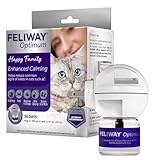
- HELPS REDUCE SIGNS OF STRESS USING A PATENTED PHEROMONE: FELIWAY Optimum is an advanced cat pheromone diffuser that helps reduce signs of stress in cats and helps ease tension between cats.*
- HELPS CATS FEEL CALM IN EVERYDAY SITUATIONS: FELIWAY Optimum is a cat calming diffuser that helps reduce stress‑related behaviors like urine spraying, scratching, hiding, and fearful reactions to change. Cat parents reported noticeable reductions in these behaviors, including a 77% reduction in urine spraying.
- SUPPORTS HARMONY IN MULTI‑CAT HOMES: Helps promote calmer interactions between cats. 72% of cat parents noticed reduced tension between their cats
- SAFE** AND NON-SEDATING: FELIWAY Optimum is not a sedative. It’s safe for use around cats, kittens, people and other pets.
- CONTINUOUS CALMING SUPPORT: This plug‑in cat pheromone diffuser provides 24/7 support when used as directed. To get started, plug into an open outlet with the vents pointed upward, allow at least 4 feet of clearance, and follow the label instructions.
Handling can also hurt when a cat has an injured, arthritic, dental, or otherwise painful condition. If touching one area consistently triggers a reaction, do not repeatedly test it. Arrange a veterinary examination.
Stress and changes in the environment
New people or animals, a changed routine, construction noise, rearranged furniture, conflict between household cats, or a different feeding schedule can alter behavior. Merck’s behavioral-history guidance emphasizes recording household changes and the circumstances around each episode. A trigger that seems minor to a person may be predictable and significant to a cat.
Unmet play needs
Merck notes that aggression directed at people can sometimes be associated with unmet play needs. This is one possible contributor, not a diagnosis and not an explanation for every bite. Interactive play with a wand-style toy can provide an appropriate target for chasing and pouncing, provided the toy stays between your hands and the cat. Never use fingers or feet as prey, and stop if the cat becomes highly aroused.
Pain or illness
Medical problems can change a cat’s tolerance and behavior. Cornell identifies hyperthyroidism, osteoarthritis, dental disease, and central nervous system problems as possible contributors to aggression. A sudden change, a rapidly worsening pattern, or aggression that appears with other concerning changes deserves veterinary attention before you assume the issue is training or temperament.
Use the pattern to narrow the possibilities
Observation cannot diagnose a cause, but organizing the pattern helps you and your veterinarian decide what to investigate.
| Observation | What it can suggest | What to record |
|---|---|---|
| Sudden onset versus longstanding behavior | A sudden change raises the priority of checking for pain, illness, or a new stressor; a longstanding pattern may involve learning, temperament, or an enduring trigger. | Approximate start date and what changed around that time. |
| Situation-specific versus occurring across settings | A reaction only during brushing, lifting, or near a window points toward a particular trigger; reactions in many settings warrant a broader assessment. | Room, activity, time of day, and what happened immediately beforehand. |
| Directed at one person versus several people | A person-specific pattern may reflect movement, scent, handling style, or a history of frightening interactions; reactions toward everyone can indicate a wider stress or medical issue. | Who was present and how each person interacted. |
| With versus without other possible illness signs | Changes in appetite, mobility, grooming, toileting, energy, or apparent pain increase the need for veterinary evaluation. | When each change began and whether it is worsening. |
These comparisons are observation tools, not a “hate checklist.” They help describe behavior precisely without claiming certainty that the evidence cannot support.
Also popular on Amazon

- SPECIFICALLY DESIGNED FOR MULTI-CAT HOMES: FELIWAY MultiCat is a cat calming diffuser that helps reduce tension between cats, including conflict, fighting, chasing, and blocking, supporting a calm home for cats living together
- HELPS CATS GET ALONG BETTER: This cat pheromone diffuser promotes calm interactions and helps ease ongoing tension, supporting more peaceful relationships in multi-cat households
- HELPS REDUCE TENSION BETWEEN CATS: 84% of cat parents noticed improvement in tension and conflict between their cats when using FELIWAY MultiCat
- SAFE* AND NON-SEDATING: FELIWAY MultiCat is not a sedative. It is safe for use around cats, kittens, people and other pets.
- CONTINUOUS CALMING SUPPORT FOR SHARED SPACES: Plug-in cat pheromone diffuser provides 24/7 calming support. To get started, plug into an open outlet with vents pointed upward and allow 4+ ft of clearance, and follow the label instructions.
What to do when your cat reacts badly
1. Pause contact and create an exit
Stop petting, step back, and keep your body turned slightly away. Do not corner, grab, chase, or block the cat’s route. If children or other pets are nearby, move them away calmly. Allow the cat to reach a hiding place or elevated retreat. Do not pull it out.
2. Keep a behavior record
Write down the date, location, people and animals present, the event immediately before the reaction, the cat’s posture and vocalization, how long the episode lasted, and what ended it. Note frequency, duration, whether the pattern is changing, attempted corrections, and household schedule changes. A short video from a safe distance can help a veterinarian, but never provoke an episode to obtain footage.
3. Reduce predictable triggers
Once you identify a pattern, manage the environment so the cat is not repeatedly pushed past its limit. Provide a quiet retreat, separate cats that are in conflict, and let the cat approach rather than reaching into its hiding place. If a particular handling task is unavoidable, ask your veterinarian for a safe plan instead of improvising restraint.
4. Rebuild contact gradually
Use brief, low-pressure interactions. Sit nearby without staring, offer a treat when the cat remains relaxed, and let it choose whether to come closer. Keep sessions short and end while the cat is still comfortable. Reward calm behavior; do not demand petting as payment. Over repeated sessions, you can slowly decrease distance or add a small amount of touch, returning to an easier step if tension appears.
5. Use appropriate play
Schedule interactive play with a wand toy or another object that keeps teeth and claws away from hands. Let the cat stalk, chase, and catch the toy, then finish with a calm transition. Play is enrichment, not a treatment for pain or fear. If play consistently triggers biting or frantic behavior, stop and seek professional advice.
6. Never punish
Yelling, hitting, spraying water, scruffing, or forcing a cat to remain in contact can increase fear and make future aggression more likely. Cornell warns, “Any type of physical punishment can increase a cat’s fear or anxiety and worsen aggression.” Merck likewise notes that punishment can make a cat afraid of its owner. Distance, management, and reward-based behavior change are safer approaches.
The Tool Desk
Outbyte PC Repair FREEClear out junk files and repair common Windows errorsFree Scan →Outbyte Driver Updater FREEScan for outdated or missing drivers - takes under a minuteDriver Scan →Also popular on Amazon

- HELPS REDUCE CAT STRESS: FELIWAY Classic is a cat calming diffuser that helps individual cats feel calm and reduce stress behaviors like scratching, urine spraying, and hiding
- CREATES A CALMING HOME ENVIRONMENT: FELIWAY Classic uses calming pheromone messages that cats naturally understand to help them feel comfortable and safe during everyday changes in routine or environment. 9 out of 10 cat parents noticed reduced urine spraying and 8 out of 10 saw reduced scratching
- SAFE* AND NON-SEDATING: FELIWAY Classic is not a sedative. It’s safe for use around cats, kittens, people and other pets.
- CONTINUOUS CALMING SUPPORT FOR SHARED SPACES: Plug‑in cat pheromone diffuser provides 24/7 calming support. To get started, plug into an open outlet with vents pointed upward and allow 4+ ft of clearance, and follow the label instructions.
- #1 VET RECOMMENDED BRAND**: FELIWAY is the #1 vet recommended brand, and is backed by 30 years of feline stress expertise
When a veterinarian should be involved
Book a veterinary appointment for new, escalating, unusually intense, or otherwise concerning aggression. Arrange an examination promptly when the behavior may be linked to pain or illness, when touching a particular area causes a reaction, or when the cat’s general behavior has changed. The goal is not to label the cat; it is to identify or rule out medical contributors before treating the problem as purely behavioral.
Bring your behavior record, a list of household changes, current medications or supplements, and any safely captured video. Describe exactly what the cat did rather than saying only that it “became mean.” Include onset, frequency, duration, targets, triggers, and what you tried. Those details help the clinician decide whether additional medical testing or a behavior referral is appropriate.
When to seek behavior support
If aggression continues after medical issues are addressed and basic management is not enough, ask your veterinarian about a veterinary behaviorist or a qualified feline behavior consultant. Cornell recommends veterinary behaviorist consultation when aggression cannot be managed with its outlined techniques. Professional help is especially valuable when a cat is biting, household members cannot safely avoid triggers, or several animals are involved.
A behavior plan should specify the trigger, the safe distance or intensity at which the cat can remain calm, the reward to use, and how to progress gradually. Do not attempt forced exposure (“flooding”) or deliberately provoke the cat. Improvement is measured by safer, calmer responses and better recovery, not by making the cat tolerate unlimited handling.
Crashes, No Sound, or Screen Glitches?
Random freezes, missing sound and display glitches usually trace back to one bad driver. Find and replace yours safely.Free scan · under a minutePC Slower Than It Used to Be?
A free scan shows the junk files, broken settings and background clutter dragging Windows down - then fixes them in one click.Free scan · Windows 10 & 11Common mistakes that make the problem worse
- Taking the behavior personally: assuming spite can lead to confrontations instead of investigating fear, stress, or pain.
- Testing the limit: continuing to pet or pick up a tense cat teaches it that early warning signals are ignored.
- Removing every hiding place: a retreat helps a frightened cat recover; removing it can increase panic.
- Changing everything at once: multiple new rules, foods, rooms, or introductions make it difficult to identify what helped or hurt.
- Using hands as toys: this teaches the cat that human skin is an acceptable target.
- Waiting through a major change: a sudden or worsening pattern should not be dismissed as a personality shift.
What a healthier interpretation looks like
Instead of asking, “Does my cat hate me?” ask: “What was my cat communicating, what preceded it, and what would make the situation safer?” A cat that hides may need a secure retreat. A cat that swats during petting may need shorter contact or a medical check. A cat that attacks ankles may need trigger management and more appropriate play. A cat that becomes aggressive suddenly may need veterinary assessment.
That change in question protects both of you. It replaces an untestable label with observable facts, reduces punishment and forced contact, and directs attention to medical care, environmental changes, and gradual trust-building when those are needed.





Leave a Reply