
Some links on this page are affiliate links: if you buy through them we may earn a commission, at no extra cost to you.
Peppermint oil may temporarily discourage a mouse from a small treated area, but it does not reliably control mice. It will not kill mice, remove an established infestation, close entry holes, or provide a dependable long-term barrier. If you use it, treat it only as an optional supplement after inspecting for entry points, removing food sources, sealing gaps, and trapping active mice.
This distinction matters especially in homes with pets. Peppermint oil and other essential oils are concentrated substances—not automatically safe simply because they are natural—and cats, birds, rabbits, guinea pigs, hamsters, and other small animals can be particularly vulnerable.
As an Amazon Associate I earn from qualifying purchases.
Do these 3 things before closing this tab:
1Scan for outdated or missing drivers - takes under a minute2Clear out junk files and repair common Windows errors3Fix the driver behind crashes, sound loss and screen glitchesDoes peppermint oil repel mice?
Sometimes, briefly, and only under certain conditions. A 2022 laboratory study found that peppermint-treated fabric initially caused avoidance in laboratory mice during controlled behavioral tests. However, the measurable repellent effect was no longer statistically significant after seven days. The study used seven-week-old male ICR mice, commercial peppermint oil sprayed onto fabric, and controlled maze and light-dark tests—not wild mice living in houses, garages, vehicles, or attics. Read the study.
The results support a cautious statement such as “fresh peppermint odor may temporarily make a small area less attractive to some mice.” They do not prove that peppermint oil keeps mice out of a house or eliminates an infestation.
Popular on Amazon

- Repels Rodents From Homes & Storage Areas: This indoor rodent repellent spray uses peppermint oil and cinnamon oil to help prevent mice from nesting and chewing in enclosed spaces, garages, attics, basements, cupboards, and storage areas. A practical peppermint spray mouse deterrent for indoors.
- Plant-Based Essential Oil: Powered by peppermint oil and cinnamon oil, this peppermint oil for mice spray is made without harsh chemicals or poisons. A plant-based rodent repellent indoor solution that is safe around kids and pets when used as directed and helps prevent costly rodent damage.
- Helps Protect Wiring, Fabrics & Stored Vehicles During Winter: Spray along cupboards, enclosed vehicle or boat storage, car wiring, machinery, engines, and entry points where rodents may invade during colder months. The peppermint scent works as a rat deterrent and rodent repellent indoor for mice.
- Non-Staining Ready-To-Use Spray: This liquid mint spray can be applied directly to dry surfaces without leaving oily residue or stains. A convenient mouse repellent spray for enclosed indoor spaces and an outdoor rodent repellent option for mice in covered storage areas.
- Grandpa Gus's Pest Control, Built the Right Way: Powered by plant-based essential oils, built on old-fashioned values from a working farm, and honest results you can trust. Made in the USA. Safe for your family, backed by our Old-Time Handshake Guarantee.
A systematic review of 54 studies on plant-derived rodent repellents reached a similar practical conclusion: results were inconsistent across laboratory, enclosure, and field studies. Compounds that appear promising in a laboratory often do not translate reliably to real-world rodent management, and only a small number of plant-based rodent repellents are registered commercially. See the systematic review.
University Extension guidance is more direct: peppermint is not expected to stop mice from entering a home. Exclusion, food control, and snap-trapping are the appropriate measures. Read the Extension response.
What peppermint oil can—and cannot—do
| What it may do | What it cannot reliably do |
|---|---|
| Temporarily make one treated spot less attractive to some mice | Kill mice |
| Cause a mouse to change direction briefly | Remove mice already nesting in walls, ceilings, or furniture |
| Provide a short-lived scent deterrent when the odor is fresh and concentrated | Seal a quarter-inch entry hole or prevent a mouse from finding another route |
| Serve as an optional supplement to a broader pest-control plan | Reduce a mouse population or reliably prevent reinfestation |
A mouse walking away from one cotton ball is not the same as controlling the infestation. If food, warmth, nesting material, and shelter are available, a hungry mouse may tolerate an unpleasant smell. It may also simply move behind an appliance, into a wall void, attic, ceiling, cabinet, or another room.
Peppermint odor also fades. Airflow disperses volatile compounds, surfaces absorb them, and animals may become accustomed to repeated odors. The laboratory study’s loss of a significant effect after seven days is not a universal household expiration time, but it is a reason not to promise that peppermint lasts a particular number of days.
Does peppermint oil make mice leave or kill them?
No. Peppermint oil is not a mouse poison, and there is no good evidence that it drives an established nest out of a wall or building. Even if a mouse avoids a treated patch, it remains somewhere nearby unless you remove it or prevent it from getting back in.
That is why scent treatments can create a misleading impression of success. You may stop seeing a mouse in the kitchen while it continues nesting behind the refrigerator, inside a wall, under a vehicle dashboard, or in an attic. Fresh droppings, gnaw marks, nesting material, food-package damage, and odors are more useful indicators than whether the peppermint smell remains strong.
Free tools Windows power users keep installed
One-click scans. No signup required.
There is no scientifically validated DIY peppermint recipe
Popular instructions often recommend mixing a certain number of drops or teaspoons of peppermint oil with water and spraying it around a room. The available mouse study does not establish a reliable household dilution, a drops-per-cup formula, a safe concentration for pets, a treatment amount for a garage or vehicle, or a replacement schedule for cotton balls and sprays.
For that reason, a recipe such as “two teaspoons per cup of water” should not be presented as a tested mouse-control treatment. It may be a popular DIY suggestion, but it is not a validated household dose. More oil is not necessarily more effective and increases the risk of respiratory irritation, pet exposure, stains, and damage to finishes.
Also, products described as peppermint oil, mint oil, corn mint oil, spearmint oil, peppermint extract, fragrance oil, and essential-oil blends are not interchangeable. Their chemical composition, concentration, and directions can differ substantially.
Also popular on Amazon

- 【Humane Natural Rodent Repellent】Repel rodents without causing harm, the rat repellent works by emitting multiple strong minty scents, the strong stimulation makes rodents feel uncomfortable and forces them to run away. It is an ideal to replace mouse traps, single use sticky traps, rat poison or pest repellent
- 【Effective & Powerful】These mouse repellent are made with ultra-strong essential oils, they can release scent for up to 30 days, the effective area of mouse deterrent balls cover up to 120 sq. ft. Effectively repels mice, squirrels, spiders,roach,ant,other rodents and pests
- 【Easy to Use】Simply remove the sealed plastic packaging, place the peppermint oil for mice into the included mesh bag, and place it in areas where rodents are often found, such as kitchen corners, car engines, garages, etc. The unpleasant smell will keep rodents away
- 【Works Anywhere】This repellent for rodents works anywhere, safely solving car engines, RVs, trucks, garages, closets, storage rooms, basements, attics, tractors, sheds, barns, boats. Mice repellent for house and other spaces
- 【Family & Pet Safe】Peppermint oil rodent repellent are formulated with natural plant ingredients, all-natural formula, and friendly to humans, pets, and the environment. you can use them with confidence
How to use peppermint oil as a cautious supplement
If you still want to try peppermint oil, use it as a small, reversible experiment—not as your main mouse-control method. There is no validated household dose, so a label-first approach is the most defensible option.
- Confirm that mice are actually present. Look for droppings, gnaw marks, tracks, nesting material, damaged food packages, or a musky odor. These are common signs of house-mouse activity. The University of California Integrated Pest Management guide has additional identification and control information.
- Address food and water first. Put human food, pet food, birdseed, and treats in tightly sealed, rodent-resistant containers. Clean crumbs and spills, secure garbage, and repair leaks. A scent is much less likely to matter when a mouse can easily reach food and water.
- Seal entry points. House mice can enter openings about 1/4 inch wide—roughly the diameter of a pencil. Use metal mesh, hardware cloth, concrete, or another chew-resistant material. Coarse steel wool can be useful as a temporary plug, but inspect it regularly. Plastic screening, rubber, vinyl, and expanding foam should not be the only repair because mice can gnaw through or around them. See guidance from UNH Extension and Penn State Extension.
- Use peppermint only in a localized spot. If you use an unlabeled household oil, put a small amount on an absorbent pad or in a secured scent holder near a suspected travel route. Keep it off food, food-contact surfaces, bedding, and areas accessible to children or animals. A labeled pest-control product must be used exactly as its label directs.
- Never use oil as a plug. Do not put a peppermint-soaked cotton ball inside an entry hole and assume the opening is sealed. The mouse may move around it—or push the material deeper into a wall, cabinet, engine compartment, or other inaccessible area.
- Do not saturate enclosed spaces. Do not pour oil into wall cavities, vents, HVAC systems, crawlspaces, engine compartments, or poorly ventilated rooms. Avoid spraying near air intakes, where the odor and droplets can be distributed through the building or vehicle.
- Stop if it does not produce a clear benefit. If fresh droppings, gnawing, or sightings continue, stop escalating the amount or frequency. Move to exclusion and trapping, or contact a qualified pest professional.
Do not spray peppermint oil directly on a mouse, another animal, a pet, food, dishes, pet bowls, countertops used for food preparation, clothing, bedding, or valuable porous materials. Essential oils can stain or damage finishes and leave persistent residues.
The mouse-control plan that works better
1. Inspect methodically
Look for both mice and the routes they use. Check:
- Under sinks and around plumbing penetrations
- Behind refrigerators, ovens, washers, dryers, and other appliances
- Around doors, garage doors, foundation joints, vents, and utility lines
- Attics, basements, crawlspaces, garages, sheds, and storage rooms
- Food cupboards, pet-food storage, garbage areas, and birdseed storage
- Vehicle air intakes, engine compartments, wiring areas, and cabin-filter housings if the problem is in a car or RV
Use droppings, rub marks, gnawing, nesting material, and odor to identify active areas. A trail of signs is more useful than treating every room with fragrance.
2. Exclude mice with chew-resistant repairs
UC Integrated Pest Management calls exclusion the most successful and permanent form of house-mouse control. Seal openings larger than 1/4 inch, including gaps around pipes, cables, doors, vents, foundations, and roof or siding transitions.
Inspect outside as well as inside. Sealing only an interior hole can leave mice trapped in a wall void or redirect them into living areas. Repair the exterior access route whenever possible, then seal interior gaps that connect the building to occupied rooms.
3. Trap active mice
For a small indoor infestation, properly placed snap traps are generally the preferred first-line tool. They remove the mouse and provide a clear way to check whether activity is declining.
- Place traps along walls, behind objects, in dark corners, and near droppings or other signs.
- Position the trigger end next to the wall because mice commonly travel along edges.
- Keep traps where children, pets, and other animals cannot reach them.
- Use only a small amount of bait. Too much can sometimes be removed without triggering the trap.
- In active areas, UC IPM recommends spacing traps no more than approximately 10 feet apart.
- Pairs of traps placed about 1–2 inches apart can help catch mice that jump over or avoid a single trap.
Continue checking traps and signs after sealing gaps. A reduction in fresh droppings and captures is more meaningful evidence of progress than a strong peppermint smell.
4. Consider rodenticides carefully
Rodenticides are not automatically safer or more effective than traps. They can expose pets and wildlife directly or indirectly, and a poisoned mouse may die in an inaccessible wall or ceiling.
In the United States, consumer rodenticide products must use secured bait stations and block or paste bait; loose consumer pellets are not permitted under current EPA requirements. Keep products away from children and pets, and follow the product label exactly. See the EPA’s guidance on options for dealing with rodent infestations and consumer mouse and rat poison packaging.
PC Slower Than It Used to Be?
A free scan shows the junk files, broken settings and background clutter dragging Windows down - then fixes them in one click.Free scan · Windows 10 & 11Outdated Drivers Are Slowing You Down
One free scan finds every outdated or missing driver and matches the right update for your exact hardware.Free scan · exact hardware matchAlso popular on Amazon

- Repels Rodents From Homes & Storage Areas: This indoor rodent repellent spray uses peppermint oil and cinnamon oil to help prevent mice from nesting and chewing in enclosed spaces, garages, attics, basements, cupboards, and storage areas. A practical peppermint spray mouse deterrent for indoors.
- Plant-Based Essential Oil: Powered by peppermint oil and cinnamon oil, this peppermint oil for mice spray is made without harsh chemicals or poisons. A plant-based rodent repellent indoor solution that is safe around kids and pets when used as directed and helps prevent costly rodent damage.
- Helps Protect Wiring, Fabrics & Stored Vehicles During Winter: Spray along cupboards, enclosed vehicle or boat storage, car wiring, machinery, engines, and entry points where rodents may invade during colder months. The peppermint scent works as a rat deterrent and rodent repellent indoor for mice.
- Non-Staining Ready-To-Use Spray: This liquid mint spray can be applied directly to dry surfaces without leaving oily residue or stains. A convenient mouse repellent spray for enclosed indoor spaces and an outdoor rodent repellent option for mice in covered storage areas.
- Grandpa Gus's Pest Control, Built the Right Way: Powered by plant-based essential oils, built on old-fashioned values from a working farm, and honest results you can trust. Made in the USA. Safe for your family, backed by our Old-Time Handshake Guarantee.
5. Know when to call a professional
Get professional help when there are many droppings or nests, mice are inside HVAC ducts or inaccessible wall voids, the infestation persists after exclusion and trapping, or the building contains vulnerable occupants. Professional assistance is also appropriate for businesses, food-storage areas, rental properties, and multi-unit buildings where neighboring units may provide continuing access.
Is peppermint oil safe around cats, dogs, birds, and small pets?
Do not assume peppermint oil is pet-safe. Essential oils can be absorbed through the gastrointestinal tract, skin, lungs, and mucous membranes. Concentrated oils should never be applied directly to an animal.
Cats are particularly vulnerable because of how they metabolize some compounds and because grooming can lead to ingestion. Birds are highly sensitive to fragrances and aerosolized particles. Rabbits, guinea pigs, hamsters, and other small mammals can also be harmed by strong odors, spills, licking, or contaminated bedding. Dogs are not immune to essential-oil exposure either.
Keep peppermint oil, treated pads, and scent holders away from:
- Cats and kittens
- Birds and cages
- Rabbits, guinea pigs, hamsters, mice, rats, and other small mammals
- Dogs that can lick or chew treated materials
- Pets with asthma, respiratory disease, or unusual sensitivity to fragrances
Do not use active or ultrasonic essential-oil diffusers around pets. As Merck Veterinary Manual explains, active diffusers emit oil microdroplets that can settle on fur or feathers and later be swallowed during grooming. The ASPCA and VCA also advise caution around essential oils and pets.
Keep bottles and treated materials inaccessible to children. Ventilate the area and stop using the oil if anyone develops coughing, wheezing, eye irritation, headache, nausea, or other symptoms. Avoid using it near sleeping areas or air intakes.
What does an EPA label mean for mint-based products?
Regulatory status and effectiveness are separate questions. The EPA lists peppermint oil among ingredients eligible for certain minimum-risk pesticide products, sometimes called 25(b) products. That exemption concerns ingredient, labeling, and product-claim requirements; it is not a federal finding that every peppermint-oil product works against mice. EPA generally does not review every exempt product for efficacy. Details are available in the EPA’s minimum-risk pesticide explanation and the National Pesticide Information Center overview.
A product label also applies only to the uses and target organisms listed on that label. For example, the EPA label for Mint-X lists corn mint oil at 0.288% alongside other active ingredients and identifies effectiveness against Norway rats, raccoons, and squirrels—not house mice. View the Mint-X label.
Recommended Free Tools
Before buying or applying a commercial mint-based product, check:
- Whether it specifically names house mice or the rodent you are trying to control
- Whether the intended site—indoors, outdoors, a vehicle, garage, attic, perimeter, or food-storage area—is listed
- Whether the application method and concentration match the label
- Whether your state or local rules add requirements
- Whether the product’s precautions address children, pets, ventilation, food, and surfaces
Do not treat an unlabeled essential oil as if it were an EPA-tested mouse-control product, and do not assume a label for rats, squirrels, insects, or another species covers house mice.
Also popular on Amazon
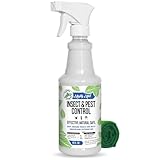
- Pet-Friendly & Family-Safe Formula – Mighty Mint is a top pick for pet parents looking for a natural pest control solution. Safe to use around dogs, cats, and kids when applied as directed—no harsh fumes or dangerous chemicals, just powerful peppermint protection you can trust.
- Powerful Plant-Based Pest Control – Formulated with extra-concentrated peppermint oil, this spray is a proven deterrent for spiders, ants, roaches, and more.
- Effective Indoor & Outdoor Use – Designed for versatile application on baseboards, entryways, patios, and other areas. Helps repel insects from kitchens, bathrooms, living spaces, and more—without staining surfaces.
- Fresh Minty Scent With Long-Lasting Effect – Infused with pure peppermint oil, this formula leaves a crisp, clean aroma that lingers without overwhelming. Free from synthetic fragrances and common allergens, making it a gentle option for scent-sensitive households.
- Ready-To-Use 16 Oz Spray For Targeted Application – Perfect for quick treatments in high-traffic areas, this 16 oz bottle delivers fast, focused pest control against spiders, ants, and other common insects. Pre-mixed and easy to use—just spray and go for natural protection wherever it’s needed most.
How to clean mouse droppings and nests safely
Peppermint oil does not disinfect mouse urine, droppings, or nesting material. Do not sweep or vacuum rodent waste before disinfecting it: disturbing dry contamination can aerosolize particles. The CDC recommends this procedure:
- Put on rubber or plastic gloves.
- Spray droppings, urine, or nesting material until thoroughly wet with an EPA-registered disinfectant or a fresh bleach solution.
- For the CDC bleach recipe, mix 1 1/2 cups of household bleach with 1 gallon of water, equivalent to 1 part bleach to 9 parts water.
- Let the disinfectant soak for 5 minutes, or follow the disinfectant product’s label.
- Wipe up the waste with paper towels and discard them.
- Mop or sponge the area with disinfectant.
- Wash gloved hands before removing the gloves, then wash bare hands.
Never mix bleach with other cleaners. For larger infestations, enclosed spaces, or areas with substantial contamination, follow the CDC’s hantavirus prevention guidance and consider professional cleanup.
Quick wins for a faster PC:
Clear out junk files and repair common Windows errorsFree Scan →Scan for outdated or missing drivers - takes under a minuteDriver Scan →Repair Windows errors before they cause bigger problemsFix Now →Common peppermint-oil mistakes
- The mouse walks past the oil. A hungry mouse may tolerate an unpleasant odor when food, warmth, and shelter are available.
- The smell works at first, then activity returns. The scent fades, airflow disperses it, and mice may habituate. The laboratory study found no statistically significant effect after seven days under its specific test conditions.
- The oil redirects the mouse. A treated patch can send a mouse into a wall, ceiling, cabinet, attic, or another room rather than out of the building.
- The wrong species or product is assumed to be covered. Evidence from laboratory mice, rats, insects, commercial blends, or outdoor wildlife cannot automatically be transferred to wild house mice in a home.
- More oil is used when a small amount fails. There is no validated household dose. Increasing the amount raises exposure and surface-damage risks without proving better control.
- A minimum-risk product is mistaken for an EPA endorsement. An exemption does not mean EPA has tested and confirmed the product’s mouse-control performance.
- Peppermint is used before exclusion. Odor cannot compensate for an open 1/4-inch gap.
- Droppings are vacuumed after scent treatment. Fragrance does not make contaminated waste safe to disturb. Follow the CDC’s wet-cleaning procedure instead.
Which mouse-control method fits your goal?
| Goal | Peppermint oil | Exclusion | Snap traps | Rodenticide | Professional control |
|---|---|---|---|---|---|
| Briefly discourage activity in one spot | Possible, uncertain | Yes, if the gap is sealed | No | No | Yes |
| Remove mice already inside | No | No | Yes | Yes | Yes |
| Prevent repeat entry | No | Best option | No | No | Yes |
| Verify whether control worked | Poorly | Indirectly | Clearly | Less clearly | Yes |
| Safe around pets | Not automatically | Generally safer | Only when inaccessible | Requires strict precautions | Depends on method |
| Works in open outdoor areas | Unreliable | Limited | Usually impractical | Product- and label-dependent | Often best |
| Evidence for household effectiveness | Weak | Strong practical consensus | Strong practical consensus | Strong, with safety trade-offs | Strong when properly applied |
When should you stop trying peppermint oil?
Stop treating peppermint oil as the solution if:
- You continue finding fresh droppings or gnaw marks.
- You hear movement in walls, ceilings, or ductwork.
- You see mice during the day or see more than one mouse.
- A pet may lick, chew, or inhale the treated material.
- Anyone in the home develops respiratory or irritation symptoms.
- The oil is being used to mask an odor rather than address the source.
- You are repeatedly adding more oil without reducing signs of activity.
At that point, prioritize sealing, trapping, safe cleanup, and professional help where necessary. In an apartment or other multi-unit building, notify the landlord or property manager because mice may be entering from adjoining units or shared utility spaces. In a car or RV, inspect the air intake, engine compartment, cabin filter, stored food, and wiring areas; do not pour oil into the vehicle or spray it into ventilation systems.
Frequently Asked Questions
How long does peppermint oil repel mice?
There is no dependable household duration. In one controlled 2022 laboratory study, peppermint initially caused avoidance, but the measurable effect was no longer statistically significant after seven days. That result should not be treated as a universal seven-day household guarantee.
Can I put peppermint oil on cotton balls to keep mice away?
You can treat a small amount on an absorbent pad or secured scent holder as an optional, localized experiment, but there is no validated household recipe or proof that cotton balls prevent mice from entering. Keep them away from pets and children, never put them in an entry hole, and do not use them in vents or enclosed spaces.
Is peppermint oil safe around cats?
Do not assume it is safe. Concentrated essential oils can expose cats through inhalation, skin contact, or ingestion during grooming. Avoid peppermint oil around cats unless your veterinarian specifically advises a safe, appropriate use.
The Tool Desk
Outbyte Driver Updater FREEScan for outdated or missing drivers - takes under a minuteDriver Scan →Outbyte PC Repair FREEClear out junk files and repair common Windows errorsFree Scan →Will peppermint oil keep mice out of my car or RV?
There is no good evidence that it reliably protects a vehicle or RV. Inspect and seal access points, remove food and nesting material, and check air intakes, cabin filters, engine compartments, and wiring areas. Do not pour or spray oil into ventilation, engine, or enclosed vehicle spaces.
What is more effective than peppermint oil for indoor mice?
Inspect for openings, seal gaps about 1/4 inch and larger with chew-resistant materials, remove food and water sources, and use properly placed snap traps. Rodenticides and professional control may be appropriate in some situations but require strict label and safety precautions.
The Bottom Line
Bottom line: Peppermint oil is an optional short-term scent tactic, not a mouse-control system. It may briefly make one spot less attractive to some mice, but it will not reliably remove an infestation or prevent entry. For lasting results, seal access points, secure food, trap active mice, clean contamination using CDC guidance, and keep essential oils away from pets—especially cats, birds, and small mammals.





Leave a Reply