
Vinegar is not a proven or dependable cat repellent. Some cats may dislike its sharp smell, but the veterinary and animal-welfare guidance available does not establish that spraying vinegar will keep cats away from a room, yard, window or marking site. More importantly, vinegar is an acid: concentrated or undiluted exposure can irritate a cat’s mouth and digestive tract.
Use vinegar, if at all, only as a properly diluted household cleaner, never on the cat and never as an invitation for the cat to lick a treated surface. Keep the animal away while the solution is wet, rinse when the product directions call for it, and let the area dry completely. For urine-marked places, an enzymatic pet-odor cleaner is the better-supported choice. New or persistent house-soiling deserves a veterinary assessment rather than an odor-based deterrent.
As an Amazon Associate I earn from qualifying purchases.
What the evidence says about vinegar as a cat deterrent
The sources reviewed by the ASPCA, Cornell University’s College of Veterinary Medicine and their poison-control guidance pages discuss vinegar mainly as an acidic household substance and as a possible cleaning ingredient. They do not report a controlled trial showing that vinegar reliably repels cats, prevents marking or solves litter-box avoidance. There is no established success rate, spray strength or application schedule that can be recommended.
The Tool Desk
Outbyte PC Repair FREERepair Windows errors before they cause bigger problemsFix Now →Outbyte Driver Updater FREEScan for outdated or missing drivers - takes under a minuteDriver Scan →That distinction matters. A cat might move away from a strong unfamiliar odor for a short time, while another cat ignores it. Even if an odor changes behavior briefly, it does not address why the cat is visiting, scratching, spraying or urinating in that location. A method that seems to work once is not evidence that vinegar will work consistently or safely in every home.
#1 Best Overall

- HELPS DISCOURAGE REPETITIVE SPRAYING: Formulated to deter cats from revisiting and spraying the same spot twice
- FOR INDOOR TRAINING: Ideal solution when trying to break cats’ spraying behaviors
- REPELLENT SCENT FORMULATED WITH ESSENTIAL OILS: Repellent scent deters cats from returning to the treated area
- SAFE FOR PETS AND HOME: Safe for pets and home when used as directed
- TRUSTED BRAND: From the maker of Nature’s Miracle products, the pet stain and odor removing brand you trust…because it works!
Therefore, the accurate answer to “Does vinegar keep cats away?” is efficacy is unestablished. Treat online recipes that promise a guaranteed vinegar barrier as anecdotal, not veterinary advice. Do not increase the concentration in an attempt to make the smell stronger; that increases irritation risk without creating evidence of better control.
Is vinegar safe around cats?
Risk depends on concentration and exposure
ASPCA Poison Control describes vinegar as acidic and capable of causing stomach upset and irritation. Its household-cleaner guidance says a vinegar-and-water solution is generally not an issue when it is diluted, rinsed and allowed to dry before a pet returns. That is a safety statement about limited exposure to a dried, diluted cleaning residue—not proof that vinegar is an effective repellent.
ASPCA’s June 4, 2020 article on household products specifically warns that ingesting concentrated or undiluted vinegar can cause vomiting, diarrhea, oral irritation and pain. Cornell’s small-animal toxin guidance likewise explains that acid damage depends on concentration. A cat that licks a wet puddle, drinks from a container or walks through a concentrated mixture and then grooms its paws has more exposure than a cat that encounters a dry, cleaned surface.
Safer cleaning practice
- Read the product label first. Follow the dilution, ventilation, rinsing and storage instructions for the vinegar product or cleaner you are using.
- Remove the cat from the area. Close the door or use another barrier while the surface is wet. Do not spray toward the animal, its bedding, food, water or litter box.
- Use only the stated dilution. A stronger mixture is not a validated repellent and creates a more concentrated acid exposure.
- Rinse when directed. If the label or your cleaning procedure calls for rinsing, remove the residue rather than leaving a cat-accessible film.
- Allow complete drying and ventilation. Return the cat only after the surface is dry and the room has aired as directed.
- Store the bottle securely. Keep concentrated vinegar and cleaning products closed and out of reach; never transfer them to an unlabeled container.
Do not apply vinegar directly to fur, paws, skin, eyes, nose or the inside of the mouth. Cats groom themselves, so a substance left on the coat can become an ingestion problem even when it was not swallowed at the time of application.
What to do after a possible exposure
If a cat licks concentrated or undiluted vinegar, drinks it, or develops drooling, mouth pain, vomiting, diarrhea or unusual distress after contact, call a veterinarian or an animal poison-control service for case-specific advice. ASPCA lists its Animal Poison Control number as (888) 426-4435. Have the product container, estimated amount, concentration and time of exposure available.
Do not induce vomiting after suspected acid exposure unless a veterinarian specifically instructs you to do so. Vomiting can bring the irritating material back through the mouth and esophagus. If the product contacted the eyes or skin, follow veterinary or poison-control instructions for flushing and examination rather than experimenting with another household chemical.
Why vinegar is a poor choice for cat urine and marking
Odor removal is different from odor masking
Urine marking and inappropriate urination leave chemical cues that can draw a cat back to the same place. Adding a sharp-smelling liquid may mask the odor to people temporarily without neutralizing the compounds that the cat can detect. It also introduces the possibility of irritation and leaves the underlying behavior unaddressed.
ASPCA recommends an enzymatic pet-odor cleaner for marked areas. These products are designed for pet urine and belong in the cleaning step, not as a sprayed boundary around the cat. Use the product exactly as labeled, keep the cat away during application and drying, and check whether the surface is suitable for liquid treatment before saturating it.
Why Cornell cautions against vinegar-containing cleaners in house-soiling cases
Cornell’s Feline Health Center advises avoiding cleaners containing ammonia or vinegar for house-soiling. Its explanation is practical: these products can smell like urine and can be irritating. Ammonia is especially unhelpful because urine contains ammonia-related odor compounds, but Cornell includes vinegar in the caution as well.
Rank #2
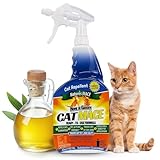
- 40 OZ READY-TO-USE FORMULA: This 40-oz ready-to-use cat spray deterrent requires no mixing or measuring. Apply directly from the bottle for coverage of targeted areas such as beds, furniture, trash bags, decks, or walkways. Great for home or garden use, it helps keep your space cat-free while reducing the effort needed for daily upkeep.
- TARGETED AREA APPLICATION: Shake thoroughly and apply our cat pee stopper to areas where cats are unwanted, covering up to 1,000 sq ft. Apply daily for the first 7-10 days, as these are the primary training days. Afterward, apply twice during the following week, and then once per week to maintain protection. Consistency is crucial in training cats to stay away from the treated areas.
- UTILIZES SCENT AVERSION: Formulated with essential oils that cats strongly dislike to keep them away from certain areas. It contains oils like peppermint and castor oil, which cats find unpleasant. Whether you need a cat spray deterrent for scratching, cat deterrent spray for unwanted behavior, or a cat spray repellent for targeted areas, it helps for all your cat training needs.
- INDOOR DETERRENT FOR HOME SURFACES: It can also be used indoors to keep away cats from scratching or clawing furniture and walls. Apply to common target areas such as sofa arms, chair legs, and door frames, creating a boundary that discourages repeat behavior. Our cat spray training formula is generally fabric-safe, but it is recommended to apply it to a hidden area first to see if it will stain the fabric. Helps protect furniture and maintain a scratch-free home.
- GENTLE CAT SPRAY TRAINING: Our cat scratch deterrent is a powerful training tool. Cats respond through repetition and consistency, so regular use helps reinforce learned behavior. This product gradually corrects habits by deterring unwanted scratching and marking actions, helping establish respectful boundaries within indoor and outdoor spaces.
This advice applies to the problem of repeated urination or marking, not to every household cleaning task. A diluted vinegar solution that has been used, rinsed and dried may be tolerated as a general cleaner, yet it is still not the recommended way to rehabilitate a urine-marked site. For that purpose, choose an enzymatic pet-odor cleaner and investigate the reason the cat is using the area.
House-soiling can signal a medical problem
A cat that suddenly urinates outside the litter box may have a urinary, gastrointestinal, pain-related or mobility problem. Stress and environmental conflict can also change elimination behavior. Because the same visible symptom can have very different causes, Cornell recommends a veterinary examination and appropriate diagnostic tests for house-soiling.
Quick wins for a faster PC:
Repair Windows errors before they cause bigger problemsFix Now →Fix the driver behind crashes, sound loss and screen glitchesFind Drivers →Clear out junk files and repair common Windows errorsFree Scan →Arrange veterinary care promptly when the behavior is new, frequent, accompanied by straining, vocalizing, blood, reduced urine, increased thirst, appetite changes, hiding or other illness signs. A blocked urinary tract is an emergency, particularly in male cats; a cat that repeatedly strains with little or no urine needs immediate veterinary attention.
During the appointment, describe when the behavior began, where it occurs, whether the cat squats or sprays, litter-box type and location, recent household changes, and any changes in drinking or appetite. A veterinarian can decide whether urine testing, imaging or other diagnostics are appropriate. Treating a medical cause is more effective than trying to make the target area smell unpleasant.
When neighborhood cats trigger marking at a window
Some indoor cats mark after seeing or smelling unfamiliar cats outside. ASPCA’s urine-marking guidance suggests limiting the indoor cat’s view of neighborhood cats, for example with a visual barrier. In the specific context of outdoor cats near windows, it also names a motion-detection sprinkler as one possible way to discourage those outdoor visitors.
These measures target an external trigger; they are not evidence that vinegar repels cats generally and they do not replace a litter-box or medical evaluation. A practical response is to block the visual line of sight, keep the window area clean with an appropriate enzymatic product if marking has occurred, and seek veterinary or qualified feline-behavior advice if marking persists.
Do these 3 things before closing this tab:
1Fix the driver behind crashes, sound loss and screen glitches2Repair Windows errors before they cause bigger problems3Scan for outdated or missing drivers - takes under a minuteChoose the response by the problem you are trying to solve
| Situation | Better-supported action | What to avoid |
|---|---|---|
| Urine on a wall, floor, fabric or furniture | Use an enzymatic pet-odor cleaner made for cat urine, following its label and drying instructions. | Relying on vinegar to mask the smell or using ammonia-based products that may attract a cat back. |
| New or persistent urination outside the litter box | Schedule a veterinary examination and recommended diagnostic tests; involve a qualified feline behavior professional when needed. | Trying stronger odors while delaying evaluation of pain, urinary disease or stress. |
| Indoor cat reacts to cats outside a window | Limit the view with a visual barrier; a motion-detection sprinkler may help discourage outdoor cats near that window. | Presenting a window sprinkler as a cure for all litter-box problems or spraying vinegar indoors. |
| Routine household cleaning where a cat may walk | If using a vinegar-water cleaner, keep the cat away while wet, rinse as directed and allow the surface to dry. | Applying vinegar to the animal, leaving wet residue accessible or using concentrated solution. |
A practical plan for a cat returning to one spot
- Check for illness first. If the behavior is new, repeated or accompanied by other signs, contact a veterinarian before treating it as a nuisance.
- Clean the site with an enzymatic urine product. Follow the label’s contact time and drying requirements. Remove or launder porous items that cannot be adequately cleaned.
- Make the litter setup easy to use. Keep boxes accessible and observe whether the cat avoids a particular location, texture or level of cleanliness. Discuss persistent avoidance with the veterinary team.
- Look for a trigger. Record visitors, renovations, new animals, changes in schedule and outdoor cats visible through windows.
- Reduce the trigger safely. Use a visual barrier for window-based conflict and ask a behavior professional for a plan if marking continues.
- Protect treated surfaces while they dry. Do not use vinegar as a boundary spray. Use a temporary physical barrier instead, provided it cannot trap, frighten or injure the cat.
Common mistakes and why they backfire
Spraying the cat
Spraying an animal with vinegar risks eye, skin and oral exposure and can make handling or the environment frightening. It does not teach the cat where elimination or scratching is appropriate. Never use it as a punishment.
Using undiluted vinegar for a stronger effect
Concentrated vinegar increases acidity and the potential for mouth and gastrointestinal irritation. No efficacy evidence justifies that added risk.
Leaving a wet solution where a cat can lick it
A cat may investigate a puddle or groom residue from its paws. Keep the cat away until the product is dry and the area has been rinsed when required.
Rank #3

- LAB PROVEN TO KILL & REPEL BUGS. Plant powered pest protection with natural essential oils that works. This pest repellent spray is proven to protect your pets and family from mosquitoes, ants, ticks, fleas, and other common yard bugs. Meets the same effectiveness standards required for conventional flea and tick yard treatment and preventatives. An alternative to conventional pesticide sprays, baits, ant granules, zappers or foggers.
- SPRAY & PLAY CONVENIENCE! NO DRY TIME NEEDED. Safe around pets and the whole family when used as directed with no wait time for drying or reentry into sprayed yard areas. Pre mixed and ready to use. Just attach directly to a garden hose, spray your backyard, and enjoy. Keep the bottle & refill the sprayer with Wondercide Outdoor Pest Control concentrate.
- TREATS UP TO 5,000 SQUARE FEET. Treats up to 5,000 square feet to kill mosquitoes, ants, gnats, fleas, Japanese beetles, no-see-ums, and crickets. Treats up to 2,500 square feet to kill and repel ticks and repel mosquitoes. When used as directed, this bug control spray can be safely used on lawns, gardens, grass, patios, dog kennels, vegetables, flowers, siding, brick, paint, and more. Treat an existing pest infestation or use for prevention.
- PLANT POWERED INGREDIENTS YOU CAN FEEL GOOD ABOUT. No artificial colors, dyes, or fragrances. Made with plant based active ingredients like steam-distilled cedarwood essential oil. The residue is safe beneficial insects and pollinators like bees and butterflies when used as directed. Cruelty free.
- POWERFULLY EFFECTIVE. We know you will love our Outdoor Pest Control Spray, especially for flea, tick, and mosquito removal. Woman founded. Mom approved. USA Made with US and global components. Application coverage depends on water pressure and walking speed.
Cleaning urine but skipping the cause
Even thorough cleaning will not prevent recurrence if pain, stress, litter-box aversion or an outdoor-cat trigger remains. Pair odor removal with veterinary and behavioral assessment when the problem persists.
Combining household chemicals
Mixing cleaners can create irritating fumes or unexpected reactions. Use one product according to its label, ventilate appropriately and store all products safely.
Bottom line for cat owners
Vinegar may smell unpleasant to an individual cat, but veterinary guidance does not establish it as a reliable repellent. Concentrated or undiluted vinegar can cause irritation and gastrointestinal signs, while diluted cleaner should be kept away from the cat until it has been rinsed and dried. For urine-marked areas, use an enzymatic pet-odor cleaner; for new or persistent house-soiling, arrange a veterinary examination and seek qualified behavior help when appropriate.
Frequently Asked Questions
How long should my cat stay away after I clean with diluted vinegar?
Keep the cat out for the entire wet-cleaning period and return it only after the surface is dry, ventilated and rinsed if the product directions require rinsing. The label’s instructions take priority.
What if my cat licks a small amount of diluted vinegar?
Remove access to the solution and monitor the cat. If there is drooling, mouth discomfort, vomiting, diarrhea or unusual behavior, contact your veterinarian or an animal poison-control service and provide the product details. Do not induce vomiting unless specifically told to do so.
What’s actually slowing this PC down?
Pick the symptom - the matching free tool is one click away.
Is white vinegar safer or more effective than another vinegar for repelling cats?
The reviewed veterinary sources do not establish a dependable repellent effect for any vinegar type, nor do they provide a preferred variety or concentration. Acidity and exposure still determine irritation risk.
Can vinegar stop a cat from scratching furniture?
No reliable efficacy evidence was identified for that use. Protect the furniture with physical management and provide appropriate scratching options; ask a veterinarian or qualified behavior professional about persistent scratching or anxiety.
Should I put vinegar in or around the litter box?
Do not use vinegar as a litter-box deterrent. If a cat is avoiding the box or eliminating nearby, investigate medical and environmental causes and use an enzymatic cleaner for accidents instead.
Quick Recap
Product prices and availability are accurate as of the date/time indicated and are subject to change. Any price and availability information displayed on Amazon at the time of purchase will apply.





Leave a Reply