
No. Cats do not universally need a spay or neuter tattoo. A clinic or shelter program may add a visible mark after sterilization, but there is no single rule requiring every pet cat to receive one. Marking practices, including whether a tattoo is used at all, are decided by the operating practice or program.
If you need to know whether a cat has already been sterilized, ask the veterinarian who performed the operation for the clinic’s marking policy and medical record. For an adopted, stray, or community cat with no reliable history, a veterinary examination and, when appropriate, veterinarian-directed testing are more dependable than an absent tattoo or a scar.
As an Amazon Associate I earn from qualifying purchases.
What a spay or neuter tattoo is—and what it proves
A sterilization tattoo is a visible mark placed by some veterinary practices or animal-welfare programs after a cat is spayed or neutered. Its purpose is recognition: someone examining the animal later can see that a sterilization procedure was reportedly completed without relying solely on a surgical scar or a paper file.
The mark is a record aid, not a legal requirement and not a universal veterinary standard. The available veterinary guidance does not establish one required color, shape, placement, or ink for cats. One clinic may tattoo, another may use a different identifying mark, and another may rely on records alone. Ask the operating clinic exactly what it does rather than assuming that every cat should have a visible line.
#1 Best Overall

- 【Support Multipe Microchip Formats】Universal microchip scanner supports EMID / ISO11784 / ISO11785 / FDX-B(15 digit microchips). Please note, the microchip reader CAN NOT read Avid chips, and the 9-digit ID can not be recognized. Only the 15-digit international standard protocol can be recognized. Please check the format of the microchip before purchasing.
- 【Easy To Operate & Fast Scan】Our pet microchip scanner is easy to operate, one button to read. Our microchip scanner adopt advanced RFID technology, responsive and fast scanning, it can better improve the efficiency of work. Please note, if no label is scanned, the device will automatically turn off after 180 seconds, or you can press and hold the button for 3 seconds to turn off the device.
- 【 Large Data Storage】Our pet microchip scanner can save 128 animal chips. It can be transferred to a computer or mobile phone via a USB cable connection. Our pet chip scanner also features a data-erase function, refer to the user manual for instructions.
- 【Rechargeable Battery】Our pet chip scanner supports USB charging, eliminating the need for frequent battery replacements, it can last for more than one year after being fully charged.
- 【Easy To Carry】Our scanners are lightweight and compact, making them easy to carry and ideal for both indoor and outdoor use. The package includes one scanner, a USB cable, and a user manual.
A colored line on a cat’s abdomen can be a post-operative clinic mark, but color and location are not standardized. Do not treat a particular color as proof of sterilization unless the veterinarian or the documented surgical record confirms it.
Why community-cat programs use visible marks
Outdoor community cats are often trapped for a single sterilization appointment and then returned to the same area. A visible signal can prevent another person from trapping the same cat and repeating anesthesia or surgery unnecessarily.
Cornell’s Maddie’s Shelter Medicine Program describes an ear tip—a small notch, usually on the left ear—as the program’s signal that an outdoor cat has already been spayed or neutered. Cornell advises that an ear-tipped community cat generally should not be trapped again unless the animal is injured or needs veterinary care. Its community-cat clinic lists ear tipping among the services it offers.
Outdated Drivers Are Slowing You Down
One free scan finds every outdated or missing driver and matches the right update for your exact hardware.Free scan · exact hardware matchPC Slower Than It Used to Be?
A free scan shows the junk files, broken settings and background clutter dragging Windows down - then fixes them in one click.Free scan · Windows 10 & 11Ear tipping is therefore a practical population-management marker in a community-cat setting. It is not a requirement for an indoor pet and should not be used to infer that every privately owned cat will have a tipped ear or an abdominal tattoo.
Rank #2

- [Support Multiple Protocols] - Support ISO11784(85)/FDX-B/EMID 10/15 digit microchips.Microchips in other formats cannot be read. Please confirm whether your microchip is compatible before purchasing.(Does not read AVID microchip).
- [Improved Recognition Performance] - Faster recognition speed and larger recognition range than older scanners. Upgraded the sensitivity of the scanner. It can better improve the efficiency of work.
- [Battery Performance Improvement] - Use high-capacity built-in lithium battery. With more battery capacity and faster charging speed. Greatly improved recognition range and sensitivity. Improved work efficiency.
- [Built-in Hardware Has Veen Fully Upgraded] - It uses the latest technology scanning chip compared to older scanners. Now the energy consumption is greatly reduced and the performance is greatly improved.
- [Data storage] - Storage capacity is equal to 128 sets of data.USB upload to computer.
Why a missing tattoo or scar cannot settle the question
No visible mark does not establish that a cat is intact. The animal may have been sterilized by a practice that does not tattoo, the mark may be difficult to see, or the record may be held by a shelter or previous owner.
A scar is also an unreliable stand-alone test. In a Cornell University College of Veterinary Medicine article published July 10, 2013, Ned Place, director of the Animal Health Diagnostic Center’s Endocrinology Laboratory, explained: “Surgical scars were once good indicators of spay, but now that dogs and cats are spayed at ever younger ages, the presence of scarring has become unreliable.” Hair, skin pigmentation, the age of the incision, and the surgical approach can all make a scar hard to identify.
That uncertainty matters before anyone schedules another operation. Re-operating solely because a tattoo is absent or a scar cannot be found exposes the cat to anesthesia and surgical risk without first establishing that surgery is needed. Have a veterinarian evaluate the history and the animal instead.
How a veterinarian confirms a cat’s reproductive status
1. Check records first
The most direct confirmation is a surgical or shelter record stating that the cat was spayed or neutered. Ask an adoption organization, former owner, municipal shelter, or prior veterinary practice for the record and compare the animal’s identifying details, such as name, description, age, and microchip number.
Rank #3

- ❤ Supports Multiple Protocols – Compatible with ISO 11784/11785, FDX-B microchips for seamless reading with one-button operation. Does NOT support FDX-A or AVID chips. The 9-digit ID CANNOT be recognized. Only the 15-digit international standard protocol can be recognized.
- ❤ Efficient Data Management – Built-in storage holds up to 128 tags, eliminating redundant scanning and improving efficiency. The USB transfer feature allows seamless data upload to computers or mobile devices for backup, analysis, and sharing, making it ideal for pet owners, farms, and research institutions.
- ❤ Portable & Durable Design – Lightweight and easy to carry, suitable for both indoor and outdoor use. The robust casing provides strong impact resistance, ensuring stable performance in farms, field research, and rescue operations, even in harsh conditions.
- ❤ Built-in Rechargeable Battery – Eliminates the need for frequent battery replacements, with USB charging for convenience. Includes an auto-shutdown function after 180 seconds of inactivity or manual shutdown with a 3-second press.
- ❤ Support turn on/off the pet reader prompt sound. The pet reader is equipped with a speaker, when you scan successfully, the pet reader will "di" to indicate that the scan is successful. If your pet is afraid of the sound of the card reader, please check the instructions in the package and follow the instructions to turn off the sound.
2. Perform a history and physical examination
A veterinarian can review the cat’s age, sex, previous procedures, reproductive history, and any mark or scar. Examination can identify clues and other health problems, but appearance alone may not prove whether gonadal tissue remains. Tell the veterinarian when and where the cat was acquired and whether it came from a community-cat program.
3. Discuss anti-Müllerian hormone testing when history is unknown
Cornell’s current feline diagnostic protocol describes qualitative anti-Müllerian hormone (AMH) testing as a way to distinguish spayed from ovarian-intact queens after sexual maturity. In males, the protocol can distinguish castrated cats from intact or cryptorchid males from birth. The test is ordered and interpreted by a veterinarian; it is not a home test.
The protocol advises waiting at least one month after surgery before testing. A negative AMH result is consistent with prior gonadectomy, but it does not rule out ovarian remnant syndrome in every circumstance. Inconclusive findings may require follow-up testing, and an intact female tested after reproductive senescence can also have a negative result. Your veterinarian must interpret the result with the cat’s age, history, and examination.
Which identification method answers which question?
| Method | What it can establish | What it cannot establish |
|---|---|---|
| Clinic sterilization tattoo or other mark | A visible cue that a clinic or program reports a sterilization procedure when that practice uses the mark | The owner’s identity, the exact operation date, or sterilization status when no mark is present |
| Ear tip | In Cornell’s community-cat program context, a tipped ear signals that an outdoor cat has been spayed or neutered | A universal requirement for privately owned cats or proof of ownership |
| Microchip | A persistent identification number that can connect a cat to registered contact details | Whether the cat has been spayed or neutered |
| Veterinary record | Documentation of a reported surgery, with the reliability of the record and animal match to be checked | Proof when the record belongs to a different animal or cannot be verified |
| Veterinarian-directed AMH test | Laboratory evidence that can help distinguish gonadectomized from reproductively intact cats under the protocol’s age and timing conditions | An unconditional answer in every case, including all ovarian-remnant situations or every post-reproductive intact female |
Questions to ask the clinic after surgery
If your cat is about to be sterilized, ask these questions before leaving the appointment:
Rank #4

- Stores lost pets chip numbers
- Alerts the user that a pet is missing
- Rechargeable by plugging into a pc
- Reads most microchips in pets, dogs, cats
- Does this practice place a tattoo or another visible mark after surgery? The answer tells you whether an absent mark later has any meaning.
- Where is the mark placed and how is it described in the record? Practices do not share one established location or color, so use the clinic’s own description.
- Will the mark be recorded in the discharge paperwork or medical record? Written documentation is easier to verify than memory.
- How can another veterinarian obtain the record? Save the practice’s contact details and keep the invoice, surgical report, and vaccination history with your pet’s files.
- Was a microchip implanted or scanned? A chip supports permanent identification, but it is separate from a sterilization marker.
What to do with an adopted or found cat of uncertain status
Start with the organization that handled the cat
Contact the shelter, rescue group, trap-neuter-return coordinator, or previous clinic. Community-cat programs may have a surgery log even when the cat has no individual owner. Ask whether an ear tip or another program mark was used and whether the animal’s description matches your cat.
Arrange a veterinary examination
Have the veterinarian scan for a microchip and review the physical findings. A chip can identify a registered owner or organization, and current contact details allow a lost cat to be reunited, but the chip does not answer the sterilization question.
Do not tattoo the cat yourself
Home tattooing can cause pain, infection, inaccurate identification, and confusion with professional records. A visible mark should be placed only as part of a veterinary or authorized shelter procedure.
Do these 3 things before closing this tab:
1Scan for outdated or missing drivers - takes under a minute2Repair Windows errors before they cause bigger problems3Fix the driver behind crashes, sound loss and screen glitchesDo not schedule repeat surgery based only on appearance
If the history remains uncertain, ask the veterinarian to explain the available diagnostic path, including whether AMH testing is appropriate and whether the one-month post-surgery waiting period applies. The decision should account for the cat’s age, sex, health, reproductive history, and the consequences of an incorrect assumption.
Best Value
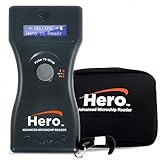
- UNIVERSAL MICROCHIP COMPATIBILITY: Reads all ISO microchips plus 9-, 10-, and 15-digit chips from any brand. Ideal for scanning horses, livestock, pets, and other animals in clinics, shelters, barns, or field settings.
- BLUETOOTH CONNECTIVITY FOR FAST, ACCURATE DATA TRANSFER: Easily sends scanned chip numbers to Bluetooth-enabled devices within a 25-foot range for quick syncing to computers, tablets, or shelter management software. Reduces manual data entry errors and speeds up check-in and intake processes—perfect for busy clinics or multi-pet facilities.
- BACKLIT LCD SCREEN WITH 15-MINUTE DISPLAY HOLD: Features a bright blue backlit LCD screen with bold white text displaying the full chip number on one line for easy reading—day or night. The 15-minute display hold gives ample time to record the scan without rushing, ideal for high-volume or field settings.
- RECHARGEABLE BATTERY WITH AUTO POWER-SAVE MODE: Includes a rechargeable 9V battery and charging unit for long-lasting performance. The auto shut-off function conserves power between uses—great for mobile vets, rescue teams, or animal control officers who need dependable scanning during long sessions.
- LIGHTWEIGHT, DURABLE DESIGN WITH PROTECTIVE CASE: This 7-inch handheld microchip scanner is compact, ergonomic, and easy to carry. Includes a protective carrying case to guard the reader during storage and transport. Built for dependable use in clinics, shelters, barns, or field settings.
Microchips and collars solve a different problem
The Feline Veterinary Medical Association’s 2019 position statement strongly advocates permanent microchip identification for all cats, regardless of lifestyle. It recommends professional or appropriately trained implantation, registration, current contact details, and recording the chip number in the medical record.
The American Veterinary Medical Association likewise explains that a microchip provides permanent identification but does not replace a collar with up-to-date identification and rabies tags. A collar and tags can be read immediately by a finder; a registered chip helps when the collar is missing. Neither one demonstrates that reproductive organs were removed.
Keep these systems current: update the registry after a move or phone-number change, ask the clinic to scan the chip at routine visits, and retain the number with the cat’s medical records.
The Tool Desk
Outbyte Driver Updater FREEFix the driver behind crashes, sound loss and screen glitchesFind Drivers →Outbyte PC Repair FREEClear out junk files and repair common Windows errorsFree Scan →Common mistakes and the safer alternative
- Mistake: assuming every sterilized cat has a tattoo. Safer approach: learn the operating clinic’s policy and obtain the record.
- Mistake: treating a green line, a faint line, or a bare patch as definitive proof. Safer approach: ask a veterinarian to interpret the mark and the history.
- Mistake: using a missing scar as proof that a female is intact. Safer approach: rely on records, examination, and veterinarian-directed testing when needed.
- Mistake: assuming a microchip means the cat was neutered or spayed. Safer approach: use the chip for identity and ownership contact, not reproductive status.
- Mistake: trapping an ear-tipped community cat for routine sterilization again. Safer approach: treat the ear tip as the program’s sterilization signal and seek veterinary care only when injury, illness, or another legitimate need is present.
- Mistake: attempting a do-it-yourself tattoo. Safer approach: leave any marking to a veterinary or authorized shelter team.
Practical decision guide
| Your situation | Most useful next step |
|---|---|
| Your cat was just sterilized at a known clinic | Ask whether that clinic marks cats and request the surgical record before leaving. |
| Your indoor cat has no tattoo but a reliable surgery record | Keep the record; the absence of a mark does not invalidate documented surgery. |
| You found an outdoor cat with a left-ear tip | In the Cornell community-cat context, regard the tip as a sterilization cue and avoid routine re-trapping unless the cat needs care. |
| An adopted cat has no record, no clear mark, and uncertain history | Arrange an examination, request shelter or prior-clinic records, and discuss AMH testing if the veterinarian considers it suitable. |
| You need to reunite a lost cat with its owner | Have the cat scanned for a microchip, contact the registry, and maintain visible identification tags; these steps do not confirm sterilization. |
The bottom line for cat owners
A spay or neuter tattoo is an optional identification practice used by some clinics and programs, not something every cat must have. Ear tipping is a specific community-cat signal, while microchips and collars identify the individual animal. When reproductive status is unclear, records and a veterinarian’s assessment—including carefully timed AMH testing when appropriate—are safer evidence than a missing tattoo, an indistinct scar, or a guess based on appearance.
Quick Recap
Product prices and availability are accurate as of the date/time indicated and are subject to change. Any price and availability information displayed on Amazon at the time of purchase will apply.





Leave a Reply