The Tool Desk
Outbyte Driver Updater FREEScan for outdated or missing drivers - takes under a minuteDriver Scan →Outbyte PC Repair FREERepair Windows errors before they cause bigger problemsFix Now →Dog anesthesia is generally manageable for veterinary teams, but it is never completely risk-free. The real level of risk depends on your dog’s age, health, breed, medications, the procedure, and whether treatment is planned or an emergency.
General anesthesia is different from simple sedation: an anesthetized dog is unconscious and cannot feel the procedure, while a sedated dog may still respond to painful or disruptive stimulation. Safe anesthesia includes more than the operation itself. It starts with preparation at home and continues through monitoring, recovery, and the first hours after discharge.
Is anesthesia safe for dogs?
Modern veterinary anesthesia is designed around the individual patient rather than a single drug combination used for every dog. The veterinarian may adjust drug choices and doses according to body size, age, breed, medical conditions, current medications, and the planned procedure.
Even with careful preparation, anesthesia cannot be described as risk-free. A dog’s overall health and the urgency and complexity of the procedure usually matter more than the word “anesthesia” by itself. There is also no single risk percentage that applies to every dog. Published figures vary according to the type of hospital, the dogs treated, the procedures performed, and whether emergency cases are included. For example, a Japanese referral-hospital study reported anesthesia-related mortality of 0.65% across 4,310 dogs, but that figure should not be treated as the risk for a healthy dog having routine surgery.
Quick wins for a faster PC:
Fix the driver behind crashes, sound loss and screen glitchesFind Drivers →Repair Windows errors before they cause bigger problemsFix Now →Scan for outdated or missing drivers - takes under a minuteDriver Scan →#1 Best Overall

- GREAT PROTECTION FOR YOUR PETS: The dog cone collar is a safe and good method of preventing your pet from aggravating a healing wound or injury. Helps to overcome lick-bite, Itch-scratch cycle. Ending self-Inflicted wound aggravation or mutilation, prevent your pet bite others in the dermatology / Beauty / surgical procedure.
- PERFECT FIT: Suitable for different ages or sizes dogs and cats, Meet your different needs. Please refer to our size chart before ordering, if your pet's measurement is close to the maximum please order the next size up.
- CONVENIENT TO USE: Hook & Loop design easy to tighten or loosen. This soft pet cone with above design can keep the collar secure in place and keep it from being pulled off or from falling off.
- HIGH QUALITY MATERIAL: Made of high quality PVC material, extra soft fabric edge provides your pet additional comfort and protection, durable and healthy, this pet recovery collar is light enough which never make your lovely pets get tired. And it's easy to clean!
- Warm Reminder: Some dogs may initially feel uncomfortable with the dog head cone. To prevent them from licking their wounds, we encourage you to comfort your dog and accompany them through this challenging recovery period. If you have any questions, please contact us. Size for L: Depth: 9.8 in, Neck Girth: 14.0-17.0in
Extra planning may be needed for dogs that are:
- Very young, very small, elderly, or giant-breed.
- Overweight or underweight, dehydrated, anemic, hypoglycemic, or otherwise systemically ill.
- Affected by heart, kidney, liver, respiratory, neurologic, or endocrine disease.
- Brachycephalic, including Bulldogs, Pugs, Boston Terriers, and similar short-nosed breeds.
- At increased risk of regurgitation or aspiration.
- Taking prescription medicines, supplements, or over-the-counter products.
- Having emergency treatment rather than planned elective surgery.
Older age alone does not automatically rule out anesthesia. Senior dogs may have hidden medical problems or need lower, more carefully adjusted doses, but their health, the expected benefit, and the procedure’s risk should be assessed together.
How veterinarians reduce anesthesia risk
A responsible anesthetic plan covers preparation, induction, maintenance, and recovery. Depending on the dog and procedure, it may include the following:
- Medical history and physical examination. Tell the veterinarian about previous anesthetic reactions, diagnosed illnesses, recent symptoms, all medications and supplements, and any previous blood tests or scans.
- Pre-anesthetic testing. Bloodwork can reveal anemia, abnormal blood glucose, dehydration, or kidney and liver problems. Additional tests, such as chest imaging, an electrocardiogram, or an echocardiogram, may be appropriate for some dogs.
- An individualized protocol. The team chooses and doses sedatives, induction drugs, inhaled anesthetics, pain relief, and other medicines for the specific patient.
- An intravenous catheter. Current AAHA fluid-therapy guidance recommends an IV catheter for patients undergoing anesthesia. It provides access for fluids and allows emergency medicines to be given quickly.
- Airway control. During general anesthesia, an endotracheal tube commonly delivers oxygen and inhaled anesthetic while helping protect the airway.
- Continuous monitoring. Depending on the hospital and procedure, monitoring may include heart rate and rhythm, breathing rate, oxygen levels, ventilation, blood pressure, temperature, and anesthetic depth.
- Pain and nausea control. Local anesthetics and combinations of pain-relieving medicines can reduce the amount of general anesthetic required and make recovery more comfortable.
- Active recovery monitoring. The period after the procedure is still part of anesthesia care. Staff should monitor breathing, circulation, temperature, alertness, protective reflexes, and pain before discharge.
What should a dog eat or drink before anesthesia?
Do not automatically impose an overnight fast. Follow the veterinary hospital’s exact instructions because fasting varies with the dog’s age, weight, health, procedure, and risk of regurgitation.
For a healthy dog, AAHA guidance lists a food-withholding period of approximately four to six hours and generally allows access to water. Puppies under eight weeks or under 2 kg, diabetic dogs, dogs with regurgitation risk, and emergency patients may need different instructions. For most patients, AAHA’s 2024 fluid-therapy guidance says it is unnecessary to withhold water, but the veterinary team may give different instructions for a particular procedure or medical condition.
Do not independently stop insulin, seizure medicine, heart medication, steroids, or any other chronic treatment. Many medicines are continued on the day of anesthesia, but there are exceptions. Ask the veterinary team what to give, what to skip, and whether each dose should be given with a small amount of food.
Rank #2

- SCRATCH & BITE RESISTANT - This inflatable dog donut collar is a perfect cone for dogs after surgery. Inflated dog neck donut works like a plump barrier around your canine's neck, can effectively prevent your pets from biting and licking injured area or surgical site. With this collar on, the unique and cute donut shape makes it like a pet ornament instead of a dog surgery collar, your pet must be a million times happier with this.
- NON-STICK FABRIC - Unlike other common velvet inflatable dog collars for after surgery donut, the outside of this dog soft cone is made of upgraded non-stick fabric, then you won't have to keep cleaning pet's hair frequently. Also it is easy to clean if needed, just unzip to take off the outer cloth. Soft cones for dogs after surgery keeps your dog comfortable, can even act as a neck pillow which helps him/her fall asleep quickly and forget the pain of the wound.
- NO STRESS - We all know how pets hate the cumbersome cone, poor dogs and cats would keep tripping on it and could not get around. This inflatable cone e collar for dogs WON'T let that happen, the inner air bag provides full support for the neck while keeping it lightweight. It does not block dog’s vision like traditional Elizabethan collar, which allows your doggie chase butterflies, hummers and grass hoppers all with wearing its collar.
- ADJUSTABLE &PERFECT FIT - In case you are concerned of the dog neck pillow from slipping down or getting taken off, we designed a fixed position on the inner part of the dog head cone, just thread your pet's everyday collar through the strips to fix it. Furthermore, a velcro strap is equipped on the opening of the collar, which can allow you to adjust the the tightness to ensure a perfect neck fit. Please remember to put the strap side at the back of your dog’s neck in case of biting.
- WARM PROMPT - If your pet wants to escape when he/she put on the collar for the first time, we hope you can work with your dog to acclimate him/her. And due to differences in dog breeds, body sizes, and growing environments, this blow up dog cone collar may not be suitable for dogs with long noses, long legs, long tails, and long bodies. Any more questions, we are here to assist you, we sincerely wish your pet a speedy recovery.
If your dog eats or drinks after the instructed cutoff, tell the clinic. Do not conceal it. The team may change the timing or modify the anesthetic plan.
Common side effects after dog anesthesia
Many dogs are sleepy or less coordinated for about 12 to 24 hours. The exact recovery depends on the drugs used, the length and type of procedure, and the dog’s health. Temporary effects can include:
- Sleepiness, weakness, or mild unsteadiness.
- Disorientation, anxiety, whining, or unusual vocalization.
- Reduced appetite or thirst during the first evening.
- Nausea or occasional vomiting.
- A mild cough from irritation caused by the breathing tube.
- Temporary difficulty maintaining normal body temperature.
A small meal or reduced portion may help limit nausea, but the discharge instructions from your veterinarian take priority. Some dogs are offered food and water once they are adequately recovered; others may need a different schedule because of the procedure or a medical condition.
When are post-anesthetic symptoms an emergency?
Call the operating veterinary hospital promptly if your dog has repeated vomiting, retching, or regurgitation; a worsening or persistent cough; persistent diarrhea or blood in the stool; uncontrolled pain; marked agitation; continued refusal to eat or drink beyond the period specified by the clinic; or an incision that is bleeding, swelling, draining, or opening.
Seek emergency veterinary help immediately if your dog:
Rank #3
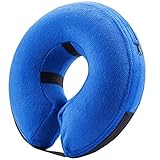
- PROTECTIVE AND GENTLE CARING - Bencmate dog cone collar is a perfect dog cone alternative after surgery. Inflated dog donut collar works like a plump barrier around your canine's neck, The dog cone collar after surgery is designed to protect your pets from injuries, rashes, and post-surgery wounds, it prevents your pets from biting and licking their injured area or surgical site and promote recovery from surgery or wounds. The soft material also provides gentle caring for your pets.
- UPGRADED FABRICS &COMFORTABLE — We offer two fabric options to choose from. One is a plush, soft-touch fabric for extra comfort (solid colors option), and the other is an anti-stick, scratch-resistant, and stretchy fabric (colorful option). Cleaning is also very convenient and simply unzip to remove the outer cover. After surgery, dogs can wear this soft dog cone for a comfortable fit, and it also doubles as a neck pillow to help them fall asleep quickly and relieve wound pain.
- FREEDOM FROM RESTRAINT — Pets wearing traditional Elizabethan collars often stumble and trip because their vision is blocked. With the Bencmate dog donut collar with inner air bag provides full neck support, and the soft outer material keeps your pet supremely comfortable without obstructing their sight. Unlike conventional E-collars that block a dog's vision, this collar allows them to eat, drink, sleep, and play with ease while staying fully protected.
- ADJUSTABLE AND EASY STORING - Designed fixation straps on the inside of the dog cone collar. Simply thread your dog collar through the strap to secure it in place. The dog cone collar features scratch & bite-resistant non-stick fabric and a clean hook-and-loop closure, making it slightly easier to put on and take off., allowing you to easily adjust the tightness for a perfect, please put the closure at the back of dog’s neck to prevent biting. Deflating and storing is also handy, store it in a small space for space-saving, and there is a zipper opening on one side.
- BENCMATE sincerely recommends you measure your pet’s neck circumference before purchasing to get a perfect size. ②If the collar is a bit large for your dog and easily falls off, please try to loop the daily collar with the recovery collar, it would be helpful to prevent the collar from falling off.
- Has difficulty breathing or labored breathing.
- Has blue, gray, or very pale gums.
- Cannot be awakened normally or becomes increasingly difficult to rouse.
- Collapses, has a seizure, or suddenly deteriorates.
A mild cough may simply reflect irritation from the endotracheal tube. A cough that persists or worsens, particularly with lethargy or breathing difficulty, needs assessment. Vomiting or regurgitation around anesthesia is also important because stomach contents can be inhaled and cause aspiration pneumonia.
Dog anesthesia recovery at home
Before leaving the clinic
The veterinary team should keep monitoring your dog until breathing, circulation, temperature control, protective reflexes, pain, and alertness are suitable for discharge. Ask what is normal for this particular procedure and which symptoms require an immediate call.
The first evening
Set up a quiet, warm, secure recovery area before bringing your dog home. Keep your dog away from stairs, energetic children, and other pets. Residual anesthetic and pain medicines can make walking unreliable, so use a leash for bathroom trips and prevent running, jumping, and rough play.
Give food, water, and prescribed medicines exactly as directed. Do not give human painkillers unless the veterinarian has specifically prescribed or authorized one for your dog. Medicines that are safe for people can be dangerous to dogs, and dosing depends on weight, health, and other treatments.
If there is an incision, use the prescribed Elizabethan collar or recovery suit. Do not let your dog lick or chew the wound. Follow instructions for bandages, drains, bathing, exercise restriction, and the recheck appointment.
Rank #4

- Upgraded Double-Layer Design: WinWeal Dog Cone features an upgraded two-tier design. The inner part with Soft Mesh Material, it provides your pet with additional comfort and protection without burden. The outer part with Waterproof Transparent PVC, it promotes clear vision and makes it easier for your pet to eat, drink, and play.
- Perfect Fit:Neck Girth: 15.4''-17.3'', Depth: 11.6''. Sufficient depth helps to prevent a dog from scratching or licking at a hot spot, surgical incision, or other irritation. Please measure the size of your pet before purchasing, if you have any trouble feel free contact us.
- No Choke & Not Falling off: Is your dog still choking and uncomfortable after putting on a dog cone collar? Getting rid of the traditional single design, this dog cone collar has an adjustable drawstring stopper that can be tightened and loosened to fit the dog's neck better, no need to worry about the pet will choke after putting on this soft cone, and make sure the cone will not slip down or take off even the dog tries to take it off. In addition, there's an elastic band at the base for threading through your pet’s collar to keep the pet cone in place.
- Soft Protective Edge: This soft dog cone for dogs has a soft protective fabric around the neck to protect your dog's cervical spine, ensuring they have a pleasant experience. The waterproof surface of this dog cone is incredibly easy to clean. You simply need a paper towel to wipe it clean, unlike other dog cones that are difficult to wash. Just get it for your lovely pet.
- Safe & Secure: Pet cone collar has a fluorescent strip in the outer rings for safe. Reflective straps keep your dog safe all the time while out for a walk. Not just one or two neck girth, the recovery cone includes a large vèl-cro strips for closure, enable you adjust the neck girth in wide range.
How long does recovery take?
Many dogs are considerably more alert by the next day, although mild tiredness or disorientation can last 12 to 24 hours. Longer recovery can occur after lengthy procedures, in senior or medically compromised dogs, or when sedatives and pain medicines remain active.
Do these 3 things before closing this tab:
1Scan for outdated or missing drivers - takes under a minute2Clear out junk files and repair common Windows errors3Fix the driver behind crashes, sound loss and screen glitchesThe important pattern is gradual improvement. A dog that becomes progressively weaker, harder to wake, more painful, or less able to breathe is not following an expected recovery pattern and should be assessed.
Independent reader supportYour contribution helps us test, update, and keep practical guides available for everyone.Questions to ask before your dog is anesthetized
| Question | Why it matters |
|---|---|
| What procedure is being performed, and is general anesthesia required? | Clarifies the plan and what to expect. |
| What examination and pre-anesthetic tests are recommended? | Testing may identify a problem that changes the timing or protocol. |
| Which medicines and supplements should I give or withhold? | Some treatments interact with anesthesia, while others should not be stopped suddenly. |
| Exactly when should food and water be withheld? | Fasting is not identical for every dog. |
| Will my dog have an IV catheter and endotracheal tube? | These support drug delivery, oxygenation, and airway management during general anesthesia. |
| What will be monitored, and who will monitor recovery? | Monitoring should continue after the procedure ends. |
| What pain and anti-nausea medicines will be used? | A plan can improve comfort and reduce anesthetic requirements. |
| When can my dog go home, and what is the after-hours number? | You need a clear escalation plan if a problem develops overnight. |
| What additional costs could arise? | Extra tests, monitoring, stabilization, or emergency treatment may be needed if findings change the plan. |
Common myths about anesthesia in dogs
“Older dogs cannot safely have anesthesia.”
Not necessarily. Age can increase the chance of concurrent disease, but advanced age alone is not a contraindication. A senior dog may safely undergo anesthesia when the benefits, health status, testing, drug plan, and monitoring are carefully considered.
“Gas anesthesia is completely safe.”
Inhaled anesthetics are adjustable and widely used, but no anesthetic drug or procedure is completely risk-free. Safety depends on assessment, dosing, airway management, monitoring, pain control, and recovery care.
“Every dog must be fasted overnight.”
This is not a universal rule. Fasting instructions differ for healthy adults, puppies, diabetic dogs, dogs with regurgitation risk, and emergency patients. Water generally does not need to be withheld unless the veterinary team tells you otherwise.
What’s actually slowing this PC down?
Pick the symptom - the matching free tool is one click away.
Best Value

- 🛡️ 【STOP LICKING & SCRATCHING】 Designed to help prevent dogs and cats from licking, biting, or scratching wounds, stitches, hot spots, rashes, and surgical areas. Ideal for post-surgery recovery, skin conditions, grooming care, and injury protection.
- 🐕 【XL SIZE – 1 CONE】 This XL size includes 1 recovery cone designed specifically for large dogs. Please carefully measure your dog’s neck and refer to the size chart before purchasing for a secure and comfortable fit.
- ☁️ 【SOFT & COMFORTABLE】 Soft fabric edges help reduce rubbing and discomfort around your dog’s neck compared with traditional hard plastic cones. Lightweight design helps pets recover more comfortably during daily wear.
- 👀 【CLEAR VISION】 The transparent dog cone helps maintain your pet’s field of vision, allowing dogs to eat, drink, sleep, walk, and rest more naturally during recovery without fully blocking their surroundings.
- 💗 【LESS STRESSFUL RECOVERY】 Designed to be lightweight and less restrictive, helping some pets feel calmer and more comfortable while recovering at home after surgery or skin treatment.
“Once my dog is awake, the danger is over.”
Awareness does not mean all anesthetic effects have ended. Residual drugs can affect temperature regulation, coordination, nausea, pain, and breathing during recovery and the first hours at home.
“A mild cough always means pneumonia.”
A mild cough can follow irritation from the breathing tube. It should improve rather than worsen. Persistent coughing, breathing difficulty, abnormal gum color, or marked lethargy requires veterinary advice.
“A dog should never eat the night after anesthesia.”
Not universally. Some dogs have little appetite the first evening, while others may be offered a smaller meal once the veterinary team permits it. The hospital’s discharge instructions should control feeding decisions.
FAQ
How long will my dog be sleepy after anesthesia?
Many dogs are tired or mildly disoriented for 12 to 24 hours. Recovery can take longer after a lengthy procedure or in a senior or medically compromised dog, but your dog should gradually improve rather than worsen.
Recommended Free Tools
Can my dog eat after anesthesia?
Follow the clinic’s discharge instructions. Some dogs can have water and a small meal once they are adequately recovered, while others need a different schedule. Repeated vomiting or refusal to eat beyond the period specified by the veterinary team warrants a call.
Should I withhold water before my dog’s procedure?
Do not assume that water must be withheld. Current guidance generally allows water for many patients, but the procedure and your dog’s health may require different instructions. Ask the veterinary team and follow its specific plan.
When should I call an emergency veterinarian after anesthesia?
Get immediate help for difficulty breathing, blue, gray, or very pale gums, inability to awaken the dog normally, collapse, seizures, or sudden deterioration. Contact the operating clinic promptly for repeated vomiting, worsening cough, uncontrolled pain, or incision problems.
The Bottom Line
Dog anesthesia is not risk-free, but individualized drug choices, pre-anesthetic assessment, IV access, airway control, monitoring, pain relief, and careful recovery make it substantially safer. Follow the clinic’s fasting and medication instructions, keep your dog quiet at home, and treat breathing problems, abnormal gum color, collapse, or inability to wake as emergencies.
Free tools Windows power users keep installed
One-click scans. No signup required.
Quick Recap
Product prices and availability are accurate as of the date/time indicated and are subject to change. Any price and availability information displayed on Amazon at the time of purchase will apply.




